

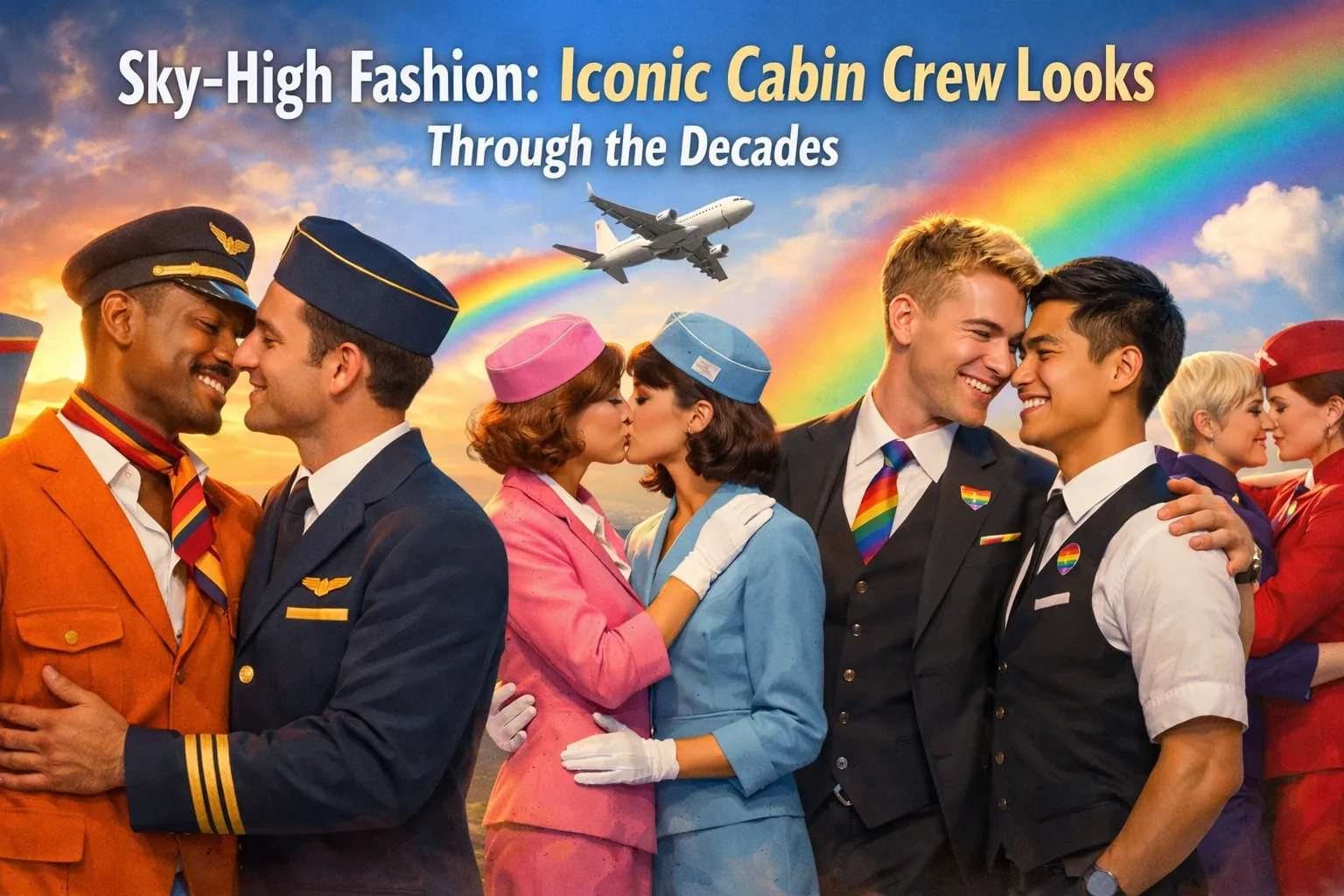
There's something undeniably romantic about vintage airline fashion. Maybe it's the promise of adventure at 30,000 feet, or the fact that flight attendants have always been the ultimate ambassadors of style, grace, and glamour. But here's what you might not know: some of the most iconic cabin crew uniforms that have graced the skies were designed by LGBTQ+ designers and allies who brought their unique vision to the world of aviation.
As we celebrate queer contributions to fashion history, let's take a sky-high journey through the decades, from post-war elegance to punk-inspired rebellion. And if you're anything like us at Read with Pride, you'll find these stories just as captivating as the best MM romance novels.
The Golden Age of Flight: 1940s–1950s
The earliest days of commercial aviation were all about projecting sophistication and trust. Airlines needed passengers to feel safe in this relatively new form of travel, and what better way than through impeccably dressed cabin crew?
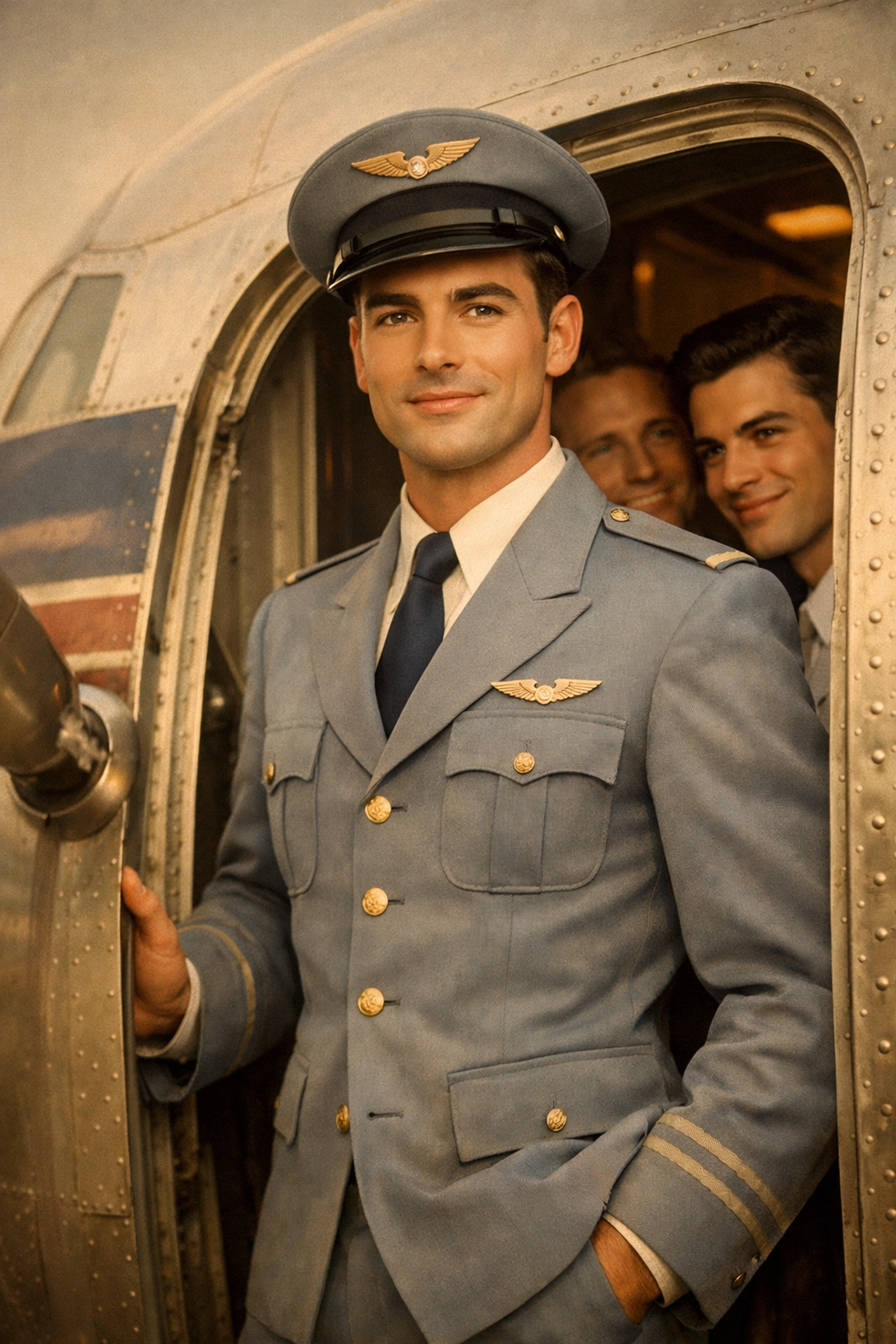
Howard Greer, a Hollywood costume designer who worked with everyone from Gloria Swanson to Carole Lombard, created one of the most ingenious uniform designs in 1944 for Transcontinental Airlines. His light blue gabardine ensemble featured a triangular lapel that could be flipped up to cover the airline's emblem, allowing flight attendants to smoke or enjoy cocktails off-duty without compromising the airline's image. Clever, right?
By 1950, Italian fashion house Sorelle Fontana designed crisp navy blue uniforms for the newly established Alitalia, bringing European haute couture sensibility to the skies. Five years later, Oleg Cassini, who would later become Jackie Kennedy's personal stylist, introduced seasonal uniforms for Trans World Airlines in sophisticated browns and greens.
These early designs set the stage for what would become a powerful intersection between high fashion and commercial aviation. If you're looking for that same era's romance and elegance in your reading, check out the gay historical romance collection at Readwithpride.com, where dapper gentlemen and slow-burn love stories reign supreme.
The Swinging Sixties: Revolution in the Skies
The 1960s changed everything. As jet travel became more accessible and youth culture exploded, airline fashion underwent its most dramatic transformation. This was the era of the jet-setter, and cabin crew uniforms needed to match the excitement.
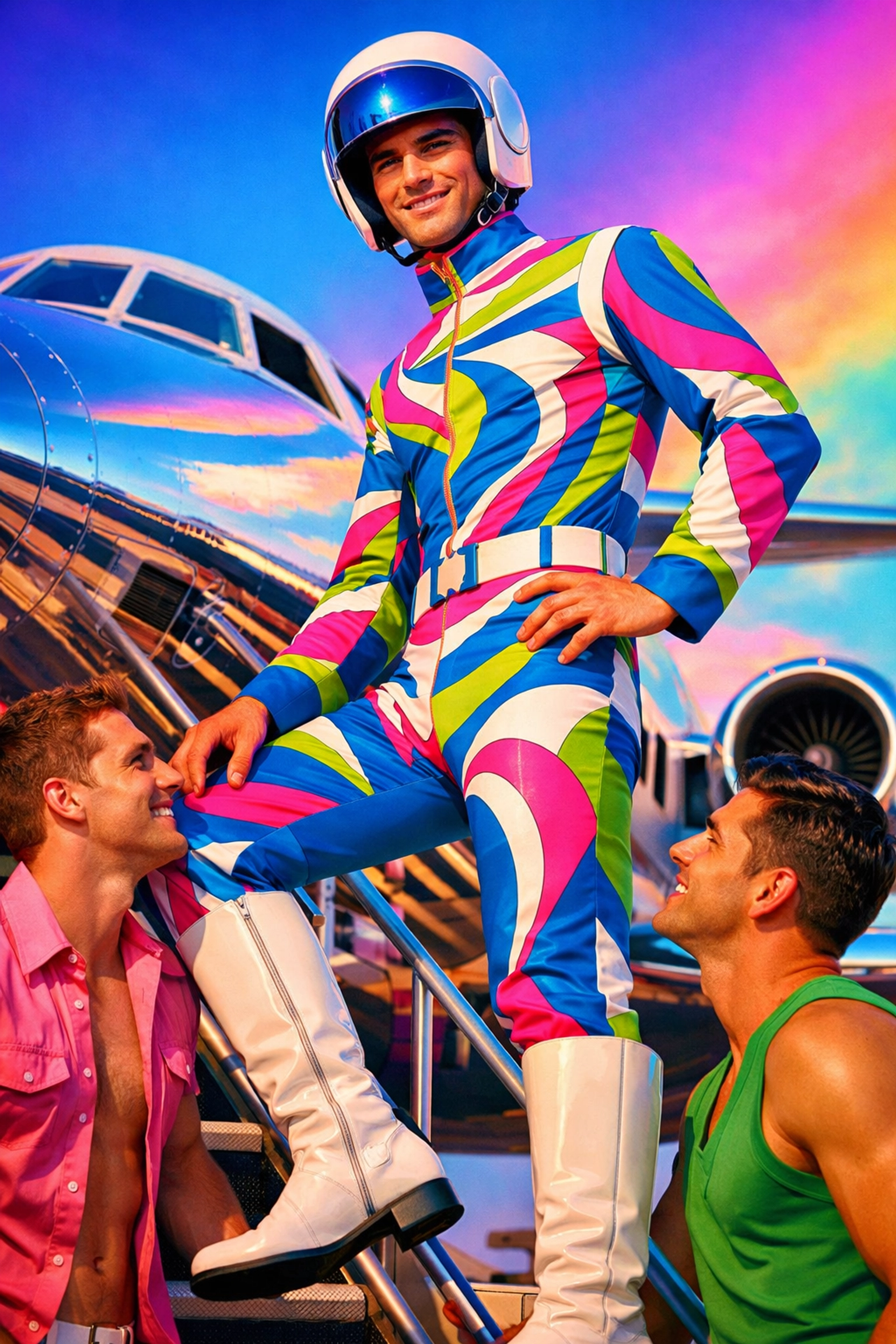
In 1963, Ben Reig designed United Airlines' "Blue Vision" collection, a softer, more modern take on flight attendant fashion with rolled collars and bracelet-length sleeves. But the real game-changer came in 1965 when Emilio Pucci unveiled his legendary "Air Strip" collection for Braniff International Airways.
Pucci's design was revolutionary: a multi-layered ensemble that flight attendants could strip down during flight (hence the cheeky name), featuring space-age helmets, mod boots, and geometric patterns in eye-popping colors. This wasn't just a uniform, it was a fashion statement that screamed confidence, modernity, and a bit of playful rebellion. The collection was nicknamed "Gemini IV" after the space program, because honestly, these flight attendants looked ready to launch into orbit.
This era reminds us of the best enemies-to-lovers MM romance tropes, unexpected, bold, and absolutely unforgettable. There's something about breaking the rules and rewriting expectations that resonates deeply with queer storytelling.
The Designer Decades: 1960s–1970s
As airlines competed for passengers in an increasingly crowded market, they turned to the biggest names in fashion to create distinctive looks. This is where queer influence in fashion history becomes beautifully evident.
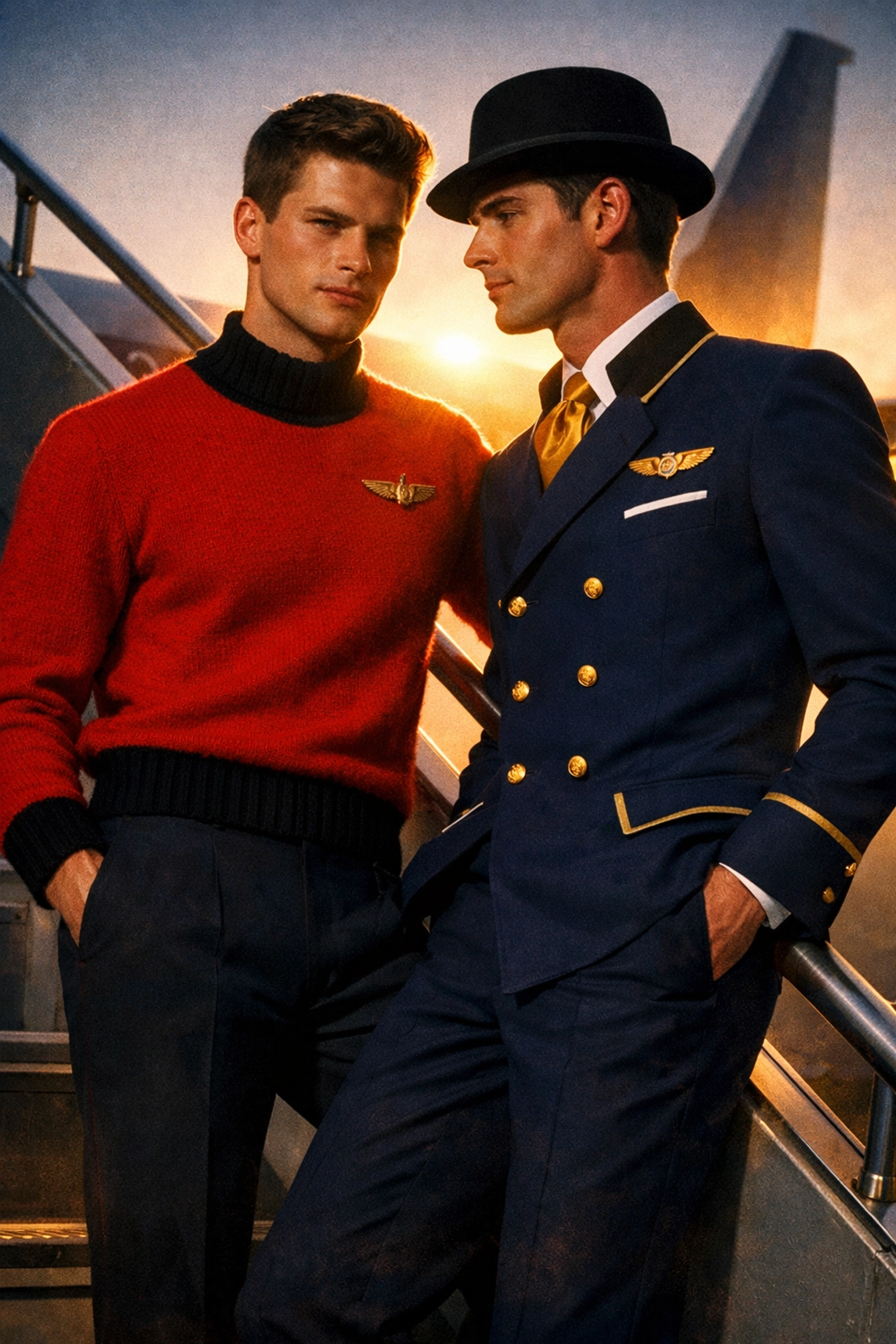
Cristóbal Balenciaga, the Spanish master couturier who revolutionized women's fashion and was known to be gay, designed Air France's 1969 uniform. His semi-fitted silhouette featured practical utility pockets but maintained his signature architectural elegance. Balenciaga understood the female form in ways that transcended mere functionality, he created clothes that empowered women while celebrating their beauty.
Pan American World Airways introduced a dramatic riding-habit-inspired uniform in 1971 that featured their first above-the-knee hemline, scandalous for the era! Flight attendants could choose between "Superjet Blue" or "Galaxy Gold," complete with bowler derbies and reversible capes. This was fashion as performance art, and passengers loved it.
Jean Louis, the Academy Award-winning Hollywood costume designer, created multiple collections for United Airlines throughout the 1970s. His designs introduced bold colors, reds, greens, and blues, and made history by including slacks as an option for female flight attendants for the first time. This was more than fashion; it was progress.
The Modern Renaissance: 2010s–Present
After decades of more corporate, standardized uniforms, high fashion made a triumphant return to the skies in 2014 when Vivienne Westwood, punk icon and fierce LGBTQ+ ally, designed Virgin Atlantic's new look.
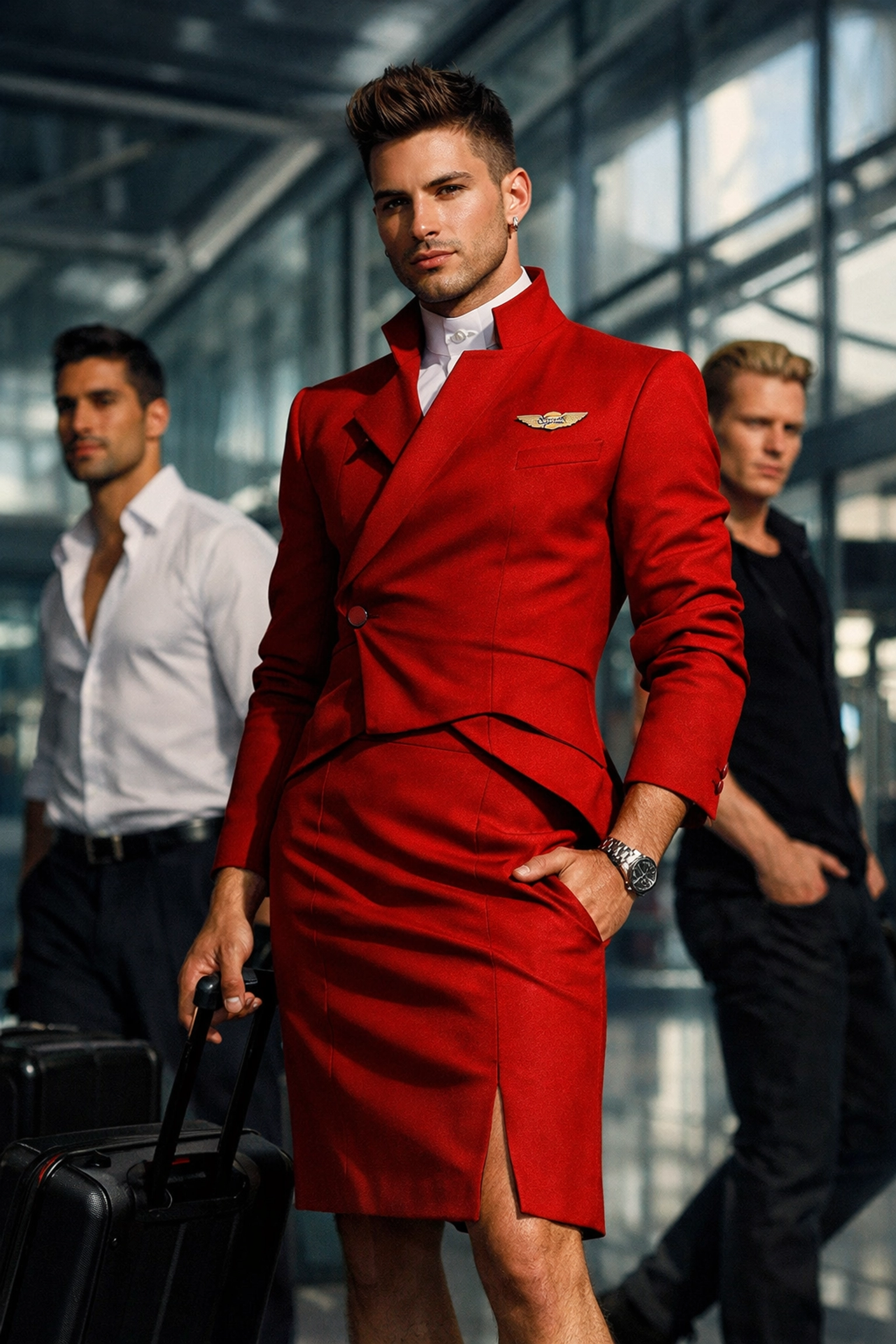
Westwood's signature red tailored suit recalled 1940s glamour while maintaining her edgy, rebellious spirit. The darted pencil skirt, high collar, and asymmetric frilled jacquard blouse perfectly captured Virgin Atlantic's "maverick attitude." This wasn't your grandmother's flight attendant uniform, it was a statement about individuality, style, and refusing to compromise.
Westwood's work reminds us that queer allies have always been essential in pushing fashion, and society, forward. Her designs celebrate diversity, challenge norms, and create space for everyone to express themselves authentically.
The Connection to Our Stories
You might wonder what vintage airline fashion has to do with MM romance books and queer fiction. Everything, actually. These designers, many of them queer or deeply connected to LGBTQ+ culture, used fashion to tell stories about identity, transformation, and breaking free from constraints.
Isn't that exactly what the best gay romance novels do? They take us on journeys where characters discover themselves, defy expectations, and find love in unexpected places. Whether it's a contemporary MM romance set in modern-day London or a gay historical romance in post-war Paris, these stories remind us that authenticity and style have always gone hand in hand.
Flying Forward
As we look back at these iconic designs, we're reminded that fashion, like great storytelling, has the power to challenge, inspire, and transform. The queer designers and allies who shaped airline fashion didn't just create beautiful uniforms; they crafted narratives about progress, elegance, and the courage to be different.
So next time you're settling into your seat for a long flight, why not pull out one of the captivating gay fiction titles from Read with Pride? Whether you're into steamy forced proximity stories (hello, airplane romance!), emotional slow burns, or adventure-filled spy thrillers, we've got you covered at Readwithpride.com.
After all, the best journeys: whether across continents or across the pages of a great book: are the ones that take us somewhere we've never been before.
Ready to explore more LGBTQ+ stories and celebrate queer culture?
Follow us on social media:
📘 Facebook
🐦 Twitter/X
📸 Instagram
Discover your next favorite MM romance novel at Readwithpride.com
#MMRomance #GayRomanceBooks #LGBTQFiction #ReadWithPride #QueerFashionHistory #GayDesigners #AviationHistory #CabinCrewStyle #GayBooks #LGBTQEbooks #QueerCulture #MMRomanceBooks #GayLoveStories #2026Reading #QueerAuthors #GayFiction #LGBTQReading #PrideReading #QueerHistory #FashionHistory

Leave a Reply
You must be logged in to post a comment.