

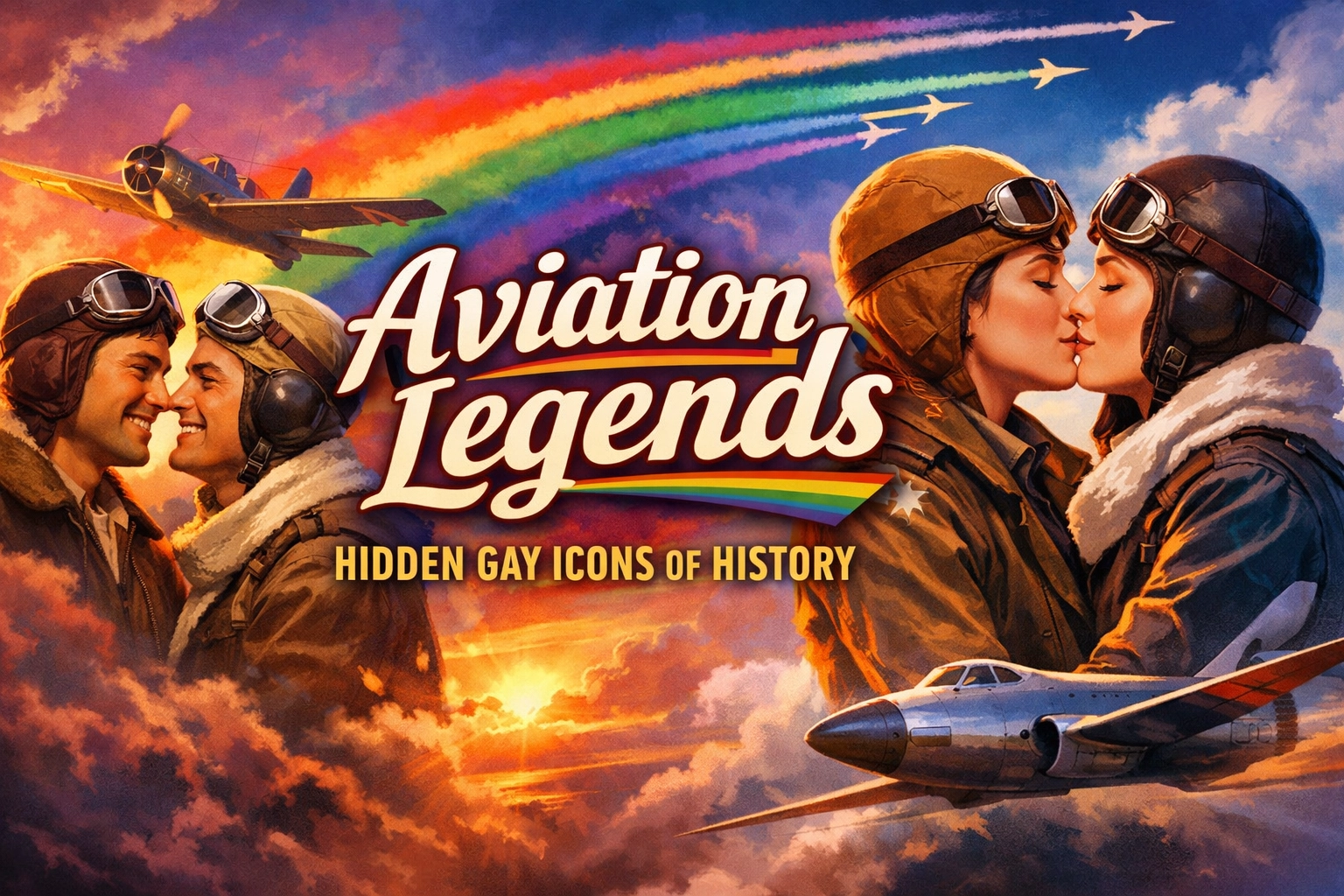
History has a way of glossing over the details that don't fit the mainstream narrative. When we think about aviation pioneers, those brave souls who looked at the sky and said, "Yeah, I'm going up there", we rarely hear about their personal lives. And when those personal lives include same-sex love? Well, that part tends to get edited out of the textbooks.
But here's the thing: LGBTQ+ individuals have been soaring through the skies since the very beginning of aviation. They've designed aircraft, piloted legendary flights, served in the military, and literally changed the course of history. It's time we told their stories.
The Pioneers Who Made History
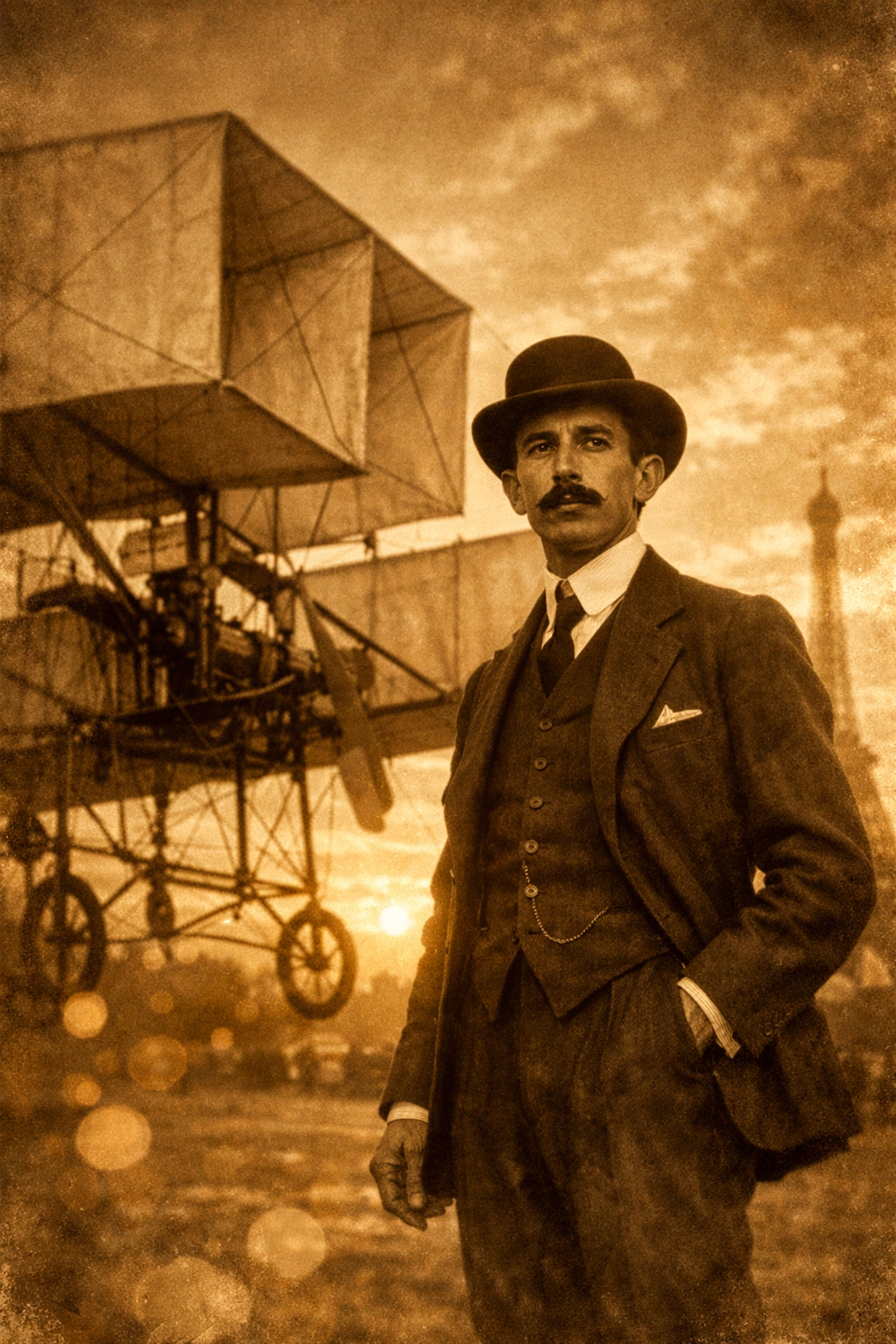
Let's start with Alberto Santos-Dumont, the Brazilian aviation genius who you've probably never heard of, unless you're from Brazil, where he's basically a national hero. On October 23, 1906, Santos-Dumont piloted the XIV-bis for 197 feet at about 15 feet altitude. Here's what made it revolutionary: his aircraft used a wheeled undercarriage and didn't need any external launching assistance. Some aviation historians argue this was actually the first true powered flight under international standards.
Santos-Dumont was a gay man living in an era when that identity had to remain hidden. He never married, lived a flamboyant lifestyle that raised eyebrows in Belle Époque Paris, and ultimately died tragically. His contributions to aviation are undeniable, yet his story remains largely unknown outside aviation circles, and his identity as a gay man even less so.
Then there's Orville Wright. Yes, that Wright brother. Historical evidence suggests Orville may have been gay, including a revealing letter his brother Wilbur wrote to their father, Bishop Milton Wright, complaining about Orville's "character defect", coded language fundamentalist families used to describe homosexuality. Neither Wright brother ever married, and Orville lived until 1948 with a longtime male companion in Dayton. The Wright brothers changed transportation forever, and one of them was likely part of our community.
And we can't forget Leonardo da Vinci, the ultimate Renaissance man who sketched flying machines centuries before anyone actually got airborne. Leonardo was known to be gay (or at least engaged in same-sex relationships), even facing legal charges for sodomy in his lifetime. His visionary designs laid conceptual groundwork for human flight, proving that queer brilliance has been reaching for the sky since, well, forever.
Modern Heroes in the Cockpit
Fast forward to more recent times, and we find stories that are both inspiring and heartbreaking.
Mark Bingham was an American pilot and rugby player who became a hero on September 11, 2001. He was one of the passengers on United Airlines Flight 93 who fought back against the hijackers, ultimately preventing the plane from reaching its intended target in Washington, D.C. Mark was openly gay, and his heroism that day saved countless lives. His mother, Alice Hoagland, later became a powerful advocate for LGBTQ+ rights, honoring her son's memory.
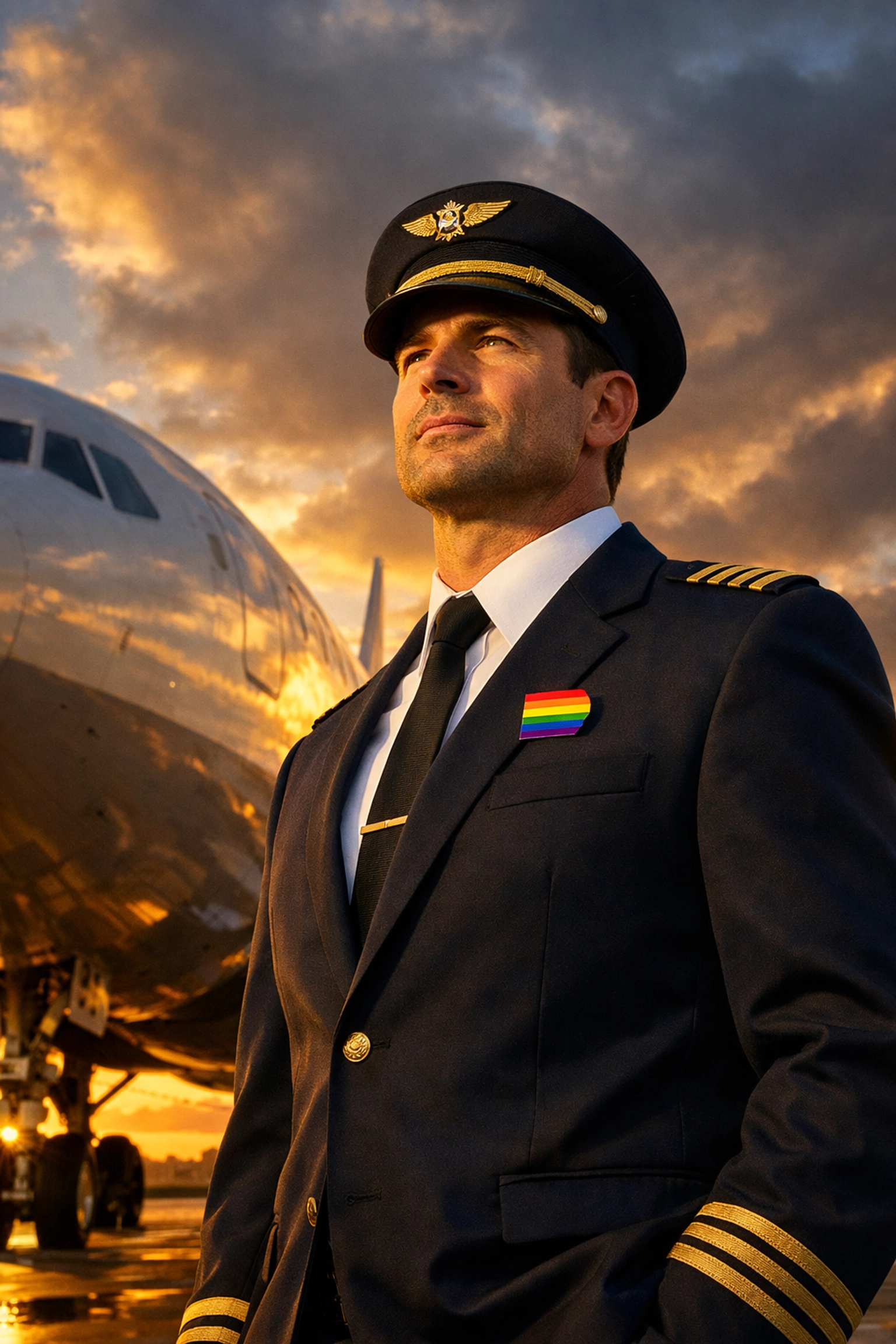
Major Margaret Witt represents a different kind of courage. As a decorated Air Force flight nurse with an impeccable service record, she was discharged in 2006 under "Don't Ask, Don't Tell" after the military learned she was in a relationship with a woman. Witt fought back, and her case became instrumental in challenging DADT. She represented the countless LGBTQ+ service members who served with distinction while having to hide their authentic selves.
The Unsung Heroes: Male Flight Attendants
Here's a piece of aviation history that rarely gets told: male flight attendants played a crucial role in LGBTQ+ visibility and created safe spaces long before Pride parades became mainstream.
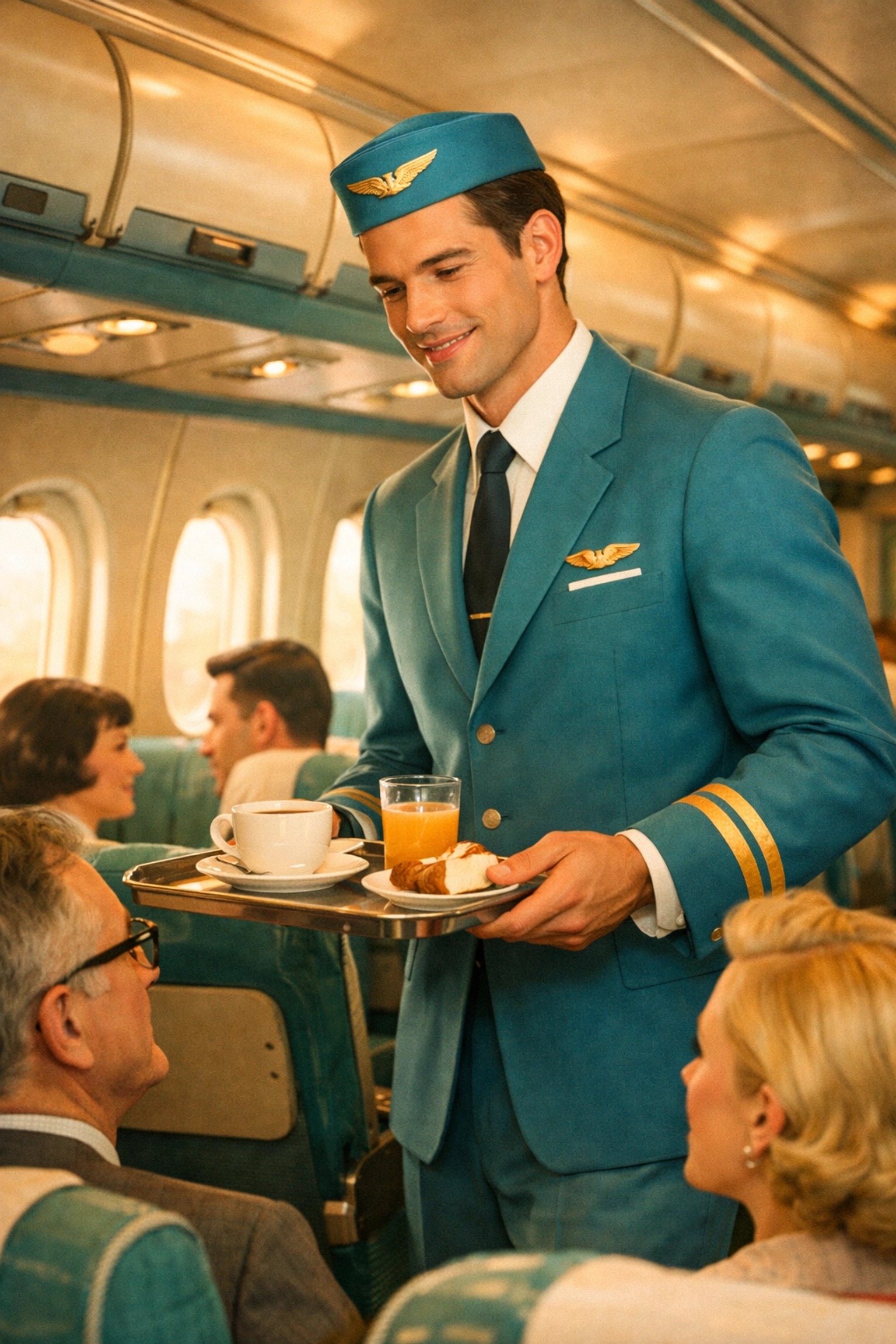
After World War II, the flight attendant profession became increasingly female-dominated, but it also became "a haven of sorts" for gay men. While discrimination existed everywhere else, airlines needed staff, and gay men found relative tolerance in the skies. For many mid-20th century travelers, gay male flight attendants represented their first exposure to openly (or semi-openly) gay people.
Think about that for a second. While the rest of society was deep in the closet, gay men were serving coffee and demonstrating safety procedures at 30,000 feet, being visible and professional. They were quietly changing hearts and minds, one flight at a time.
The 1950s, often called "the most homophobic decade in American history", brought significant challenges. Airlines occasionally purged gay male flight attendants following public scandals, desperate to avoid negative publicity. But the community persisted, creating networks of support and solidarity that existed above the clouds.
The Military's Open Secret
Here's a statistical reality that should blow your mind: there were likely "a few dozen gay, bisexual, and trans people among the Tuskegee Airmen." The legendary African American military pilots who fought in World War II included LGBTQ+ members. Their stories remain mostly undocumented because they were fighting for their country while facing both racism and homophobia, a double burden that makes their service all the more remarkable.
The military's complex relationship with LGBTQ+ service members is a story of courage in the face of institutional discrimination. From WWII through the "Don't Ask, Don't Tell" era and finally to today's more inclusive policies, queer pilots and aviation professionals have served with distinction while often unable to serve openly.
Looking Forward: The New Generation Takes Flight
The National Gay Pilots Association (NGPA), founded in the early 1990s, has worked for decades to encourage LGBTQ+ individuals to enter aviation through education and outreach programs. While significant progress has been made, NGPA leadership acknowledges that "we still have a long way to go before equality is achieved."
Today's generation of LGBTQ+ aviation professionals stands on the shoulders of giants, many of whose names we'll never know. They're commercial pilots, military aviators, aerospace engineers, air traffic controllers, and yes, still flight attendants. They're flying openly and proudly, representing a future those early pioneers could only dream about.
Why These Stories Matter to Readers
So what does all this aviation history have to do with MM romance books and Read with Pride? Everything, actually.
These real-life stories of courage, hidden identity, and ultimate triumph are the exact narratives that fuel the best gay romance novels and LGBTQ+ fiction. When you read about a pilot falling in love with his co-pilot in a contemporary MM romance, or a historical gay romance set during WWII, you're reading echoes of real experiences: real people who loved and lived despite enormous obstacles.
The best gay fiction doesn't exist in a vacuum. It's informed by the lived experiences of LGBTQ+ people throughout history who navigated love, identity, and societal expectations. Every gay love story you devour on your e-reader carries the DNA of these historical figures who couldn't tell their own stories openly.
That's why uncovering and celebrating these hidden icons matters. It's why education and representation through both history and queer fiction remain essential. We need to know our history: the good, the complicated, and the heartbreaking: so we can imagine better futures.
Keep Their Stories Alive
The aviation pioneers we've discussed today: Santos-Dumont, Wright, Bingham, Witt, and countless unnamed others: deserve to be remembered not despite their identities but as whole people. Their queerness wasn't separate from their achievements; it was part of who they were.
As you explore MM romance and gay literature through platforms like Readwithpride.com, remember that every story about overcoming adversity, finding love against the odds, or living authentically has roots in real history. These aviation legends weren't just defying gravity: they were defying a world that told them they couldn't be both queer and extraordinary.
Spoiler alert: They absolutely could be both. And so can we.
Follow Read with Pride on Facebook, Instagram, and X/Twitter for more LGBTQ+ history, gay book recommendations, and the best MM romance books of 2026.
Discover more stories of courage and love at readwithpride.com
#ReadWithPride #LGBTQHistory #AviationHistory #QueerHistory #MMRomance #GayRomanceBooks #LGBTQFiction #GayLiterature #QueerStories #HiddenHistory #LGBTQPride #GayBooks #MMRomanceBooks #HistoricalGayRomance #LGBTQReading #GayFiction #QueerFiction #PrideReading #LGBTQRepresentation

Leave a Reply
You must be logged in to post a comment.