

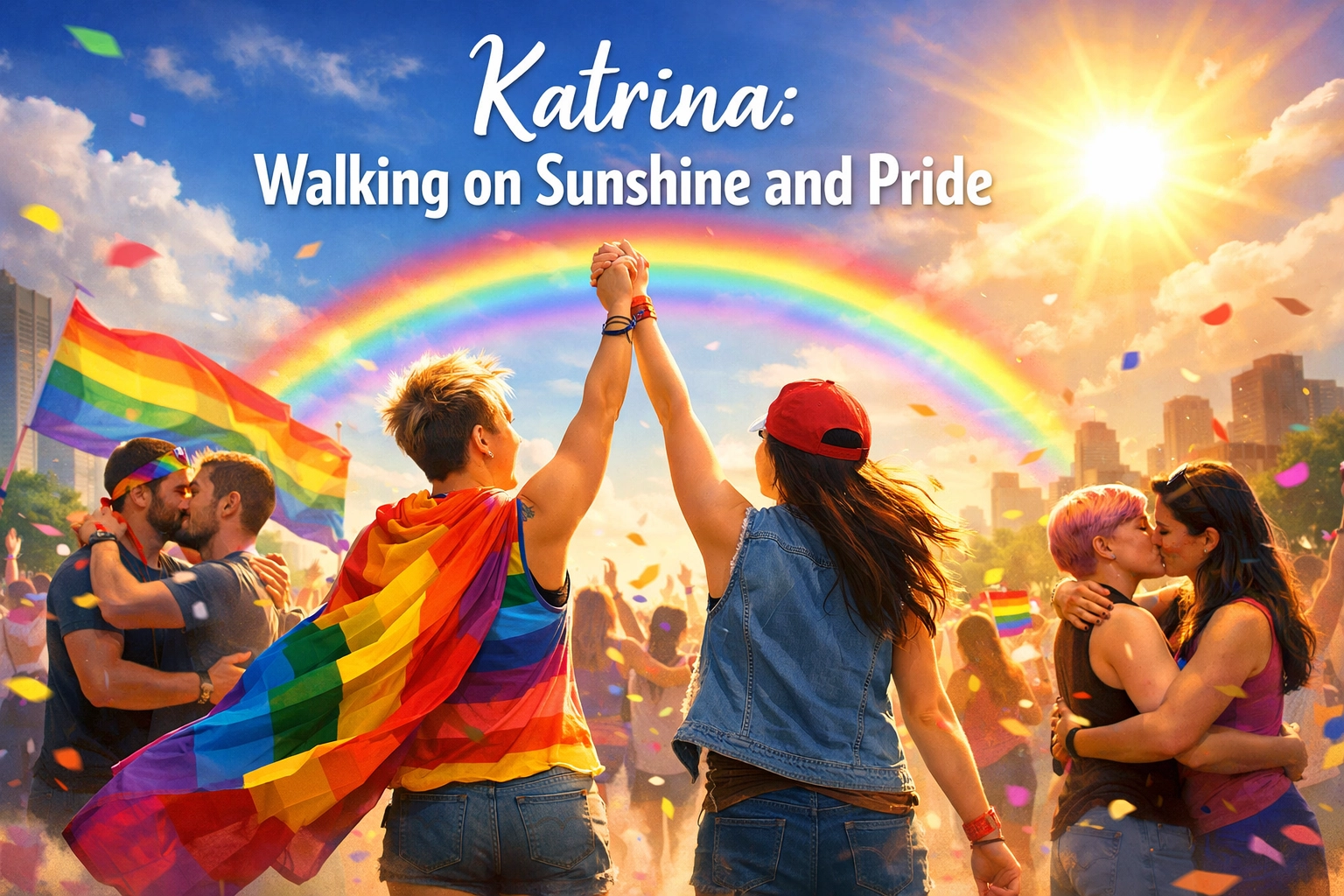
Before there was Conchita Wurst's phoenix-like rise, before Dana International shattered barriers, and long before Eurovision became the glittering, unapologetically queer spectacle we know and love today, there was a moment in 1997 that quietly resonated with LGBTQ+ hearts across Europe. Katrina and the Waves took the stage in Dublin with "Love Shine a Light," and what followed was more than just a landslide victory: it was a celebration of joy, resilience, and the kind of unfiltered positivity that the queer community has always needed.
The Band Behind the Sunshine
If you grew up in the '80s or early '90s, you probably know Katrina and the Waves for one thing: "Walking on Sunshine." That infectious, impossibly upbeat anthem became the soundtrack to everything from graduation parties to rom-coms, cementing itself as one of those songs that just makes you feel good. But the band was more than a one-hit wonder, even if mainstream audiences didn't always realize it.
Formed in 1981, Katrina and the Waves were fronted by the powerhouse vocalist Katrina Leskanich, whose voice could lift spirits and shatter glass in equal measure. The band had a straightforward approach: write catchy pop-rock songs, perform them with genuine enthusiasm, and don't take yourself too seriously. In many ways, they embodied the kind of authentic joy that resonates deeply with queer culture: music that celebrates life even when the world tries to dim your light.
By the mid-'90s, the band had faded from the mainstream spotlight, but they were still touring, still creating, and still spreading that signature sunshine energy. When the BBC came knocking in 1997 to ask if they'd represent the United Kingdom at Eurovision, it seemed like an unexpected second act. Little did anyone know it would become their defining moment.
Dublin 1997: A Night of Light
Eurovision 1997 was held at the Point Theatre in Dublin, Ireland: a fitting location given Ireland's dominance in the contest throughout the '90s. The competition was fierce, with 25 countries vying for the crown. But when Katrina and the Waves performed "Love Shine a Light," something magical happened.
The song itself was a departure from "Walking on Sunshine's" manic energy. "Love Shine a Light" was anthemic, hopeful, and deeply emotional. Written by Kimberley Rew, the band's guitarist, it spoke to anyone who'd ever felt lost, anyone who needed a beacon in the darkness. "Love shine a light in every corner of my heart / Let the love light carry / Let the love light carry": these weren't just lyrics; they were a mission statement.
Katrina delivered the performance of her career that night, wearing a simple black outfit that let her voice do all the talking. There were no gimmicks, no elaborate staging: just raw talent and genuine emotion. The queer community, watching from living rooms across Europe, felt that authenticity. In a contest that was increasingly becoming a safe space for LGBTQ+ expression, Katrina's performance was a reminder that you didn't need to be loud to be proud. Sometimes, the most powerful statement is simply being yourself.
The results were historic. Katrina and the Waves won with 227 points, the highest score in Eurovision history at that time. They received the maximum 12 points from ten countries. It wasn't just a victory; it was a landslide of love and light.
The Quiet Pride of a Winner
Here's where the story gets particularly meaningful for the LGBTQ+ community: Katrina Leskanich's journey after Eurovision revealed a woman who understood what it meant to be an outsider, to fight for acceptance, and to champion love in all its forms.
In the years following her Eurovision triumph, Katrina became increasingly vocal about LGBTQ+ rights and became a beloved figure at Pride events across Europe. She understood something fundamental: the gay community had always been there for her music, dancing to "Walking on Sunshine" in clubs from London to Sydney, finding solace in "Love Shine a Light" during difficult times. She never forgot that loyalty.
Katrina's performances at Pride events weren't just appearances: they were homecomings. She brought the same energy, the same authenticity, whether she was performing for 100,000 people at a major festival or at a smaller community event. That's the kind of allyship the LGBTQ+ community treasures: not the celebrities who show up once for a photo op, but the artists who genuinely understand and appreciate their queer fans.
Eurovision's Evolution and Katrina's Place in It
Looking back from 2026, Katrina and the Waves' victory sits at a fascinating inflection point in Eurovision history. It came one year before Dana International's groundbreaking win as a trans woman, and it helped pave the way for the contest to become the LGBTQ+ cultural institution it is today.
The 1997 win proved that Eurovision audiences: queer and straight alike: responded to authenticity, joy, and messages of hope. "Love Shine a Light" wasn't explicitly about LGBTQ+ rights, but its universal message of acceptance and illumination resonated deeply with a community that had spent decades fighting to come out of the shadows.
Katrina herself has spoken about how the gay community "got" her music in ways that mainstream audiences sometimes didn't. They understood the defiant joy of "Walking on Sunshine," the resilience required to keep smiling when the world tries to bring you down. They heard the deeper meaning in "Love Shine a Light": that we all need someone to help us find our way, that love is the ultimate guide.
A Legacy of Light
Today, as we explore the rich tapestry of gay culture in Eurovision, Katrina and the Waves' 1997 victory stands as a reminder that representation isn't always about explicit statements. Sometimes, it's about creating spaces where everyone feels welcome, where the message is universal enough to embrace all forms of love.
For those of us who love MM romance books and gay fiction, there's something familiar in Katrina's story. The best queer fiction doesn't always announce itself with fanfare: sometimes it's in the quiet moments, the authentic connections, the way characters (or in this case, performers) navigate a world that doesn't always understand them. If you're looking for stories that capture that same spirit of resilience and joy, check out the collection at Read with Pride, where LGBTQ+ fiction celebrates all the ways love shines a light.
Katrina Leskanich's journey from '80s pop star to Eurovision champion to Pride icon embodies the kind of authentic allyship and genuine connection that the LGBTQ+ community has always valued. She didn't change who she was to win over gay audiences: she simply recognized that they'd been there all along, dancing in the sunshine and seeking the light.
And isn't that what the best love stories: whether in gay romance novels or real life: are all about? Being seen, being celebrated, and finding your people who understand that sometimes, the most revolutionary act is simply letting your light shine.
Want more stories about LGBTQ+ culture and Eurovision? Follow us on Facebook, Instagram, and X for daily updates. Explore our collection of gay books and MM romance at readwithpride.com.
#Eurovision #KatrinaAndTheWaves #LGBTQHistory #ReadWithPride #GayRomance #MMRomance #QueerCulture #LoveShineALight #PrideHistory #Eurovision1997 #LGBTQBooks #GayFiction #QueerReads #LGBTQCommunity #EurovisionHistory #GayCulture #MMRomanceBooks #AuthenticPride

Leave a Reply
You must be logged in to post a comment.