

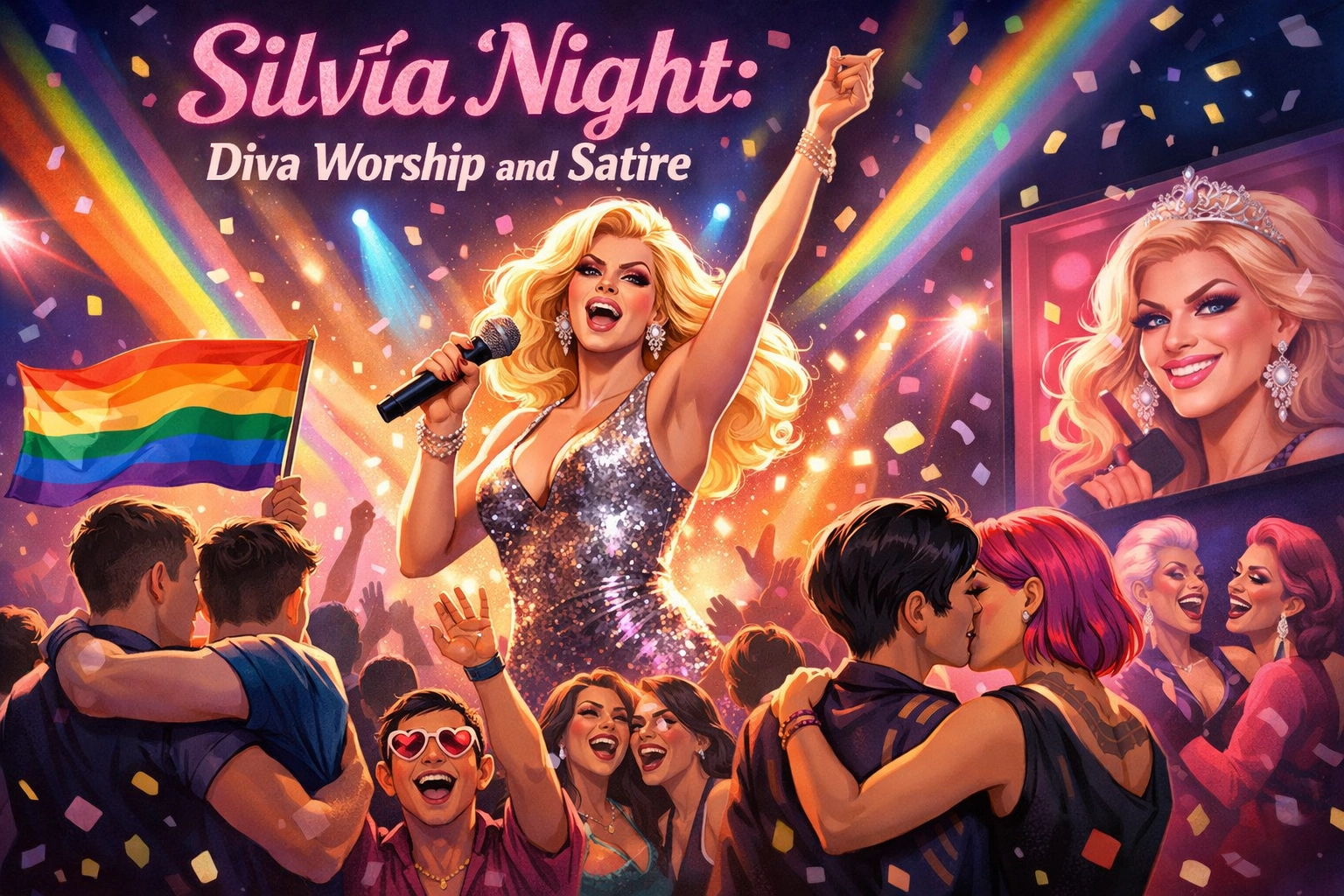
There's something deliciously complicated about gay culture's relationship with divas. We love them, worship them, quote them endlessly, and sometimes, we can't quite tell when someone's taking the piss. Enter Silvía Night, Iceland's gloriously messy 2006 Eurovision entry, who walked the razor-thin line between satirical critique and full-blown diva worship so expertly that even the queer community wasn't entirely sure which side she was on.
The Birth of a Monster (In the Best Way)
Silvía Night wasn't real, though you'd be forgiven for thinking otherwise. Created by Icelandic actress Ágústa Eva Erlendsdóttir and writer Gaukur Úlfarsson, Silvía was designed as a satirical character to skewer narcissism, greed, and the cult of celebrity in modern society. Think of her as Iceland's answer to Ali G or Borat, except dripping in sequins and convinced she was the most talented person to ever grace planet Earth.

The character's DNA was pure, uncut narcissism. Silvía saw herself as a megastar trapped in a world that somehow hadn't fully recognized her genius yet. Her television show featured her interviewing guests while systematically overshadowing them with self-obsessed antics, turning every conversation into an opportunity to discuss her own magnificence. She was meant to be absurd, a mirror held up to society's worst impulses.
But here's where it gets interesting: it took audiences a surprisingly long time to realize Silvía Night wasn't a real person. This wasn't just good acting, it was something deeper. She tapped into something so familiar, so recognizable in celebrity culture, that people genuinely couldn't tell the difference between satire and reality.
Diva Worship: A Gay Cultural Institution
Let's talk about why gay culture fell so hard for, and so hard against, Silvía Night. The worship of divas isn't just a stereotype; it's a genuine cultural phenomenon with deep roots in LGBTQ+ history. From Judy Garland to Diana Ross, from Madonna to Lady Gaga, queer communities have historically found strength, identity, and representation in larger-than-life female performers.
These weren't just entertainers; they were survivors, fighters, and icons who embodied resilience in the face of adversity. When you're part of a marginalized community, there's something powerful about celebrating women who refuse to be diminished, who demand the spotlight, who are unapologetically themselves.
But diva worship has always walked a fine line. There's genuine appreciation for talent and strength, and then there's the camp embrace of excess, drama, and over-the-top behavior. Gay culture has mastered the art of loving something both sincerely and ironically at the same time. We can stan a diva while simultaneously laughing at the absurdity of stan culture itself.
This is exactly the space Silvía Night occupied, and it's why she was so confusing.
"Congratulations" and the Eurovision Circus
When Silvía Night showed up to represent Iceland at Eurovision 2006 with her song "Congratulations," it was chaos in the best possible way. The song itself was a masterpiece of meta-commentary, essentially a victory anthem sung before the competition even began, with Silvía congratulating herself on winning.
The lyrics were wonderfully absurd: pure ego wrapped in a catchy pop melody. But was this a critique of Eurovision's often ridiculous self-importance, or was it just another entry in a competition known for not taking itself too seriously? The answer, frustratingly and brilliantly, was both.
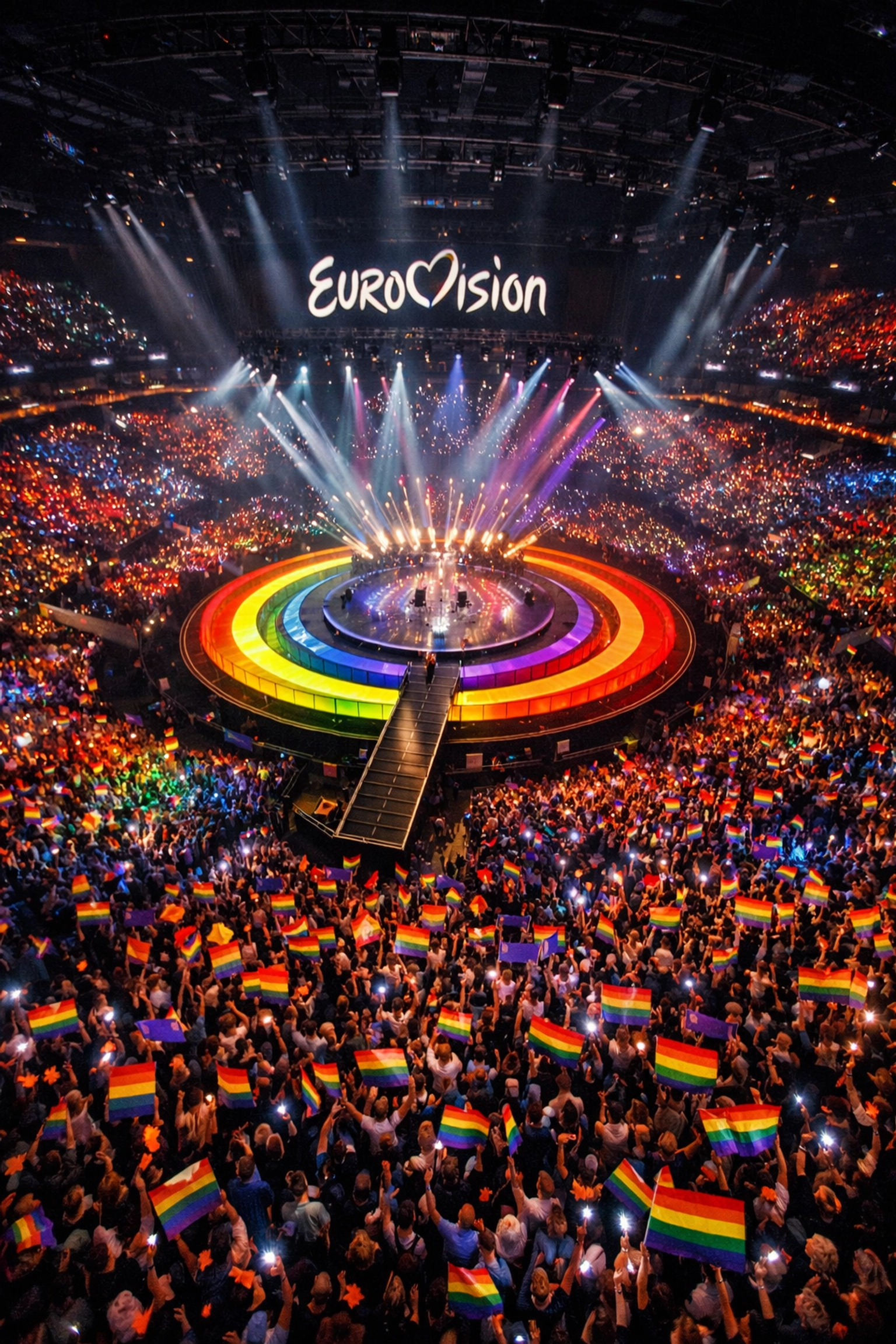
Silvía's behavior during Eurovision week became the stuff of legend. She insulted other contestants, threw diva tantrums, and generally behaved like the worst version of a celebrity ego trip. Her antics created international media attention and genuine controversy. Some viewers found her hilarious; others found her offensive and vulgar.
For the gay Eurovision fans watching, and let's be real, Eurovision is practically a gay holiday, the reaction was split. Some recognized the satire and appreciated the commentary on celebrity culture and Eurovision's own theatrical excess. Others were put off by behavior that felt too close to actual diva nastiness, crossing from camp into cruelty.
When Satire Becomes Reality
Here's what makes Silvía Night fascinating from a queer cultural perspective: she exposed the sometimes uncomfortable truth about diva worship. We love our divas when they're fierce, but where's the line between fierceness and toxicity? When does confidence become narcissism? When does demanding respect become demanding worship?
The character was supposed to be a cautionary tale, a satire of greed and materialism. But something unexpected happened: she became genuinely popular. Her debut album Goldmine topped the Icelandic charts in 2007. Young people imitated her distinctive style. She transcended her satirical origins to become an actual cultural phenomenon.
This is the ultimate postmodern twist: a fake diva created to mock celebrity culture became a real celebrity. The satire ate itself and became the thing it was satirizing. For gay culture, which has always had a complex relationship with irony and sincerity, Silvía Night became a perfect symbol of that confusion.
The Legacy of Confusion
What Silvía Night ultimately taught us, whether intentionally or not, is that gay culture's relationship with divas is more nuanced than simple worship. We're not naive fans blindly following anyone with good pipes and better attitude. We're sophisticated consumers of camp who understand the difference between celebrating strength and enabling ego.
But we're also human, and sometimes we get it wrong. Sometimes we defend behavior we shouldn't because it's coming from someone we've elevated to icon status. Sometimes we mock behavior that actually deserves respect. Silvía Night lived in that uncertain space, forcing us to examine our own complicity in celebrity culture.
The fact that she polarized audiences, that some saw brilliant satire while others saw offensive behavior, says more about us than it does about the character. We all have different lines for what's acceptable, what's camp, what's satire, and what's just mean-spirited.
Finding Pride in the Ambiguity
At Read with Pride, we celebrate the complexity of LGBTQ+ culture, including the messy, contradictory, wonderfully complicated parts. Silvía Night represents one of those beautiful contradictions: a fake diva who became real, a satire that became the thing it satirized, a character that forced us to examine our own cultural practices.
Eurovision has always been a space where gay culture could celebrate itself, the camp, the drama, the sequins, the sincerity hidden beneath layers of irony. Silvía Night crashed that party and asked uncomfortable questions: Are we celebrating or mocking? Are we sincere or ironic? Can we be both?
The answer, gloriously and frustratingly, is yes. We can appreciate the satire while also understanding that diva worship serves a genuine purpose in queer culture. We can laugh at the absurdity while recognizing the real strength these icons represent. We can hold both truths simultaneously because that's what queer culture has always done best: exist in the spaces between binaries.
Silvía Night didn't win Eurovision 2006 (she didn't even qualify for the final), but she won something perhaps more valuable: she became an enduring symbol of the complicated relationship between queer culture and the divas we love, mock, and can't quite live without.
Discover more stories celebrating LGBTQ+ culture and history at Read with Pride. Follow us on Facebook, Instagram, and Twitter for daily doses of queer joy.
#EurovisionHistory #LGBTQCulture #QueerHistory #SilviaNight #Eurovision2006 #DivaWorship #ReadWithPride #MMRomance #QueerFiction #LGBTQBooks #GayRomance #CampCulture #EurovisionSongContest #QueerIcon #GayBooks

Leave a Reply
You must be logged in to post a comment.