

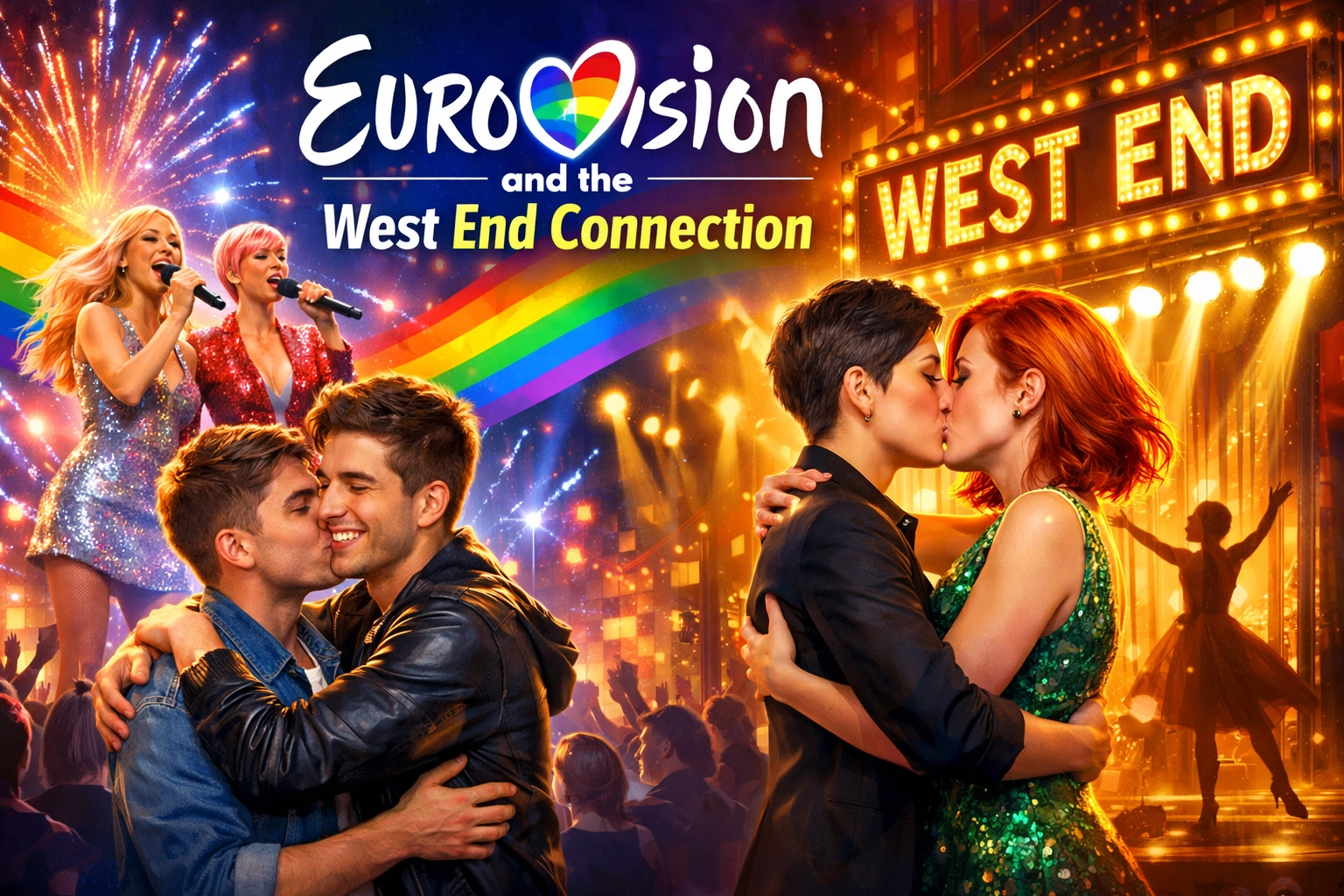
When Michael Ball took to the Eurovision stage in 1992 with "One Step Out of Time," he wasn't just representing the United Kingdom: he was embodying a cultural crossroads that the LGBTQ+ community had been celebrating for decades. The West End and Eurovision have always been two sides of the same fabulous, glittery coin, and their connection runs deeper than sequins and spotlight moments.
The Theatrical DNA We All Share
Let's be real: Eurovision is musical theatre with voting. The soaring ballads, the costume reveals, the key changes that hit you right in the feels: it's basically a three-minute Broadway show with better lighting. For queer audiences who've found sanctuary in both darkened theatres and living rooms full of friends watching Eurovision parties, this overlap isn't coincidental. It's cultural kismet.
Michael Ball's Eurovision journey perfectly illustrates this connection. Before he belted out that power ballad in Malmö, he'd already originated the role of Marius in Les Misérables in the West End. He understood the theatrical vocabulary that makes both Eurovision and musical theatre so compelling: the build-up, the emotional payoff, the moment when a performer connects with thousands of people simultaneously. His second-place finish (we were robbed, honestly) only strengthened his theatre career, leading to roles in The Phantom of the Opera, Hairspray, and Sweeney Todd.
Why Queer Culture Claims Both Stages
The overlap between Eurovision superfans and West End devotees in the LGBTQ+ community isn't random: it's about finding spaces where emotion, drama, and authenticity collide in spectacular fashion. Both worlds celebrate performers who commit fully, who aren't afraid of big emotions or bigger gestures. In societies that often told queer people to tone it down, to be less obvious, Eurovision and musical theatre said: "Actually, can you do more?"
Musical theatre has historically provided coded queer narratives long before mainstream media caught up. Eurovision, with its international flavour and celebration of difference, offered a similar safe harbour. The Venn diagram of people who ugly-cry during "Bring Him Home" and people who lose it during a Eurovision key change is basically a circle.
From Brighton to the West End and Back Again
The pipeline between Eurovision and West End stages runs both ways. ABBA's 1974 victory with "Waterloo" in Brighton didn't just launch a Swedish supergroup: it eventually gave us Mamma Mia!, which has been packing West End theatres for 26 years. Their Eurovision performance was pure theatre: the costumes, the staging, the unapologetic joy. It's no wonder it translated so perfectly to the stage.
But it's not just about the winners. Jade Ewen, who came fifth in 2009 with "It's My Time" (penned by Andrew Lloyd Webber, because of course), went on to star in In The Heights and led Disney's Aladdin as Princess Jasmine in the West End. Lucie Jones headlined Wicked after her 2017 Eurovision turn. Samantha Womack has played everyone from Morticia Addams to the White Witch after her 1991 Eurovision entry.
The Camp Aesthetic That Binds Us
Let's talk about camp, because you can't discuss Eurovision or West End culture without acknowledging the elephant in the rhinestone-studded room. Susan Sontag defined camp as "love of the exaggerated," and honey, both Eurovision and musical theatre have that in spades. The queer community has long embraced camp as a form of cultural expression: a way to reclaim theatricality and emotion that mainstream culture deemed "too much."
Michael Ball's Eurovision performance, with its earnest delivery and theatrical staging, embodied a specifically British approach to camp: sincere yet self-aware, emotional yet controlled. It's the same energy that makes West End performers so compelling. They commit to the bit, even when the bit involves singing about cats or roller-skating while dressed as a train.
The Community Connection
What really strengthened the queer bond around this Eurovision-West End overlap was the communal experience. Before social media, before streaming, Eurovision was one of the few genuinely pan-European cultural events that brought people together. For LGBTQ+ folks who felt isolated in their daily lives, watching Eurovision meant joining a continent-wide party where difference was celebrated, not tolerated.
Similarly, the West End has always been a gathering place for queer culture. From the performers to the creative teams to the audiences filling the stalls, musical theatre spaces became unofficial queer community centres. You could be yourself there. You could appreciate art that wasn't afraid of emotion. You could find your people.
When Michael Ball competed at Eurovision, he was bridging these two worlds for a community that had always understood they were connected. Musical theatre fans tuned in en masse, cheering on one of their own. Eurovision fans flocked to see him on stage after. The overlap wasn't new, but it became more visible, more celebrated.
The Legacy Continues
Today, the connection between Eurovision and West End stages remains strong. Artists continue to move between both worlds, and the audiences continue to overlap significantly. The LGBTQ+ community still claims both as cultural touchstones, spaces where we've always been welcome to be our full, dramatic, emotional selves.
At Read with Pride, we celebrate these cultural connections that have shaped queer identity and community. Whether you're into MM romance books that capture theatrical drama or gay fiction that explores the complexities of finding your people, these stories of connection and community resonate because they're fundamentally about being seen, being celebrated, and finding spaces where you belong.
The Eurovision-West End connection, strengthened by performers like Michael Ball who navigated both worlds with grace and genuine talent, reminds us that queer culture has always been about creating and claiming spaces where emotion, artistry, and authenticity aren't just accepted: they're celebrated with a standing ovation.
Discover more LGBTQ+ stories and celebrate queer culture at www.readwithpride.com
Follow us:
- Facebook: Read With Pride
- Instagram: @read.withpride
- X/Twitter: @Read_With_Pride
#Eurovision #WestEnd #MichaelBall #LGBTQCulture #QueerHistory #MusicalTheatre #ReadWithPride #MMRomance #GayFiction #LGBTQBooks #QueerCommunity #TheatreLovers #EurovisionHistory #CampCulture #GayRomanceBooks #LGBTQFiction #2026Pride

Leave a Reply
You must be logged in to post a comment.