

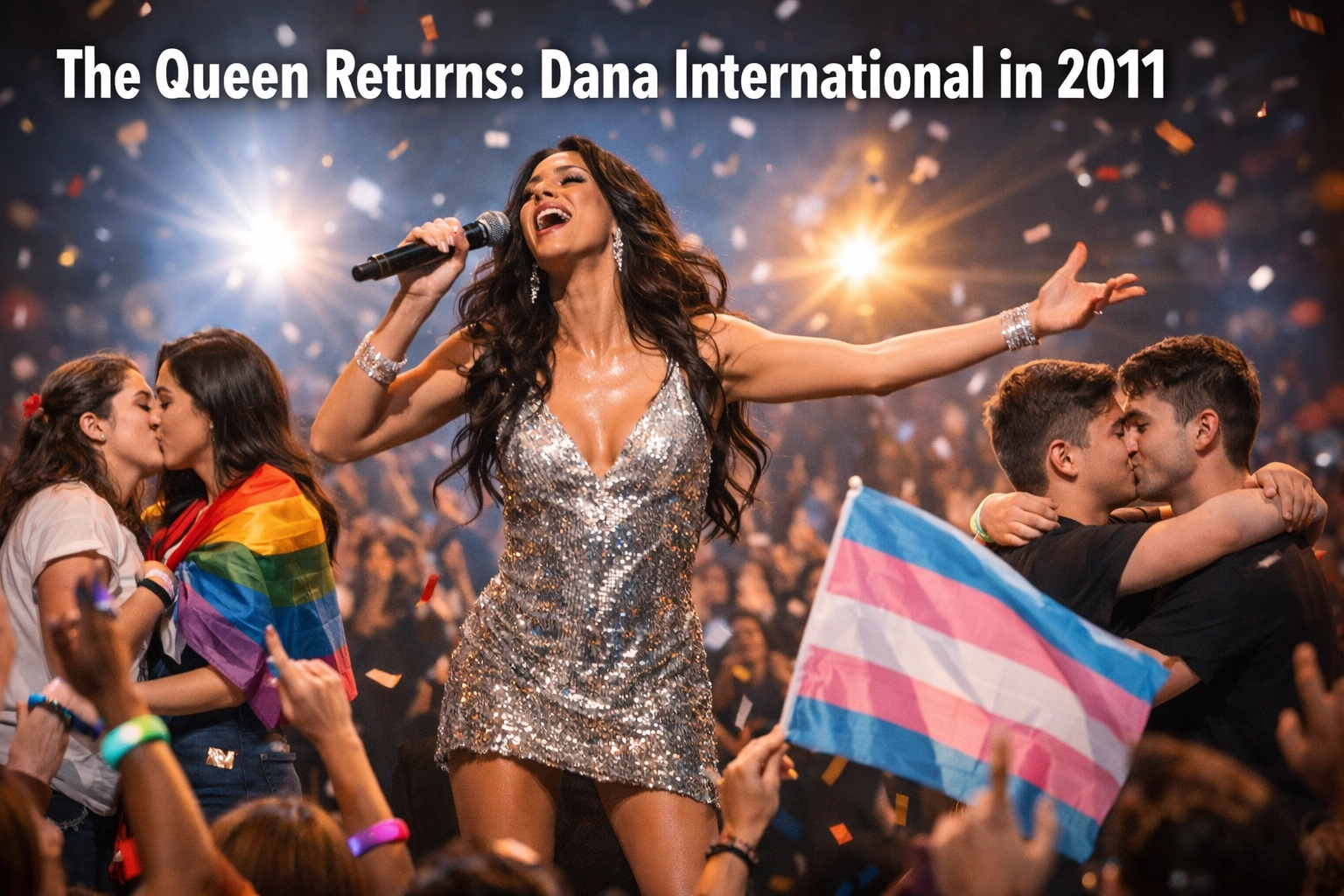
Thirteen years is a long time in pop culture. In 1998, when Dana International won Eurovision with "Diva," the world was a different place. Trans visibility was minimal, the internet was still finding its feet, and a trans woman winning Europe's biggest song contest was genuinely revolutionary. So when Dana decided to return to the Eurovision stage in 2011, it wasn't just a comeback: it was a statement about how far we'd come, and how far we still had to go.
The Queen Who Changed Everything
Before we dive into 2011, let's remember why Dana International's 1998 victory mattered so much. She didn't just win Eurovision; she smashed through barriers with stiletto heels and a voice that wouldn't be silenced. Her victory was controversial, celebrated, and groundbreaking all at once. Religious conservatives protested. The LGBTQ+ community celebrated in the streets. And Dana? She wore her crown with pride and never looked back.

By 2011, Dana had become an icon: not just in Israel or within the queer community, but across Europe. She'd released albums, performed worldwide, and become a symbol of resilience and authenticity. Her legacy wasn't just about one song or one night in Birmingham; it was about opening doors for trans artists and showing that Eurovision could be a platform for radical visibility.
"Ding Dong" and the Return
When Dana announced she was competing in Israel's national selection for Eurovision 2011, the news sent ripples through the fan community. Could lightning strike twice? On March 8, 2011, she won Kdam Eurovision with "Ding Dong," securing 270 points through a combination of jury votes and public support. The song was classic Dana: upbeat, danceable, with that unmistakable edge that made "Diva" such a hit.
But "Ding Dong" wasn't trying to be "Diva 2.0." It was its own beast: a celebration of self-confidence wrapped in an infectious pop package. The lyrics were playful, the production was modern, and Dana's performance showed she'd lost none of her star power in the intervening years.
The competition featured ten entries, and Dana's victory was decisive. The voting system combined three thematic jury groups (12%), an expert jury (40%), and the public vote (48%): and she dominated across the board. It was proof that Israel still loved their queen, and they were ready to send her back to Eurovision.
Jean Paul Gaultier and Fashion as Armor
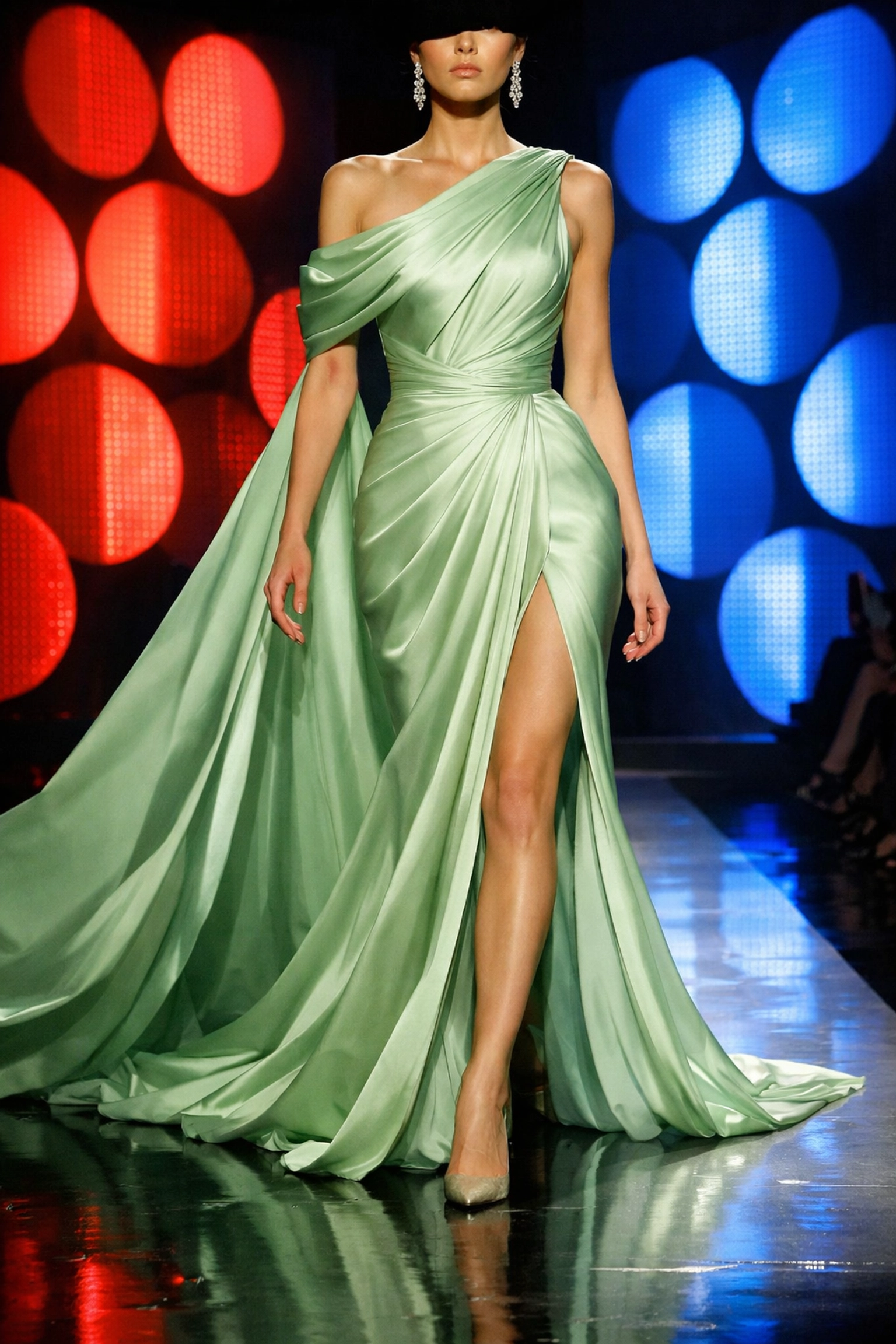
For her 2011 performance in Düsseldorf, Germany, Dana turned once again to French fashion legend Jean Paul Gaultier: the same designer who'd created one of her iconic looks for the 1998 contest. The choice was deliberate and meaningful. Gaultier has long been an ally to the LGBTQ+ community, and his designs have challenged gender norms throughout his career.
Dana took the stage in a stunning light green draped dress that caught the lights and commanded attention. Backed by five vocalists in white dresses, she owned that stage like she'd never left. The LED screens pulsed with red and blue circles, and Dana walked the catwalk with the confidence of someone who knew exactly who she was and what she represented.
Fashion has always been part of Dana's armor and her art. In a world that often tries to put trans women in boxes, Dana has consistently used fashion to say, "I'll define myself, thank you very much." The Gaultier dress wasn't just beautiful: it was a statement of continuity, showing that the same spirit that won in 1998 was still burning bright in 2011.
The Results That Shocked the World
Here's where the story takes an unexpected turn. Despite the national enthusiasm, the glamorous performance, and Dana's legendary status, "Ding Dong" didn't qualify for the Eurovision final. Israel finished 15th in the Second Semi-Final with just 38 points.
Let that sink in. Dana International became the first Eurovision winner in history to fail to qualify for the final when returning to compete. It was shocking, disappointing, and honestly a bit heartbreaking for her fans. But it also revealed something important about Eurovision: past glory doesn't guarantee future success. The contest is unpredictable, democratic (for better or worse), and sometimes just plain brutal.
What the Return Actually Meant
But here's the thing: Dana's 2011 journey was never really about winning. Whether she knew it or not, her return was about something bigger. In the thirteen years between 1998 and 2011, trans visibility had grown exponentially. More trans people were living openly, media representation was improving (slowly), and the conversation around gender identity was evolving.
Dana's presence on that stage in 2011 was a reminder of progress. In 1998, she was an anomaly, a pioneer, a lightning rod for controversy. In 2011, while still remarkable, her participation felt more… normal. That normalization is progress. It meant that a trans woman competing in Eurovision was no longer the scandal it once was: it was just Eurovision being Eurovision.
That doesn't mean transphobia had disappeared, or that the fight was over. Far from it. But the conversation had shifted. Dana's legacy had helped create space for other trans and gender-nonconforming artists to exist in mainstream pop culture. Her return showed that she wasn't just a moment in time: she was a lasting force.
The Legacy Lives On
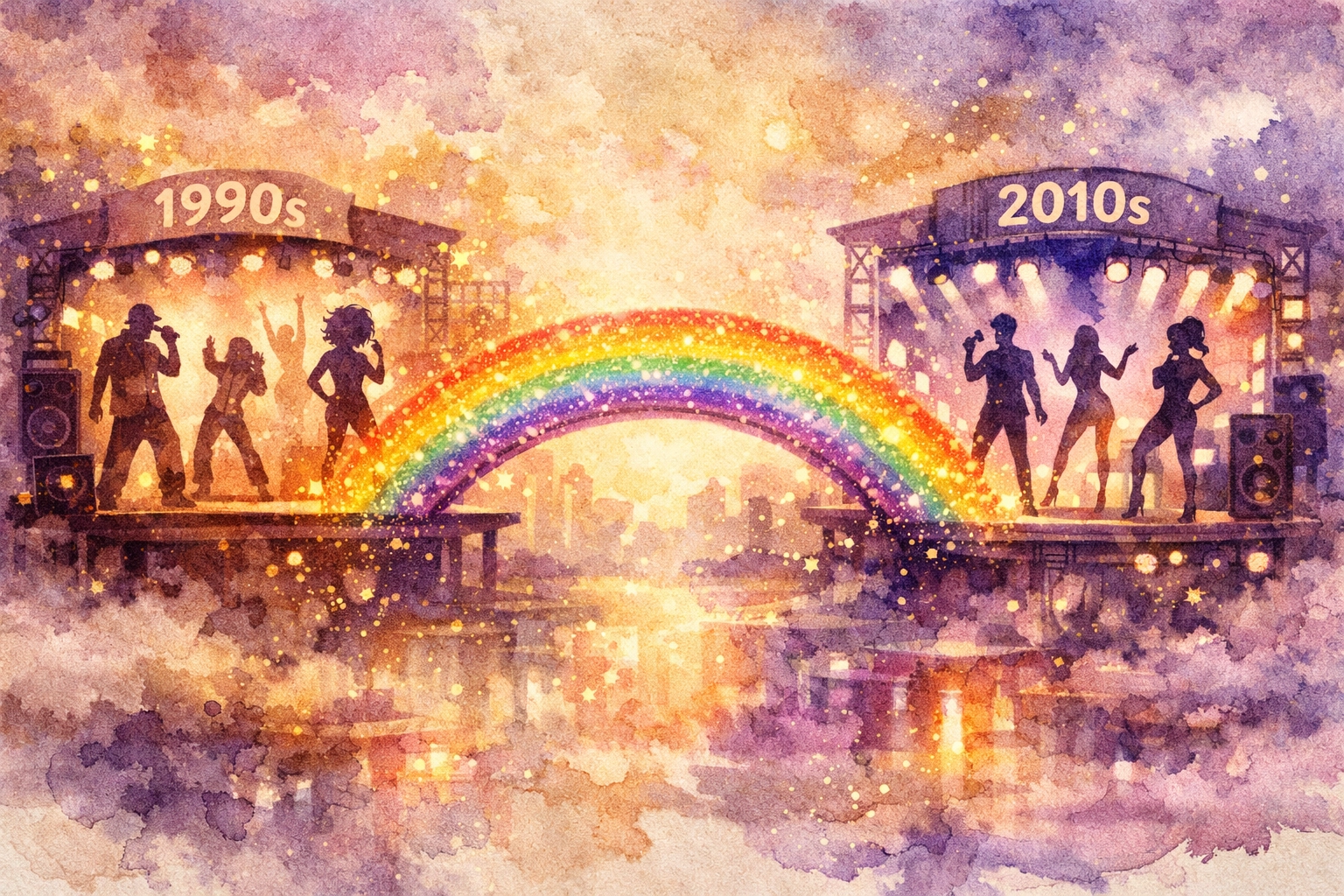
Looking back at Dana's 2011 return from our vantage point in 2026, we can see it as a bridge between eras. The late 1990s pioneer met the 2010s reality of increased visibility and ongoing struggle. Eurovision has continued to be a space where LGBTQ+ artists can shine, where gender-bending performances are celebrated, and where the queer community finds representation.
Dana paved the way for artists like Conchita Wurst, who won in 2014 with a full beard and a stunning voice, proving once again that Eurovision can be a platform for radical self-expression. Every trans artist who steps onto that stage carries a piece of Dana's legacy with them.
Why This Matters for Readers at Read With Pride
At Read With Pride, we celebrate stories of LGBTQ+ resilience, courage, and visibility. Dana International's return to Eurovision in 2011 is exactly the kind of story we love: it's messy, human, and ultimately triumphant even in "defeat." Because the real victory wasn't about qualifying for the final; it was about showing up, being authentic, and refusing to let the world forget you.
Whether you're into MM romance books, gay fiction, or just love stories about queer icons who refuse to be erased, Dana's journey resonates. She showed that coming back isn't about recreating past glories: it's about honoring who you've become and owning your space in the world.
The Eurovision stage has always been a little bit queer, a little bit camp, and a lot about finding yourself in the spotlight. Dana International understood that in 1998, and she understood it even better in 2011. She remains the queen, crown or no crown.
Follow Read With Pride:
- Facebook: Read With Pride
- Instagram: @read.withpride
- X/Twitter: @Read_With_Pride
- Website: www.readwithpride.com
#DanaInternational #Eurovision #TransVisibility #LGBTQ+ #QueerHistory #EurovisionHistory #TransRights #ReadWithPride #QueerIcons #GayCulture #LGBTQHistory #TransRepresentation #Eurovision2011 #Pride #Authenticity #QueerStories #MMRomance #LGBTQReading #TransPride #VisibilityMatters

Leave a Reply
You must be logged in to post a comment.