

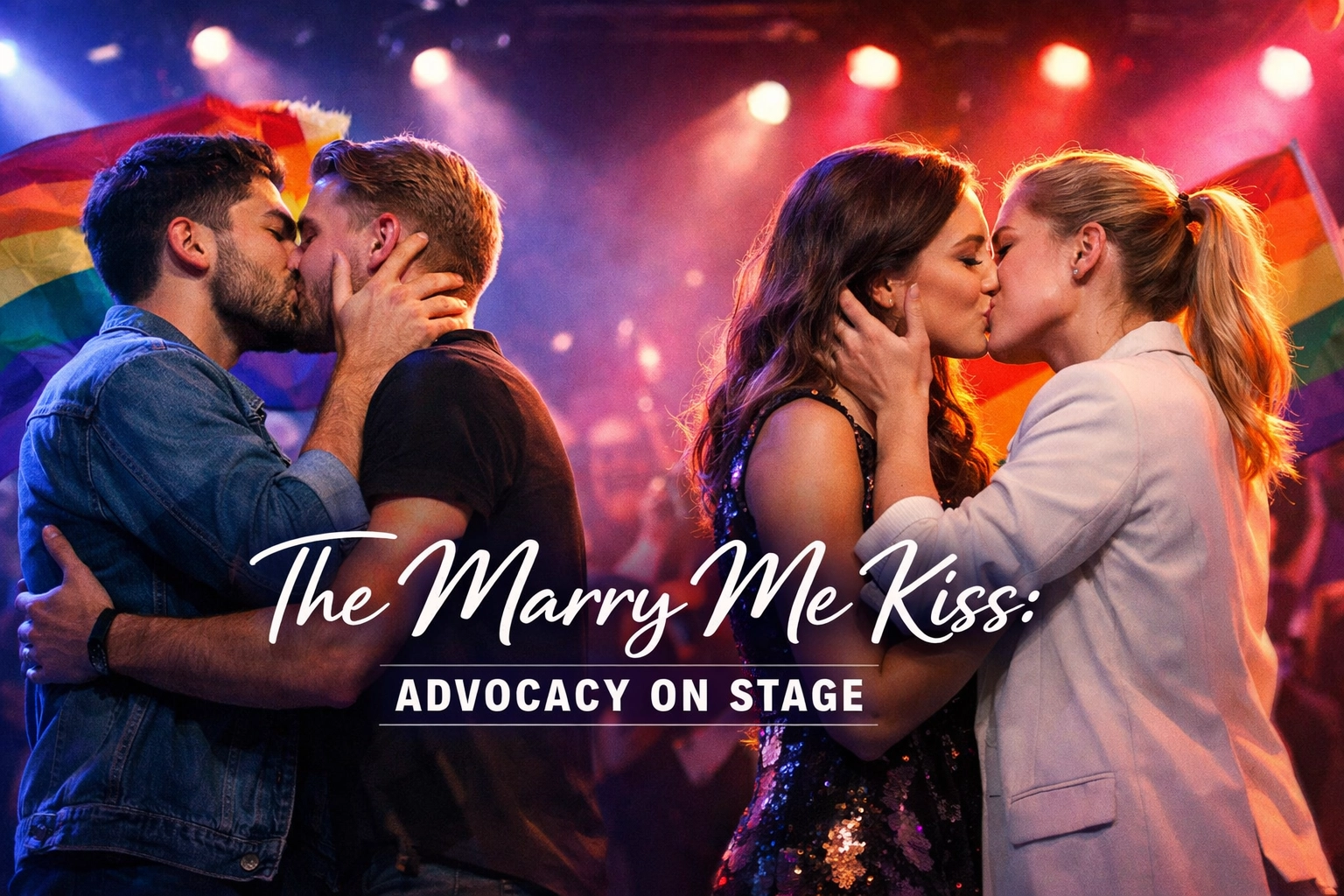
When Krista Siegfrids took the stage at the 2013 Eurovision Song Contest in Malmö, Sweden, she wasn't just representing Finland: she was about to make history. In a moment that would ripple through Eurovision culture and LGBTQ+ advocacy worldwide, she delivered the contest's first-ever same-sex kiss on stage. It was bold, it was intentional, and it was absolutely necessary.
The Song That Started a Conversation
"Marry Me" was more than just a catchy pop tune with an infectious chorus. The song's lyrics celebrated love in its purest form, asking that age-old question: will you marry me? But for Siegfrids, the performance was an opportunity to make a statement that transcended the glittery Eurovision bubble. At a time when marriage equality was still a contentious issue across Europe: and outright illegal in many countries: she used the world's largest music competition as her platform.
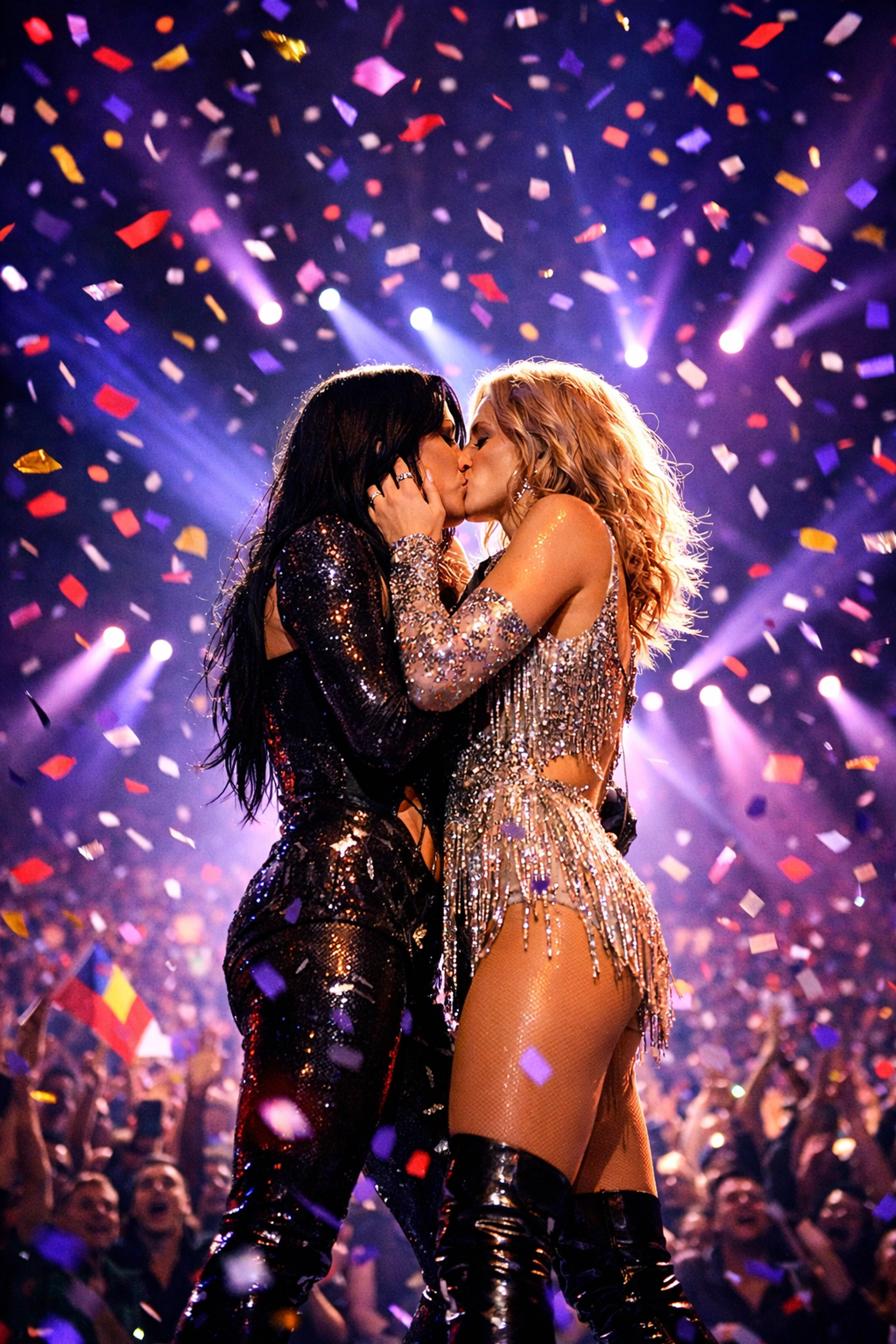
The staging was deceptively simple: bright, upbeat, and packed with the kind of energy that makes Eurovision performances so memorable. But it was the final seconds that changed everything. As the song reached its climax, Siegfrids leaned in and kissed one of her female backing dancers, a gesture that was equal parts celebration and protest.
Why It Mattered Then (And Still Does)
To understand the magnitude of this moment, you need to remember the landscape of 2013. While some European nations had legalized same-sex marriage, many others were actively resisting it. Finland itself wouldn't legalize marriage equality until 2017: four years after Siegfrids' performance. Russia, one of Eurovision's major participating countries, had just passed its infamous "gay propaganda" law, criminalizing the promotion of "non-traditional sexual relationships" to minors.
Eurovision had always been a safe haven for LGBTQ+ fans and performers, but it had rarely been overtly political. Siegfrids' kiss wasn't subtle: it was a declaration. She later confirmed that the kiss was intentional, designed to advocate for marriage equality and spark conversation. And spark it did.
The response was immediate and polarized. Some viewers celebrated the moment as a triumph of visibility and advocacy. Others criticized it as inappropriate or unnecessarily provocative. But that's exactly the point of advocacy: to make people uncomfortable enough to question why they're uncomfortable in the first place.
The Art of Performance Activism
What made Siegfrids' approach so effective was that she wrapped her activism in pure entertainment. "Marry Me" wasn't a protest song: it was a pop banger. The kiss didn't feel forced or awkward; it felt like a natural extension of the song's message. This is the beauty of performance activism: when done right, it meets people where they are and challenges them to think differently without feeling like they're being lectured.
In the world of LGBTQ+ storytelling: whether it's through music, literature, or visual art: authenticity matters. Just like the compelling narratives found in MM romance books and gay fiction, Siegfrids' performance worked because it was genuine. She wasn't using LGBTQ+ themes as a gimmick; she was using her platform to amplify voices that needed to be heard.
The Eurovision Effect
Eurovision has long held a special place in LGBTQ+ culture. From Dana International's historic 1998 win as a transgender artist to Conchita Wurst's triumph in 2014, the contest has given queer performers and fans a space to celebrate openly. But visible advocacy: the kind that explicitly challenges social and political norms: was less common.
Siegfrids' kiss opened doors. It showed other performers that Eurovision could be more than escapism; it could be a tool for change. In the years that followed, we've seen increasingly bold statements of LGBTQ+ pride on the Eurovision stage, from rainbow flags to explicit lyrics about same-sex relationships.
The contest itself has become more than just a music competition: it's a cultural barometer for LGBTQ+ rights across Europe. When Russia threatened to censor LGBTQ+ content in Eurovision broadcasts, the European Broadcasting Union stood firm. When countries with poor LGBTQ+ rights records participate, their presence becomes a conversation starter about human rights and equality.
Love Stories Deserve Every Stage
The kiss lasted maybe two seconds, but its impact has lasted over a decade. It reminded us that love stories: all love stories: deserve to be celebrated publicly and proudly. This is the same principle that drives the creation of gay romance novels, LGBTQ+ fiction, and queer storytelling across every medium. Visibility matters. Representation saves lives.
For those of us who devour MM contemporary romance or lose ourselves in gay love stories, Siegfrids' moment feels familiar. It's about claiming space, refusing to be hidden, and insisting that our relationships are worthy of the same celebration, recognition, and joy as anyone else's. Whether it's on a Eurovision stage, in the pages of a novel, or at a real-life wedding, every public declaration of queer love is an act of resistance and hope.
The Ripple Effect
Since 2013, Finland has legalized marriage equality. Sweden, the host country that year, had already done so. Across Europe, the conversation has shifted: slowly, unevenly, but undeniably. Cultural moments like Siegfrids' kiss contribute to that shift. They plant seeds in people's minds, normalize what was once considered radical, and give courage to those who need to see themselves reflected in mainstream culture.
This is why platforms like Read with Pride matter so much. We need spaces dedicated to LGBTQ+ stories, whether they're historical accounts of advocacy moments like this one or contemporary gay fiction that imagines the world we're still building. Every story adds to the chorus, every representation matters, every kiss: on stage or on the page: pushes us forward.
Looking Back, Moving Forward
Would Krista Siegfrids' kiss be as shocking today? Probably not, and that's actually a good thing. It means we've made progress. But the work isn't done. Marriage equality still isn't universal, even in Europe. LGBTQ+ rights are under threat in many places. And representation in mainstream media, while improving, still has miles to go.
That's why we keep telling stories. Why we keep celebrating moments like this one. Why we keep reading, writing, and sharing gay romance books, queer literature, and LGBTQ+ narratives that center our experiences. Every story is a small act of advocacy, a reminder that we exist, that we love, and that we deserve to have our happily ever afters just like everyone else.
Krista Siegfrids' "Marry Me" kiss wasn't just a Eurovision moment: it was a promise. A promise that we would keep fighting, keep loving, and keep demanding the right to do both openly and proudly. And more than a decade later, we're still keeping that promise.
Want more LGBTQ+ stories and celebrations? Check out our collection of gay romance novels and MM fiction that honor every kind of love story. Follow us on Facebook, Instagram, and X/Twitter for daily doses of queer joy and literary recommendations.
#ReadWithPride #EurovisionHistory #LGBTQAdvocacy #KristaSiegfrids #MarriageEquality #MMRomance #GayRomanceBooks #QueerCulture #LGBTQFiction #GayLoveStories #Eurovision2013 #RepresentationMatters #LoveIsLove #GayFiction #LGBTQReading #MMRomanceBooks #GayLiterature #QueerVisibility #Pride2026 #GayRomanceNovels

Leave a Reply
You must be logged in to post a comment.