

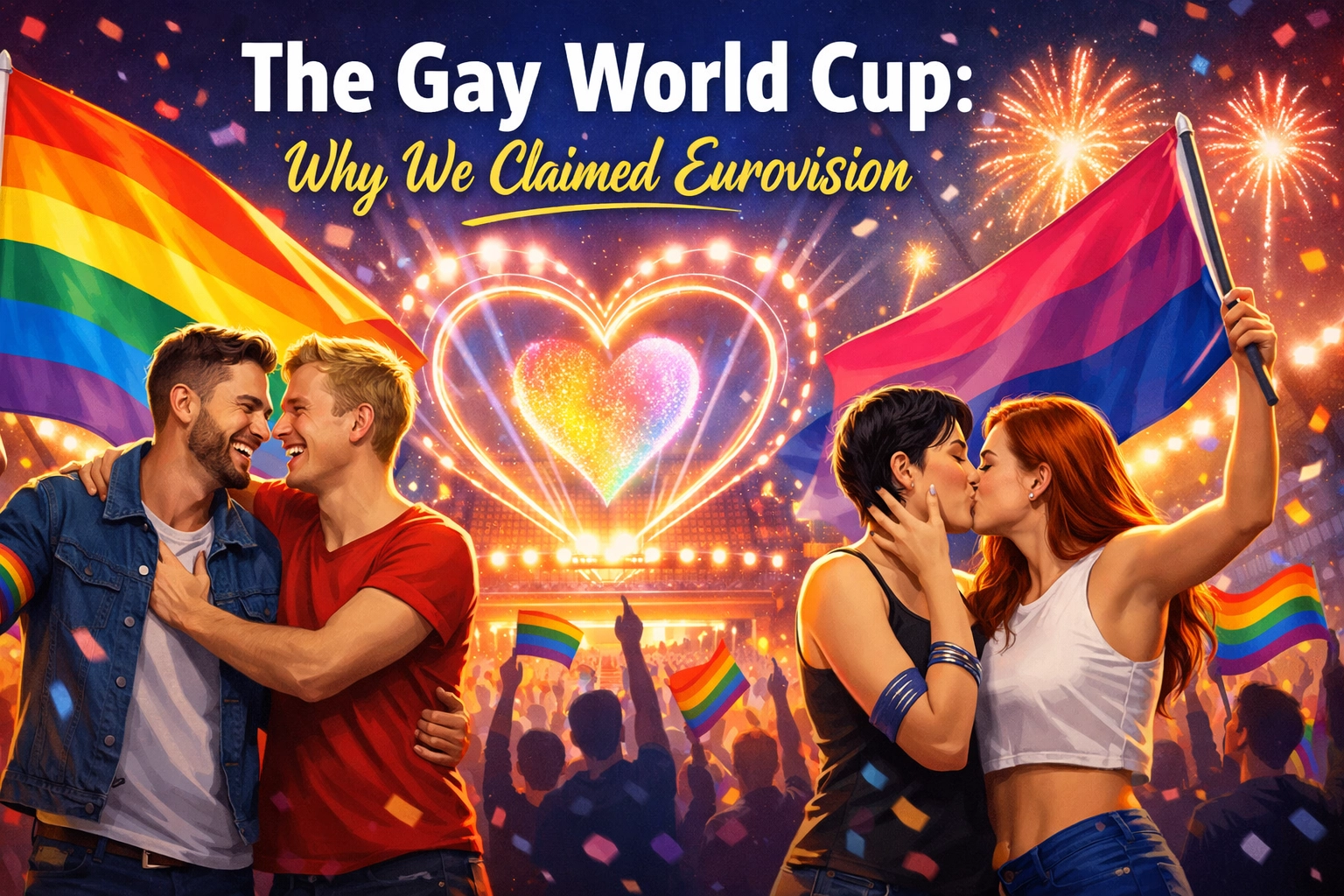
Every May, something magical happens. Gay bars across the globe pack to capacity. Sequins fly. Flags wave. Grown adults scream at television screens as someone from Moldova performs a dubiously choreographed number about trains. Welcome to Eurovision, or as we affectionately call it: the Gay World Cup.
But how did a song contest that started in 1956 become the undisputed Super Bowl of queer culture? Buckle up, because this journey involves camp, courage, and a whole lot of glitter.
The Birth of a Beautiful Obsession
Let's rewind to the 1980s. While the rest of the world saw Eurovision as a quirky European tradition with questionable fashion choices, the LGBTQ+ community: particularly gay men: saw something entirely different. They saw home.
By the mid-80s, Eurovision had quietly become the foundation of a transnational fandom created largely by queer audiences who gathered in living rooms, bars, and community centers to watch countries battle it out with songs about love, peace, and occasionally, Ukrainian grandmothers baking bread.
This wasn't an accident. Eurovision offered something precious: a space where being over-the-top wasn't just accepted: it was celebrated. Where else could you watch a bearded drag queen representing Austria, a Finnish heavy metal band dressed as monsters, or literally anyone from Iceland doing absolutely anything?
Camp: The Secret Ingredient
Here's the thing about Eurovision that straight people often miss: it's camp. Not "camping in the woods" camp, but capital-C Camp. The Susan Sontag kind. The celebration of artifice, exaggeration, and the gloriously unnatural.
For the LGBTQ+ community, camp has always been a survival mechanism and a cultural language. It's how we communicated before we could be open. It's opera, musical theatre, Cher, and yes: Eurovision. The contest's aesthetic of dramatic performances, elaborate costumes, and emotional crescendos felt like coming home to a place we'd always belonged.
Eurovision didn't need to feature explicit queer content to be queer. We made it queer by seeing ourselves in its excess, its drama, its refusal to be subtle. Every wind machine, every key change, every unnecessarily complicated costume reveal: it spoke to us.
From Whispers to Roars: The Evolution
For decades, Eurovision was our not-so-secret secret. But 1997 changed everything when Iceland's Paul Oscar became the first openly gay man to compete in the contest. He didn't win, but he opened a door that would never close again.
The following years saw Eurovision transform from subtext to text. Dana International, a trans woman from Israel, won in 1998 with "Diva": a moment that felt revolutionary. Suddenly, Eurovision wasn't just tolerating queer participation; it was celebrating it.
Scandinavian countries led the charge, with broadcasters actively promoting human rights and LGBTQ+ equality through the contest. Eurovision became more than entertainment: it became a platform. When Finland's Krista Siegfrids kissed a female dancer during her 2013 performance, it wasn't just a moment; it was a statement to countries where such an act could land you in prison.
The Phenomenon of Fan Screenings
Now, let's talk about why we call it the Gay World Cup. It's not just because we love it (though we do, passionately). It's because of what we've built around it.
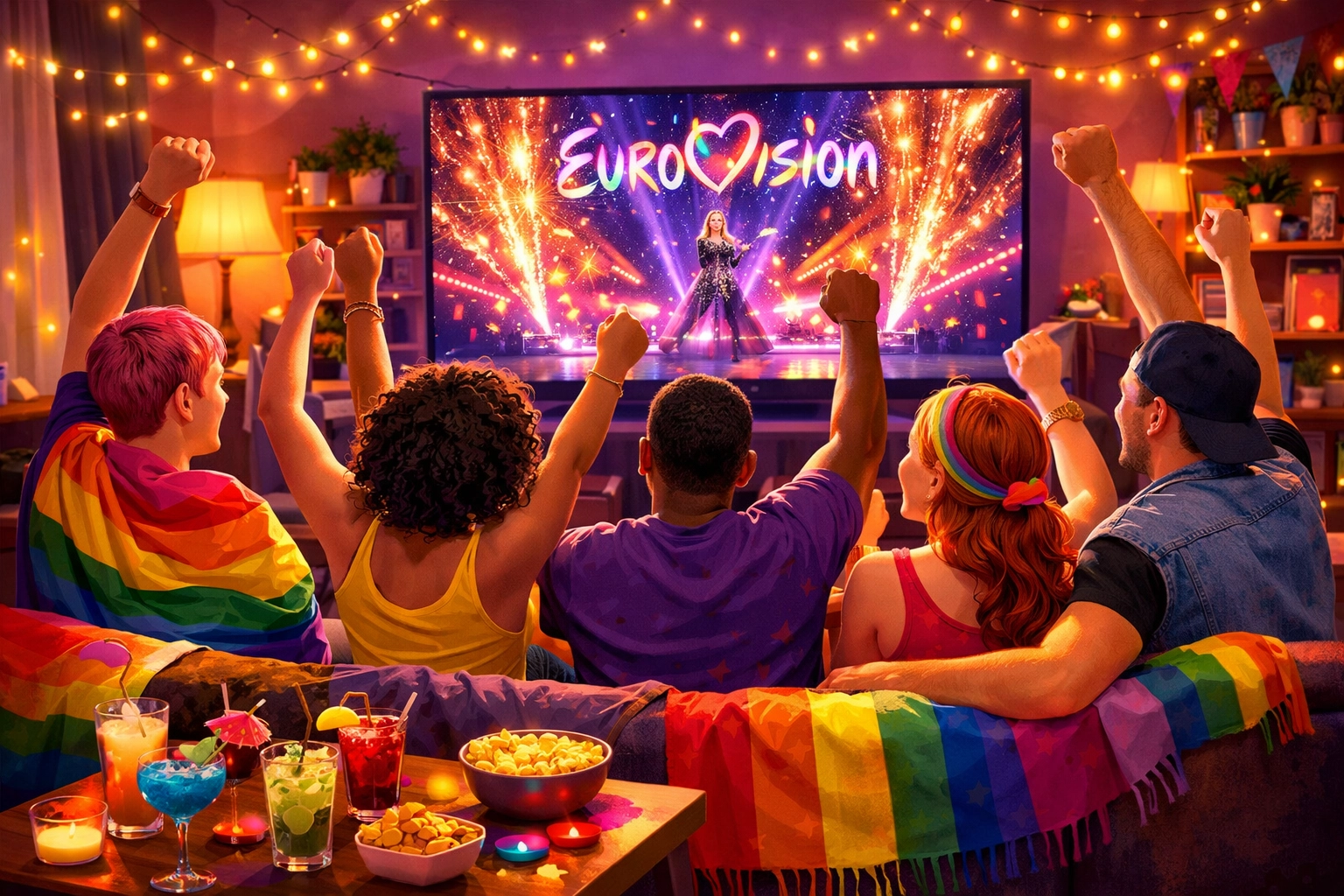
Somewhere along the way, watching Eurovision at home stopped being enough. The community needed to experience it together. Thus, the massive fan screening was born.
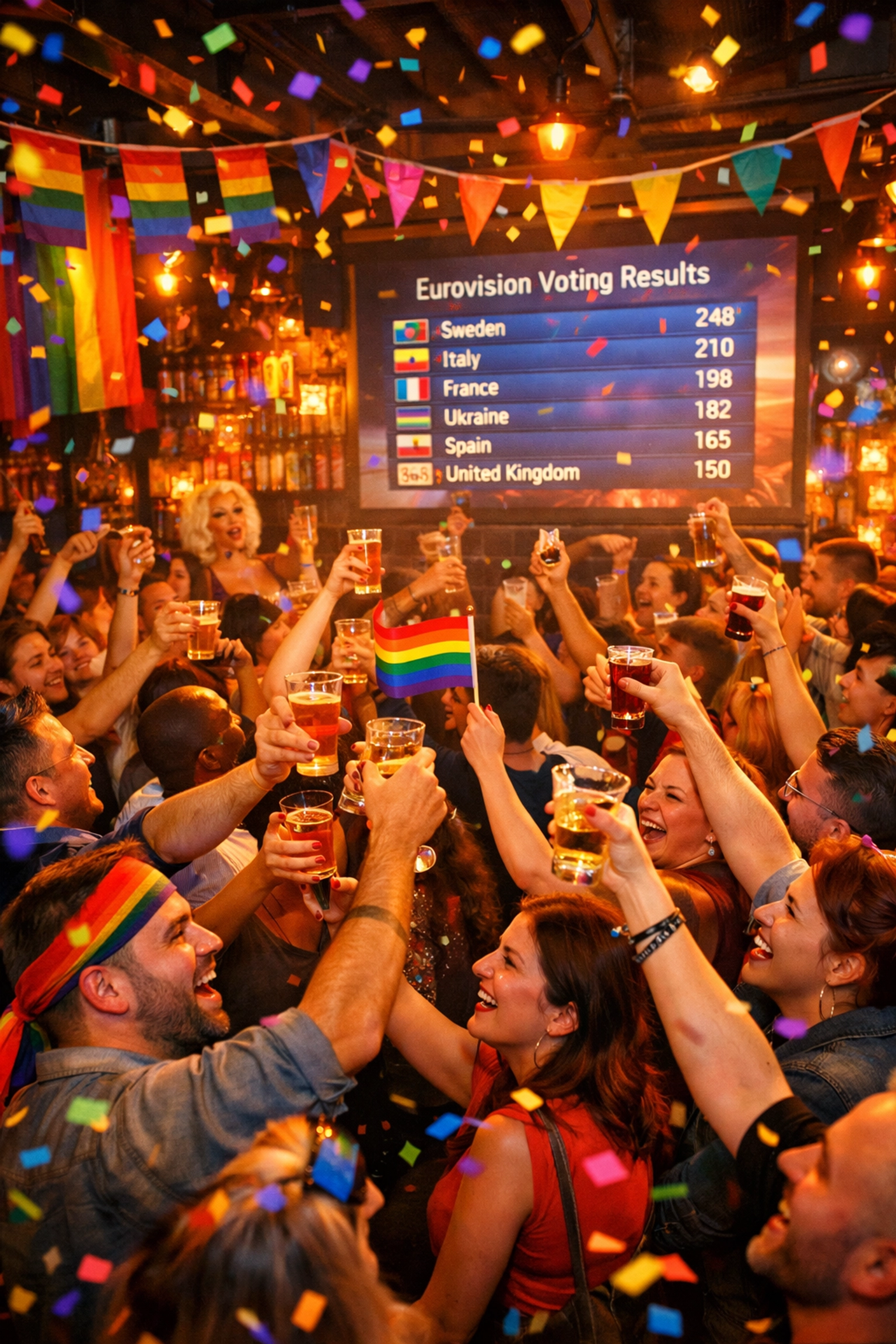
Today, LGBTQ+ venues and community centers across Europe and beyond host Eurovision parties that rival any sports bar during the World Cup. We're talking hundreds of people crammed into spaces, drinking themed cocktails named after contestants, placing bets on who'll give us the most dramatic performance, and collectively losing our minds when the voting begins.
These screenings became cultural institutions. They're where baby gays experience their first big queer gathering. Where found families come together annually. Where the Douze Points chant becomes a prayer. If you've never experienced a room full of queer people collectively gasping at an unexpected vote swing, you haven't lived.
More Than Sequins: Eurovision as Activism
But here's where Eurovision gets real. Beyond the fun, the camp, and the community, Eurovision became a tool for queer counter-cultural diplomacy.
When Austria sent Conchita Wurst: a bearded drag queen: to the contest in 2014, it was during a time of rising homophobia in Eastern Europe. Russia had just passed its "gay propaganda" laws. The political stakes were high. Conchita didn't just perform; she won. And in winning, she sent a message that reverberated globally: we're here, we're queer, and we're not going anywhere.
Eurovision performances became acts of protest. Every rainbow flag in the audience, every same-sex kiss on stage, every openly LGBTQ+ artist competing challenged nations with poor human rights records. The European Broadcasting Union, which runs Eurovision, increasingly took stances on equality, making LGBTQ+ inclusion not just welcomed but expected.
For queer people living in countries where being yourself could cost you everything, seeing that acceptance on such a massive international stage mattered. It gave hope. It showed possibilities.
Why It's OUR Super Bowl
So why did we claim Eurovision? Because it claimed us first.
Eurovision offered visibility when mainstream culture still treated us as punchlines. It gave us space to celebrate excess in a world that demanded we minimize ourselves. It became a platform for political resistance wrapped in sequins and pyrotechnics. And most importantly, it gave us an annual reason to gather, celebrate, and remind ourselves that our community is global, powerful, and absolutely fabulous.
While straight people have their football matches and basketball championships, we have our Gay World Cup: and honestly, ours has better costumes, more dramatic plot twists, and significantly more wind machines.
Every May, when that Eurovision logo appears and the host city's interval acts begin, millions of LGBTQ+ people around the world feel the same thing: belonging. We see ourselves reflected not just in the queer performers on stage, but in the very DNA of the contest itself.
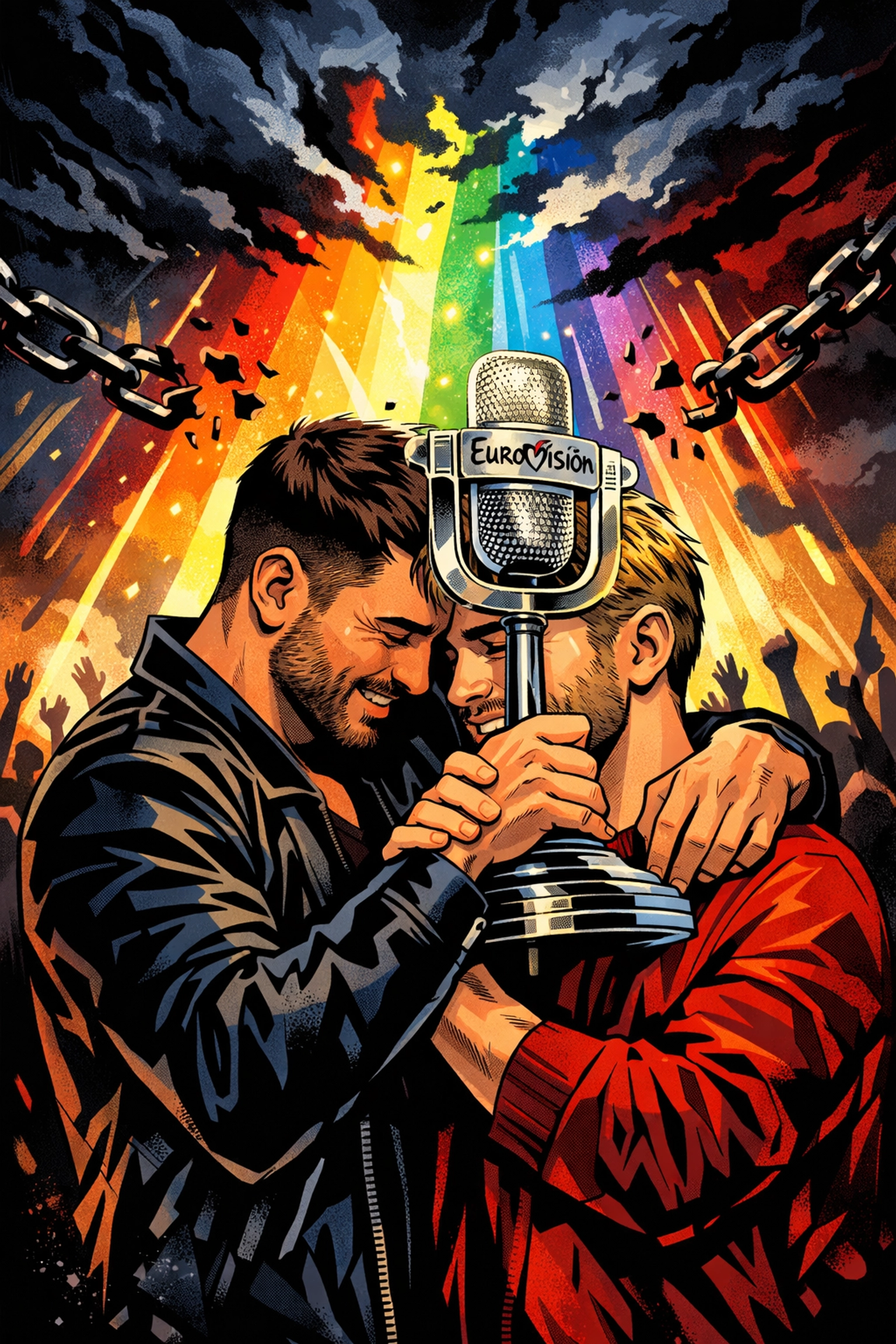
That's why we claimed Eurovision. Because in a world that often tells us we're too much, Eurovision says we're not nearly enough. Bring more. Be bigger. Shine brighter.
And trust me, we will.
Want to explore more stories celebrating LGBTQ+ culture and community? Dive into our collection of MM romance books and gay fiction that honors our history, our present, and our gloriously dramatic future.
Follow us for more LGBTQ+ content and celebrate pride every day:
- Facebook: facebook.com/profile.php?id=61586883027069
- Instagram: @read.withpride
- X: @Read_With_Pride
- Website: readwithpride.com
#Eurovision #GayWorldCup #LGBTQPride #QueerCulture #ReadWithPride #MMRomance #GayFiction #QueerStories #EurovisionSongContest #LGBTQCommunity #CampCulture #GayBooks #LGBTQBooks #PrideMonth #QueerHistory #GayRomance #MMRomanceBooks #LGBTQFiction #QueerVisibility #GayLiterature

Leave a Reply
You must be logged in to post a comment.