

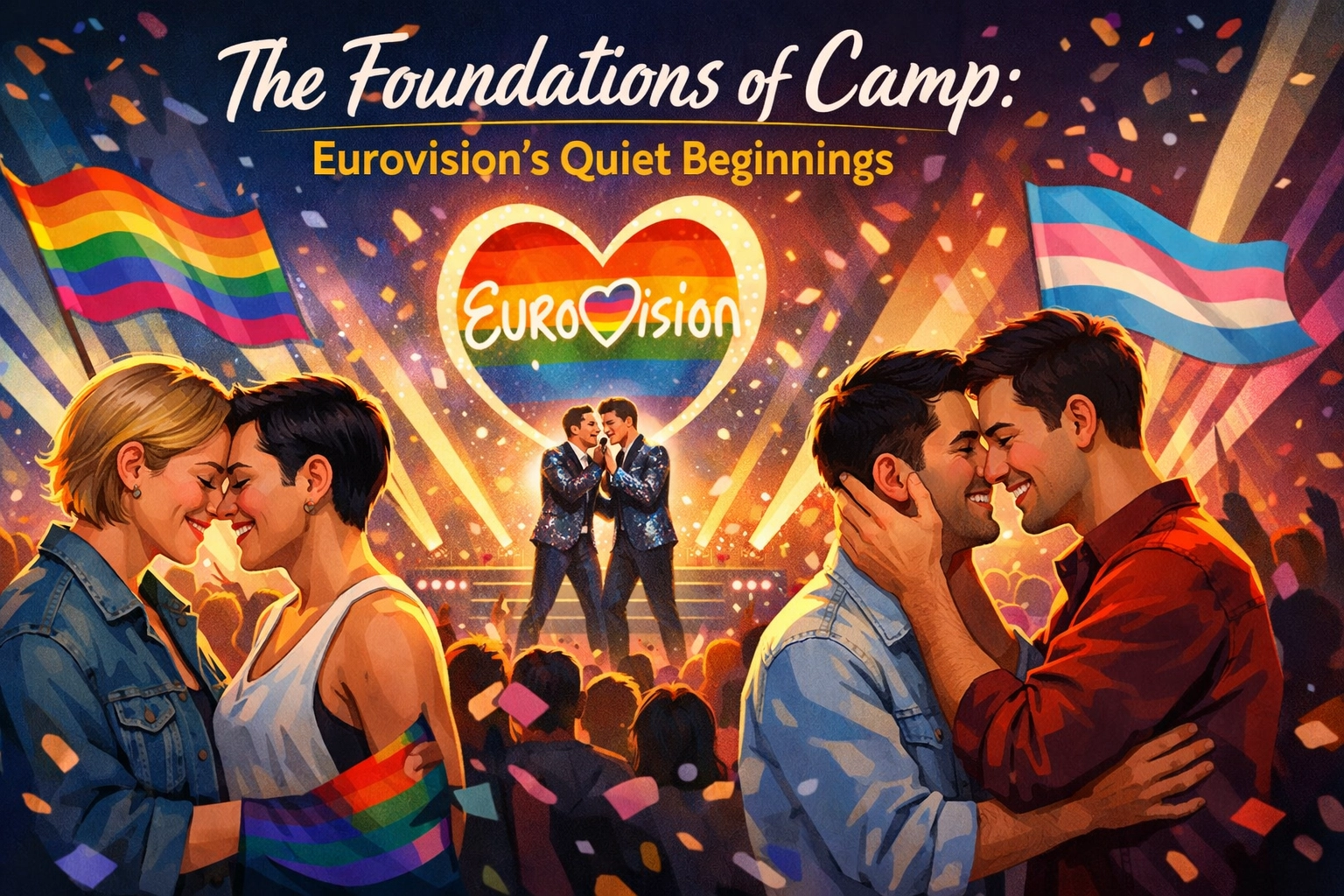
Long before drag queens and rainbow flags became Eurovision staples, before Conchita Wurst's bearded triumph, and decades before Dana International's legendary win, something subtly queer was already brewing in the contest's DNA. It just wasn't saying the quiet part out loud yet.
May 24, 1956, in Lugano, Switzerland. Seven countries. Fourteen songs. One Swiss winner named Lys Assia crooning "Refrain." The whole thing broadcast live across Europe in what was basically a technological miracle for the time. On paper? A modest music competition. In practice? The seeds of something far more fabulous were being planted.
When Spectacle Met Television
The European Broadcasting Union didn't set out to create a cultural phenomenon that would one day become synonymous with LGBTQ+ celebration. They wanted to test the limits of live international television and maybe bring war-torn Europe together through song. Sweet, right? But here's where it gets interesting.
From day one, Eurovision was extra. And we mean that in the best possible way.
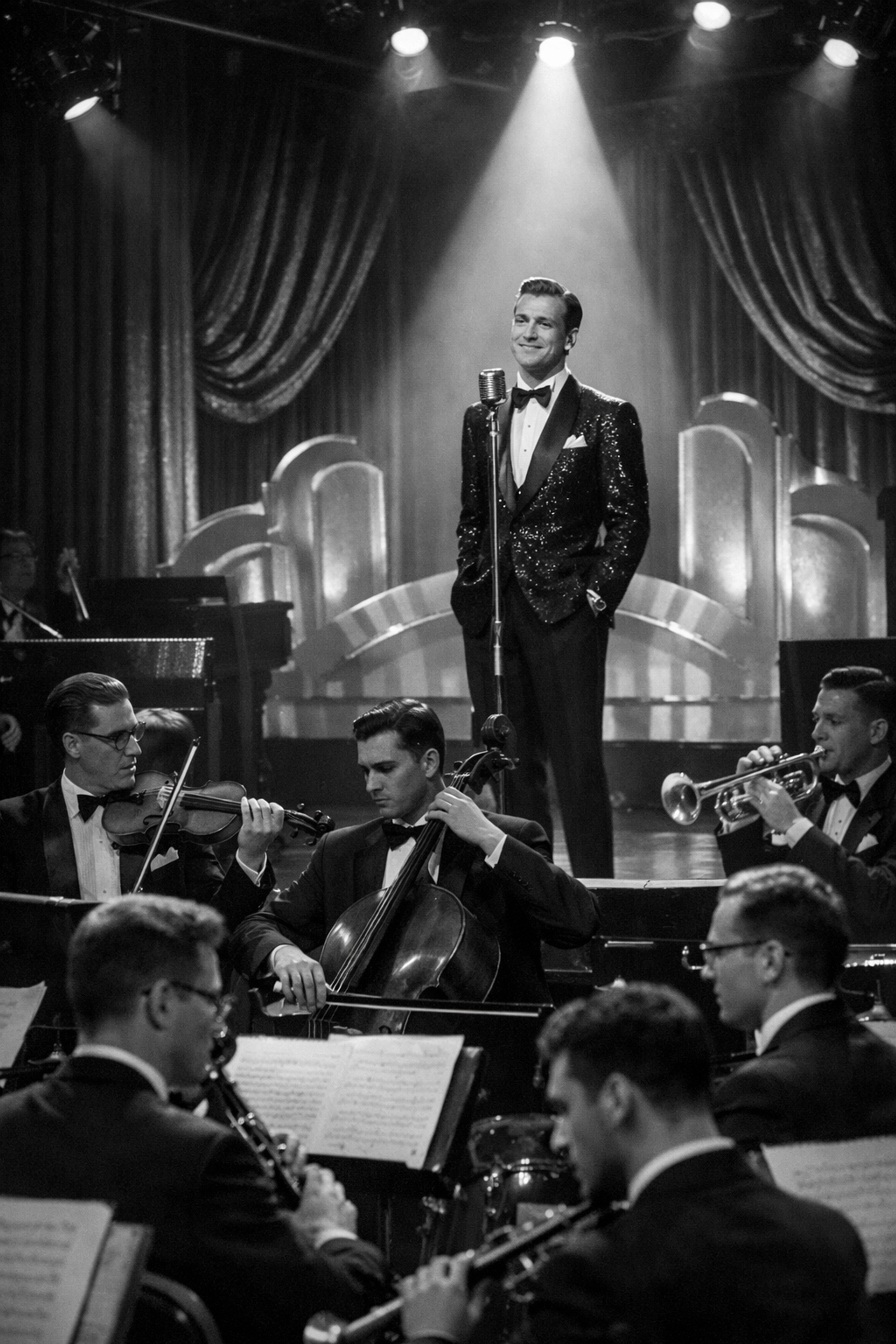
The format demanded spectacle. Full orchestras. Evening gowns. Spotlight moments. Performers giving their absolute everything for three minutes on a stage beamed across multiple countries simultaneously. Even in those buttoned-up 1950s, there was an inherent theatricality to Eurovision that felt deliciously indulgent. Was it camp? Not by name. Not yet. But the DNA was there, excess, performance, glamour, and an almost religious devotion to the moment.
The Unspoken Language of Glitz
Let's talk about what Eurovision looked like in those early years. We're talking about an era when television itself was still finding its aesthetic language, when everything was in black and white, when proper ladies wore gloves and gentlemen kept their hair slicked back with enough pomade to sink a battleship.
But put someone on a Eurovision stage? Different rules applied.
Suddenly, sequins were acceptable. Dramatic gestures were encouraged. Vulnerability through song wasn't weakness, it was artistry. The contest created a space where emotional expression and theatrical presentation weren't just tolerated but celebrated. Where being "too much" was actually the point.
For anyone who felt like they had to dim their light in everyday life, and let's be real, that was basically every queer person in 1950s Europe, Eurovision offered something radical disguised as entertainment. It was permission to witness (and eventually participate in) unbridled self-expression.
Orchestra Pits and Hidden Codes
Those full orchestras deserve their own moment. Every entry in the early years came with a live orchestra, often featuring 30 or more musicians. The arrangements were lush, dramatic, sometimes bordering on operatic. This wasn't radio-friendly pop, this was production.
The musical directors and arrangers put their whole souls into these three-minute performances. They created sonic landscapes that were sophisticated, emotionally complex, and yes, often quite theatrical. Musical theater has always had a special relationship with LGBTQ+ culture, and Eurovision's orchestral foundations tapped into that same artistic sensibility.
There's something inherently queer about devotion to beauty for beauty's sake. About caring deeply how a string section swells at exactly the right moment. About understanding that the perfect key change can make you feel everything. Eurovision got that from the beginning, even if nobody was using those words yet.
The Contest That Dared to Connect
Remember, this was 1956. Europe was still rebuilding from World War II. The Iron Curtain was firmly in place. Most countries still had laws criminalizing homosexuality. This wasn't exactly a progressive moment in history.
Yet here was Eurovision, creating literal connections between countries through live television broadcast. It was bringing different cultures together. It was saying, implicitly, that despite our differences, we could share this moment of joy, competition, and mutual appreciation for performance art.
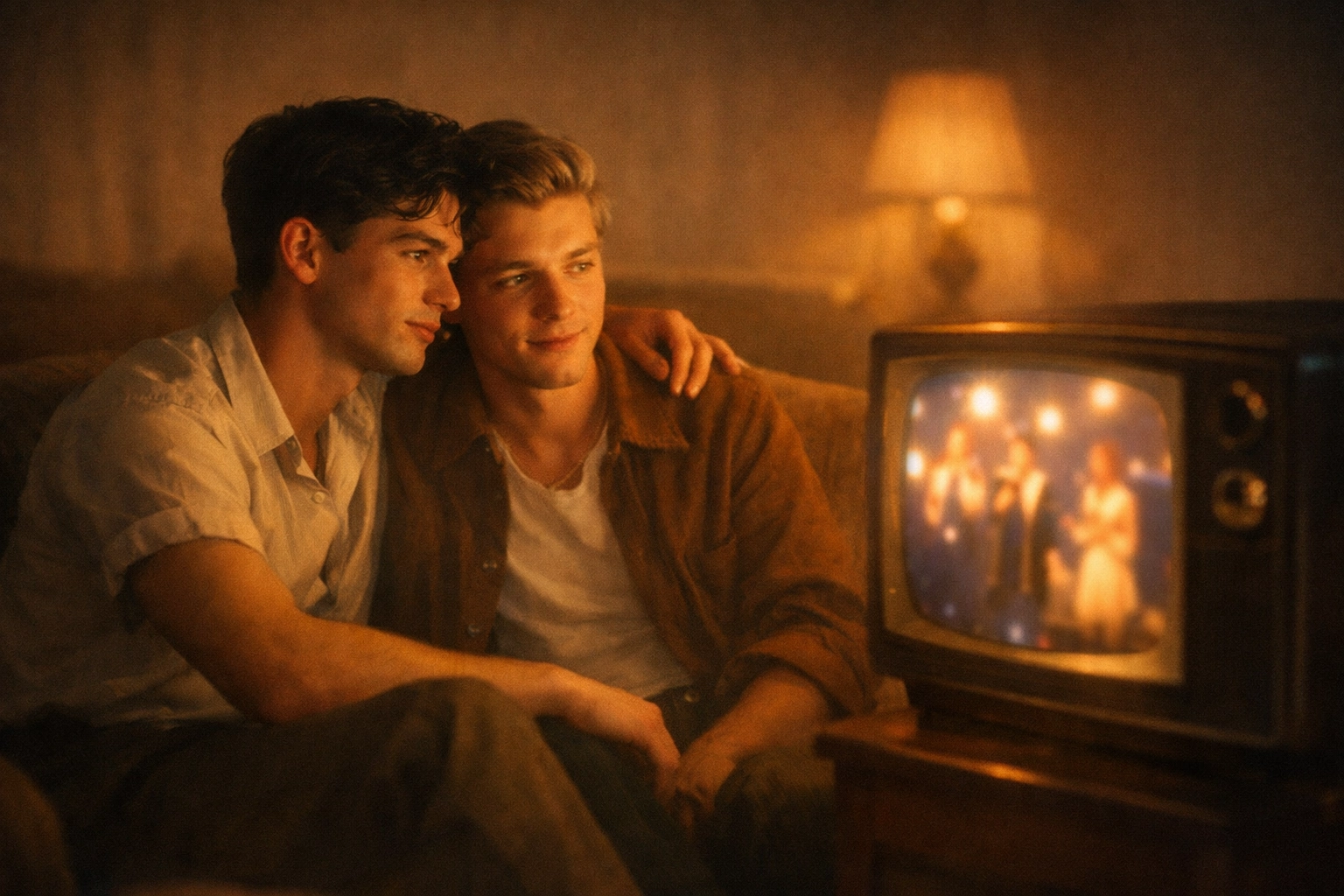
For queer people scattered across these countries: isolated, closeted, often feeling utterly alone: that message of connection, even delivered through something as seemingly innocuous as a song contest, mattered. It created a shared cultural touchstone. A reason to gather around televisions. A safe topic of conversation that could lead to finding your people.
Why the Quiet Beginning Matters
Looking back at Eurovision's first decades through a queer lens isn't about retrofitting modern sensibilities onto the past. It's about recognizing that the elements that would eventually make Eurovision a gay cultural institution were present from the start: they were just coded, subtle, waiting for the world to catch up.
The camp was there in the commitment to glamour over practicality. The queerness was there in the celebration of emotional vulnerability and artistic expression. The gay was there in the understanding that sometimes, a song competition isn't really about the song: it's about the spectacle, the community, the shared experience of witnessing something beautifully, unapologetically extra.
When you read about early Eurovision at Read with Pride, we're not just celebrating LGBTQ+ fiction and MM romance books: we're exploring the full breadth of queer cultural history. And Eurovision? That's a massive chapter, even if the first page was written in code.
The Stage Was Set
Those early years might have been quiet about their queer undertones, but they were laying foundations that would eventually support drag performances, openly gay winners, rainbow flag waves, and millions of LGBTQ+ fans treating Eurovision like our own personal Pride celebration every May.
The orchestras, the gowns, the dramatic lighting, the three-minute emotional journeys, the sheer commitment to putting on a show: it was all there in 1956. It just needed a few decades to fully bloom into what we know and love today.
So here's to Lugano, 1956. To Lys Assia and "Refrain." To the seven countries who showed up with their orchestras and their evening gowns and their earnest belief that a song contest could bring Europe together. They probably had no idea they were building what would become the world's gayest annual event.
But maybe, just maybe, some of them had an inkling. After all, you don't create that much sparkle by accident.
Want to explore more stories that celebrate LGBTQ+ culture, history, and love? Check out our collection of gay romance novels and queer fiction at readwithpride.com. Follow us on Facebook, Instagram, and Twitter/X for more content celebrating our community's stories.
#Eurovision #LGBTQHistory #QueerCulture #CampAesthetics #ReadWithPride #GayRomance #MMRomance #QueerFiction #LGBTQBooks #GayBooks #EurovisionHistory #1950s #QueerHeritage #LGBTQCommunity #GayLiterature #PrideReading

Leave a Reply
You must be logged in to post a comment.