

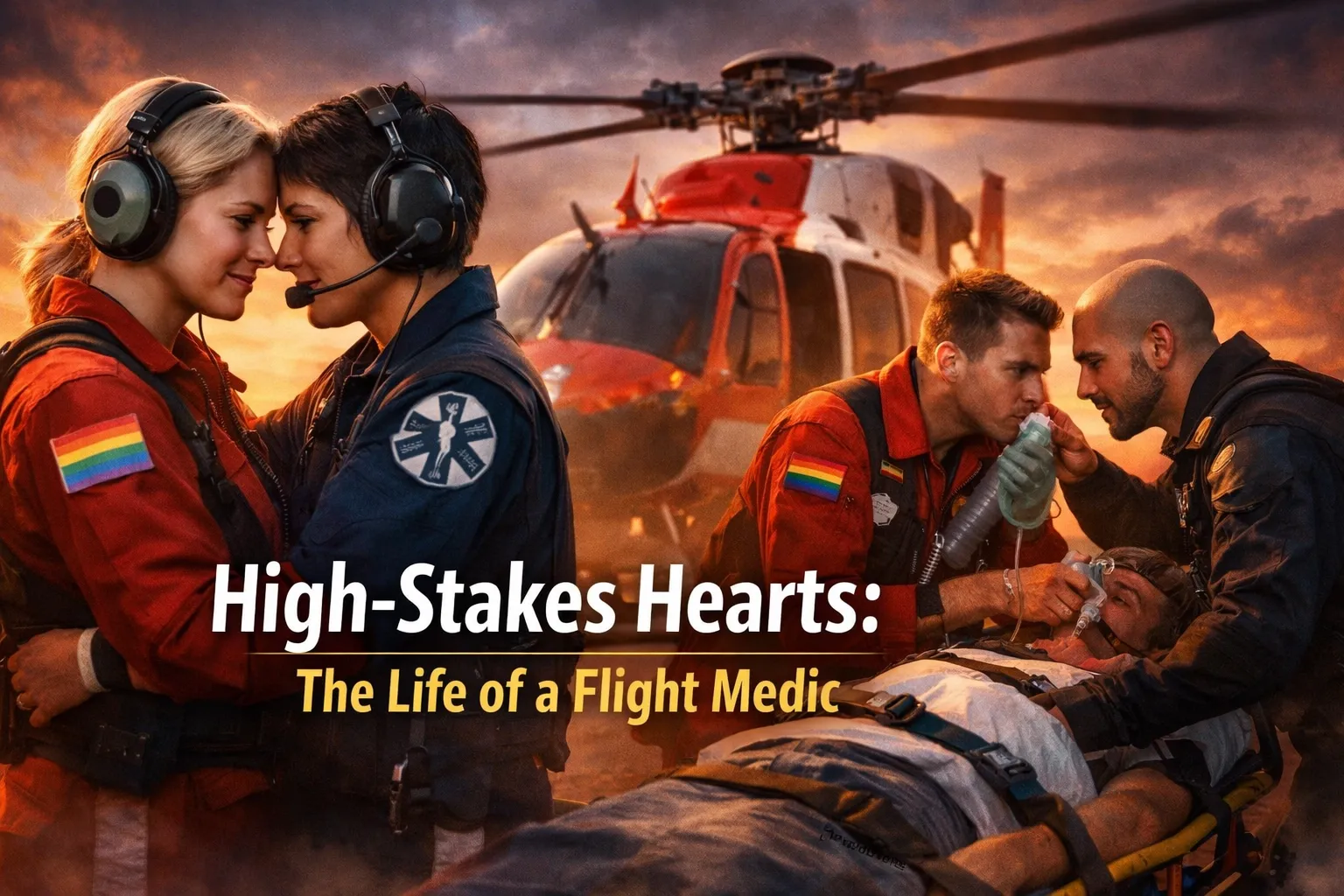
There's something undeniably magnetic about a person who literally flies into danger to save lives. Flight medics: those brave souls who provide emergency care at 10,000 feet: combine competence, courage, and yes, those striking uniforms in a way that's captured imaginations across the LGBTQ+ community for decades. Whether it's the practical flight suit, the confident stride across the tarmac, or the knowledge that they're racing against time to save someone's life, flight medics embody a fantasy that's both aspirational and deeply human.
This is story #27 in our series exploring the uniforms, the fantasies, and the very real people behind them. Today, we're taking to the skies.
The Reality Behind the Fantasy
Let's ground ourselves in what flight medics actually do, because the reality is even more impressive than the fantasy. These specialized paramedics provide emergency medical care during air transport, working in helicopters and fixed-wing aircraft to stabilize patients in situations that ground paramedics simply can't handle. They're not just along for the ride: they're managing complex medical crises in confined spaces, at altitude, while dealing with vibration, noise, and the unique challenges of providing care in the sky.
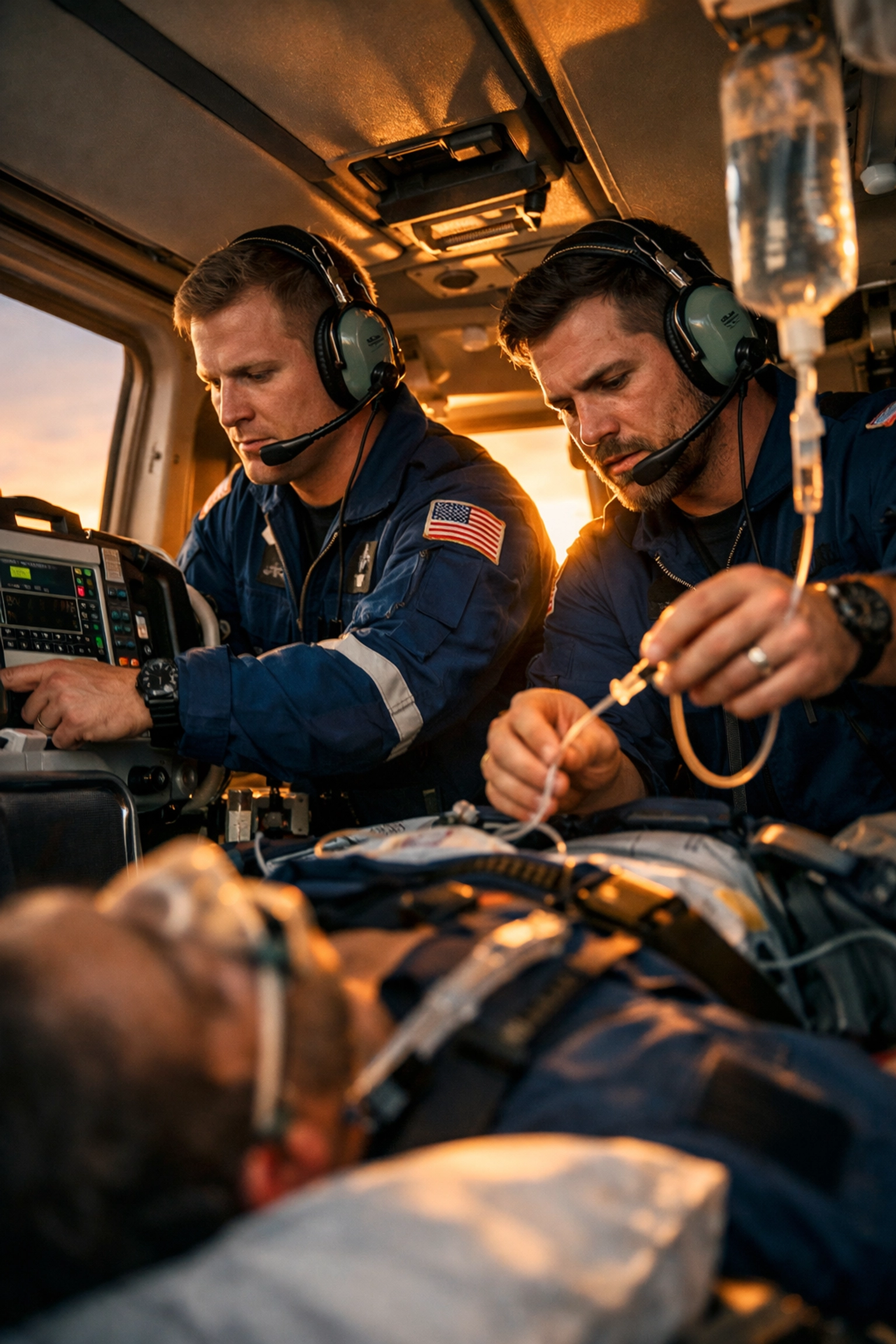
Flight medics monitor vital signs constantly, administer medications adjusted for altitude effects, manage ventilators and cardiac monitors in spaces barely bigger than a closet, and document everything meticulously for seamless handover to hospital teams. They provide emotional support to terrified patients and families, all while maintaining the cool composure that makes them so damn attractive in the first place.
When someone's heart stops mid-flight, or a patient's respiratory system starts failing, flight medics perform rapid stabilization using advanced life support techniques: intubation, defibrillation, emergency medications: all adapted for aircraft environments. They coordinate with pilot crews, communicating needs for altitude adjustments or emergency landings. They are, in every sense, heroes with wings.
Why We're Drawn to Them
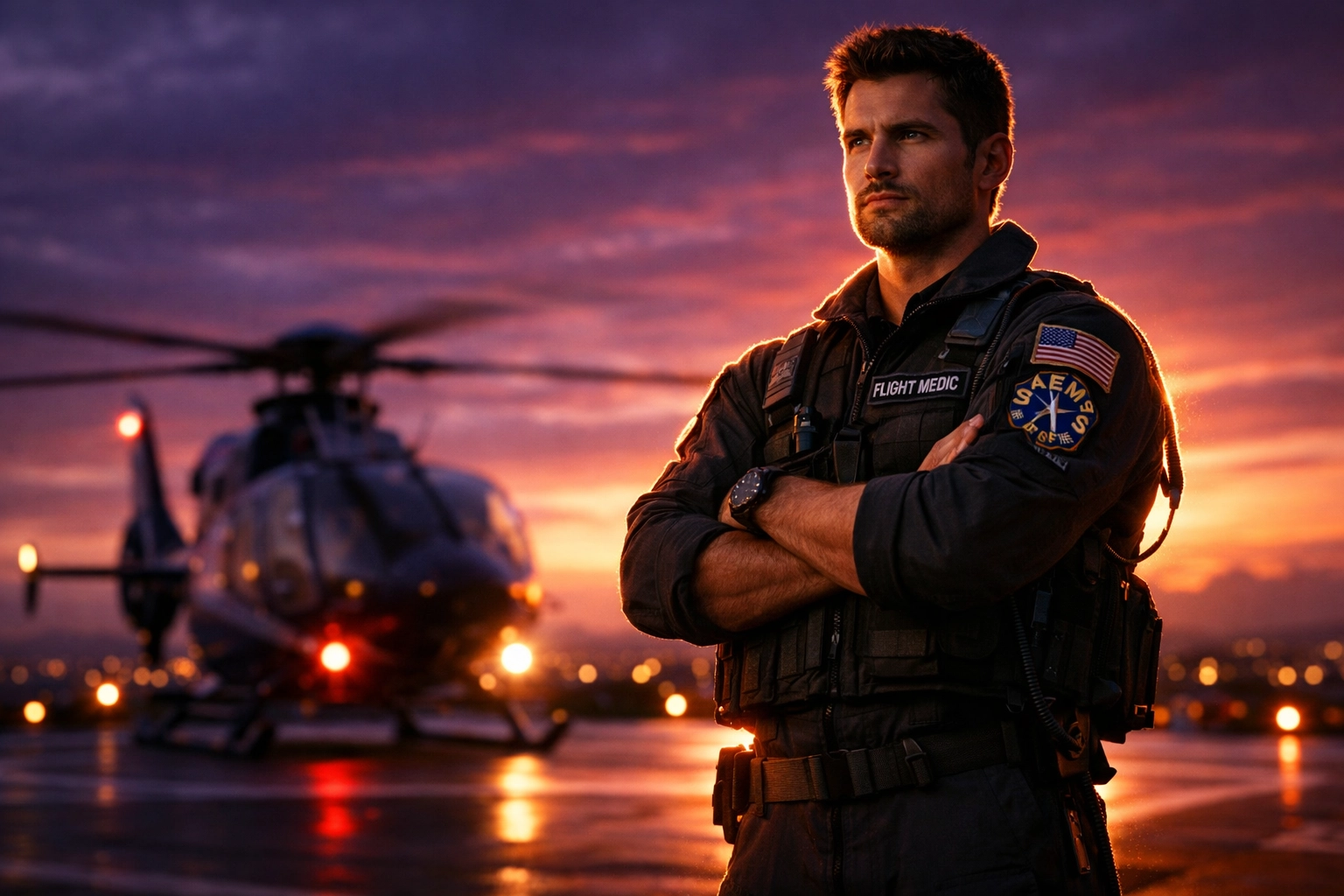
In the world of gay romance and MM fiction, the flight medic character hits multiple beloved tropes simultaneously. There's the competence kink: watching someone who absolutely knows what they're doing in high-pressure situations. There's the hero complex: someone who literally saves lives for a living. There's the uniform appeal: flight suits and patches and practical gear that somehow manages to be both utilitarian and incredibly hot.
But beyond the surface appeal, flight medics represent something deeper in queer fiction and real-life attraction. They embody care and strength in equal measure. They're technical experts who also provide comfort. They're adrenaline junkies who've channeled that energy into helping others. In an age where toxic masculinity still tries to separate "tough" from "caring," flight medics prove you can be both: and that's incredibly attractive to many in the LGBTQ+ community.
Visit Read with Pride for MM romance books that feature heroes in high-stakes professions.
From Fantasy to Fiction
The flight medic appears regularly in gay novels and LGBTQ+ fiction, often as the grounding force (pun intended) in an emotional story. Maybe he's the calm, collected medic who patches up the reckless firefighter after a dangerous call. Perhaps he's the love interest who literally swoops in during a mountain rescue. Or maybe: and this is where the best MM romance lives: he's the one with his own vulnerabilities, the one who saves everyone else but struggles to save himself.
These characters work so well in gay romance novels because they bring built-in conflict and stakes. The job demands everything from them: irregular hours, emotional trauma, physical danger: which creates natural tension when they're trying to build a relationship. How do you plan date nights when you might get called to airlift a critical patient at any moment? How do you explain to a new partner that you might not come home some days?
The best MM contemporary romance doesn't shy away from these realities. It explores how two people navigate a relationship when one (or both) has a career that demands everything. It shows the late-night conversations, the interrupted dinners, the fear that lives in the back of every partner's mind. And it shows the triumphs too: the profound satisfaction of a life saved, the deep bonds between crew members, the pride in doing something that truly matters.
The Uniform Effect
Let's be real for a moment: the uniform matters. Whether it's the flight suit with patches and insignia, the tactical pants and boots, or the more formal dress uniform worn for ceremonies, there's something about professional attire that signals competence and dedication. In the LGBTQ+ community, where many of us have complicated relationships with traditionally masculine professions and presentations, reclaiming the attraction to these uniforms can feel both rebellious and affirming.
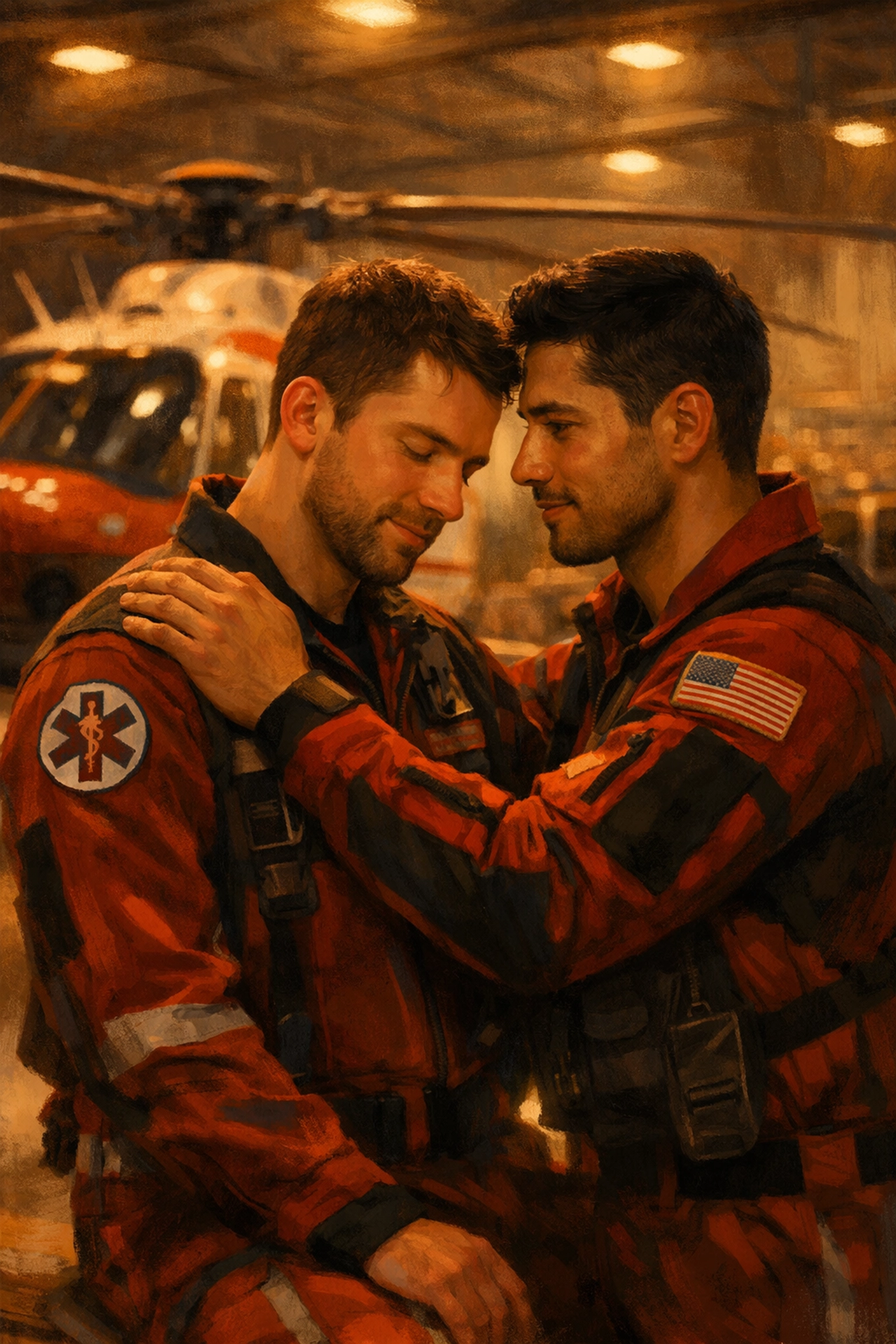
The flight medic's uniform isn't about conformity or hiding: it's about function. Every pocket has a purpose. Every patch tells a story. The uniform says "I'm here to do a job, and I'm damn good at it." For many queer people, that confidence and competence is deeply attractive. It's not about the uniform itself; it's about what wearing it represents.
Beyond the Fantasy: Real Qualifications and Skills
To become a flight medic requires serious dedication. These professionals must hold licensed paramedic certification, complete training in altitude physiology and its effects on patients, and earn certification in operating medical equipment during flight conditions. In the United States, certifications like FP-C or CCP-C are typical. In the UK, flight paramedics need at minimum a postgraduate certificate in critical care.
The skills go far beyond medical knowledge. Flight medics need critical thinking to make split-second decisions under pressure, communication abilities to coordinate with crews and comfort patients, and advanced knowledge of emergency procedures, medications, and mechanical ventilation. They must be comfortable with heights, resistant to motion sickness, and possess strong resource management and adaptability skills.
These aren't casual requirements. They represent years of training, continuous education, and a commitment to excellence that makes the fantasy even more compelling. When you're attracted to a flight medic: whether in fiction or real life: you're attracted to someone who's earned their place in that helicopter through dedication and skill.
The Team Dynamic
Flight medics rarely work alone, and that's where some of the most interesting MM romance dynamics emerge. They collaborate with flight nurses who provide continuous monitoring and comfort care. For the most complex patients, flight physicians join the crew to deliver hospital-level care at altitude. This team structure creates opportunities for workplace romance, forced proximity (a beloved trope in gay fiction), and the kind of high-stakes emotional connection that forms when people literally trust each other with lives.
Imagine the slow burn MM romance between two crew members who've worked together for years, saving lives and sharing trauma, before they finally admit their feelings. Or the enemies to lovers tension between a by-the-book flight medic and a risk-taking pilot who clash on every call until they don't. The professional setting creates boundaries that make the eventual breach of those boundaries even more satisfying.
Where Fantasy Meets Reality
The truth is, real flight medics are just people: queer and straight, single and partnered, confident and insecure. They're not all chiseled heroes straight out of gay romantic fiction (though some certainly are). What makes them compelling, both in fantasy and reality, isn't perfection. It's the combination of skill, dedication, and humanity.
When we explore these fantasies in LGBTQ+ fiction and conversation, we're not objectifying people in uniforms. We're celebrating the qualities those uniforms represent: courage, competence, care, and commitment. We're imagining ourselves with partners who embody those qualities, or imagining ourselves as people who embody them. We're exploring what draws us to others and what we hope to become ourselves.
Reading the Romance
If this exploration has you craving more stories about heroes in the sky, you're not alone. MM romance books featuring flight medics, air rescue teams, and medical professionals in high-stakes environments offer the perfect blend of action, emotion, and heat. These stories remind us that the most attractive quality isn't the uniform: it's the person who wears it with purpose.
Ready to dive into more gay love stories featuring irresistible professionals? Explore the full collection at Read with Pride, your destination for LGBTQ+ ebooks that celebrate authentic queer romance in all its forms.
Follow Read with Pride:
Facebook: facebook.com/profile.php?id=61586883027069
Instagram: @read.withpride
X/Twitter: @Read_With_Pride
Website: www.readwithpride.com
#ReadWithPride #MMRomance #GayRomance #LGBTQFiction #FlightMedicRomance #MMBooks #GayLoveStories #QueerFiction #UniformRomance #MMContemporary #GayNovels #LGBTQBooks #GayRomanceBooks #2026LGBTQ #MMRomanceBooks #QueerAuthors #GayFiction #HighStakesRomance #MedicalRomance #LGBTQRomance

Leave a Reply
You must be logged in to post a comment.