

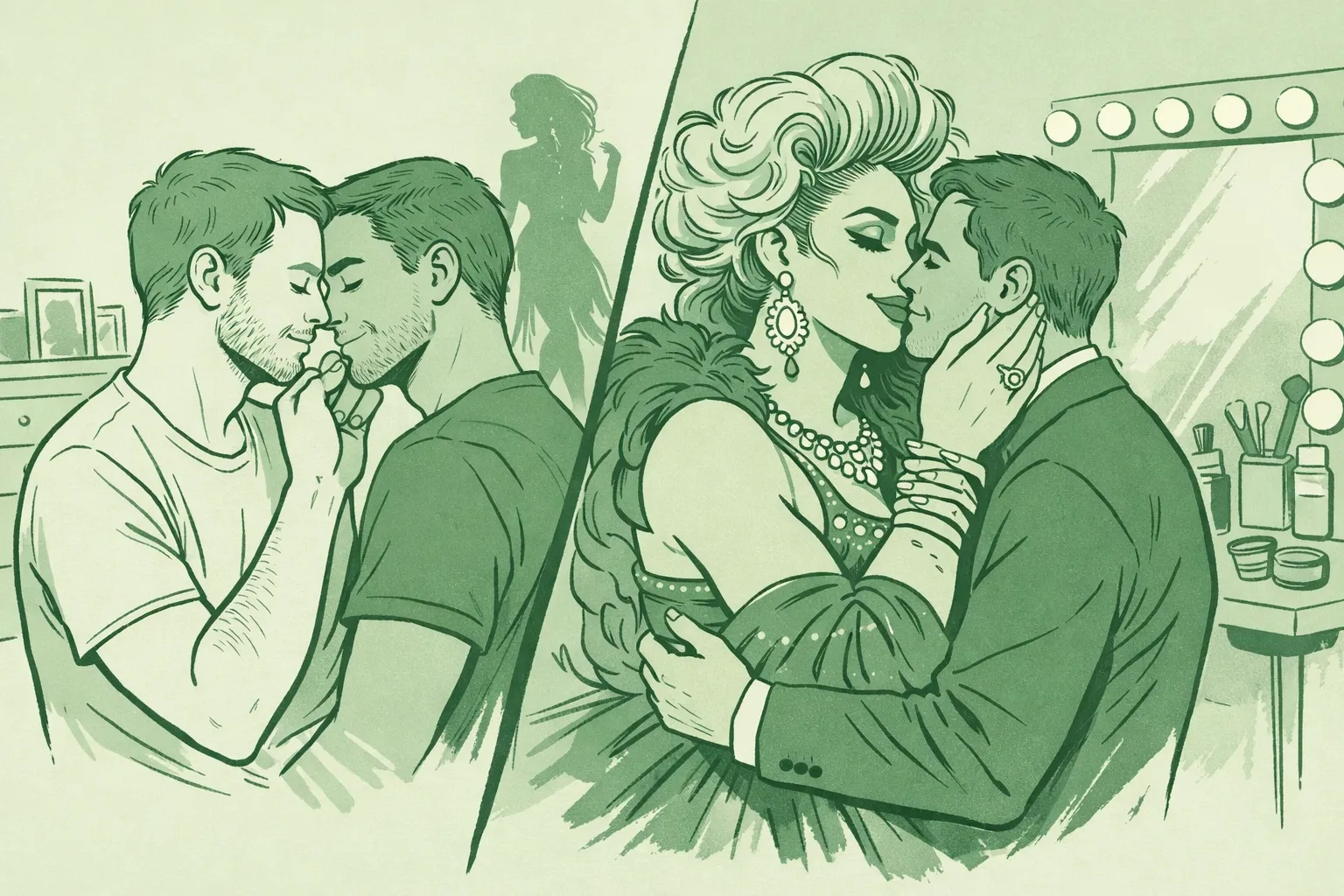
THE TRANSFORMATION PROCESS: MAKEUP TECHNIQUES AND ARTISTRY
Drag transformation represents a complete reinvention through makeup application, wig styling, and costume selection. The process converts everyday appearance into extraordinary performance art through systematic technique application.
Strategic Eye Makeup Application
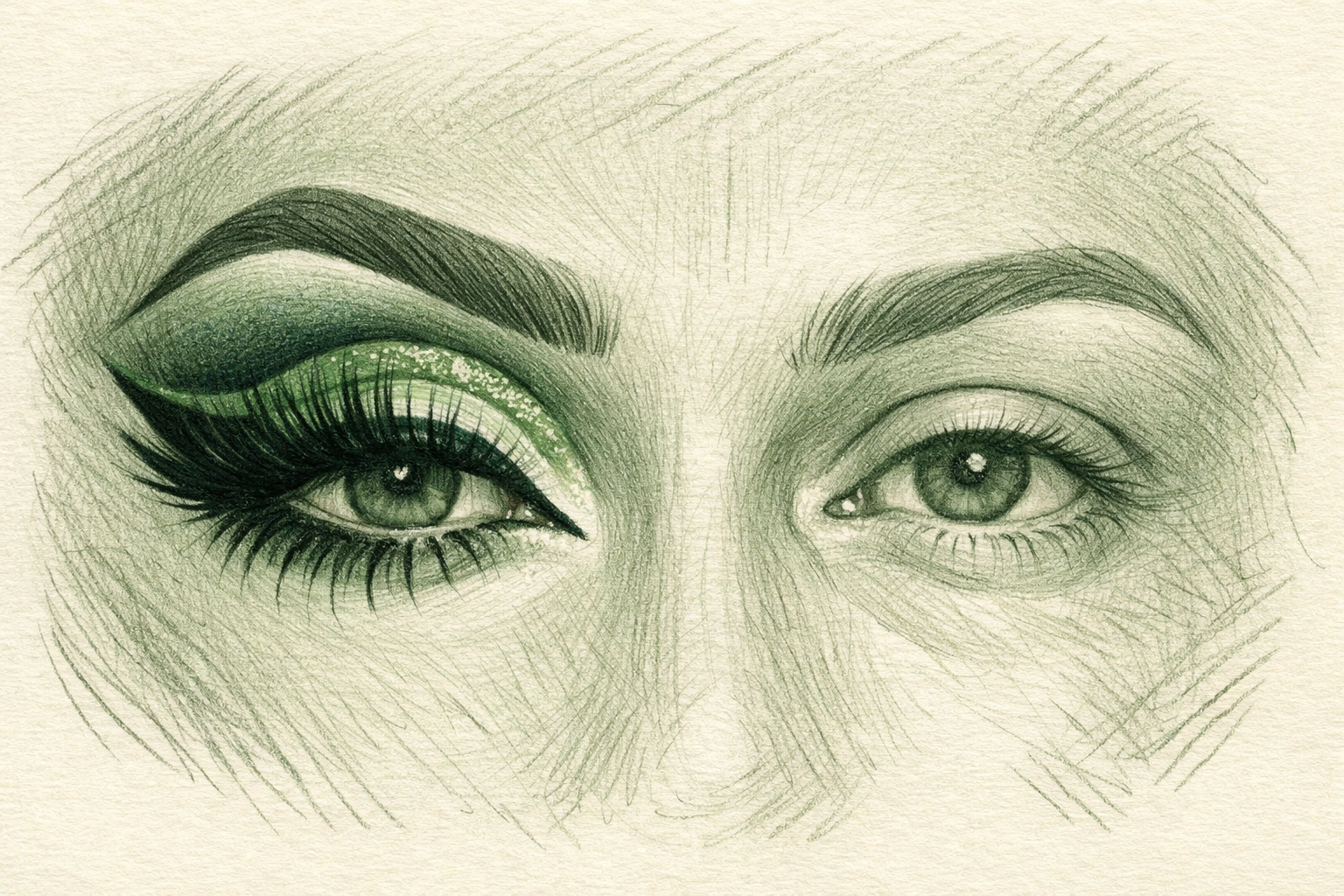
The cut crease technique reshapes eye structure by drawing eyeshadow creases higher than natural placement. This creates enlarged, dramatically defined eyes that photograph effectively under stage lighting. Apply eyeshadows in graduated layers: dark shades in the crease, lighter tones on the lid, coordinated with elongated winged eyeliner extending diagonally to feminize facial structure.
Eyebrow reshaping precedes eye makeup. Block natural brows with glue stick application, then redraw brows higher and more arched using pencil and powder combination. This elevates the entire eye area, creating space for dramatic eyeshadow application.
Foundation Layering System
Apply highlight foundation 2-3 shades lighter than natural skin tone to highest facial planes: cheekbones, forehead center, nose bridge, and chin. Follow with mid-tone foundation application across remaining facial areas. Heavy contour placement under cheekbones, along jawline, and at temples creates dimensional structure.
The "cooking" technique intensifies highlights. Apply thick translucent powder to highlighted areas, allowing product to sit undisturbed for 10-15 minutes. This sets makeup while simultaneously brightening highlight zones. Brush away excess powder to reveal amplified contrast between light and dark facial areas.
Dimensional Color Application
Powder contour in cool-toned, matte formulation sharpens previously applied cream contour. Blush placement on cheek apples adds warmth and dimension. Highlighter application to cheekbone tops, nose tip, and cupid's bow creates luminosity under performance lighting.
Lip overdrawing extends beyond natural lip lines, creating fuller mouth proportions. Ombre techniques: darker corners transitioning to lighter centers: add three-dimensional appearance. Gloss application completes the look.
COSTUME AND WIG COORDINATION
Makeup exists as one element within complete drag presentation. Gown selection, wig styling, and makeup application must coordinate as integrated components. Each element affects others: wig color influences makeup tone selection, costume neckline determines makeup application boundaries.
Wig Selection and Styling
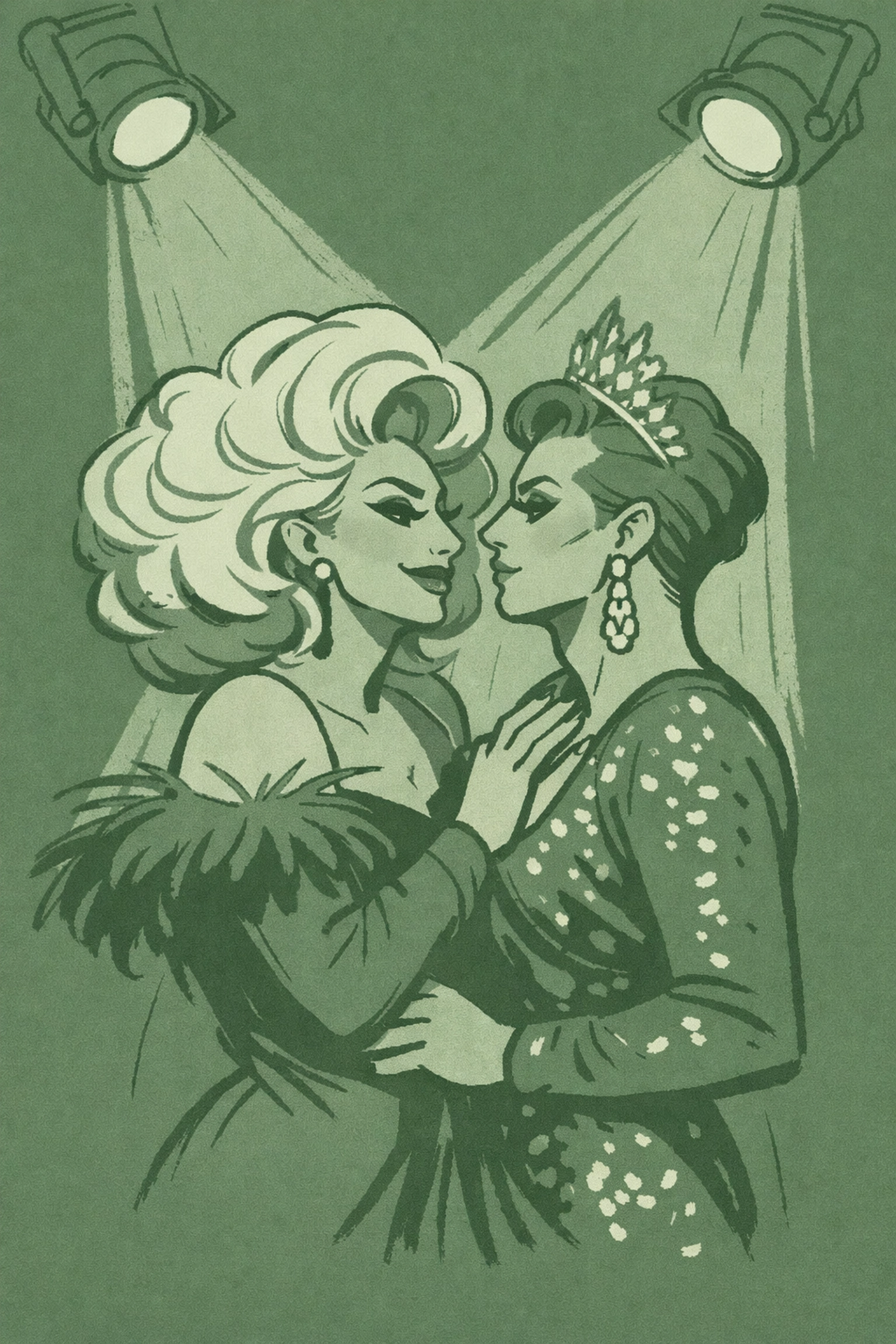
Wig choice establishes overall aesthetic direction. Synthetic wigs offer affordability and pre-styled convenience. Human hair wigs provide styling versatility at higher cost. Lace-front construction creates natural hairline appearance.
Secure wigs with wig cap foundation, bobby pin anchoring, and adhesive application at the hairline. Style after securing to ensure movement coordination with head positioning.
Complete Character Development
The transformation extends beyond physical appearance modification. Voice modulation, gesture refinement, and posture adjustment complete character establishment. Practice coordinated movement in heels, costume management during performance, and facial expression amplification for audience visibility.
MENTAL TRANSFORMATION: PERSONA DEVELOPMENT
Physical transformation accompanies psychological shift into drag persona. This represents creative expression beyond everyday identity limitations.
Character Construction
Drag personas function as distinct characters with individual personalities, speaking patterns, and behavioral characteristics. Some performers develop personas as extensions of personal attributes. Others create characters completely separate from everyday identity.
Name selection establishes persona foundation. Many performers choose names referencing pop culture, personal significance, or wordplay. The name becomes the character's identity, announced in performances and social media presence.
Confidence Building Through Transformation
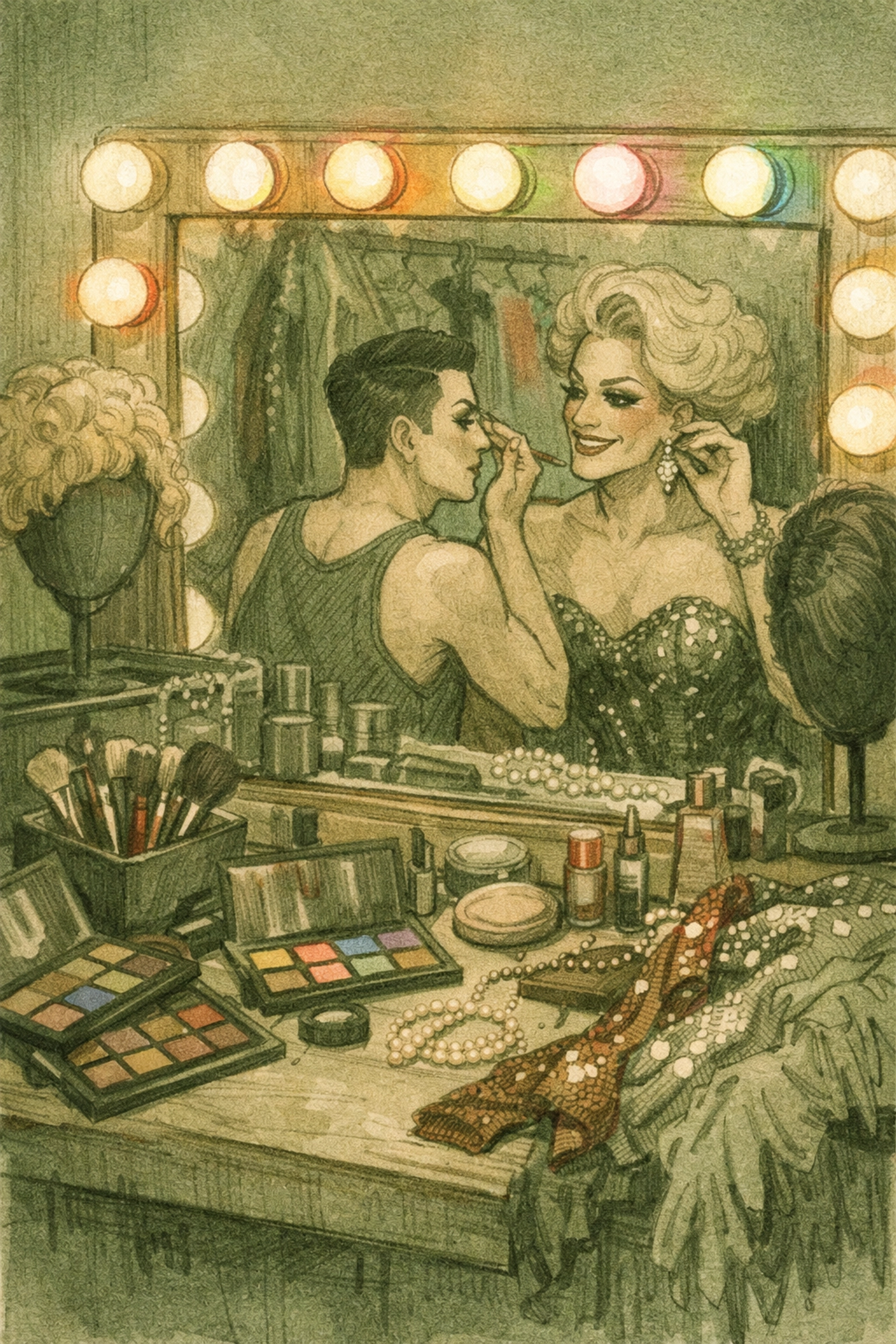
The makeup application process itself builds confidence through skill demonstration and visible progress tracking. Each completed transformation reinforces artistic ability and creative vision execution.
Performing in drag often liberates individuals from everyday social constraints. The persona provides permission to express characteristics normally suppressed: boldness, humor, sensuality, or theatrical dramatic presentation.
PRACTICAL TRANSFORMATION TIMELINE
Initial transformations require 3-4 hours completion time. Experienced performers reduce this to 90-120 minutes through practiced efficiency. Breakdown of typical transformation schedule:
- Eyebrow blocking and eye makeup: 45 minutes
- Foundation, contour, and highlighting: 30 minutes
- Cooking time: 10-15 minutes
- Powder contour, blush, highlight: 20 minutes
- Lips and final touches: 15 minutes
- Wig application and styling: 20 minutes
- Costume dressing: 10 minutes
Practice reduces timing while improving technique precision and final result quality.
ARTISTIC EMPOWERMENT AND SELF-EXPRESSION
Drag transformation represents powerful creative expression where individuals design entirely new identities through artistic skill application. The blank canvas approach: starting with bare face and building complete character: demonstrates tangible artistic ability.
This art form celebrates gender performance fluidity, challenges conventional beauty standards, and creates community among performers and audiences. The transformation process itself becomes meditation on identity, presentation, and self-determination.
Explore LGBTQ+ Stories and Identity Exploration
Discover narratives celebrating self-expression and identity exploration through Read with Pride. Our curated collection features MM romance, queer fiction, and LGBTQ+ literature exploring diverse experiences within the community.
Browse our complete catalog at dickfergusonwriter.com/collections/all featuring gay romance books, MM novels, and contemporary LGBTQ+ fiction.
THE COMMUNITY ASPECT
Drag culture creates supportive communities where performers share techniques, collaborate on shows, and mentor newcomers. This community aspect enhances the transformation experience beyond individual artistic expression.
Local drag scenes provide performance opportunities, skill development workshops, and social connection. Many cities host regular drag shows at bars, clubs, and theaters, creating accessible entry points for aspiring performers.
Online communities extend support globally through tutorial videos, technique discussions, and virtual performance opportunities. Social media platforms enable performers to share transformations, connect with audiences, and build personal brands.
CONCLUSION: TRANSFORMATION AS ART FORM
Drag queen transformation combines technical makeup skill, costume design, wig styling, and performance art into comprehensive creative expression. The process transforms ordinary appearance into extraordinary presentation through practiced technique and artistic vision.
This art form continues evolving with new makeup techniques, styling innovations, and performance formats. Whether pursued professionally or recreationally, drag transformation offers powerful creative outlet and community connection.
Visit Read with Pride and dickfergusonwriter.com for LGBTQ+ literature celebrating diverse identities and experiences.
Follow us on social media:
Instagram: @dickfergusonwriter
X/Twitter: @DickFergus94902
Facebook: Dick Ferguson Writer
Visit us at www.readwithpride.com for more LGBTQ+ fiction, gay romance books, MM romance, and queer literature.
#DragQueen #DragTransformation #LGBTQPride #QueerArt #ReadWithPride #DragArtistry #LGBTQCommunity #QueerExpression #DragCulture #MMRomance #GayFiction #LGBTQBooks #QueerLiterature #ReadingWithPride #GayRomance #LGBTQFiction #PrideReading #QueerStories #GayBooks #LGBTQeBooks

Leave a Reply
You must be logged in to post a comment.