
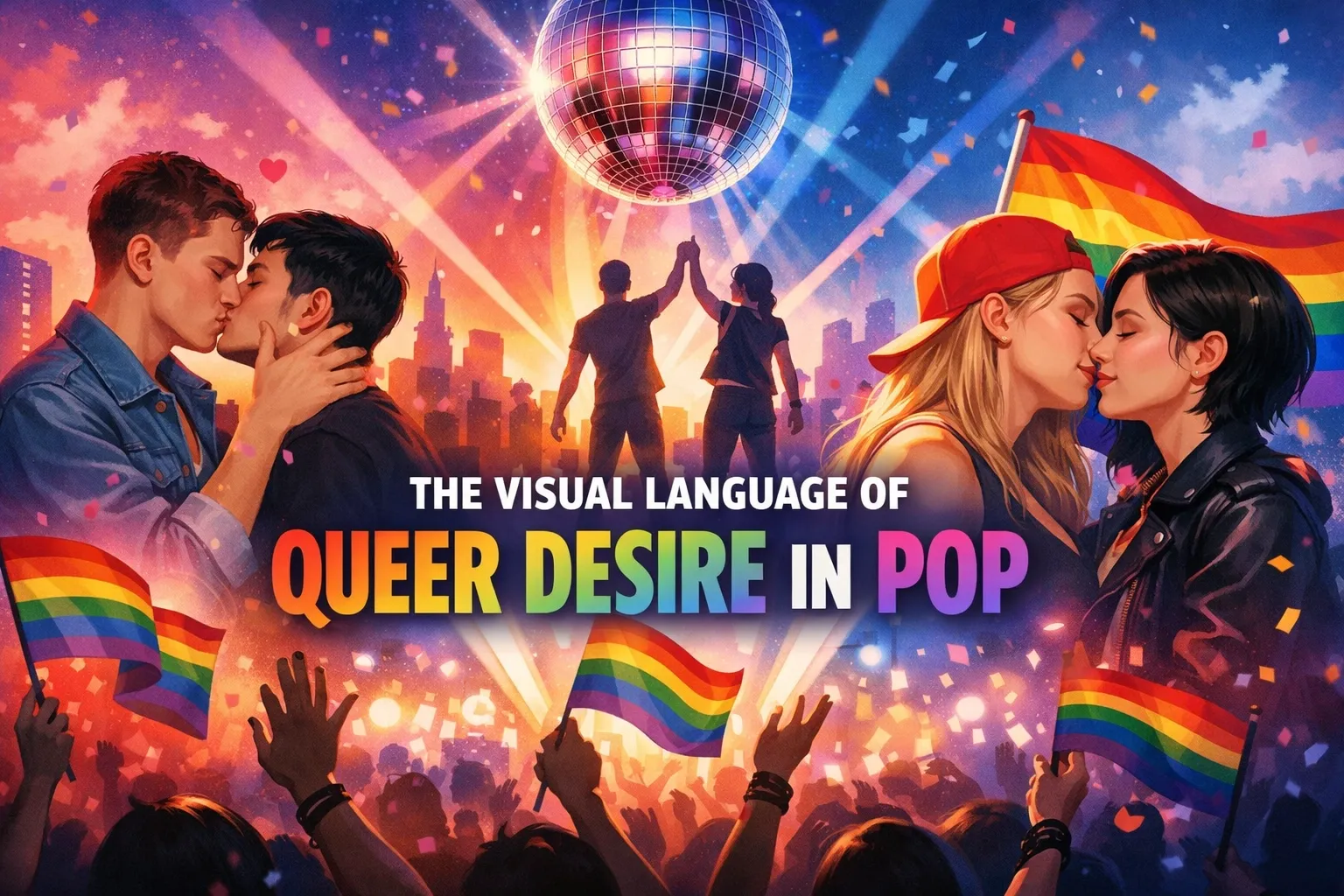
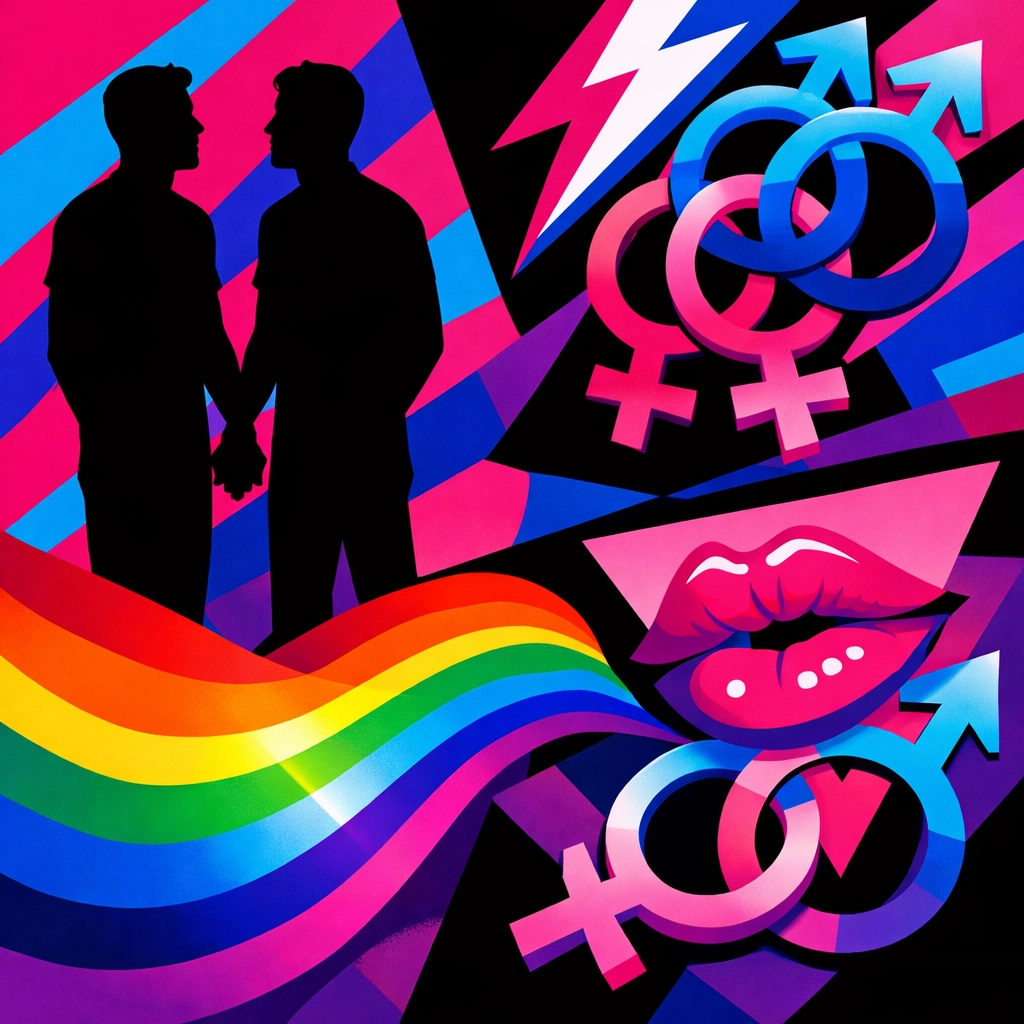
Pop music has always been more than just sound: it's a full sensory experience where visuals tell stories that lyrics sometimes can't. For the LGBTQ+ community, pop culture's visual language has been both a lifeline and a celebration, a coded conversation and a loud proclamation. From the glittering rebellion of early icons to today's unapologetically queer pop stars, the way desire, identity, and pride are visualized in pop has shaped generations.
Let's dive into how pop's biggest supporters and queer icons have used visual storytelling to create a language of liberation, one music video, outfit, and stage performance at a time.
The Power of Visual Rebellion
Pop culture doesn't whisper: it screams, struts, and sparkles. For queer audiences who grew up searching for themselves in mainstream media, visual cues in pop music became essential markers of belonging. Before marriage equality, before pronouns in bios, there were the visuals: androgynous fashion, same-sex chemistry in music videos, and performances that challenged every gender norm.
This visual language operates on multiple levels. For those in the know, it's recognition and validation. For allies, it's education and invitation. For queer youth still figuring things out, it's often the first mirror that reflects something true back at them.
Madonna: The Mother of Visual Transgression
Before we had social media activism, we had Madonna serving gender-bending realness on MTV. Her "Justify My Love" video was banned for its bisexual imagery and sexual fluidity: which, naturally, made everyone want to see it more. Madonna understood that queer desire wasn't something to hide in subtext; it was something to put front and center, consequences be damned.
Her "Vogue" video didn't just appropriate ball culture: it brought it to the mainstream, introducing millions to the fierce creativity of Black and Latinx queer communities. Those angular poses, that androgynous styling, the celebration of being "struck a pose": it was visual poetry that told queer audiences: your art, your culture, your existence is magnificent.
Cher: The Ultimate Ally in Sequins
Cher's relationship with the LGBTQ+ community goes beyond music: it's personal, political, and beautifully visual. As the mother of Chaz Bono, she became one of the most visible straight allies at a time when that visibility mattered desperately.
But Cher's visual impact on queer culture started long before. Her outrageous Bob Mackie outfits challenged every notion of what women "should" wear. That famous 1986 Oscars outfit: the one with the Mohawk headdress: was peak visual rebellion. She showed that you could be glamorous, powerful, and utterly yourself without conforming to anyone's expectations. That's a message the Read with Pride community knows well.
Lady Gaga: Born This Way, Shown This Way
Lady Gaga didn't just sing about LGBTQ+ rights: she made them unmissable. Her visual approach to queerness is intentional, theatrical, and transformative. From the meat dress to the "Telephone" prison yard sequence with Beyoncé (hello, sapphic panic), Gaga's visuals have consistently pushed boundaries.
Her "Born This Way" era was a masterclass in visual allyship. The music video featured dancers of all backgrounds, abilities, and gender expressions, creating a visual utopia where difference was the norm. She didn't just tell queer kids they were born perfect: she showed them, in glorious technicolor.
Gaga's ongoing work with the Born This Way Foundation and her consistent visual inclusion of trans, non-binary, and gender non-conforming performers in her shows creates a blueprint for what real allyship looks like in pop.
Lil Nas X: The New Guard of Queer Visibility
If older icons used coded language and subtle symbolism, Lil Nas X said "subtle is over" and pole-danced down to hell. His "MONTERO (Call Me By Your Name)" video was a visual declaration of queer desire that sparked outrage, conversation, and ultimately, celebration.
The video's biblical imagery: specifically its queer reclamation of religious symbolism: was radical visual storytelling. For LGBTQ+ people who've been condemned with religious rhetoric, seeing a Black queer man defiantly embrace his sexuality while literally seducing the devil was transformative. It said: your shame is not our shame, and we're taking back the narrative.
Hayley Kiyoko: Showing Girls Who Love Girls
"Girls Like Girls" wasn't just a catchy song: it was a visual revolution for young queer women. Hayley Kiyoko's music videos consistently center lesbian and bisexual experiences without apology or male gaze. Her visuals show queer teenage love as normal, beautiful, and worthy of the same romantic treatment that straight couples get in every other pop video.
This representation matters enormously. For young queer women scrolling through YouTube, seeing themselves reflected in mainstream pop videos: kissing, falling in love, having their hearts broken: is still revolutionary. Kiyoko understands that visibility isn't just about being seen; it's about being seen as worthy of love stories.
Sam Smith & The Gender Fluid Visual Renaissance
Sam Smith's evolution from heartbroken balladeer to gender-fluid pop provocateur has been fascinating to watch. Their visual transformation: especially in videos like "I'm Not the Only One" to "Unholy": shows how pop can visualize the journey of self-discovery.
Their embrace of gender-neutral fashion, corsetry, and traditionally "feminine" aesthetics challenges binary thinking in real-time. When Sam Smith wears a dress on a magazine cover or performs in heels, they're not making a political statement so much as living their truth: and the visual impact ripples outward.
Janelle Monáe: The Pansexual Android Aesthetic
Janelle Monáe's visual language is sci-fi, Afrofuturism, and queer liberation all rolled into one impossibly cool package. Her "PYNK" video: featuring vulva pants and celebrations of female sexuality and desire: was visceral, joyful, and unapologetically queer.
Monáe's android persona has always been about challenging what's "natural" or "normal": a perfect metaphor for queerness itself. Her visuals consistently blur boundaries between human and machine, masculine and feminine, creating a aesthetic that says: the future is fluid, and it's gorgeous.
The Visual Codes We Still Use
Even as queer representation becomes more explicit, visual coding hasn't disappeared: it's evolved. The handkerchief code may be historical, but we've got new signals: cuffed jeans, specific jewelry, hair cuts, even the way someone styles their Spotify. The language adapts because it needs to: it's still how we find each other, recognize each other, and celebrate each other.
Modern pop videos incorporate these codes while adding new ones. The use of specific colors (lavender, pink, light blue), the inclusion of queer community spaces (clubs, drag shows, Pride parades), and the centering of queer joy rather than queer pain: these are the contemporary visual vocabulary.
Why Visual Language Matters for MM Romance Readers
For those of us at Read with Pride who love MM romance books and gay romance novels, pop's visual language connects to why we read what we read. Both pop culture and queer fiction create spaces where desire doesn't need justification. They show love stories: whether in three-minute videos or 300-page novels: where queer people are the protagonists, not the sidekicks.
The best MM romance does what the best pop videos do: it centers queer desire as natural, exciting, and worthy of celebration. It doesn't apologize or explain: it just is. That's the power of representation, whether it's visual or literary.
The Evolution Continues
Pop's visual language around queer desire has moved from coded whispers to full-throated declarations, but the journey isn't over. Each new artist, each bold video, each refusal to conform adds another layer to this evolving conversation.
The icons who've supported and elevated LGBTQ+ visibility: from Cher's decades of advocacy to Lady Gaga's consistent platform-sharing to Lil Nas X's fearless authenticity: have given us more than great music. They've given us a visual vocabulary that says: you exist, you're seen, and you're celebrated.
Keep Reading, Keep Watching, Keep Pride
The visual language of queer desire in pop isn't just entertainment: it's affirmation, education, and revolution wrapped in sequins and set to a beat. Whether you're watching music videos or diving into the latest gay romance books, the message is the same: our stories, our desires, and our love are worthy of center stage.
Ready to explore more LGBTQ+ stories? Check out our collection of LGBTQ+ ebooks and MM romance novels at Readwithpride.com. Because representation matters in every medium.
Follow us for more LGBTQ+ content:
#ReadWithPride #LGBTQRomance #MMRomance #GayRomanceBooks #QueerFiction #LGBTQBooks #PopCulture #QueerVisibility #MMRomanceBooks #GayLiterature #LGBTQPride #QueerRepresentation #MMFiction #LGBTQEbooks #GayRomanceNovels #Pride2026 #QueerPop #VisualActivism

Leave a Reply
You must be logged in to post a comment.