

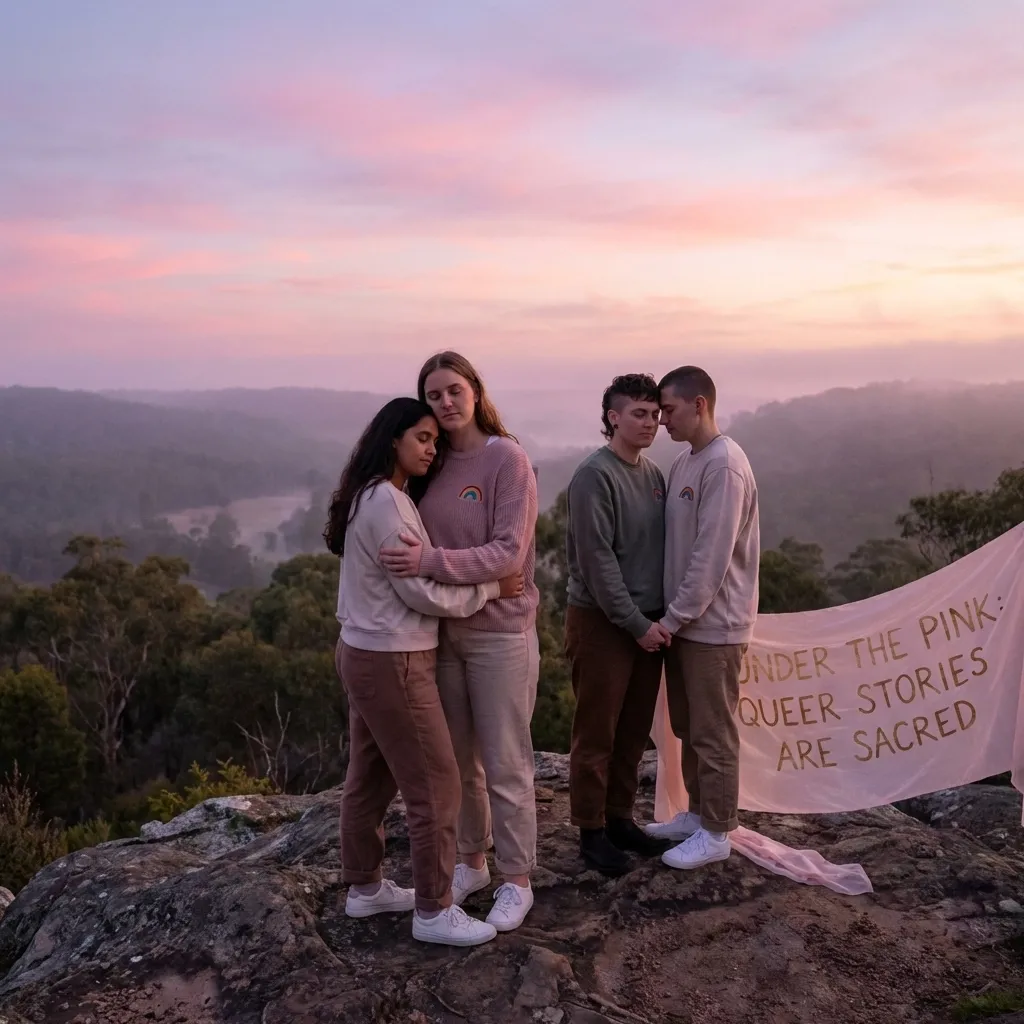
Before Lady Gaga told us we were born this way, before Cher became the ultimate gay icon on Twitter, there was a flame-haired piano goddess sitting at her Bösendorfer, singing about God, sex, trauma, and transformation. Tori Amos never asked to be anyone's spokesperson, but for countless queer kids growing up in the '90s and beyond, she became something more precious than an ally: she became a witness to the sacred mess of becoming yourself.
The Priestess at the Piano
When Under the Pink dropped in 1994, Tori Amos was already building a reputation as someone who refused to play by the rules. Her debut Little Earthquakes had been raw and confessional, but Under the Pink went deeper: into mythology, religion, sexuality, and the complicated terrain between fantasy and reality. Songs like "Cornflake Girl," "God," and "Past the Mission" weren't just catchy piano pop. They were ceremonies.
For queer listeners navigating a world that told us we were broken, sinful, or invisible, Tori's music offered something radical: permission to be complicated. She sang about desire without shame, about questioning authority (including God himself), and about the pain of being misunderstood by the people closest to you. Sound familiar?

Breaking Free of Religious Repression
One of the most powerful aspects of Tori's work: especially on Under the Pink: is her unflinching examination of religious trauma. Raised as a minister's daughter, she understood the suffocating weight of expectations, the guilt that comes with not fitting the mold, and the courage it takes to walk away from everything you've been taught to believe.
In "God," she literally puts the big guy on trial, asking why he lets terrible things happen. In "Icicle," she explores sexual awakening within the confines of religious repression. These weren't just songs: they were exorcisms. And for queer people raised in religious households where we were told our love was an abomination, hearing someone articulate that rage and confusion felt like absolution.
Tori's music gave us language for the unspeakable. She showed us that questioning isn't blasphemy: it's sacred. That claiming your sexuality and your truth isn't rebellion: it's resurrection.
The Art of Being Seen
What makes Tori Amos such an enduring icon in the LGBTQ+ community isn't just her music: it's her radical empathy. She's spent decades really listening to her fans, particularly those who've experienced trauma, rejection, and marginalization. Her concerts aren't just performances; they're communion. She creates space for people to feel what they feel without apology.
At a time when many artists were uncomfortable even saying the word "gay," Tori embraced her queer fanbase with genuine warmth. She understood that for many of us, her songs weren't entertainment: they were lifelines. When you're a queer kid in a small town with no one to talk to, a three-minute song can literally save your life.
The Power of Feminine Masculinity and Masculine Femininity
Tori's gender expression has always been delightfully fluid. She's the fairy princess who talks about blow jobs. She's the vulnerable confessional songwriter who plays piano like she's trying to break it. She's sensual and cerebral, powerful and soft, mythological and human. This refusal to be one thing resonated deeply with queer audiences who've always known that binaries are bullshit.
In the world of MM romance books and gay fiction, we celebrate characters who embrace all aspects of themselves: the tough and the tender, the fierce and the fragile. Tori embodied that complexity decades before it was trendy. She showed us that strength isn't about hardening yourself; it's about staying soft in a world that wants to make you cold.
Sacred Spaces in Secular Times
Under the Pink arrived at a crucial moment: the mid-'90s, when LGBTQ+ people were fighting for visibility during the AIDS crisis, when "Don't Ask, Don't Tell" was the law of the land, when Ellen DeGeneres hadn't yet come out on national television. The world felt hostile, and safe spaces were rare.

Tori's music became a cathedral for the outcasts. Her songs were our prayers, her concerts our pilgrimages. She created a space where feminine power was celebrated, where trauma survivors were believed, where sexual complexity wasn't shameful. Just like the best LGBTQ+ fiction, her work reminded us that our stories mattered: that they were, in fact, sacred.
The Legacy of Listening
Unlike some pop stars who discovered their gay fanbase and leaned into it for marketing purposes (no shade: we appreciate that too), Tori's relationship with the queer community has always felt authentic. She's spoken openly about her gay friends who died during the AIDS crisis. She's performed at LGBTQ+ events. She's never treated us like a demographic: she's treated us like family.
This authenticity is what we crave in all our cultural touchstones, from the music we listen to to the gay romance novels we devour. We can smell performative allyship from a mile away, and Tori has never given us that. She's been consistently, quietly, powerfully present.
Finding Ourselves in Her Stories
One of the reasons Tori's music has endured for three decades is its narrative complexity. She tells stories about complicated women: survivors, seekers, sinners, and saints. She writes about desire in all its messy forms. She explores power dynamics, betrayal, redemption, and transformation.
These are the same themes that make MM romance so compelling. We're drawn to stories where characters grapple with who they are versus who they're supposed to be. Where love isn't simple but it's worth fighting for. Where trauma doesn't define you but shapes you. Where queerness isn't a problem to be solved but a perspective to be celebrated.

Tori understood that before most songwriters were willing to go there. She wrote songs like love letters to the misfit toys, and we recognized ourselves in every word.
The Sacred Act of Storytelling
At Read with Pride, we believe that queer stories are sacred. Not in a religious sense necessarily, but in the sense that they matter profoundly: they shape how we see ourselves, they connect us to each other, they validate our experiences in a world that often tries to erase us.
Tori Amos has spent her career treating stories: especially women's stories, queer stories, survivor stories: with that same reverence. She's shown us that the personal is political, that the intimate is universal, and that art can be both healing and holy.
Whether you're listening to Under the Pink for the first time or the thousandth, whether you're reading contemporary gay fiction or historical queer romance, the message is the same: your story matters. Your complexity is beautiful. Your truth is sacred.
More Than an Ally
In the end, Tori Amos's relationship with the LGBTQ+ community transcends the label "ally." She's been a mirror, a mother, a mystic, and a friend. She's created art that holds space for all of us: the broken parts, the fierce parts, the parts we're still discovering. Like the best queer fiction, her work doesn't offer easy answers. It offers something better: recognition.
So here's to the piano goddess who taught us that being seen is sacred, that questioning authority is holy, and that the most radical act is simply telling the truth about who you are. Under the pink, under the surface, under all the layers we show the world: that's where the real stories live. And Tori's been honoring those stories all along.
Explore more stories that celebrate authentic queer voices at Read with Pride. Follow us on Facebook, Twitter/X, and Instagram for daily recommendations and community.
#ToriAmos #UnderThePink #QueerIcon #LGBTQMusic #MMRomance #GayRomanceBooks #QueerFiction #ReadWithPride #GayBooks #LGBTQPride #MusicAndPride #QueerStories #GayLiterature #90sMusic #LGBTQAlly #AuthenticVoices #QueerCulture #MMRomanceBooks #GayFiction #LGBTQCommunity #PrideReading #QueerArt

Leave a Reply
You must be logged in to post a comment.