

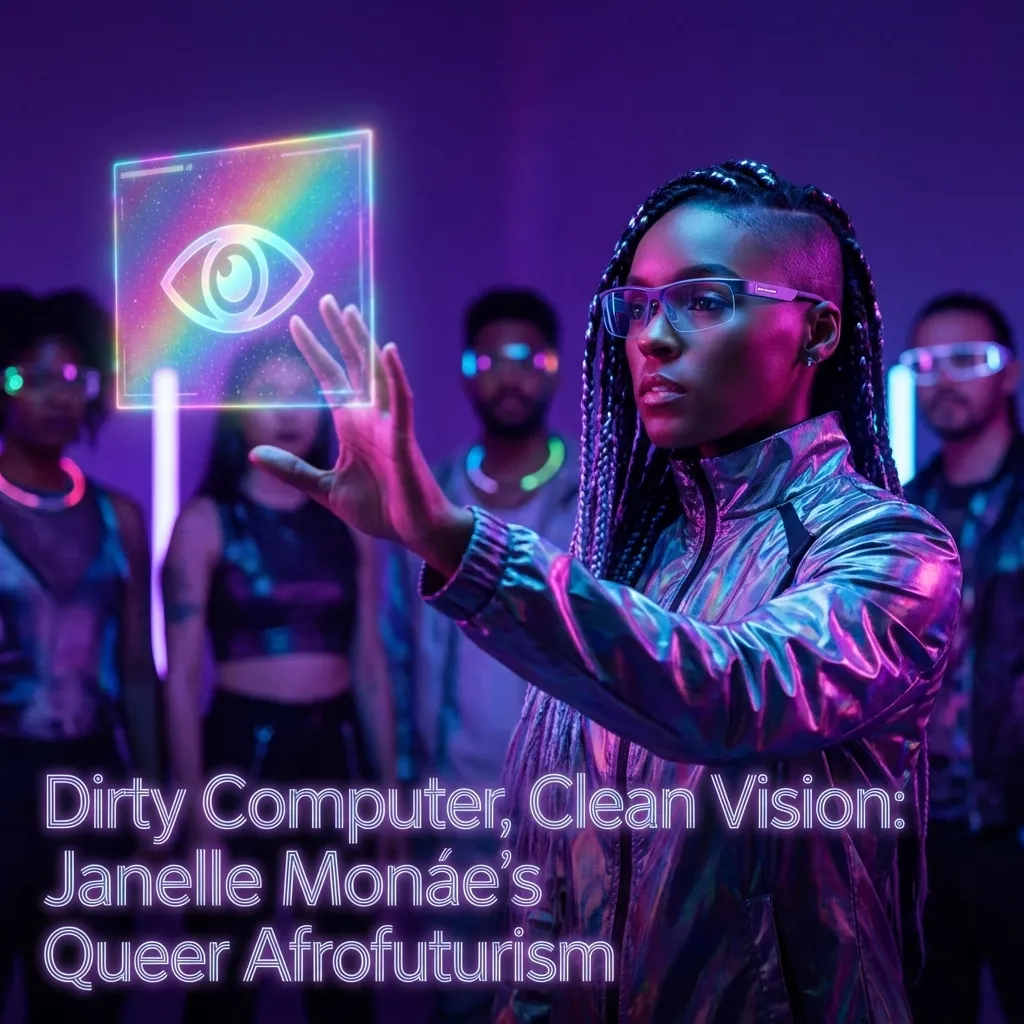
When Janelle Monáe dropped Dirty Computer in 2018, she didn't just release an album, she created a manifesto. A gorgeous, genre-bending, unapologetically queer Afrofuturist masterpiece that said what so many of us needed to hear: your differences aren't bugs in the system. They're features. And damn right, they're revolutionary.
At a time when pop stars were still tiptoeing around queerness with vague pronouns and "open to interpretation" music videos, Monáe kicked down the door wearing a vagina pants suit and said, "Let me make this crystal clear." Dirty Computer is what happens when an artist stops code-switching and starts truth-telling. It's sci-fi rebellion meets bedroom confessions, wrapped in production so tight it could make Prince smile from the beyond (and yes, he actually mentored her on this project before his passing).
The Concept: Love as Resistance in a Dystopian Future
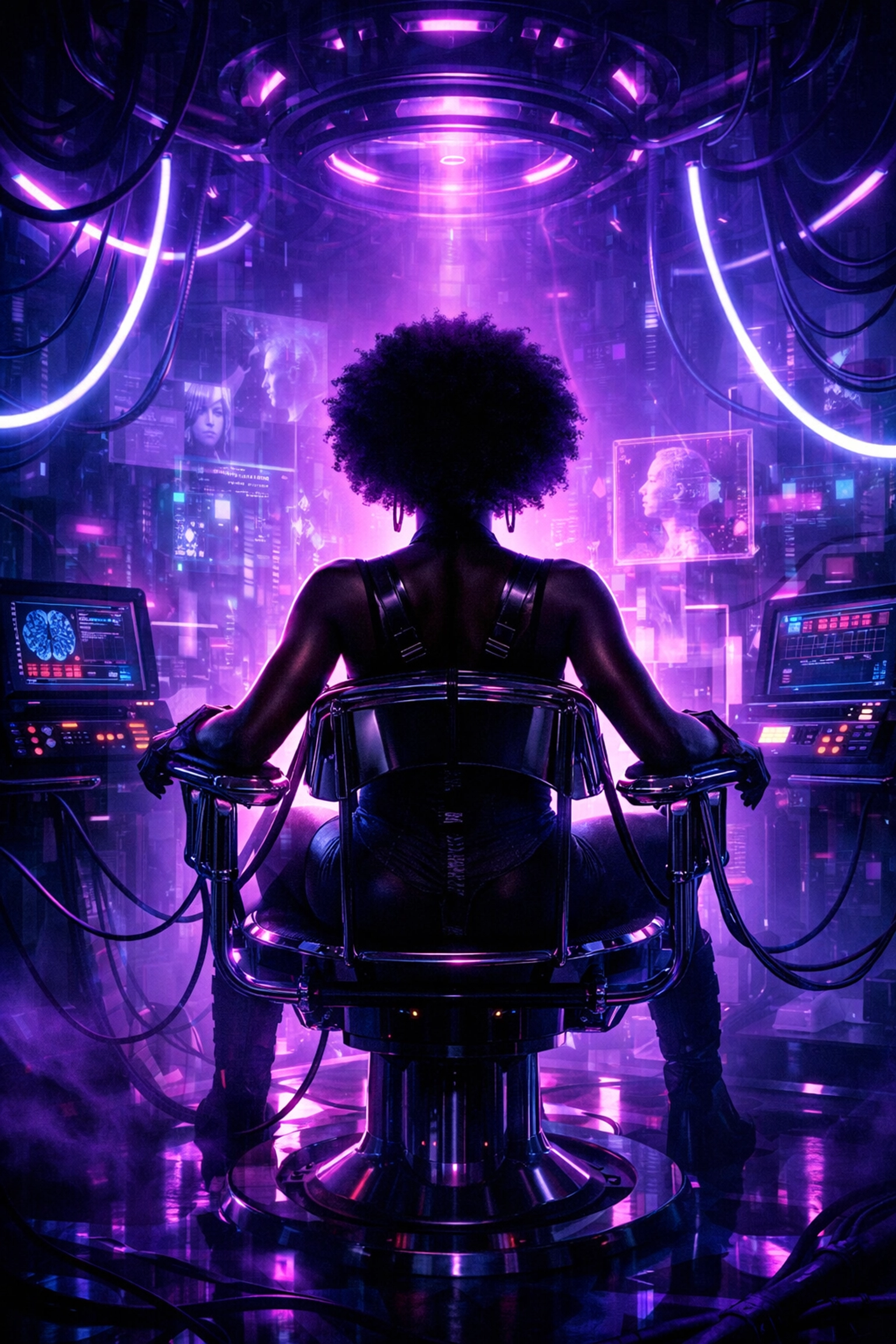
Dirty Computer isn't just an album, it's a 48-minute emotion picture that plays like Black Mirror directed by someone who actually gives a damn about marginalized people. The story follows Jane 57821, a "dirty computer" living in a totalitarian society where being different, queer, Black, free-thinking, alive, marks you for erasure.
The House of the New Dawn sounds like a wellness retreat but functions like conversion therapy meets 1984. Jane and others deemed "dirty" are strapped into chairs and forced to have their memories, their identities, systematically deleted. It's not subtle metaphor. It's barely metaphor at all. For anyone who's faced pressure to conform, to straighten up, to tone it down, to be less… this hits like a gut punch wrapped in synthesizers.
What saves Jane? Love. Specifically, her relationship with Zen, played by Tessa Thompson in a performance that radiates chemistry through every frame. Their connection isn't a subplot or queer-baiting, it's the beating heart of the resistance. When Jane declares "I will always be your dirty computer," she's refusing assimilation. She's choosing love and identity over safety and erasure.
"Make Me Feel": The Bisexual Anthem We Deserved
Let's talk about "Make Me Feel" for a second because this song is doing things. With production blessed by Prince himself, Monáe created what might be the most joyful, sensual celebration of bisexuality in pop music. The video features Monáe caught between two stunning love interests, Tessa Thompson in cool blue and Jayson Aaron in hot pink, and she's not choosing. She's feeling.
"It's like I'm powerful with a little bit of tender / An emotional sexual bender" isn't just a lyric. It's a whole mood. It captures that fluid, expansive experience of desire that refuses boxes and boundaries. And unlike so many pop songs that hint at queerness while maintaining plausible deniability, Monáe leans all the way in.
The track works because it sounds like liberation feels, buoyant, confident, a little dangerous, completely irresistible. It's the song you blast when you're tired of explaining yourself and ready to just be.
Afrofuturism Meets Queer Liberation
What makes Dirty Computer groundbreaking isn't just its queerness, it's how it weaves together race, gender, sexuality, and resistance through an Afrofuturist lens. Monáe interrogates how Black bodies, especially Black queer bodies, have been historically dehumanized and controlled. By framing herself and other marginalized people as "dirty computers," she flips the script on dehumanization itself.
In Afrofuturism, the boundary between human and machine often represents possibilities for transcendence. But Monáe rejects empty transhumanism. She embraces the body, messy, sexual, vulnerable, powerful, as the site of memory and resistance. When you watch tracks like "Django Jane" (a feminist rap banger that would make Audre Lorde nod in approval) or "Americans" (a searing critique of systemic oppression), you see someone refusing to be anything other than fully, complexly human.
"Django Jane" in particular goes OFF: "We gave you life, we gave you birth / We gave you God, we gave you Earth / You wanna flex? We got the truth." It's Black feminist rage as pop art, and it's glorious.
Coming Out, Loud and Clear
Janelle Monáe officially came out as pansexual around the release of Dirty Computer, though she'd been dropping hints for years through her android alter ego Cindi Mayweather. But there's something powerful about stepping fully into visibility. In interviews, she talked about growing up in Kansas City, navigating spaces that didn't always affirm queer identity, and eventually finding freedom in artistic expression.
"Being a queer Black woman in America," she told Rolling Stone, "someone who has been in relationships with both men and women, I consider myself to be a free-ass motherf***er." And honestly? That energy permeates every frame of Dirty Computer.
Her visibility matters. Not just because representation matters (though it does), but because Monáe creates visibility with nuance, artistry, and zero apologies. She's not interested in being palatable. She's interested in being free.
Why This Matters for Our Community
Pop culture gives us mirrors and windows: chances to see ourselves reflected and glimpses into experiences beyond our own. For LGBTQ+ folks, especially queer people of color, those reflections have often been distorted, absent, or tragic. Dirty Computer offers something different: a vision of queerness as futuristic, powerful, worth fighting for, worth celebrating.
The album doesn't shy away from the reality of oppression: the memory-wiping sequences are genuinely disturbing. But it also doesn't end in tragedy. Jane's memories, her love, her identity: they persist. They resist. The final image of the emotion picture shows freed "dirty computers" dancing together, alive and unbroken.
That vision matters. It matters when you're a queer kid wondering if there's space for you in the future. It matters when you're tired of seeing queer stories that end in suffering. It matters because joy is resistance, and pleasure is political, and sometimes the most revolutionary thing you can do is dance like you're already free.
The Legacy Continues
Dirty Computer earned Monáe multiple Grammy nominations and cemented her status not just as a pop innovator but as a queer icon. She's joined the ranks of artists like Lady Gaga, Cher, and other pop legends who've used their platforms to uplift and celebrate the LGBTQ+ community: but with her own distinct vision.
Since Dirty Computer, Monáe has continued to push boundaries. She's shown up for trans rights, spoken out against discrimination, and created space for other queer artists to thrive. And she's done it all while maintaining artistic integrity that never panders or simplifies.
For those of us at Read with Pride, there's a direct line between the stories we celebrate: MM romance books, gay romance novels, queer fiction that centers love and resistance: and what Monáe accomplishes in Dirty Computer. Both say: your story matters. Your love is powerful. Your difference is what makes you magnificent.
So if you haven't experienced Dirty Computer yet, carve out an evening, dim the lights, and let it wash over you. Watch the emotion picture. Let "Make Me Feel" move through your body. Rage along with "Django Jane." Feel seen, feel powerful, feel dirty and clean and completely, beautifully yourself.
Because in the end, we're all just computers trying to hold onto our programming: the memories, loves, and truths that make us who we are. And as Janelle Monáe proves, the dirtiest computer is the one that refuses to be wiped clean.
Discover more LGBTQ+ stories, MM romance books, and queer fiction at readwithpride.com
Follow us: Facebook | X/Twitter | Instagram
#JanelleMonae #DirtyComputer #QueerIcon #LGBTQ #Afrofuturism #QueerPop #ReadWithPride #MMRomance #QueerFiction #GayRomanceBooks #LGBTQBooks #PrideReading #BisexualVisibility #Pansexual #QueerArt #RepresentationMatters #2026Pride #GayLiterature #LGBTQReading


Leave a Reply
You must be logged in to post a comment.