
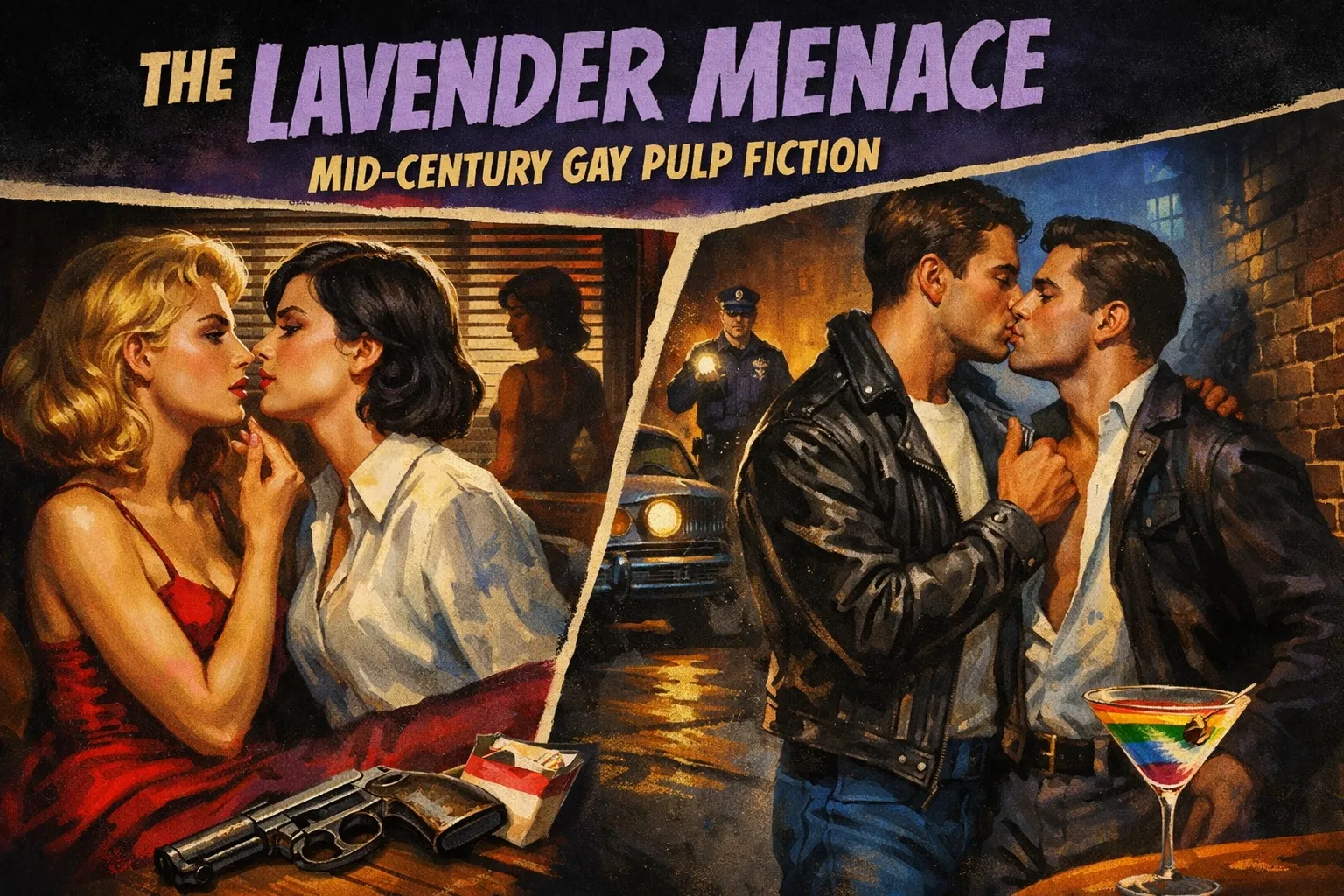
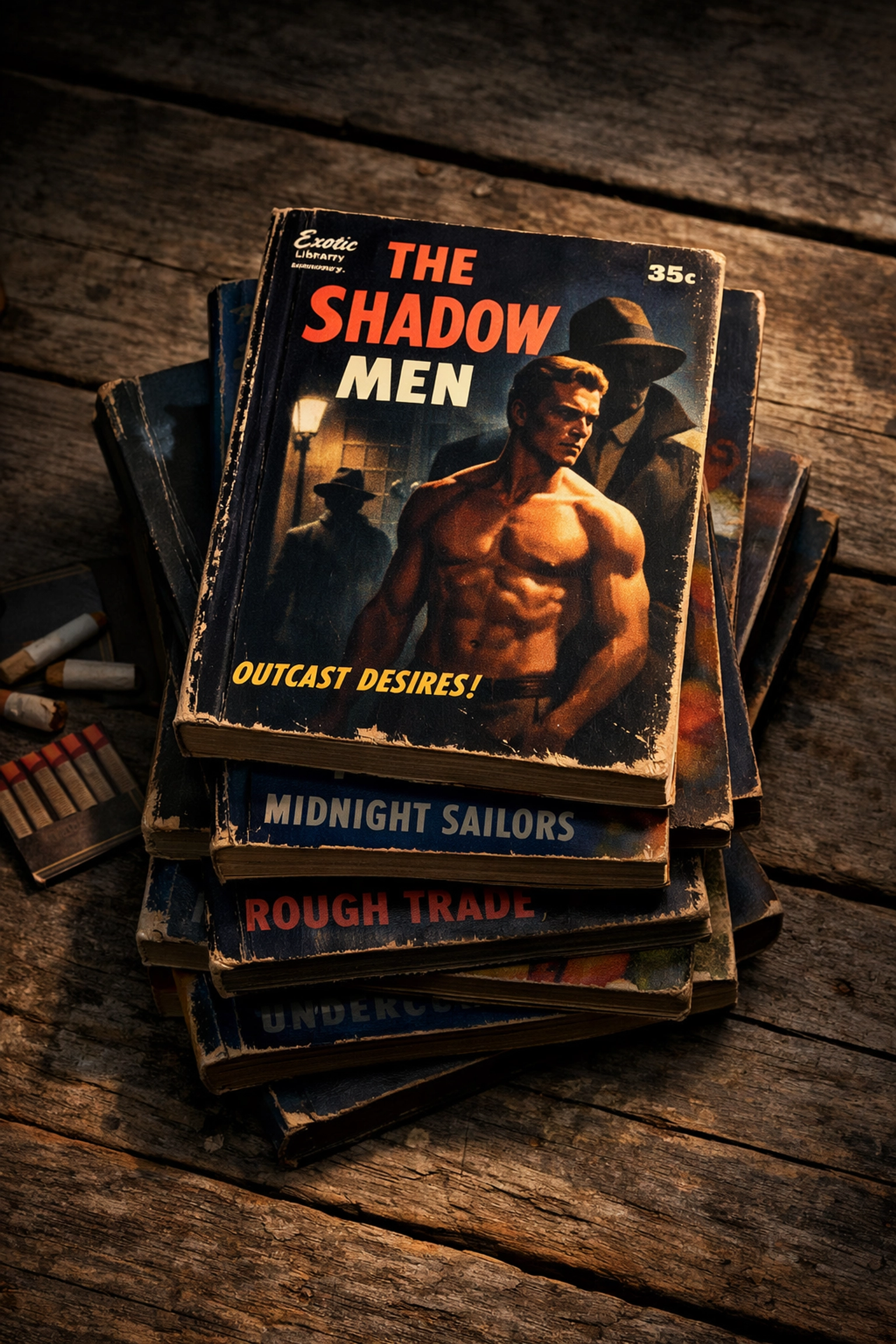
Before we had Kindle Unlimited filled with steamy MM romance and beautifully crafted gay love stories, before Call Me By Your Name graced movie screens, and before queer bookstores became community hubs, there were the pulps. Cheap, lurid, and often tragic paperbacks sold in drugstores and bus stations, tucked behind more "respectable" reading material. These weren't your typical gay romance books, they were something messier, something desperate, and something absolutely revolutionary.
The term "lavender menace" actually came from Betty Friedan's 1969 panic about lesbians threatening the feminist movement (spoiler: they didn't). But the phrase perfectly captures the moral panic surrounding anything queer in mid-century America. And nowhere was that panic more visible, and more exploited, than in the pulp fiction that flooded American newsstands from the 1940s through the 1960s.
The Paperback Revolution Nobody Talks About
Here's the thing about pulp fiction: it was trashy by design. Cheap paper, sensationalized covers featuring sultry women or brooding men, and titles that promised scandal. They cost a quarter, fit in your pocket, and could be read on a lunch break or during a commute. Publishers cranked them out by the thousands, covering everything from westerns to crime noir to science fiction.
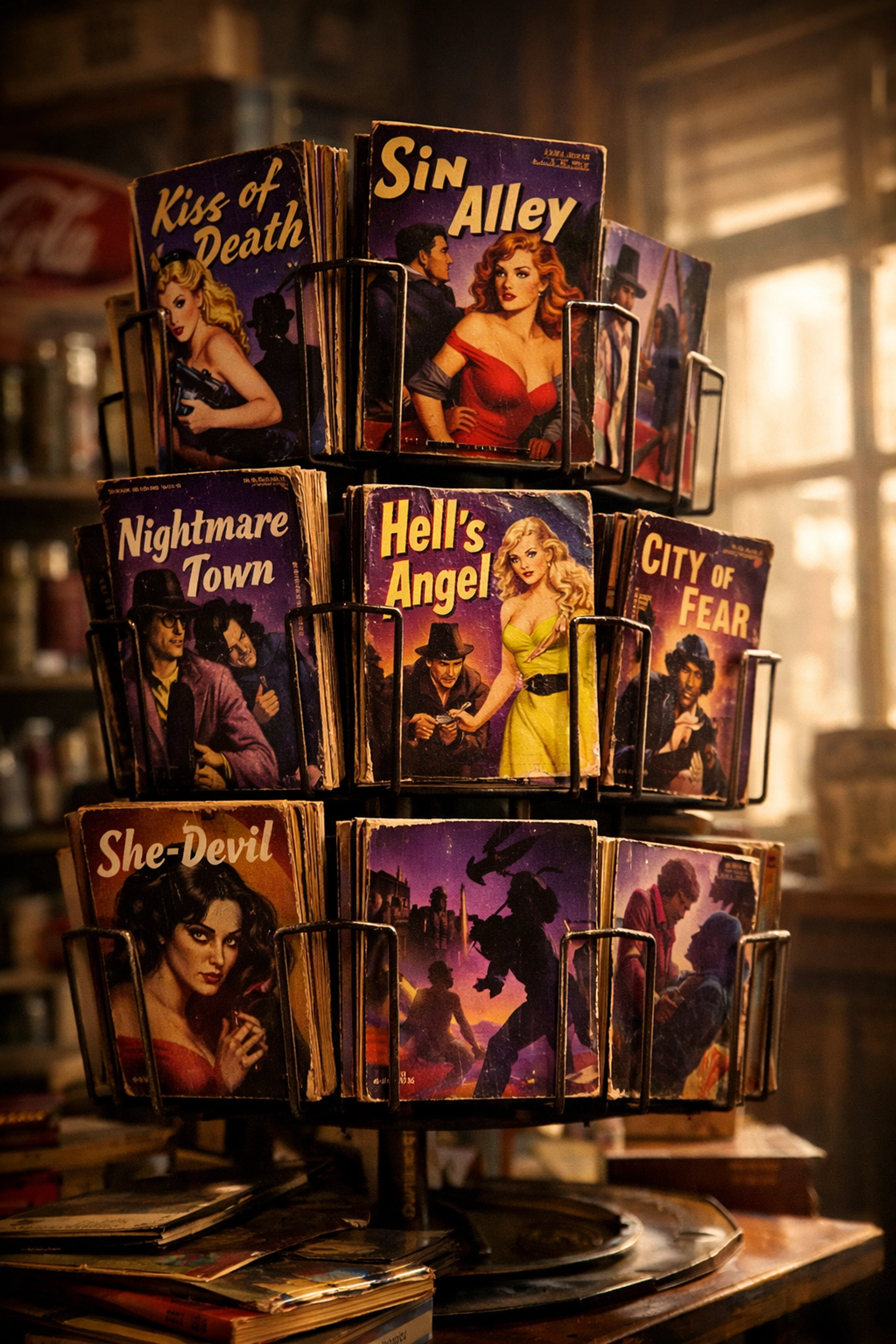
And buried among all those genres? Gay fiction and lesbian novels that offered the only representation many queer people would ever see in print.
Companies like Beacon Books, Greenleaf Classics, and Midwood Books published hundreds of titles with queer themes between 1950 and 1965. Books with covers featuring half-dressed women and titles like Twilight Women, The Third Sex, or Strange Sisters. For gay men, there were titles like The Divided Path, Finistere, and Quatrefoil, stories that acknowledged same-sex desire existed at all, which was radical in an era when homosexuality was classified as a mental illness.
Reading Between the Lines (Because You Had To)
The covers screamed exploitation, but inside? The stories varied wildly. Some were genuinely written by queer authors trying to tell authentic stories within impossible constraints. Others were straight-up exploitation written by straight authors who'd never met a gay person and relied entirely on stereotypes. The problem? Readers usually couldn't tell which was which until they were several chapters in.
These books operated under what we might call "oppressive censorship meets capitalist opportunity." Publishers found a loophole: you could write about queer people if you presented them as cautionary tales. The formula became predictable: introduce your protagonist, show their "descent" into homosexuality, depict their suffering, and, this is crucial, ensure they either died, went straight, or ended up utterly miserable by the final page.
The tragic ending wasn't just a trope. It was a requirement. The Comstock Laws and various obscenity statutes meant that books depicting homosexuality could only legally exist if they condemned it. Happy queer people? That was obscene. Dead or suffering queer people? That was "social commentary."
But here's where it gets interesting: queer readers learned to read between the lines. They savored the chapters before the mandatory tragedy. They found community in the mere existence of characters like them. They passed these books to friends with whispered recommendations. The pulps became a coded language, a way of recognizing each other.
The Women Who Dared
Lesbian pulp fiction deserves its own special mention because it was weirdly more prevalent than male-focused pulps, at least on the surface. Books like Ann Bannon's Odd Girl Out (1957) or Vin Packer's Spring Fire (1952) sold hundreds of thousands of copies. Patricia Highsmith's The Price of Salt (published under the pseudonym Claire Morgan in 1952) dared to have a happy ending and became legendary because of it.
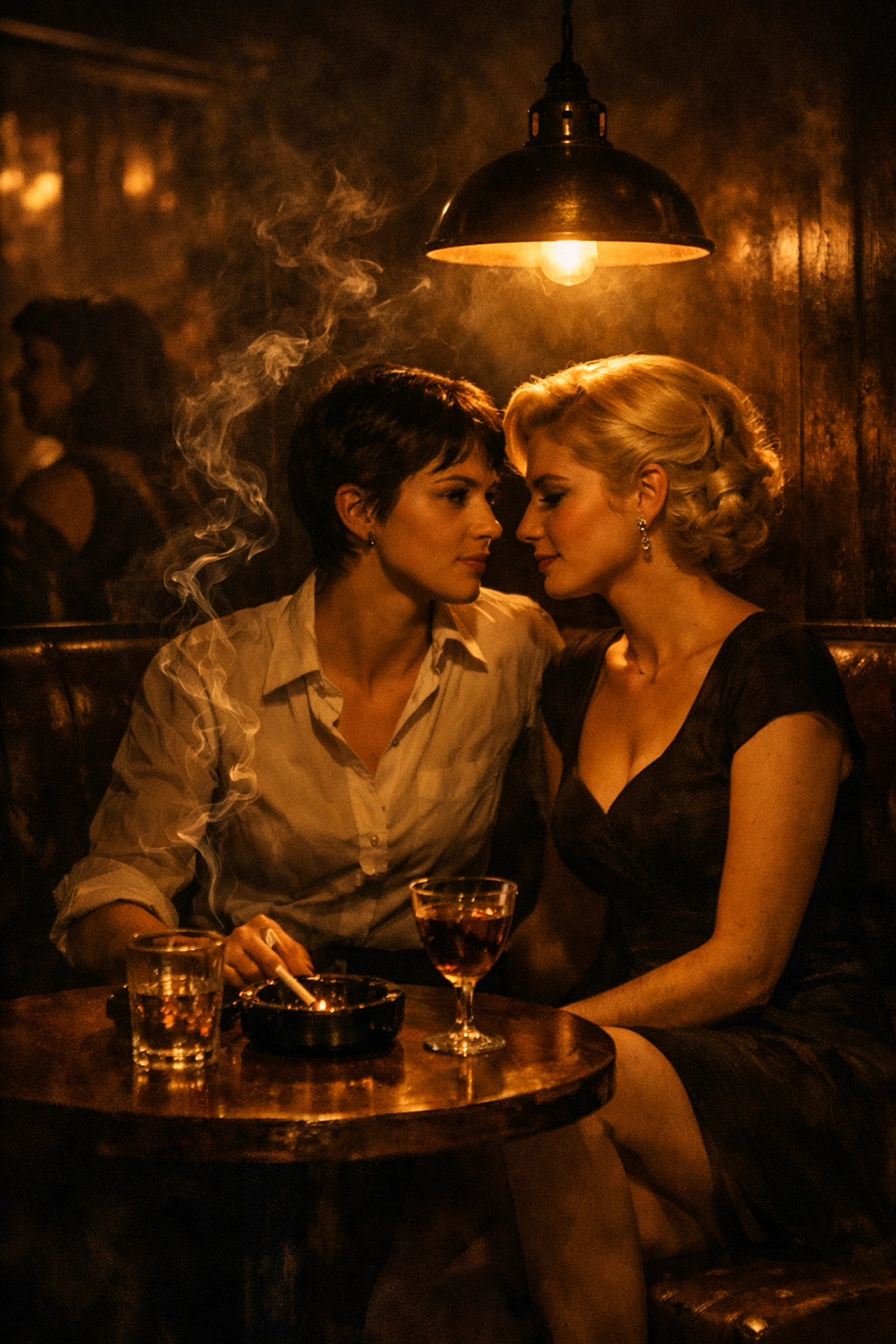
The lesbian pulps had their own particular flavor of exploitation. Publishers sold them to straight men as titillation while queer women bought them desperately searching for themselves on the page. The covers featured lipstick lesbians in dramatic embraces, designed to attract male readers. But inside, writers like Ann Bannon crafted stories about Greenwich Village bars, found families, and women choosing each other despite everything society told them.
These books created something unexpected: a literary community. Readers wrote to publishers begging for more titles. They wrote to the (often pseudonymous) authors. They found each other through shared knowledge of these books, creating networks that would later become the foundation of the lesbian feminist movement.
The Men in the Margins
Gay male pulps were rarer and operated under even stricter scrutiny. Publishers feared prosecution more with male content, probably because male homosexuality was more actively criminalized and carried harsher penalties. But the books that did make it through offered glimpses of gay life that nothing else did.
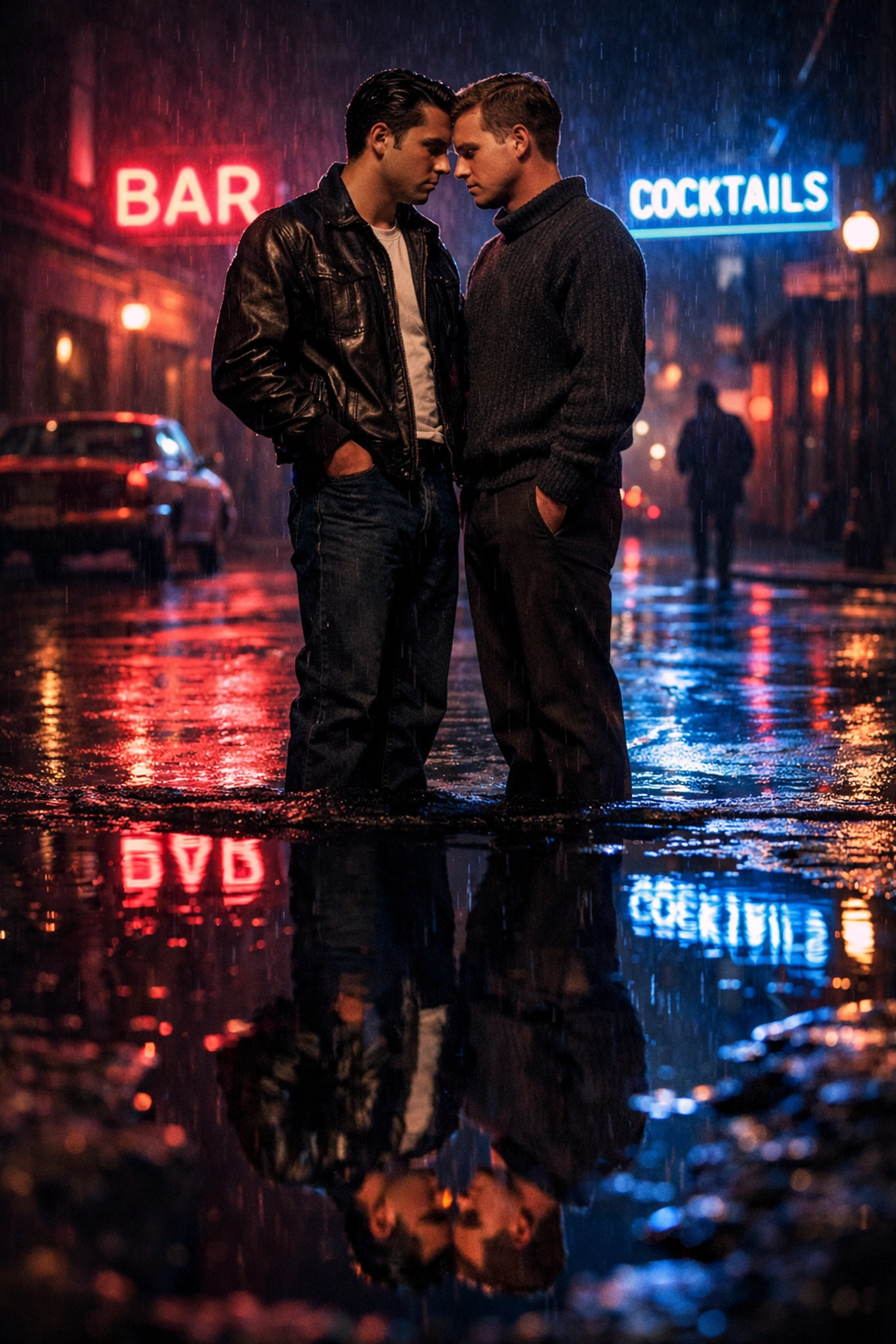
Novels like John Horne Burns's Lucifer with a Book or Fritz Peters's Finistere attempted literary merit within pulp constraints. They depicted gay bars, coded language, the constant fear of police raids, and the particular loneliness of mid-century queer life. Even when ending in tragedy, and they almost always did, these books validated that gay men existed, had lives, fell in love, and weren't just the punchlines or villains they were in mainstream media.
Why They Mattered (Despite Everything)
Look, we're not going to pretend these books were perfect. They weren't. They were often sexist, racist, and filled with internalized homophobia. The mandatory tragic endings reinforced harmful ideas about queer people deserving suffering. The medical model of homosexuality (treating it as pathology) appears constantly. There's a lot to critique.
But for a closeted teenager in 1958 Kansas or a young lesbian in 1963 Alabama, finding one of these books was life-changing. It was proof they weren't alone. It was proof that somewhere, somehow, other people felt what they felt. It was the only gay literature that existed in many places.
The pulps also preserved queer culture. They documented the bars, the language, the networks that existed despite oppression. Reading them now is like accessing a time capsule of mid-century queer life, complete with all its complexity and contradiction. They're historical documents disguised as throwaway paperbacks.
From Pulp to Pride
The direct line from pulp fiction to modern LGBTQ+ fiction is undeniable. When the Stonewall riots happened in 1969, activists already had decades of pulp-created community to build on. When gay bookstores opened in the 1970s, they knew there was a market because the pulps had proved it. When queer authors finally got to write their own stories without tragic endings, they were responding to and rebelling against pulp tropes.
Today's MM romance books and queer fiction owe these messy, exploitative, revolutionary paperbacks a debt. We get happy endings now. We get complex characters who aren't defined solely by tragedy. We get authentic stories from real queer voices. But the pulps opened that door, even if they did it while kicking and screaming and insisting everyone had to die sad.
The Queer Canon We Inherited
Modern readers discovering pulp fiction are often shocked by how raw it feels. These books weren't polished. They weren't approved by sensitivity readers or carefully marketed. They were desperate, urgent, and often messy. And that messiness? That's part of their power.
They remind us that gay romance and LGBTQ+ literature didn't emerge fully formed in the 21st century. Every beautifully crafted modern novel about two men falling in love stands on the shoulders of pulp writers who were just trying to smuggle truth past censors. Every happy ending we read now is a middle finger to the mandated tragedies of the pulp era.
So yeah, the lavender menace was real; but it wasn't a threat. It was a revolution hiding in plain sight, sold for a quarter at drugstores, changing lives one cheap paperback at a time.
Discover authentic LGBTQ+ stories and contemporary gay romance at ReadWithPride.com 🌈
Follow us for more queer literary history and recommendations:
- Facebook: facebook.com/ReadWithPride
- Instagram: @read.withpride
- X/Twitter: @Read_With_Pride
#ReadWithPride #LGBTQBooks #GayRomance #MMRomance #QueerLiterature #GayFiction #PulpFiction #LGBTQHistory #GayBooks #QueerHistory #GayLiterature #MMRomanceBooks #LGBTQFiction #GayClassics #QueerReads #LGBTQReading #GayBookClub #MMFiction #QueerFiction #GayNovels

Leave a Reply
You must be logged in to post a comment.