

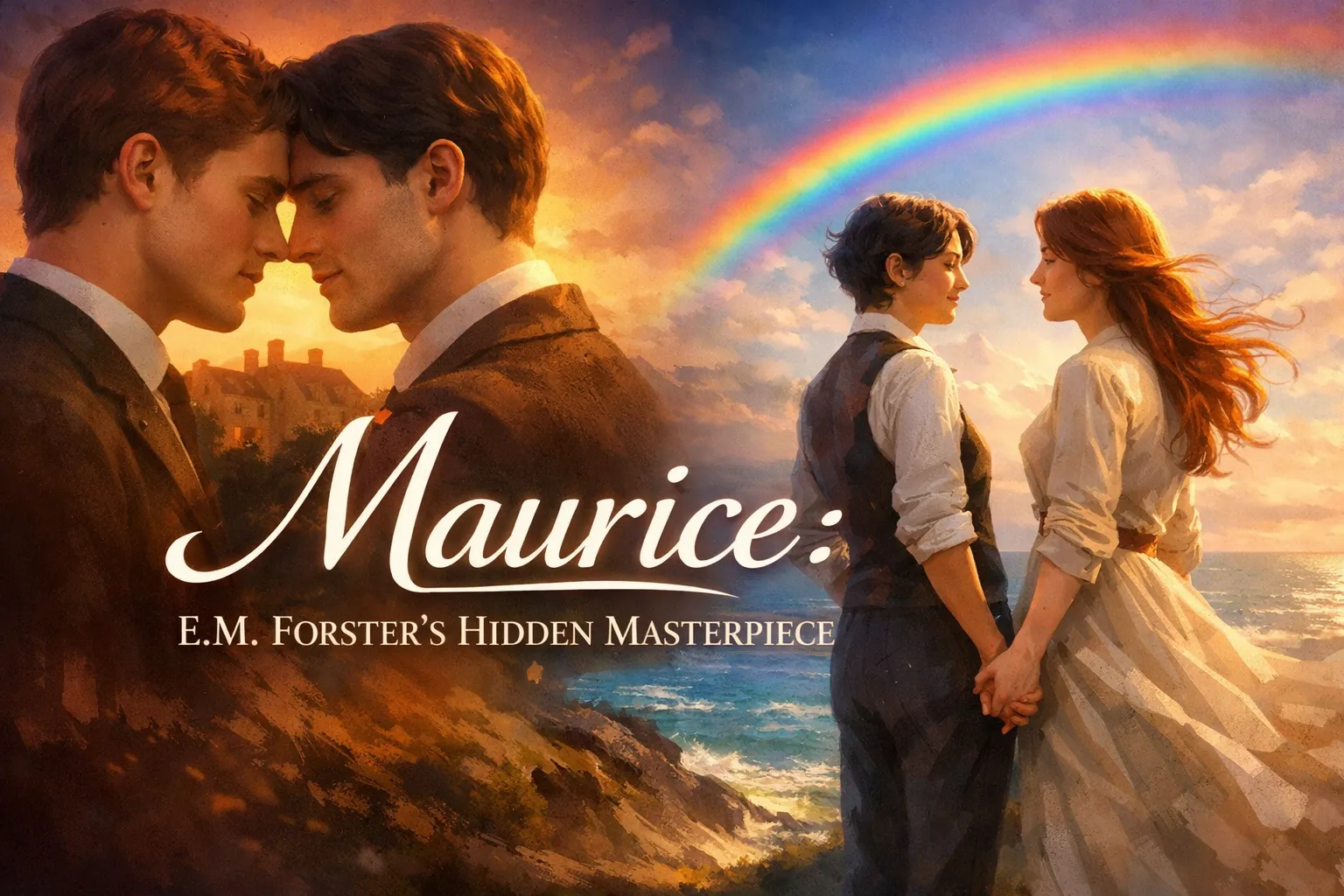
Imagine writing a love story so honest, so raw, that you lock it away for 57 years, not because it's bad, but because telling the truth could destroy you. That's exactly what E.M. Forster did with Maurice, a novel that wouldn't see daylight until after he was safely dead and buried. Talk about the ultimate posthumous mic drop.
The Novel That Couldn't Be Published
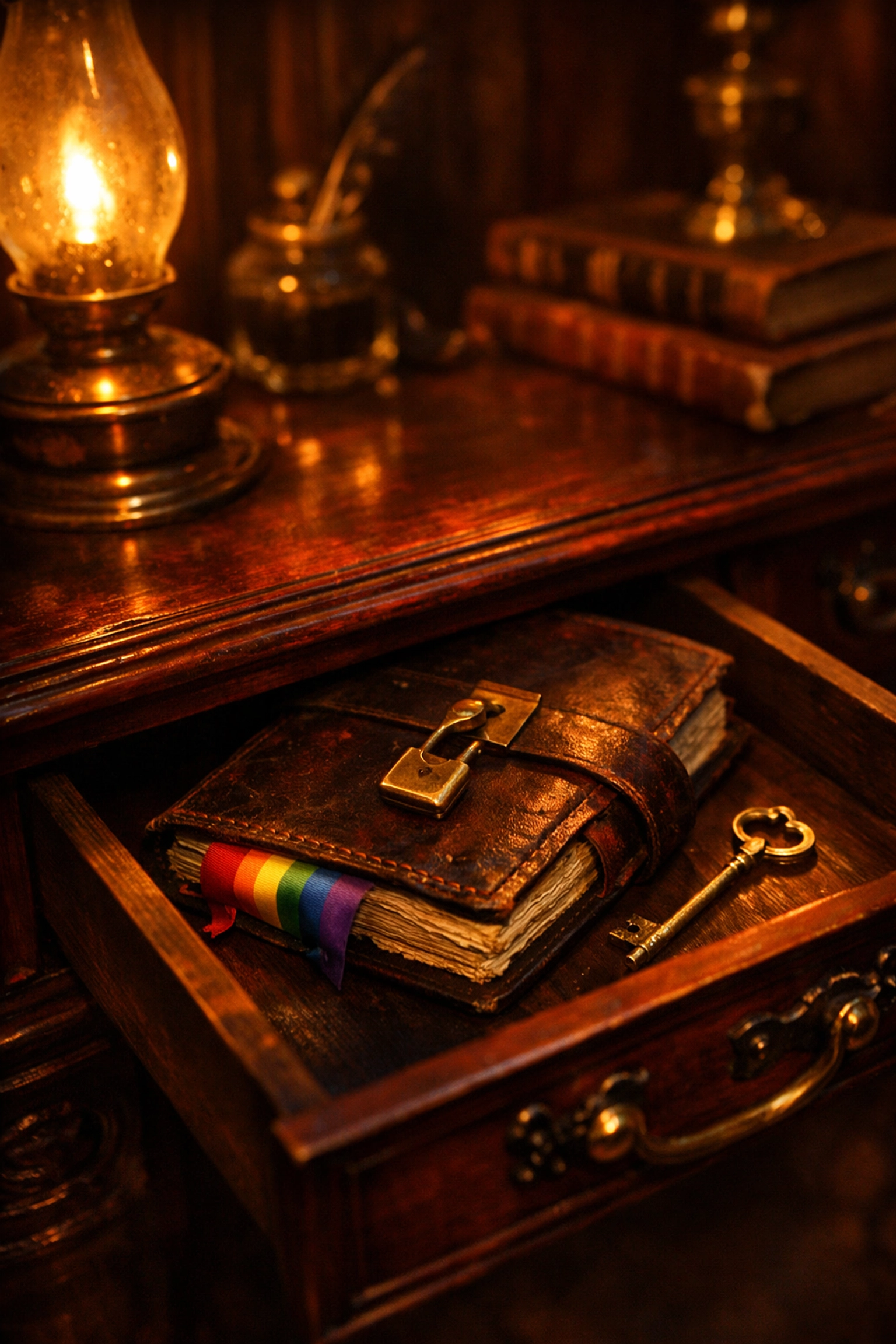
When Forster finished Maurice in 1914, Oscar Wilde's imprisonment was still fresh in public memory. Homosexuality wasn't just taboo, it was literally illegal in England, punishable by imprisonment and social annihilation. So what did Forster do with his groundbreaking gay love story? He tucked it in a drawer, revised it occasionally (in 1932 and again in 1959-1960), and left instructions for it to be published only after his death.
The novel finally hit shelves in 1971, a year after Forster died at age 91. In a way, Maurice became his way of coming out, safely, posthumously, but powerfully. The literary world got to meet the real Forster, the one who'd been hiding in plain sight for decades while writing other celebrated works like A Room with a View and Howards End.
For those of us who love gay literature and MM romance books today, it's wild to think that one of the most important works of queer fiction had to wait over half a century to exist publicly.
Maurice's Journey: From Cambridge to Self-Discovery
The novel follows Maurice Hall through the minefield of early 20th-century British society. We meet him as a young man at Cambridge University, where he falls for Clive Durham, a fellow student. Their relationship is all intellectual connection and no physical contact, the kind of "Greek ideal" romance that upper-class Edwardian men could almost justify to themselves.
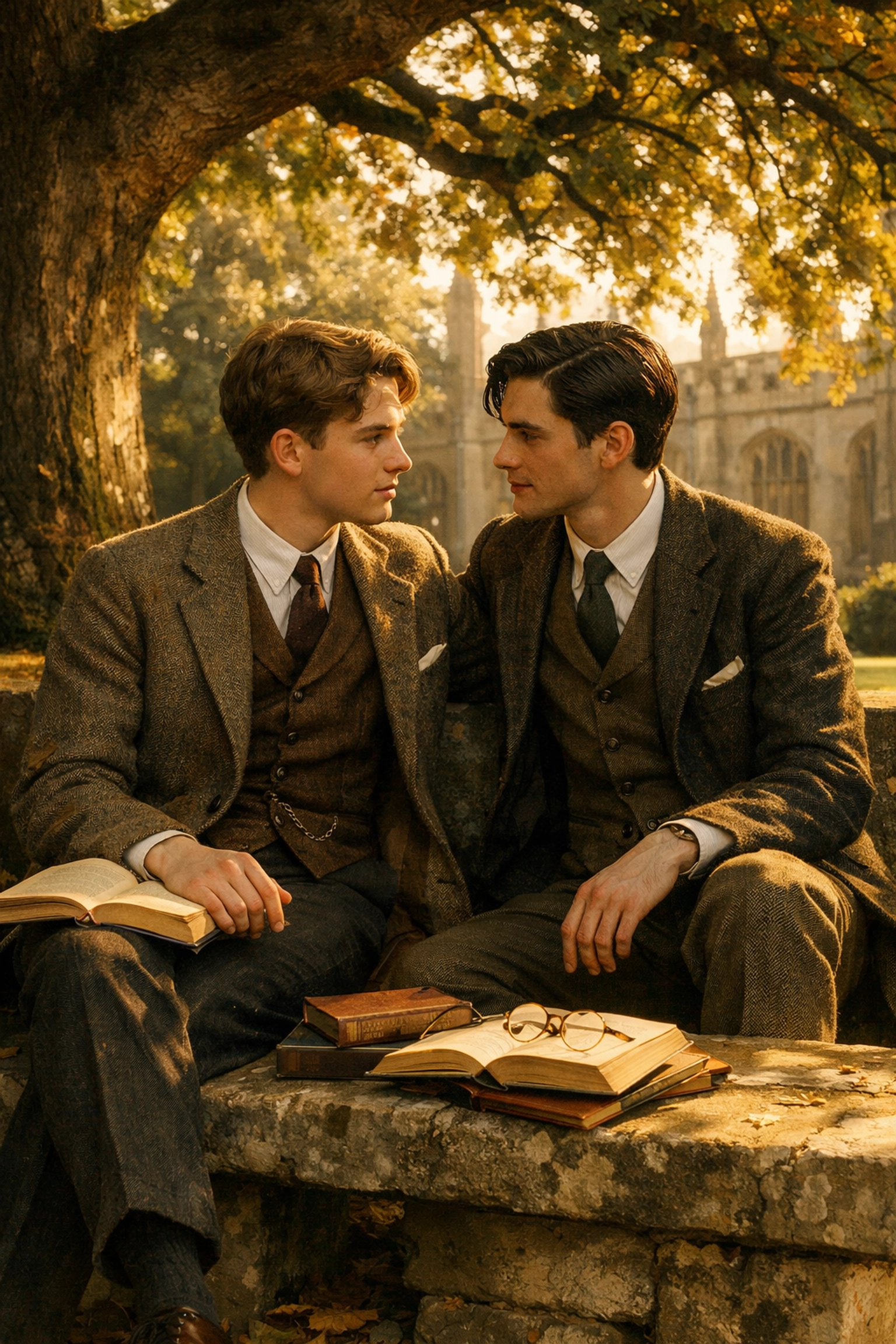
But here's where Forster gets real: Clive eventually decides he's "not that way" anymore (we've all met that guy, right?) and marries a woman, leaving Maurice absolutely devastated. This is where many historical MM romance novels of that era would end, with tragedy, shame, or a swift exit stage left.
But Forster had other plans.
Enter Alec Scudder, a gamekeeper on Clive's estate. He's working class, physical, and unapologetically himself. When Maurice and Alec connect, it's everything his relationship with Clive wasn't: passionate, physical, honest, and real. No more pretending that love between men has to be some ethereal, sexless ideal.
Maurice even visits a doctor, confessing he's "an unspeakable of the Oscar Wilde sort", a heartbreaking moment that shows how internalized homophobia poisoned even the bravest souls. The doctor's response? Basically, "have you tried not being gay?" Sound familiar?
The Revolutionary Happy Ending
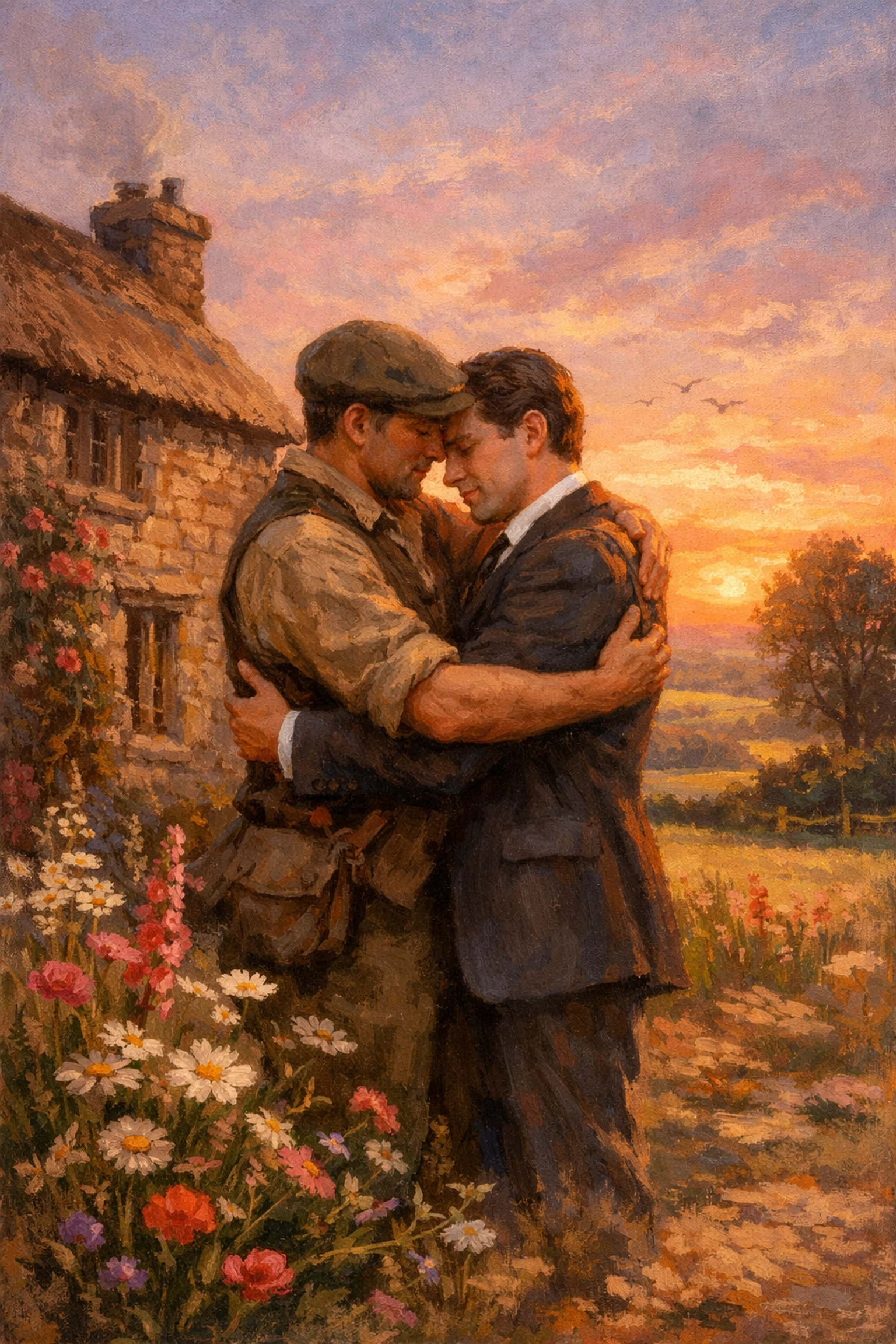
Here's what makes Maurice absolutely revolutionary: it has a happy ending. Not a "buried gays" tragedy. Not a "one of them marries a woman" cop-out. Not a "they loved but society tore them apart" sob story.
Forster explicitly said: "A happy ending was imperative. I shouldn't have bothered to write otherwise…two men should fall in love and remain in it for the ever and ever that fiction allows."
In 1914, this was radical. Hell, it would've been radical in 1971 when it was finally published. Even today, when we're spoiled for choice with gay romance novels and MM fiction that celebrate love, this ending resonates. Forster was saying that queer love deserves happiness, full stop, no qualifications, no tragic payment required.
The inspiration for this hopeful vision came from a real-life couple: Edward Carpenter and George Merrill, whom Forster visited in 1913. Seeing two men living openly and happily together, despite everything society threw at them, gave Forster permission to imagine that ending for Maurice and Alec.
Class, Society, and the Cages We Build
One of the most fascinating aspects of Maurice is how it weaves together sexuality and class. Maurice's first love, Clive, comes from the "right" social circles but ultimately chooses conformity. Alec, the gamekeeper, has nothing to lose, no reputation to protect, no estate to inherit, no political career to safeguard.

Forster shows how the British class system didn't just divide people economically, it suffocated authentic human connection. Maurice can't be himself in his own social sphere, where everyone's watching and judging. Freedom comes only when he's willing to walk away from privilege and respectability.
This tension between social expectations and personal truth is something that still resonates in queer fiction today. How many of us have had to choose between being ourselves and being accepted? Between love and safety? Between authenticity and approval?
Why Maurice Still Matters
Nearly a century after it was written, Maurice remains essential reading for anyone interested in LGBTQ+ fiction and the history of gay literature. It's not just a historical artifact, it's a bridge between the closeted past and the out-and-proud present.
For readers discovering MM romance for the first time, Maurice offers context. It shows where we've come from, when even imagining a happy ending for gay characters was an act of rebellion. Every contemporary MM romance book with a joyful HEA (happily ever after) owes something to Forster's decision to write that forbidden happy ending.
The novel also reminds us that queer stories have always existed, even when they couldn't be told publicly. Forster wasn't the only one writing in secret, dreaming of a day when love stories like Maurice's could be celebrated rather than criminalized.
Coming Out After Death
There's something both tragic and touching about Forster's posthumous coming out via Maurice. He never got to see readers embrace the novel. He never got to hear from gay men who found themselves in Maurice's struggles. He never witnessed the book's adaptation into the beautiful 1987 film by James Ivory.
But maybe that's the point. Forster wrote Maurice not for himself, but for the future, for readers who would live in a world where such stories could exist openly. He planted a seed he'd never see bloom, trusting that someday, somewhere, it would matter.
And it did. Maurice paved the way for the explosion of gay romance, MM novels, and LGBTQ+ ebooks we have today. Every time we pick up a new gay love story with a happy ending, we're living in the world Forster could only imagine.
Read with Pride
If you haven't read Maurice yet, add it to your list. Yes, it's slower-paced than modern MM contemporary romance. Yes, the language is dated. But it's also beautiful, brave, and deeply human. It's a reminder that love has always been worth fighting for: even if that fight means waiting 57 years to tell the truth.
And if you're looking for more gay romance books that celebrate love in all its forms, explore the collection at Read with Pride. From historical romance to contemporary stories, from sweet to steamy, there's a whole world of queer fiction waiting for you: stories that Forster helped make possible.
Follow us for more LGBTQ+ literature and romance recommendations:
- Facebook: Read with Pride
- Instagram: @read.withpride
- Twitter/X: @Read_With_Pride
- Website: readwithpride.com
#MauriceNovel #EMForster #HistoricalMMRomance #GayLiterature #LGBTQBooks #MMRomance #QueerFiction #GayRomanceBooks #ClassicLGBTQLiterature #ReadWithPride #GayBooks #MMRomanceBooks #LGBTQFiction #QueerHistory #GayHistoricalRomance #MMNovels #GayLoveStories #2026Reading #BestGayBooks #LGBTQReading #GayBookClub

Leave a Reply
You must be logged in to post a comment.