

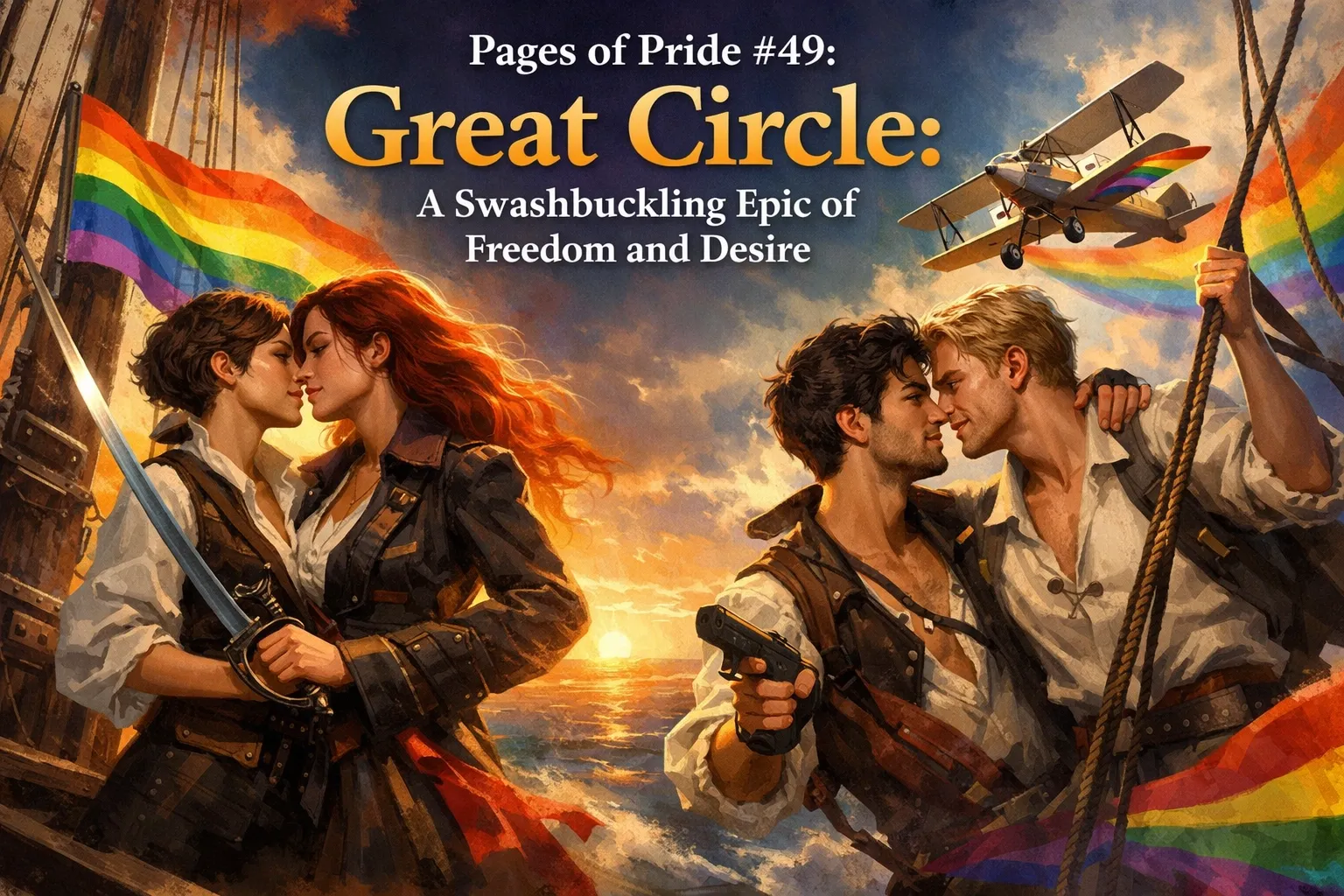
Some books take you on a journey. Others strap you into a vintage biplane and send you soaring across decades, continents, and the boundaries of what it means to be free. Maggie Shipstead's Great Circle is firmly in the latter category: a sweeping, ambitious novel that weaves together early 20th-century aviation, queer desire, and the unrelenting hunger for a life lived on your own terms.
For #49 in our Pages of Pride series celebrating the best LGBTQ+ books in history, we're diving into this modern epic that's as much about a woman's relationship with the sky as it is about her relationships with other women. Buckle up, because this ride gets turbulent in all the best ways.
A Story That Spans Sky and Screen
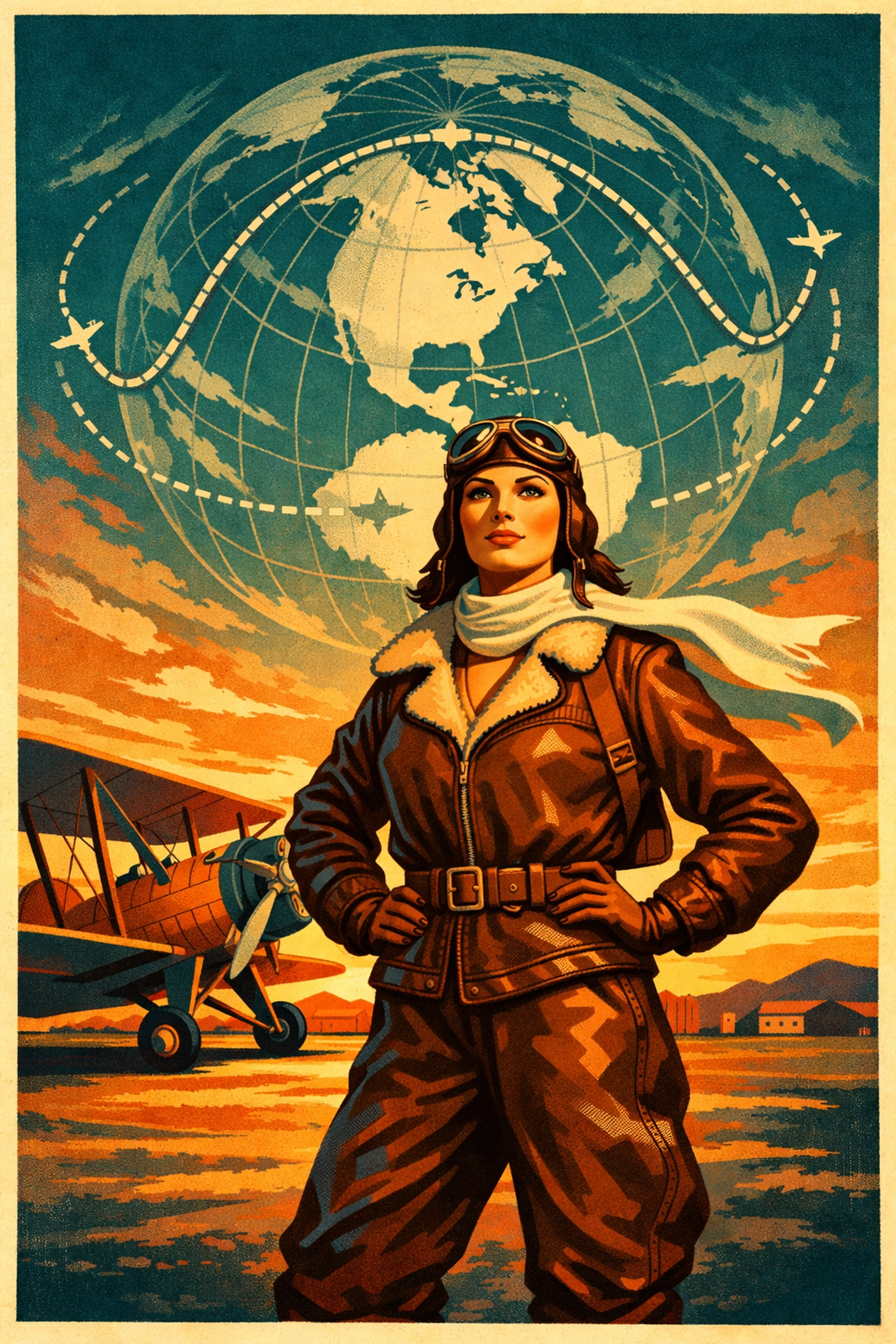
Great Circle operates on dual timelines that mirror and illuminate each other in unexpected ways. In one thread, we follow Marian Graves, born in 1914 after her parents perish in a shipwreck. Raised by her twin brother's side in Montana, Marian becomes obsessed with flying: and not just any flying. She dreams of circumnavigating the globe longitudinally, over both poles, a feat never accomplished in her era.

The second timeline follows Hadley Baxter, a troubled 21st-century Hollywood actress cast to play Marian in a biopic. Hadley's own messy life: tabloid scandals, addiction, bisexuality: becomes a contemporary echo of Marian's refusal to be contained by society's expectations.
What makes this structure sing is how Shipstead uses both women to explore similar themes: What does it cost to live authentically? How do we navigate desire when the world wants to dictate our paths? And what does freedom actually mean when you're constantly fighting for it?
The Queer Heart of the Matter
Let's talk about what really matters here: the queer representation that pulses through this 600-page beast. Marian's sexuality isn't a subplot or a "phase": it's woven into the fabric of who she is and how she moves through the world.
Early in the novel, Marian has a formative relationship with another woman, and later, she navigates a complex marriage to a man while carrying on significant relationships with women. Shipstead doesn't treat this as contradiction or confusion. Instead, she presents Marian as someone whose desires exist outside neat categories: someone living authentically in an era that had no language for bisexuality or queerness beyond criminalization and shame.
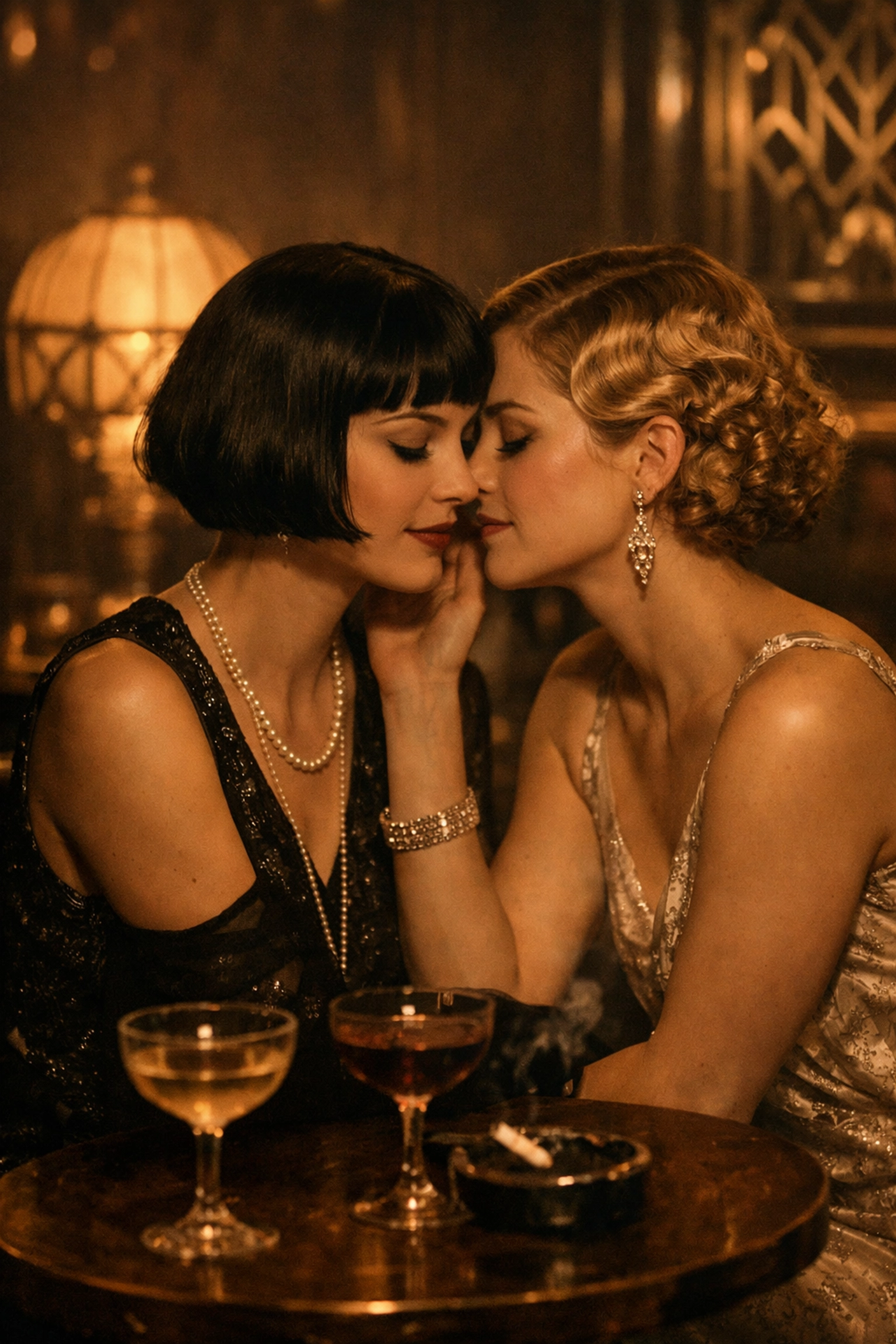
The historical queer fiction here doesn't sanitize the past. Marian faces real consequences for her relationships, for refusing to perform conventional femininity, for choosing adventure over domesticity. But Shipstead also doesn't make the story only about suffering. Marian's queerness is part of her larger defiance: a refusal to be grounded in any sense.
In the modern timeline, Hadley's bisexuality is more openly acknowledged but comes with its own set of complications: public scrutiny, relationship chaos, and the pressure to fit into Hollywood's narrow boxes. The parallel reminds us that while some things change, the fundamental challenge of living authentically remains.
Why This Book Matters for LGBTQ+ Readers
Great Circle arrived in 2021: a time when we desperately needed expansive, ambitious queer stories that didn't reduce LGBTQ+ characters to their trauma or their coming-out narratives. Shipstead gives us something rarer: a queer woman whose sexuality is one thread in a much larger tapestry of ambition, adventure, and self-determination.
For readers seeking gay romance novels with depth and literary heft, this delivers something different from traditional MM romance books or contemporary queer fiction. It's not primarily a love story: it's a story about a woman in love with freedom, with the sky, with living on her own terms, and yes, with other women along the way.
The book also offers something crucial: historical visibility. Female aviators existed. Queer female aviators existed. Women who refused to be wives and mothers and who instead chose danger and adventure: they existed. Shipstead brings one such fictional life into vivid focus, reminding us that LGBTQ+ people have always been here, always been extraordinary, always been reaching for something beyond what society prescribed.

Freedom, Desire, and the Sky
The central metaphor of flight works on multiple levels. Marian literally wants to fly higher and farther than anyone before her. But she's also trying to escape: gender expectations, small-town provincialism, the cage of heteronormativity, the earth itself.
Her great circle route: a path that takes her over both poles: becomes a symbol of attempting the impossible, of refusing the well-traveled routes everyone else takes. It's no accident that Shipstead chose this particular flight path for her queer protagonist. The great circle is the most direct route between two points on a globe, but it requires going to extremes, enduring harsh conditions, navigating by instruments when there are no landmarks.
Sound familiar? It's a pretty apt metaphor for queer life, especially in the early 20th century. The direct path to authenticity requires going to extremes, enduring hostile conditions, navigating without a map because society hasn't provided one.
Desire in the novel: sexual desire, the desire for adventure, the desire to be free: becomes inseparable from the act of flying. When Marian is in the air, she's most herself. When she's grounded, whether by marriage, pregnancy, or social expectation, she chafes and struggles. The book asks: What are we willing to risk for the chance to soar?
A Place in the LGBTQ+ Literary Canon
Great Circle belongs to a growing tradition of historical queer fiction that refuses to hide queer people in the margins of history. It sits alongside books like The Price of Salt, Fingersmith, and The Song of Achilles: novels that insist queer people have always been central to human stories of love, adventure, and ambition.
What sets it apart is its scope and ambition. This isn't a cozy queer romance (though we love those too: check out Read with Pride for plenty of MM romance books and gay love stories). It's a literary epic that happens to have a bisexual protagonist. It's historical fiction that refuses to erase queer desire. It's an adventure story where the adventurer loves women.
The book was a finalist for the Booker Prize, proving once again that LGBTQ+ fiction doesn't have to be niche or marginal. Queer stories can be ambitious, sprawling, literary, and commercially successful. They can tackle multiple timelines, complex themes, and hundreds of years of history while keeping queer characters at the center.
Who Should Read This?
If you're a fan of queer fiction that prioritizes character complexity and literary ambition, Great Circle delivers. If you loved The Seven Husbands of Evelyn Hugo but wanted something with more historical detail and less Hollywood gloss, this is your book. If you've ever felt constrained by expectations: gender, sexual, professional, personal: Marian's story will resonate.
This isn't a quick, escapist read. At over 600 pages, it requires commitment. But for readers who want to lose themselves in a character's entire life, who want to feel the rush of 1930s aviation and the complexity of queer desire across decades, it's absolutely worth the journey.
The book also offers something valuable for anyone interested in the history of women in aviation, prohibition-era Montana, or how Hollywood shapes and distorts the stories we tell about the past. Shipstead did meticulous research, and it shows in every detail of Marian's flights, her planes, and the world she navigates.
Why We're Celebrating It
As we near the end of our Pages of Pride series on the best LGBTQ+ books in history and today, Great Circle reminds us why queer literature matters. It's not just about representation: though that matters immensely. It's about expanding what's possible in storytelling, about insisting that queer people deserve epic narratives, sweeping adventures, and complex inner lives.
Marian Graves refuses to be grounded, refuses to stay in her assigned lane, refuses to limit herself to the roles women of her era were supposed to play. In doing so, she becomes a symbol for all of us who've ever wanted to chart our own course, love who we love, and reach for something beyond the ordinary.
Great Circle is gay literature at its finest: ambitious, beautifully written, unflinching in its portrayal of queer desire, and absolutely soaring in its scope. It's a reminder that our stories deserve to be told with the same grandeur, complexity, and ambition as any other.
So strap in, check your instruments, and prepare for takeoff. Marian Graves is taking us on a journey, and it's one hell of a ride.
Discover more incredible LGBTQ+ fiction and MM romance novels at ReadwithPride.com. Follow us on Facebook, Instagram, and Twitter/X for daily queer book recommendations.
#ReadWithPride #GreatCircle #QueerLiterature #LGBTQBooks #HistoricalQueerFiction #FemaleAviators #BisexualFiction #QueerFiction #GayLiterature #LGBTQReading #PagesOfPride #QueerBooks #WLWFiction #SapphicFiction #LiteraryFiction #BookRecommendations #QueerBookClub #2026Reading #GayBooks

Leave a Reply
You must be logged in to post a comment.