

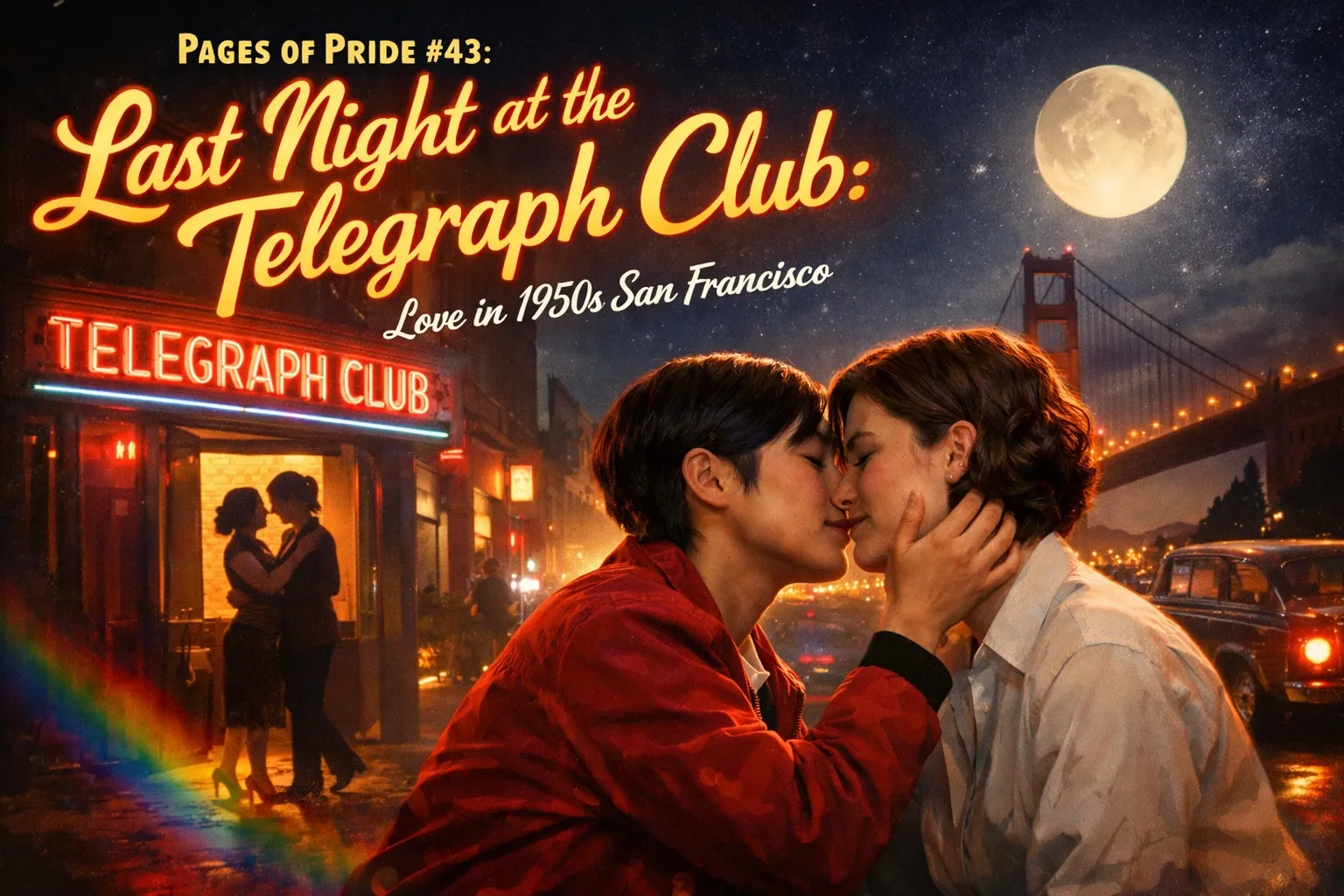
Some love stories need to be whispered in the shadows. Others deserve to be shouted from rooftops: even when the world isn't ready to listen. Malinda Lo's Last Night at the Telegraph Club gives us both: a tender, achingly real portrait of queer love that bloomed in one of the most dangerous eras for LGBTQ+ people and Chinese Americans alike.
This National Book Award-winning novel isn't just historical queer fiction: it's a love letter to everyone who ever had to hide who they were, wrapped in the glittering danger of 1950s San Francisco.
When Science Dreams Meet Forbidden Desire
Meet Lily Hu, a seventeen-year-old Chinese American girl living in San Francisco's Chinatown in 1954. While most girls her age are thinking about poodle skirts and sock hops, Lily's head is in the stars, literally. She dreams of becoming an astronomer, inspired by the science fiction magazines she devours and the possibility of exploring worlds beyond her own.
But there's another dream taking shape, one she doesn't have words for yet. It's in the way her heart races when Kathleen Miller smiles at her. It's in the magnetic pull she feels toward something she can't quite name. And then she discovers the Telegraph Club.
Under the Neon Sign: Finding Home in the Most Unlikely Place
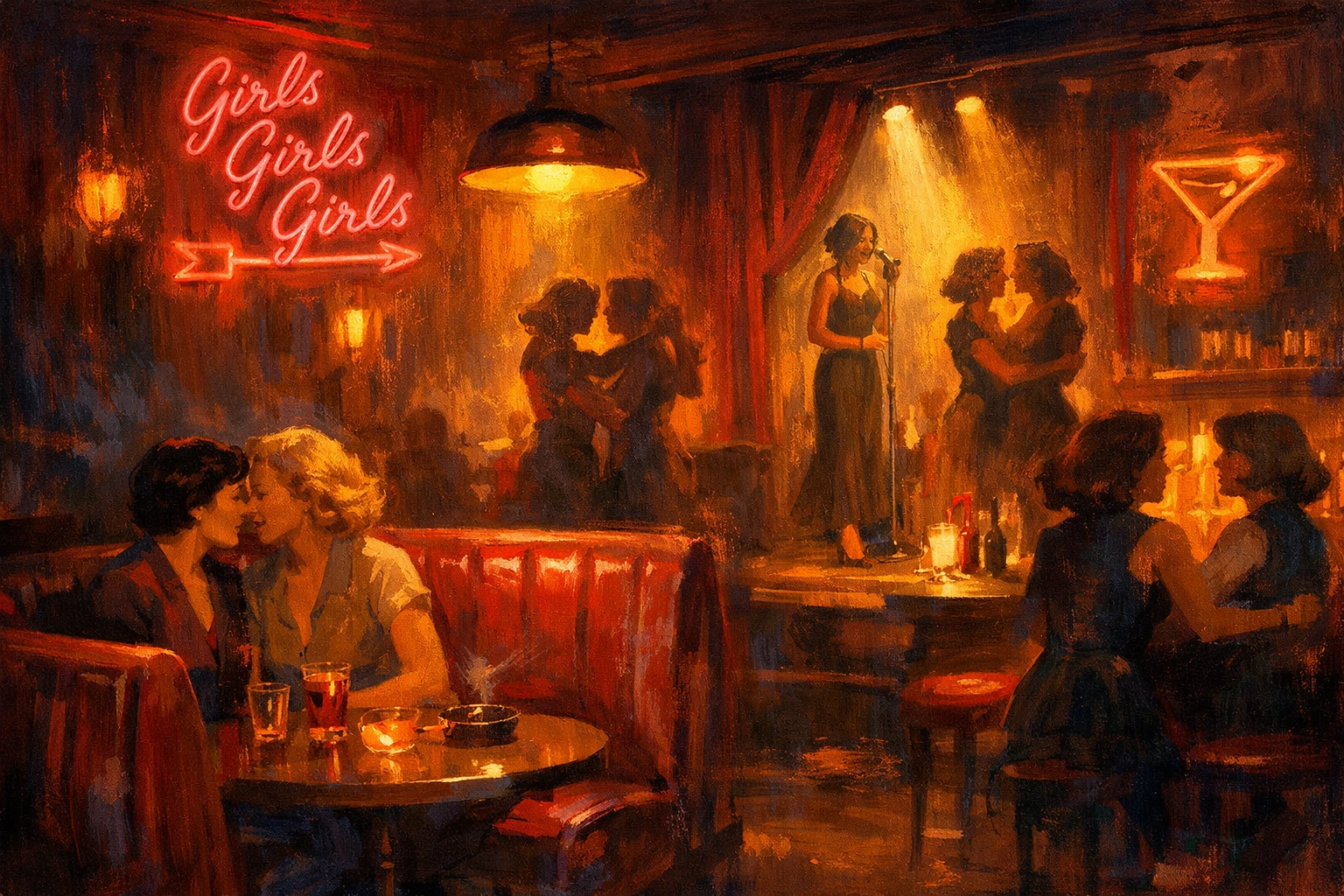
The Telegraph Club is a lesbian bar tucked away in San Francisco's North Beach neighborhood, where women dance together and a drag king performs under dim lights. For 1954, this isn't just taboo: it's dangerous. But for Lily, walking under that flashing neon sign changes everything.
This is where gay literature shines brightest: in moments of recognition, when a character: and by extension, a reader: realizes they're not alone. The Telegraph Club becomes Lily's sanctuary, a place where she can witness queer adults living authentically, loving openly, and building lives that society insists shouldn't exist.
It's not just a bar. It's proof that there's a future for girls like her.
Two Girls, One Impossible Love
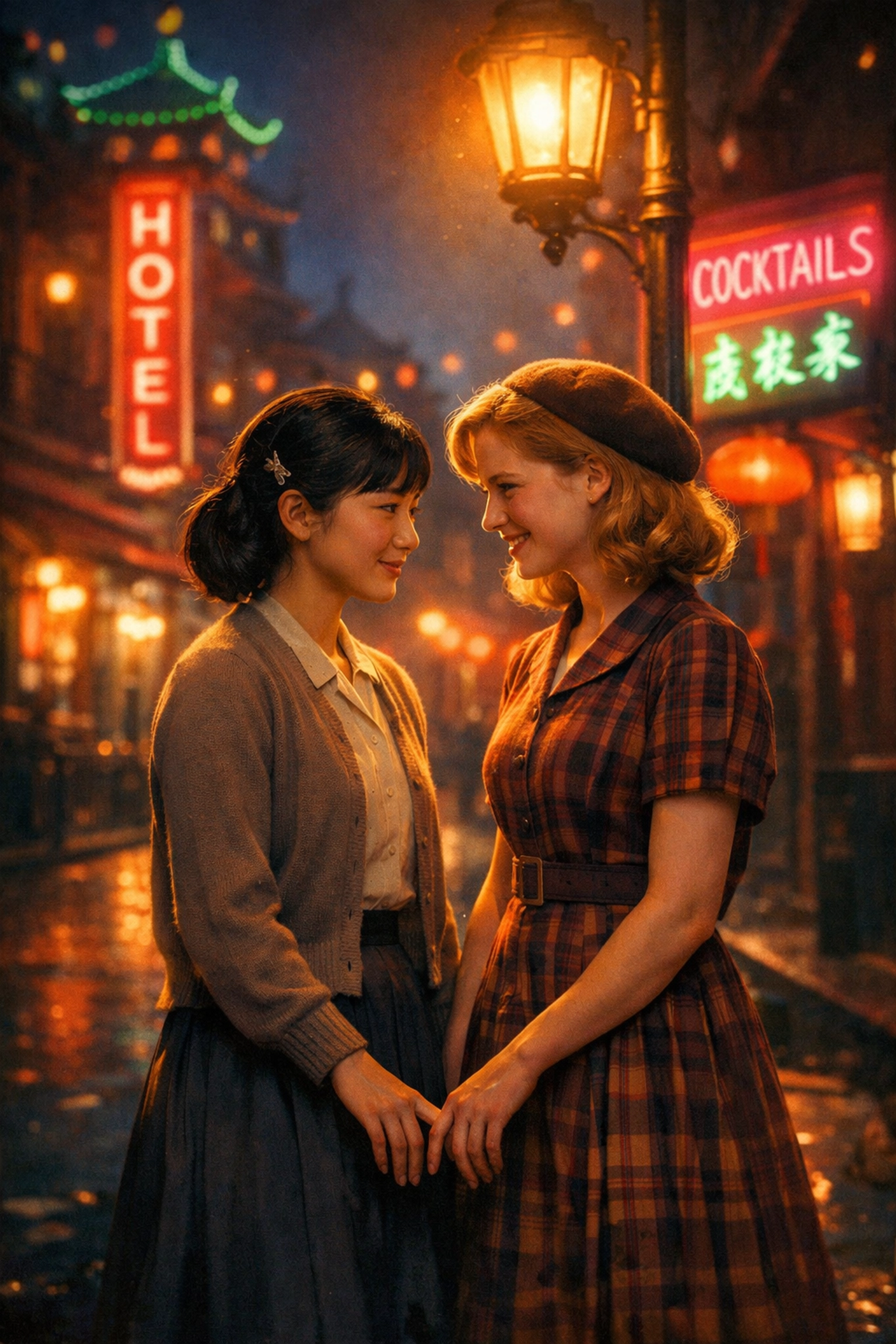
Lily and Kathleen's romance unfolds with the slow burn that makes MM romance books and sapphic fiction so compelling. These aren't characters who fall into bed in chapter two: they're teenagers navigating attraction, identity, and desire in an era when even holding hands could destroy their lives.
Kathleen (Kath to her friends) becomes Lily's guide to this hidden world, but she's also fighting her own battles against conformity and expectation. Their relationship develops through stolen glances, secret meetings, and the electric tension of almost-touches. When Lily finally whispers "I love you," and Kath says it back, you feel the weight of every risk they've taken to reach that moment.
This is queer fiction at its most authentic: no trauma porn, no burying the gays. Just two people fighting for the right to love each other.
Red Scare, Yellow Peril: When Danger Comes from Every Direction
Here's where Last Night at the Telegraph Club elevates itself from "good" to "essential" in the canon of gay literature. Lo doesn't just explore Lily's queerness in isolation: she examines how her identity as a Chinese American woman compounds the danger she faces.
It's 1954. McCarthyism is in full swing, and the Red Scare has turned everyone into potential suspects. For Chinese Americans like Lily's family, the paranoia is even worse. Her father, despite being a U.S. citizen, faces the threat of deportation. Being queer isn't just illegal: it's seen as un-American, potentially Communist, a threat to national security.
And then there's the racial element. Interracial relationships are illegal in California. Lily and Kath's love is forbidden on multiple levels. They're not just breaking social norms: they're breaking actual laws that could tear their families apart.
Lo brilliantly captures how intersectionality isn't just an academic concept: it's lived reality. Lily can't separate her Chinese identity from her American identity from her queer identity. They're all threads in the same fabric, and pulling one threatens to unravel everything.
Found Family and Chosen Futures
One of the most powerful themes in this gay romance novel is the concept of queer futurity. When Lily walks into the Telegraph Club, she doesn't just find a place to dance: she finds evidence that survival is possible. She sees older queer women who've built lives, relationships, and communities despite everything society throws at them.
This is what LGBTQ+ fiction does best: it shows us maps to futures we're told don't exist.
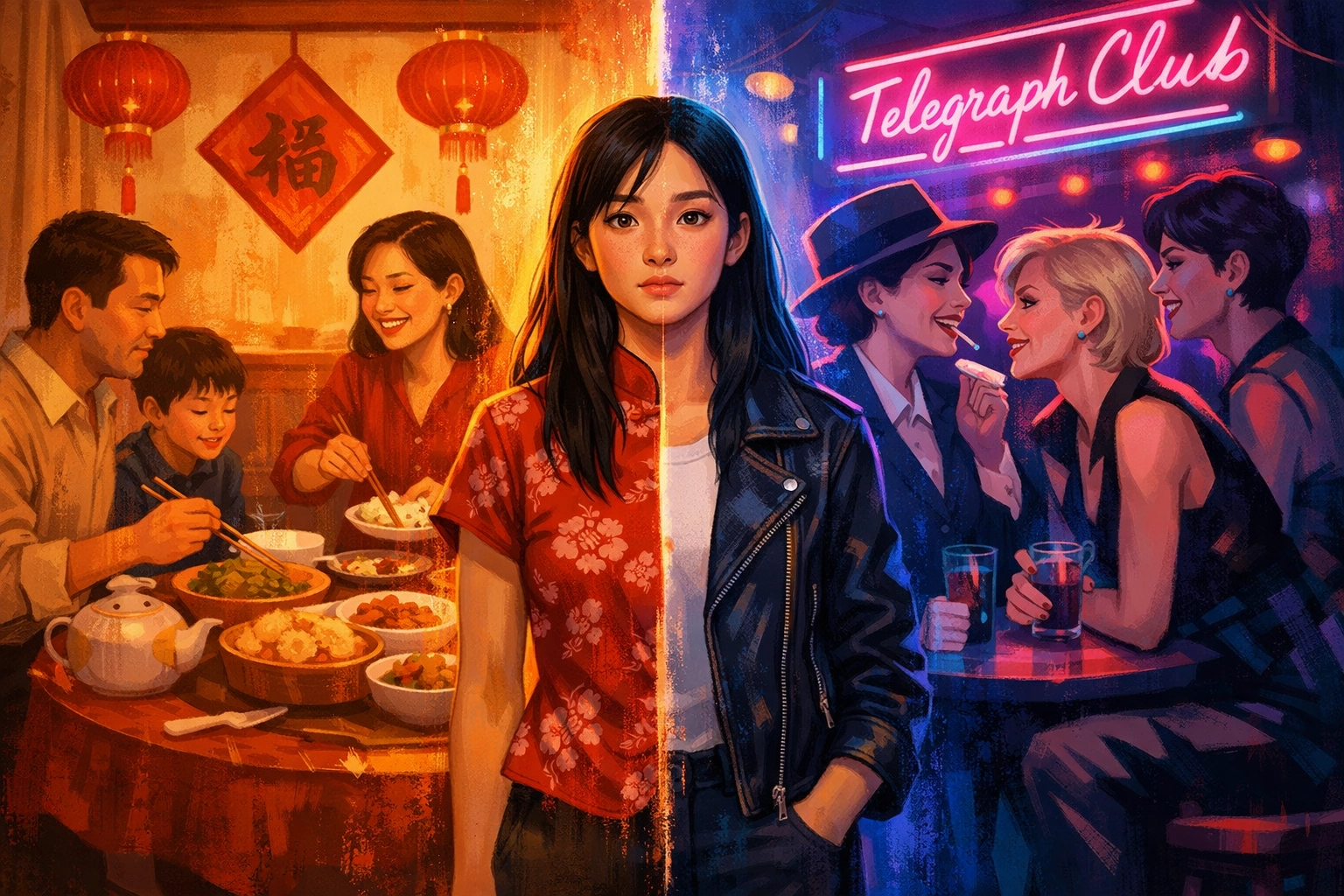
The novel also explores the painful choice between family loyalty and personal truth. Lily loves her parents and her aunt. She understands the sacrifices they've made, the discrimination they've faced. But she also knows she can't live the life they envision for her. It's a conflict that resonates across generations of queer readers who've had to choose between authenticity and acceptance.
Why This Book Matters in 2026
Last Night at the Telegraph Club won the National Book Award for a reason. In an era where LGBTQ+ books are being banned from libraries and queer history is being erased from curricula, this novel does something revolutionary: it proves we've always existed.
Queer people didn't suddenly appear in the 2000s. We were at Stonewall. We were in the bars of 1950s San Francisco. We were in the speakeasies of the 1920s and the molly houses of the 1700s. We've always been here, loving each other, building community, and fighting for the right to exist.
For Asian American LGBTQ+ readers specifically, seeing themselves reflected in historical queer fiction matters immensely. Too often, queer narratives center white experiences. Lo's novel reminds us that queer history is diverse, intersectional, and deeply tied to other movements for justice.
More Than a Romance: A Piece of History
What sets this apart from typical gay romance books is Lo's meticulous historical research. The Telegraph Club was a real place. The paranoia, the police raids, the constant threat of exposure: all real. Lo weaves actual history into Lily's fictional journey, creating something that feels both intimate and epic.
The writing is gorgeous without being flowery. Lo captures the awkwardness of first love, the terror of discovery, and the joy of recognition with equal skill. You'll highlight passages. You'll cry. You'll feel both heartbroken and hopeful, often on the same page.
This is gay literature that trusts its readers to sit with complexity. There's no neat resolution, no perfect happy ending tied with a bow. But there's love. There's hope. There's the promise that even in the darkest times, we find each other.
Your Next Essential Read
If you're building your collection of LGBTQ+ fiction, Last Night at the Telegraph Club belongs on your shelf: digital or physical. It's perfect for readers who loved The Seven Husbands of Evelyn Hugo, fans of historical romance with depth, and anyone craving queer fiction that honors the past while speaking to the present.
Ready to discover more stories that celebrate queer love across history? Visit Readwithpride.com for our complete collection of MM romance, sapphic fiction, and LGBTQ+ books that prove love has always been revolutionary.
Follow us for more queer book recommendations:
📘 Facebook
🐦 Twitter/X
📸 Instagram
#LastNightAtTheTelegraphClub #MalindaLo #LGBTQBooks #QueerFiction #GayLiterature #HistoricalRomance #SapphicFiction #AsianAmericanLit #ReadWithPride #QueerHistory #GayRomanceBooks #LGBTQFiction #NationalBookAward #1950sSanFranco #LesbianRomance #QueerLoveStories #MMRomance #GayBooks #HistoricalQueerFiction #RepresentationMatters

Leave a Reply
You must be logged in to post a comment.