

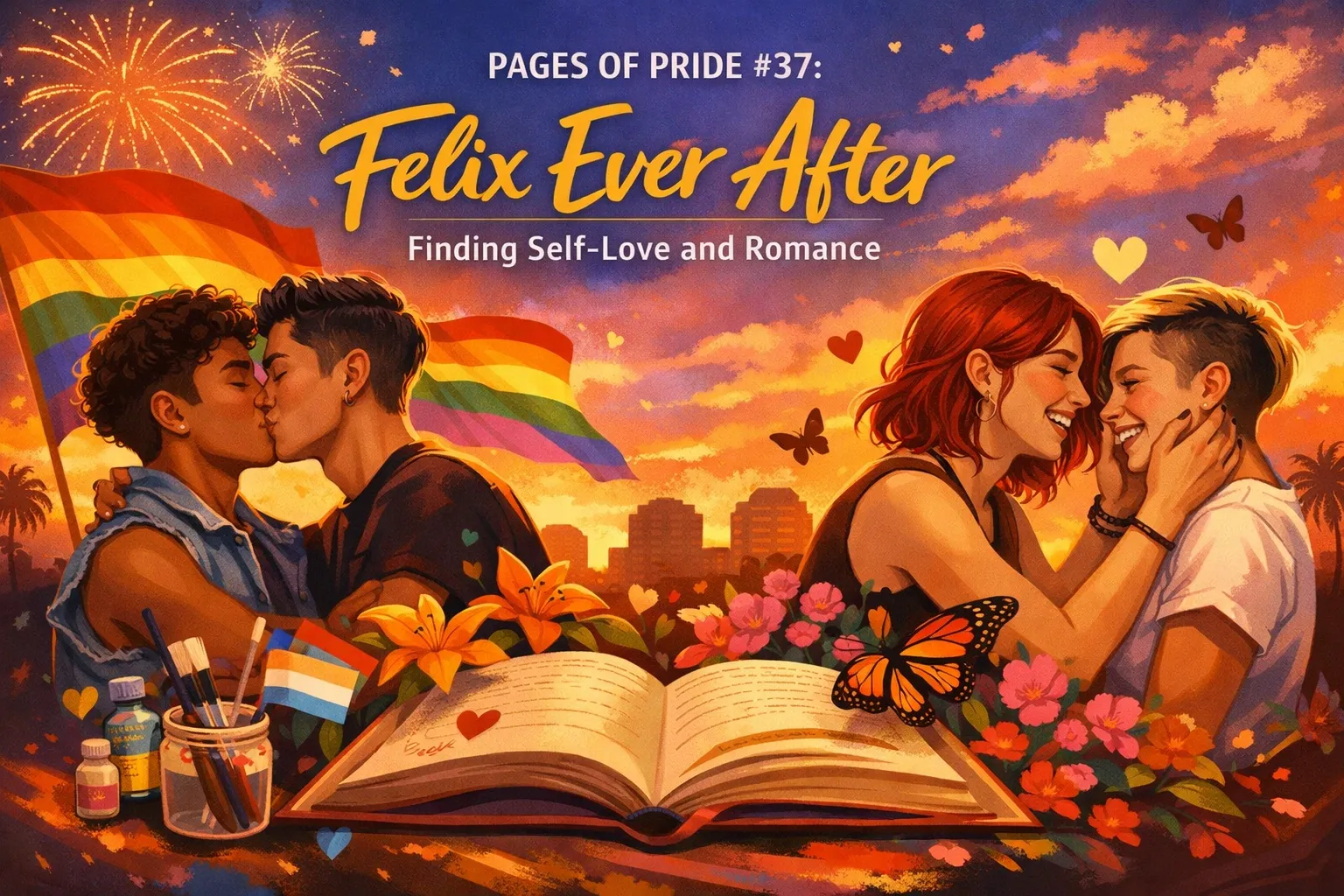
When was the last time you read a YA romance where the trans protagonist wasn't just surviving, but actually getting to fall in love, mess up, learn, and grow? If you're drawing a blank, you're not alone. That's exactly why Kacen Callender's Felix Ever After hit the LGBTQ+ fiction world like a rainbow-colored meteor in 2020, and why it continues to resonate with readers today in 2026.
This isn't just another coming-of-age story. It's a love letter to every queer kid who's ever wondered if they're "too much" to be loved, too Black, too trans, too complicated. Spoiler alert: you're not. And Felix Love's journey proves it.
Meet Felix Love: The Hopeless Romantic with Trust Issues
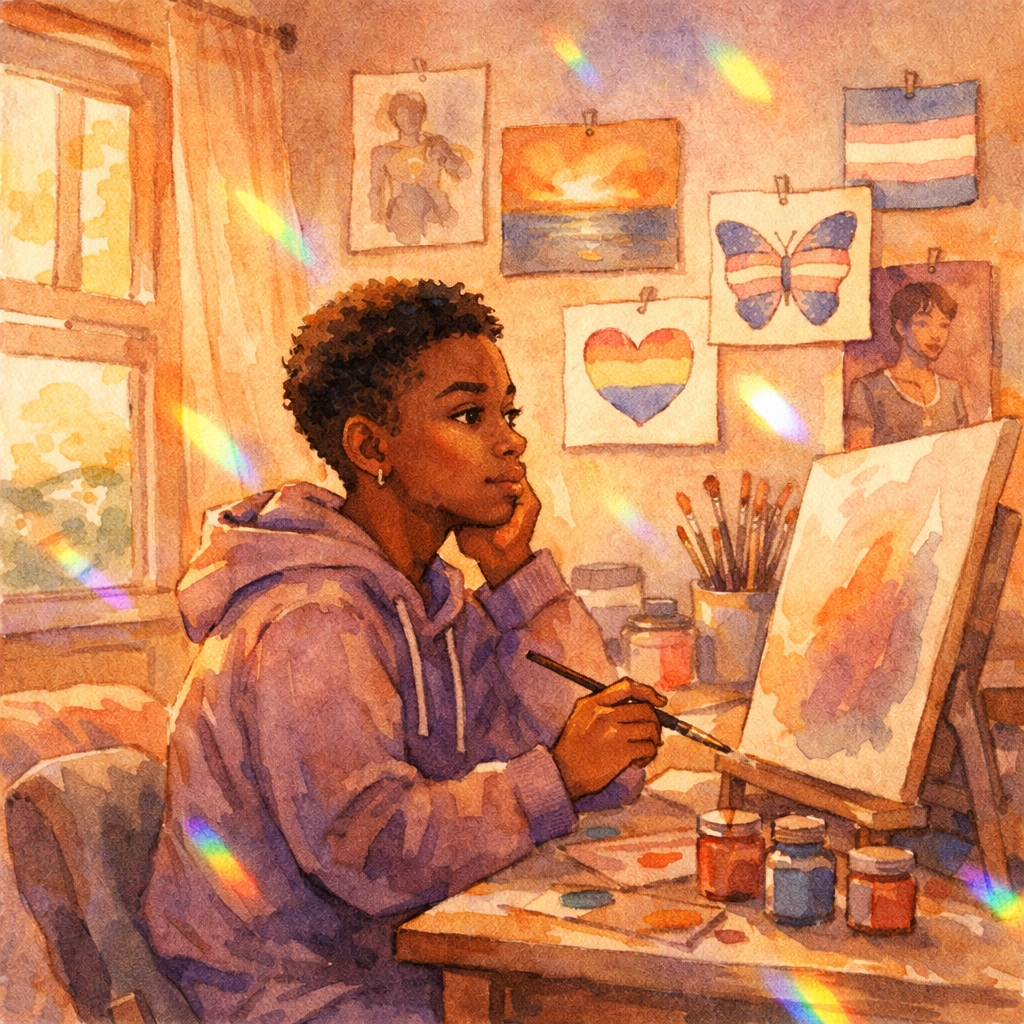
Felix Love (yes, that's actually his name, and yes, he sees the irony) is a Black, queer, transgender teen spending his summer at a prestigious art gallery program in New York City. He's a hopeless romantic who's never actually been in love, which feels like some kind of cosmic joke. He's got his art, his best friend Ezra, and a burning desire to experience the kind of earth-shattering romance he sees in movies and reads about in books.
But here's the thing about Felix, he's also wrestling with some heavy stuff. His relationship with his dad is complicated, marked by microaggressions and the painful reality of being deadnamed by someone who's supposed to love you unconditionally. His confidence in his own identity wavers. And then someone at the gallery program decides to make things exponentially worse.
When Your Past Gets Weaponized: The Outing
In an act of cruel transmisia, an anonymous student leaks Felix's pre-transition photos and deadname online for everyone at the program to see. It's every trans person's nightmare, having your past used as a weapon, having your privacy violated, having your identity questioned by people who have no business doing so.
The violation cuts deep. Felix already felt like he was "one marginalization too many", Black, queer, and transgender, to ever get his own happily-ever-after. Now someone has literally put his most vulnerable self on display without consent. The anger, hurt, and betrayal are palpable, and Callender doesn't shy away from showing how trauma like this affects every aspect of Felix's life.
But Felix isn't the type to just take it lying down. He decides to fight back. The problem? His revenge plan involves catfishing, fake identities, and a whole lot of emotional messiness that's about to get very, very complicated.
The Accidental Love Triangle (Because Of Course)
Felix suspects a fellow student is behind the leak and hatches a plan to catfish them through fake social media accounts. What starts as revenge quickly spirals into something Felix didn't plan for, actual feelings. Real connection. The kind of messy, complicated, "oh no, I think I'm catching feelings" situation that makes for both great drama and important self-reflection.
Enter the quasi-love triangle that's anything but typical. There's Declan, who seems like the perfect artsy boyfriend material. And then there's Austin, whose relationship with Felix evolves in unexpected ways. As Felix navigates these connections while maintaining his catfishing scheme, he's forced to confront some uncomfortable truths about himself, his capacity for revenge, and what he actually wants from love.
The beauty of this romance arc is that Callender doesn't let Felix off the hook. He's not a perfect victim or a flawless protagonist. He makes questionable choices, hurts people (including himself), and has to sit with the consequences. That's what makes him real. That's what makes him relatable.

The Real Love Story: Felix and Himself
Here's where Felix Ever After transcends typical YA romance and becomes something more profound. The central love story isn't actually about Felix and whoever he ends up with romantically: it's about Felix learning to love himself.
Throughout the novel, Felix grapples with internalized transmisia and the painful question many marginalized people face: "Am I worthy of love?" He's spent so long feeling like he needs to earn acceptance, prove his identity, and make himself smaller to fit into other people's comfort zones. The leaked photos become a catalyst for Felix to examine his relationship with his own identity and self-worth.
His journey involves recognizing that he can't find lasting love with others until he addresses his relationship with himself. It's about learning to hold loved ones accountable for harmful behavior (yes, including his dad) while also channeling his anger toward self-discovery rather than revenge. It's about understanding that being trans isn't something he needs to apologize for or hide from: it's just part of who he is.
The novel beautifully illustrates how self-love isn't a destination but a practice. Felix doesn't magically wake up one day with perfect self-esteem. He works through it, stumbles, gets back up, and keeps trying. That's the kind of authentic trans narrative we need more of in queer fiction.

Why This Matters for LGBTQ+ Literature
In the landscape of gay books and LGBTQ+ YA fiction, Felix Ever After occupies crucial space. Trans stories, particularly trans stories centered on joy, romance, and self-discovery rather than just trauma, remain underrepresented in mainstream publishing. Callender's work pushes back against the narrative that trans people are only interesting when they're suffering.
Felix gets to be messy, romantic, artistic, flawed, and ultimately hopeful. He gets to make mistakes and learn from them. He gets to fall in love: both with another person and with himself. These are the kinds of diverse queer stories that younger readers desperately need, stories that say "you're not too much, you're exactly enough."
The book also doesn't shy away from showing transmisia within queer communities. Not all of Felix's experiences with other LGBTQ+ people are positive, which is an important reality to depict. Queerness doesn't automatically equal understanding or acceptance, and Felix's navigation of these spaces feels painfully real.
The Art of Identity
One element that sets this book apart is how central art is to Felix's identity and healing process. He's a visual artist trying to find his voice, both literally and figuratively. His art becomes a way to process trauma, explore identity, and ultimately reclaim his narrative. For creative queer kids, seeing that representation: seeing that your art matters and that creativity can be a form of resistance and healing: is invaluable.
The gallery program setting also allows Callender to explore themes of privilege, access, and what it means to be a Black trans artist in predominantly white spaces. These intersections matter, and the book doesn't treat them as separate issues but as interconnected parts of Felix's lived experience.
A Hopeful Ever After
What makes Felix Ever After ultimately so satisfying is its commitment to hope without glossing over the hard stuff. Felix doesn't get a perfect ending where all his problems disappear. His dad doesn't suddenly become the world's most understanding parent. But he does grow, heal, and find genuine connection: both with others and with himself.
For readers exploring MM romance books and gay romance novels that center trans experiences, this book offers something special: a reminder that love stories are for everyone, including trans people of color. That romance, self-discovery, and happily-ever-afters aren't reserved for cisgender characters.
If you're building your collection of LGBTQ+ fiction and looking for trans YA that combines heart, humor, and honest emotion, Felix's story deserves a spot on your shelf. It's the kind of book that stays with you long after you've turned the last page: not because it's perfect, but because it's real.
Ready to discover more groundbreaking LGBTQ+ stories? Explore our collection at readwithpride.com and join our community celebrating diverse queer voices in literature.
Connect with us:
📘 Facebook
🐦 X/Twitter
📸 Instagram
#FelixEverAfter #TransYA #QueerFiction #LGBTQBooks #TransLit #DiverseReads #ReadWithPride #QueerYA #TransRepresentation #MMRomance #GayBooks #LGBTQFiction #TransStories #QueerLiterature #YABooks2026 #TransJoy #BlackQueerAuthors #LGBTQReads #PrideReading #QueerBookClub

Leave a Reply
You must be logged in to post a comment.