

Sometimes a book comes along that doesn't just tell a story: it rewrites the rules of how stories can be told. Alison Bechdel's Fun Home did exactly that when it dropped in 2006, proving that queer narratives could be both devastatingly honest and artistically groundbreaking. This isn't your typical coming-out memoir. It's a masterclass in how comics can capture the complexity of family, sexuality, and grief in ways that traditional prose simply can't.
The Story Behind the Funeral Home
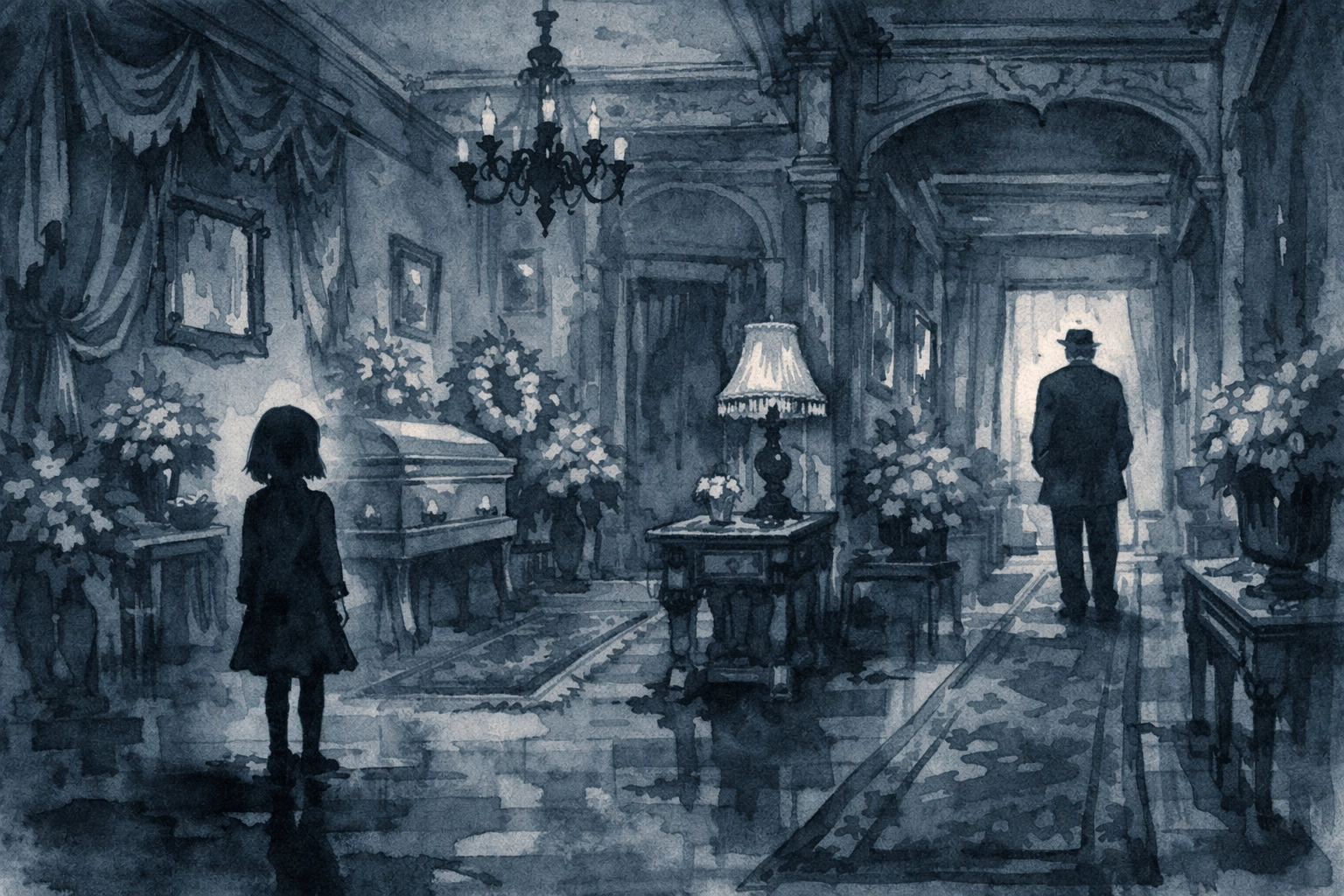
Fun Home takes its deceptively cheerful title from the nickname for Bechdel's family business: the funeral home her father ran in rural Pennsylvania. But there's nothing light about this graphic memoir. It chronicles Alison's childhood growing up in a Victorian house obsessively restored by her closeted gay father, Bruce, who worked as both a high school English teacher and a funeral director. The memoir navigates the treacherous waters of family secrets, coming out, and the tragic irony of a father who died just months after his daughter came out as a lesbian.
The genius of Bechdel's approach lies in how she weaves together multiple timelines and perspectives. The narrative doesn't follow a straight path (pun absolutely intended). Instead, it spirals through the same events from different angles, adding new layers of meaning each time. You'll revisit moments from her childhood with fresh eyes as adult Alison unpacks what she didn't: couldn't: understand as a kid.
Breaking Every Rule in the Book
What makes Fun Home revolutionary isn't just what it says, but how it says it. Scholar Judith Kegan Gardiner nailed it when she pointed out that Bechdel brilliantly mashes up tragedy and humor: conventions typically kept separate in literature. She discusses her father's death using comic book style and dark comedy, creating something entirely new in the process. This wasn't the victimization narrative that dominated so much LGBTQ+ literature at the time. Instead, Bechdel explores the shared tragedy and guilt between father and daughter, the complicated love that exists even in dysfunctional families.
The book tackles sexual orientation, gender identity, suicide, emotional abuse, and family dysfunction all at once, but it never feels overwhelming. That's the magic of the graphic novel format. Bechdel can show you her father's carefully curated aesthetic prison of a home while simultaneously revealing the emotional distance it represents. The medium becomes the message.
Seven Years of Obsessive Dedication
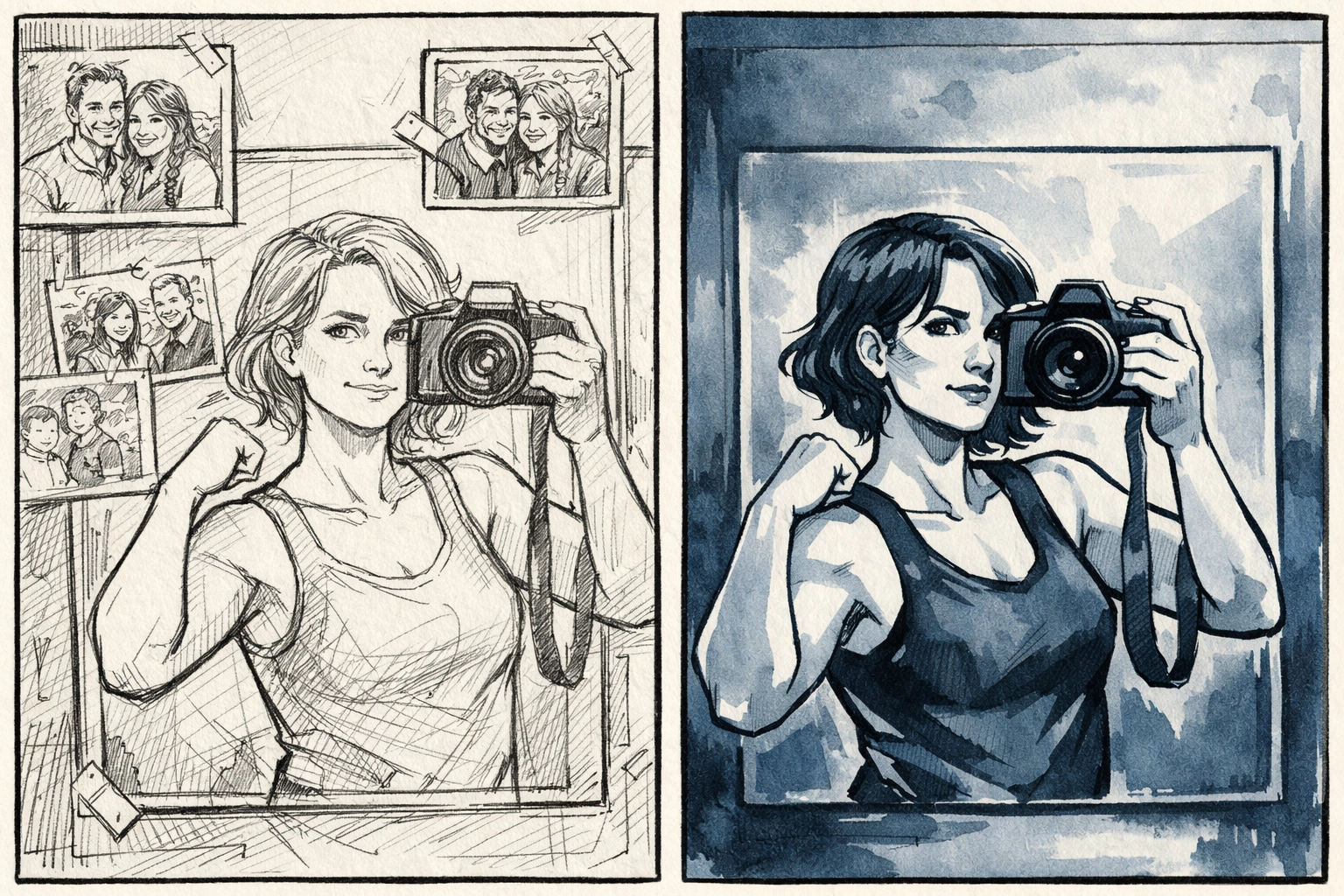
Here's where things get really interesting: Fun Home took seven years to create. Seven. Years. Bechdel didn't just sit down and sketch out her memories. Her process was meticulous to the point of obsession. She photographed herself in poses for nearly every human figure in the book. She used extensive photo references for background details. She hand-copied family photographs and letters. She incorporated excerpts from her childhood journals.
Every panel features a distinctive blue-gray ink wash that Bechdel specifically chose for its "bleak, elegiac quality." That color choice? It's not just aesthetic: it's emotional architecture. The washed-out tones perfectly capture the feeling of looking back at old photographs, of trying to reconstruct a past that's forever just out of reach.
Why This Book Changed Everything for Queer Literature
Before Fun Home, graphic novels weren't really taken seriously as a medium for queer memoirs. Comics were for superheroes and newspaper strips, right? Bechdel showed the world that sequential art could handle the most complex, nuanced stories about sexuality, family, and identity. She opened the door for an entire generation of queer graphic novelists.
But the impact goes deeper than just legitimizing the medium. Fun Home demonstrated that queer family memoirs didn't have to follow a predictable arc of rejection and eventual acceptance (or tragic isolation). Real families are messier than that. They're full of contradictions, unspoken connections, and parallel lives that never quite intersect the way they should have.
The book also tackled something rarely discussed in LGBTQ+ literature: the complicated relationship between gay parents and their queer children. Bruce Bechdel never came out. He lived a double life, had affairs with male students and family babysitters, and died in what may or may not have been suicide. Young Alison sensed something in her father that she recognized in herself, but that recognition came with confusion, fear, and later, profound sadness.
The Literary References That Build a Bridge
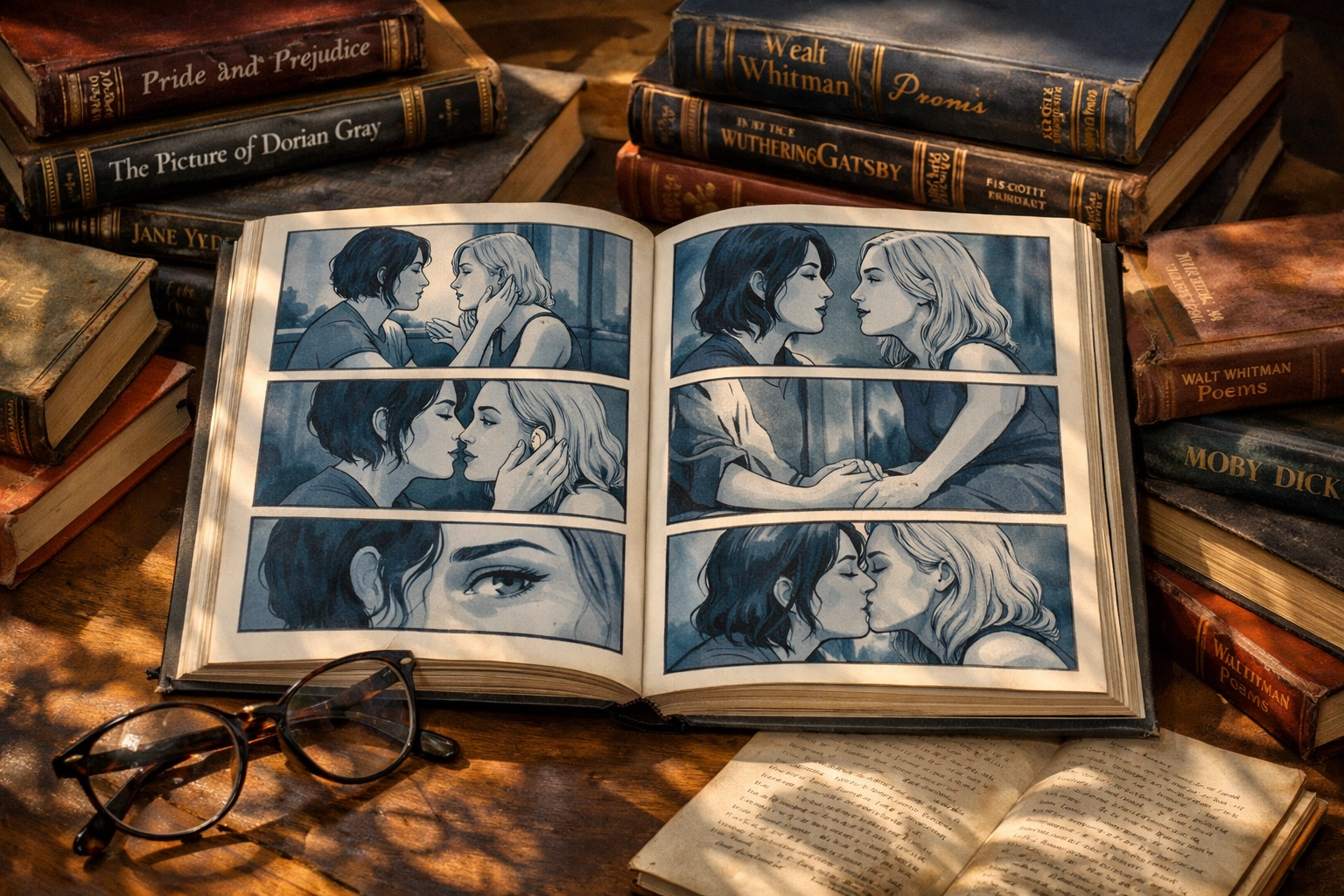
One of the most brilliant aspects of Fun Home is how Bechdel uses literary references throughout. Her father was obsessed with literature: Fitzgerald, Proust, Wilde, Joyce: and these references become a language father and daughter share, even when they can't talk directly about what matters most. James Joyce's Ulysses and A Portrait of the Artist as a Young Man run through the memoir like a thread, connecting Bruce's artistic aspirations and secret life to Alison's own journey of self-discovery.
These aren't just showing off or academic name-dropping. The literary references create a poignant parallel: just as these modernist writers were pushing boundaries and exploring hidden desires in their work, the Bechdel family was navigating their own closets and silences. It's meta-narrative at its finest, all done in comic panels.
The Ripple Effect on LGBTQ+ Publishing
Fun Home didn't just win awards (though it won plenty, including being named a finalist for the National Book Critics Circle Award). It changed what publishers thought was possible in LGBTQ+ ebooks, gay books, and queer fiction more broadly. Suddenly, there was proof that readers wanted complex, literary, artistically ambitious queer stories. They wanted gay literature that didn't fit into neat boxes.
The memoir paved the way for other groundbreaking queer graphic novels like Gender Queer by Maia Kobabe, Spinning by Tillie Walden, and The Magic Fish by Trung Le Nguyen. It showed that the graphic novel format could capture the nuance of queer experience in ways that felt both intimate and universal.
And let's not forget: Fun Home eventually became a Tony Award-winning Broadway musical. A graphic memoir about a closeted gay funeral director became a hit musical. That's the kind of cultural impact that reshapes the landscape.
Why You Need to Read It Right Now
If you're into MM romance books and gay romance novels, Fun Home might seem like a departure from your usual reading. There's no happily-ever-after here. But here's the thing: understanding the full spectrum of LGBTQ+ literature makes those romance novels even richer. Bechdel's unflinching honesty about family, closets, and the cost of living inauthentically reminds us why those happy endings in contemporary gay fiction matter so much.
Fun Home is essential reading for anyone who wants to understand how far LGBTQ+ storytelling has come and where it's going. It's a book about seeing yourself in your parent, about recognizing queerness as something that connects generations even when shame and silence try to keep us apart.
Looking for more incredible LGBTQ+ stories that push boundaries? Check out the full catalog at Readwithpride.com, where we celebrate gay novels, MM fiction, and queer voices that deserve to be heard.
Follow us for more book recommendations and LGBTQ+ literary discussions:
- Facebook: Read With Pride
- Instagram: @read.withpride
- X: @Read_With_Pride
Fun Home proves that the most revolutionary act in literature is telling the truth: even when it's complicated, messy, and breaks your heart. And sometimes, that truth is best told in pictures.
#ReadWithPride #FunHome #QueerGraphicNovels #LGBTQBooks #GraphicMemoir #AlisonBechdel #QueerLiterature #GayBooks #LGBTQReading #QueerFiction #GraphicNovels #MemoirMonday #BookRecommendations #LGBTQHistory #QueerStories #PagesOfPride #GayLiterature #ComingOutStories #FamilyMemoirs #LiteraryFiction

Leave a Reply
You must be logged in to post a comment.