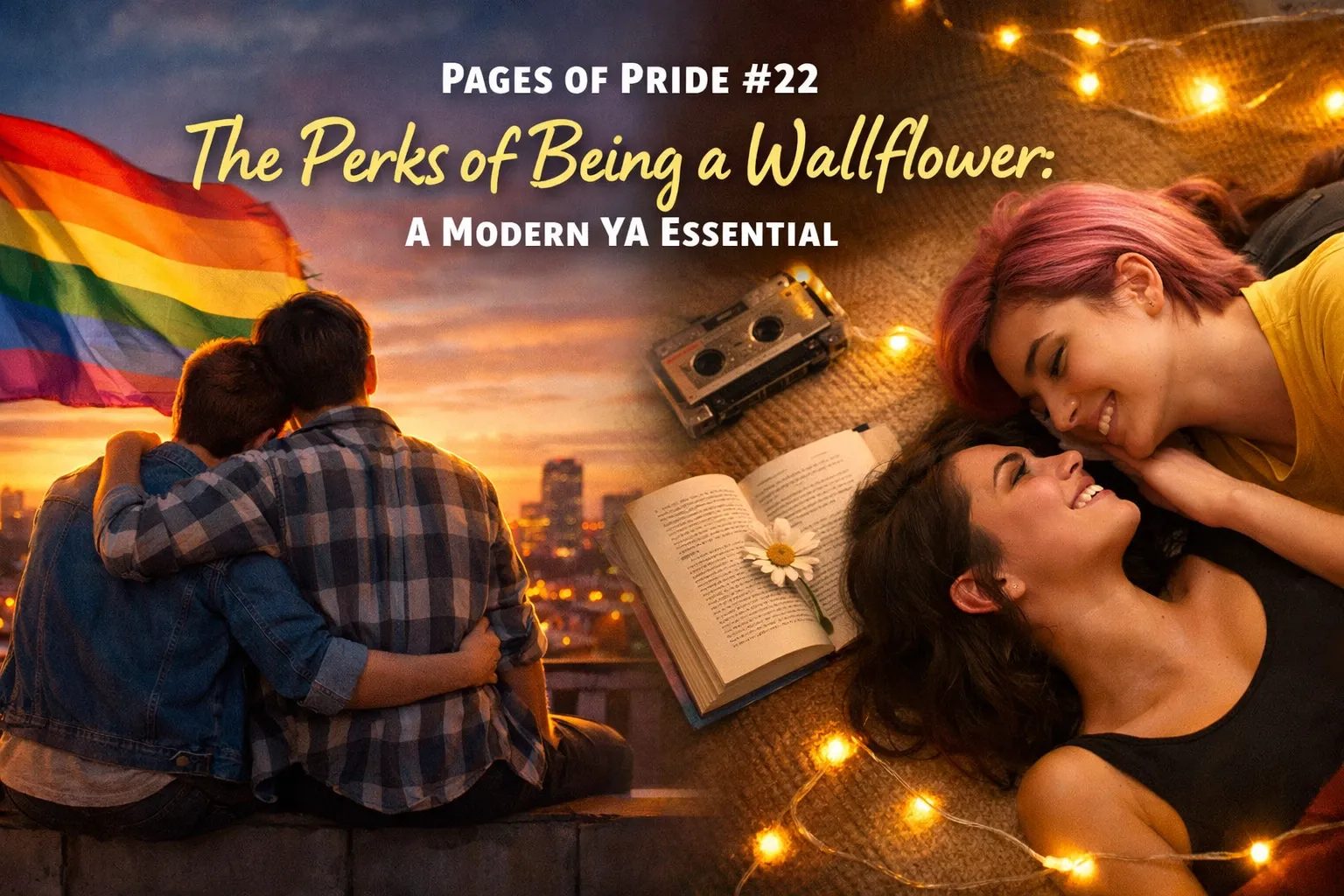
Sometimes, the books that mean the most to us aren't the ones with perfectly polished prose or elaborate plots. They're the ones that feel like they were written just for us, messy, raw, and painfully honest. Stephen Chbosky's The Perks of Being a Wallflower is one of those books. Published in 1999, this epistolary novel has become a touchstone for generations of readers navigating the turbulent waters of adolescence, identity, and belonging.
But what makes this book particularly significant in the world of gay literature and LGBTQ+ fiction isn't just its sensitive portrayal of a queer character, it's how naturally that portrayal fits into the larger tapestry of teenage life, showing that being gay is just one thread in the complex fabric of who we are.
Dear Friend: A Story Told in Letters
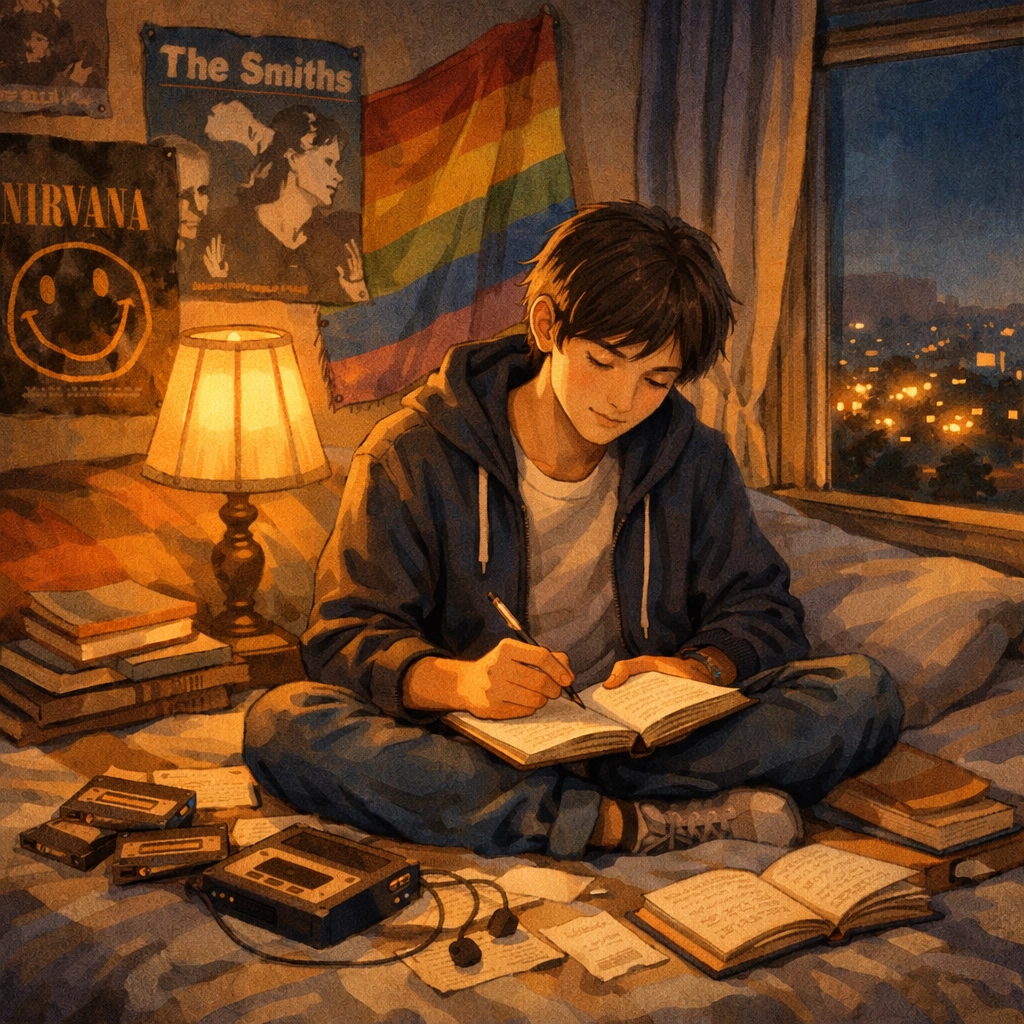
The Perks of Being a Wallflower unfolds through letters written by Charlie, a sensitive freshman navigating high school after emerging from a mental health crisis. Through his eyes, we meet an unforgettable cast of characters, including Patrick, openly gay, unapologetically himself, and one of the most genuinely portrayed queer characters in young adult literature.
Charlie's letters to an anonymous "friend" create an intimate, confessional quality that makes readers feel like trusted confidants. We're not just reading about Charlie's experiences; we're living them alongside him. And in doing so, we witness Patrick's story with the same tender, non-judgmental gaze that Charlie offers everyone in his life.
Patrick: More Than a Gay Best Friend
Long before the "gay best friend" became a tired trope in teen media, Chbosky gave us Patrick, a fully realized human being whose sexuality is important but not defining. He's funny, theatrical, protective, wounded, and brave. He falls in love. He gets his heart broken. He makes mistakes. He's real.
Patrick's relationship with Brad, a closeted football player, is portrayed with stunning sensitivity. Chbosky doesn't shy away from the pain of internalized homophobia, the violence of forced invisibility, or the heartbreak of loving someone who can't love you openly. The scene where Brad's father catches them together, and the subsequent fallout, remains one of the most gut-wrenching moments in gay young adult fiction.

What's remarkable is how Chbosky handles this storyline. There's no sensationalism, no exploitation of queer pain for shock value. Patrick's experience is treated with the same care and gravity as any other character's struggle. His sexuality isn't presented as his only interesting quality, nor is it treated as something that needs to be fixed or explained away.
A Different Kind of Coming-of-Age
The Perks of Being a Wallflower sits comfortably alongside classics in the coming-of-age genre, but it brings something unique to the table. This isn't just a story about growing up, it's about learning to participate in life, about mental health, trauma, and the messy process of healing.
Charlie's journey intersects with Patrick's in meaningful ways. Both are navigating what it means to be seen, Charlie with his anxiety and depression, Patrick with his sexuality. The novel shows how different forms of marginalization and struggle can create bonds of understanding and compassion.
The famous quote, "We accept the love we think we deserve," resonates throughout the narrative, for Charlie, for Patrick, for Brad, for all of them. It's a meditation on self-worth that speaks particularly powerfully to queer readers who've grown up in a world that often tells them they're less than, other than, not quite enough.
Why It Still Matters in 2026
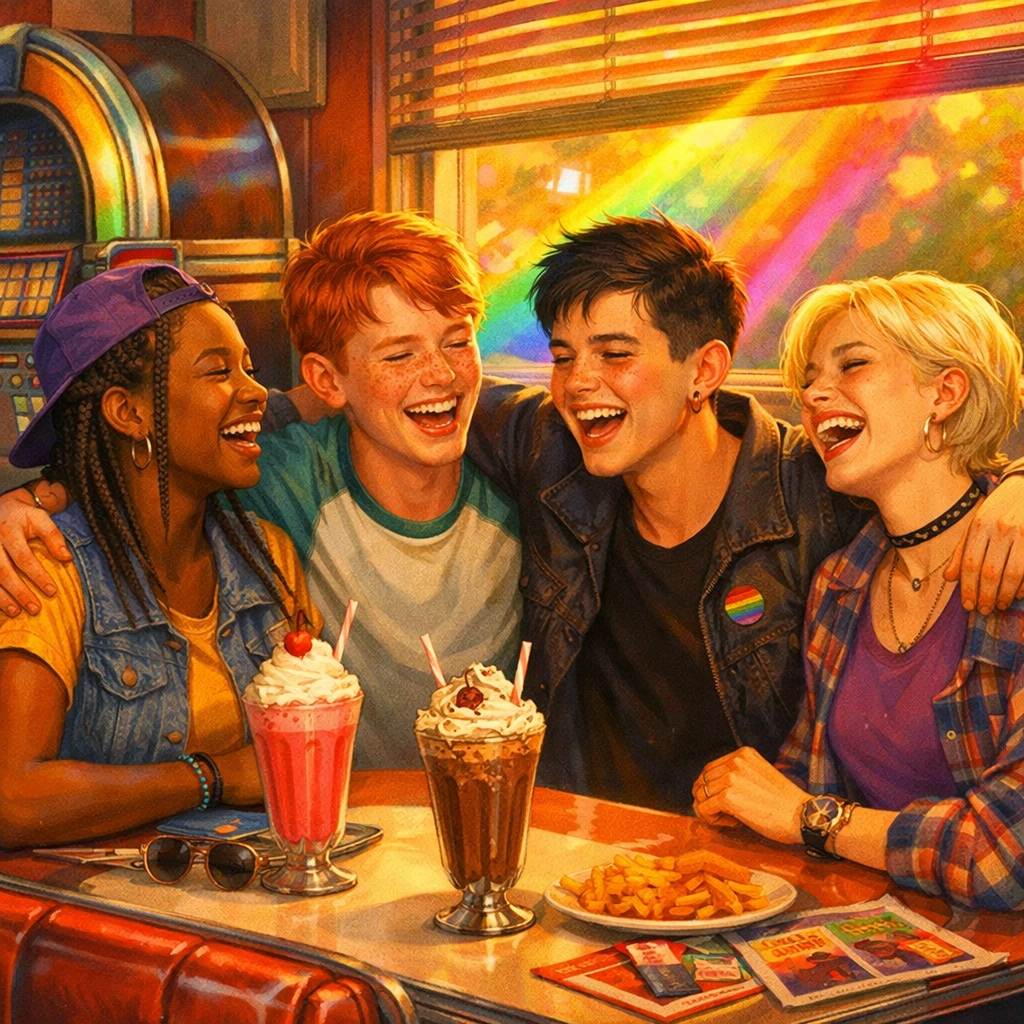
Nearly three decades after its publication, The Perks of Being a Wallflower remains essential reading. While we've seen an explosion of LGBTQ+ books and MM romance novels in recent years, which you can explore at Read with Pride, there's something about Chbosky's novel that continues to resonate.
Perhaps it's because the core emotions it captures are timeless: the desperate need to belong, the fear of being truly seen, the exhilaration of real friendship, the confusion of first love. Or maybe it's because, despite increased visibility, many queer young people still navigate worlds where they can't be fully themselves, where they watch friends like Brad choose invisibility over authenticity.
The book also serves as a bridge between classic gay fiction and contemporary queer literature. It helped pave the way for the diverse YA landscape we enjoy today, where books like Simon vs. the Homo Sapiens Agenda, They Both Die at the End, and Red, White & Royal Blue can exist and thrive.
The Power of Authentic Representation
What Chbosky got right, what still feels radical even now, is that Patrick isn't defined by suffering. Yes, he experiences pain. Yes, he faces homophobia. But he also experiences joy, friendship, and self-acceptance. He goes to parties. He performs in The Rocky Horror Picture Show. He looks out for his friends. He lives a full, complex life.
This kind of representation matters because it shows queer teenagers (and adults) that being gay doesn't mean your entire existence revolves around your sexuality or that your story must be one of unrelenting tragedy. Patrick gets to be fully human in all its messy glory.

The novel also explores allyship through Charlie's character. Charlie never questions Patrick's sexuality, never makes it weird, never makes Patrick's experiences about his own discomfort. He's simply there: listening, supporting, participating. It's a model of how straight people can show up for their queer friends, not as saviors but as genuine companions in life's journey.
More Than Just a Book
The Perks of Being a Wallflower has transcended its pages to become a cultural touchstone. The 2012 film adaptation, written and directed by Chbosky himself, brought Patrick (brilliantly portrayed by Ezra Miller) to life on screen, introducing new generations to this story. The iconic tunnel scene: with "Heroes" by David Bowie blasting: has become synonymous with the feeling of infinite possibility, of feeling alive and free.
The book has also sparked countless conversations about mental health, trauma, sexuality, and what it means to really participate in life. It's been challenged and banned in schools: a dubious honor it shares with many important works of LGBTQ+ literature: which somehow makes it feel even more necessary.
Why You Should Read (or Reread) It Now
If you've never read The Perks of Being a Wallflower, there's no better time than now. If you read it as a teenager, revisit it as an adult. You'll be surprised by what you notice this time around: the subtleties in Charlie's narration, the foreshadowing, the deeper themes that resonate differently at different life stages.
For those exploring gay books and queer fiction, this novel is an essential part of understanding how LGBTQ+ representation in YA has evolved. It's a reminder that sometimes the most powerful queer stories aren't exclusively about being queer: they're about being human, with queerness woven naturally into the narrative fabric.
And for anyone who's ever felt like a wallflower: watching from the sidelines, afraid to participate, uncertain of their place in the world: this book offers both comfort and challenge. It says: you belong here. Your story matters. And someday, when you're ready, you too will feel infinite.
Looking for more incredible LGBTQ+ reads? Explore our curated collection of MM romance books, gay romance novels, and queer fiction at ReadwithPride.com. From contemporary love stories to historical romances, we've got your next favorite read waiting.
Follow us for more book recommendations:
📘 Facebook
🐦 Twitter/X
📸 Instagram
#ReadWithPride #PagesOfPride #GayLiterature #LGBTQBooks #PerksOfBeingAWallflower #QueerFiction #YALiterature #GayYA #MMRomance #QueerBooks #GayRomanceBooks #LGBTQReads #ComingOfAge #GayBooks2026 #QueerReading #BookRecommendations #LGBTQFiction #GayNovel #PrideReading #QueerYA

Leave a Reply
You must be logged in to post a comment.