

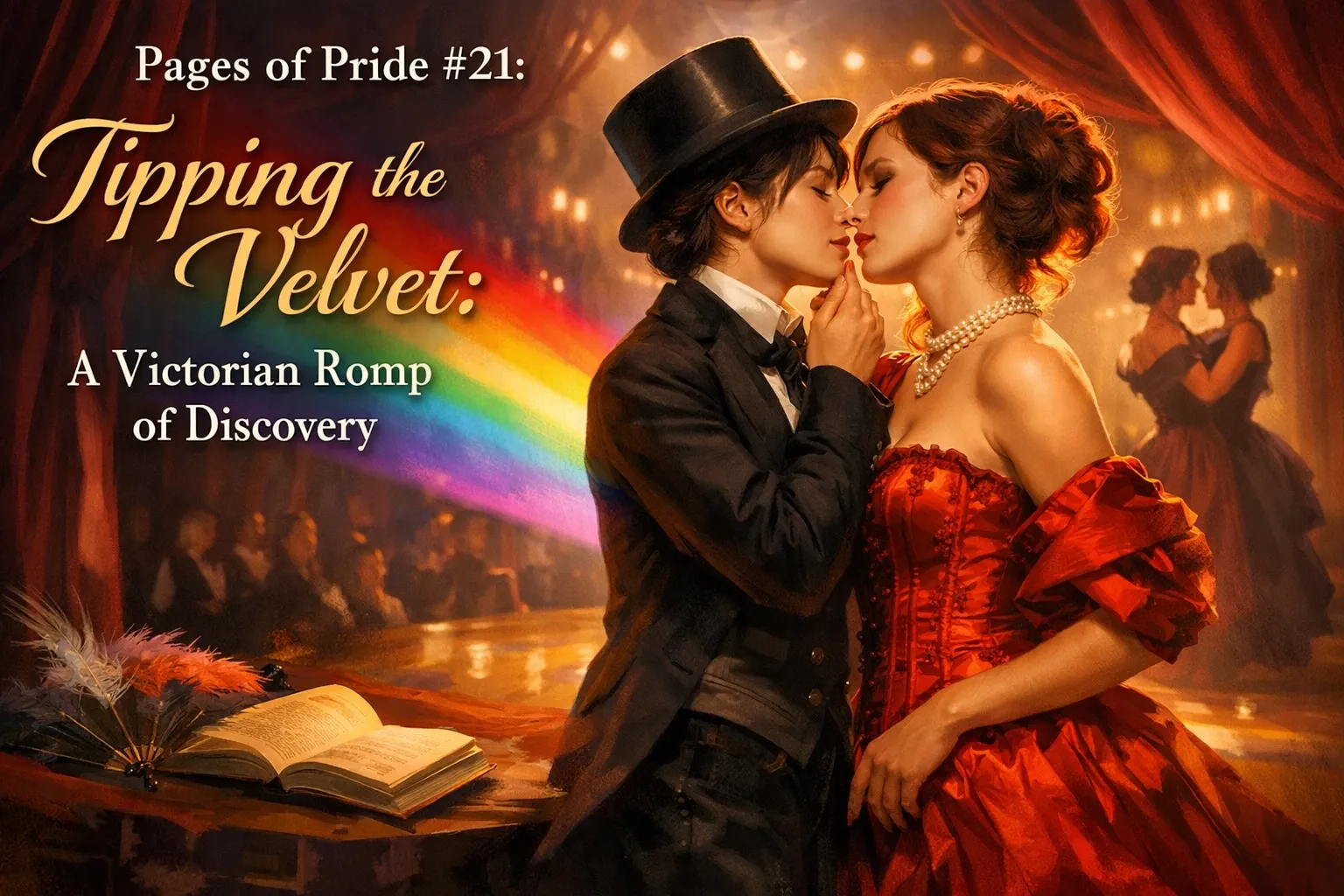
Before Gentleman Jack graced our screens and before sapphic TikTok became a thing, there was Nancy "Nan" Astley, a Whitstable oyster girl who fell head over heels for a male impersonator and embarked on one of the most deliciously scandalous journeys in LGBTQ+ literature. Sarah Waters' debut novel Tipping the Velvet (1998) didn't just crack open the door to Victorian queer life, it kicked it off its hinges with a feather boa and a knowing wink.
This isn't your grandmother's historical fiction. Well, actually, it might be: if your grandmother has excellent taste in gay romance novels and appreciates a good Victorian romp through London's underground queer scene.
An Oyster Girl's Awakening
Nan King's story begins in the coastal town of Whitstable in the 1890s, where she works in her family's oyster house. Her life is as predictable as the tide until she sees Kitty Butler perform at the local music hall. Kitty is a male impersonator: a woman who performs in men's clothing: and Nan is absolutely smitten. Not just with the performance, but with Kitty herself.
What follows is a sexual awakening so vivid and tender that it revolutionized how sapphic desire was portrayed in historical fiction. Waters doesn't shy away from the physical reality of queer love. Instead, she celebrates it with a frankness that was groundbreaking for its time and remains refreshing today. This is LGBTQ+ fiction that refuses to apologize for itself or fade to black at the interesting bits.
The Music Hall Magic
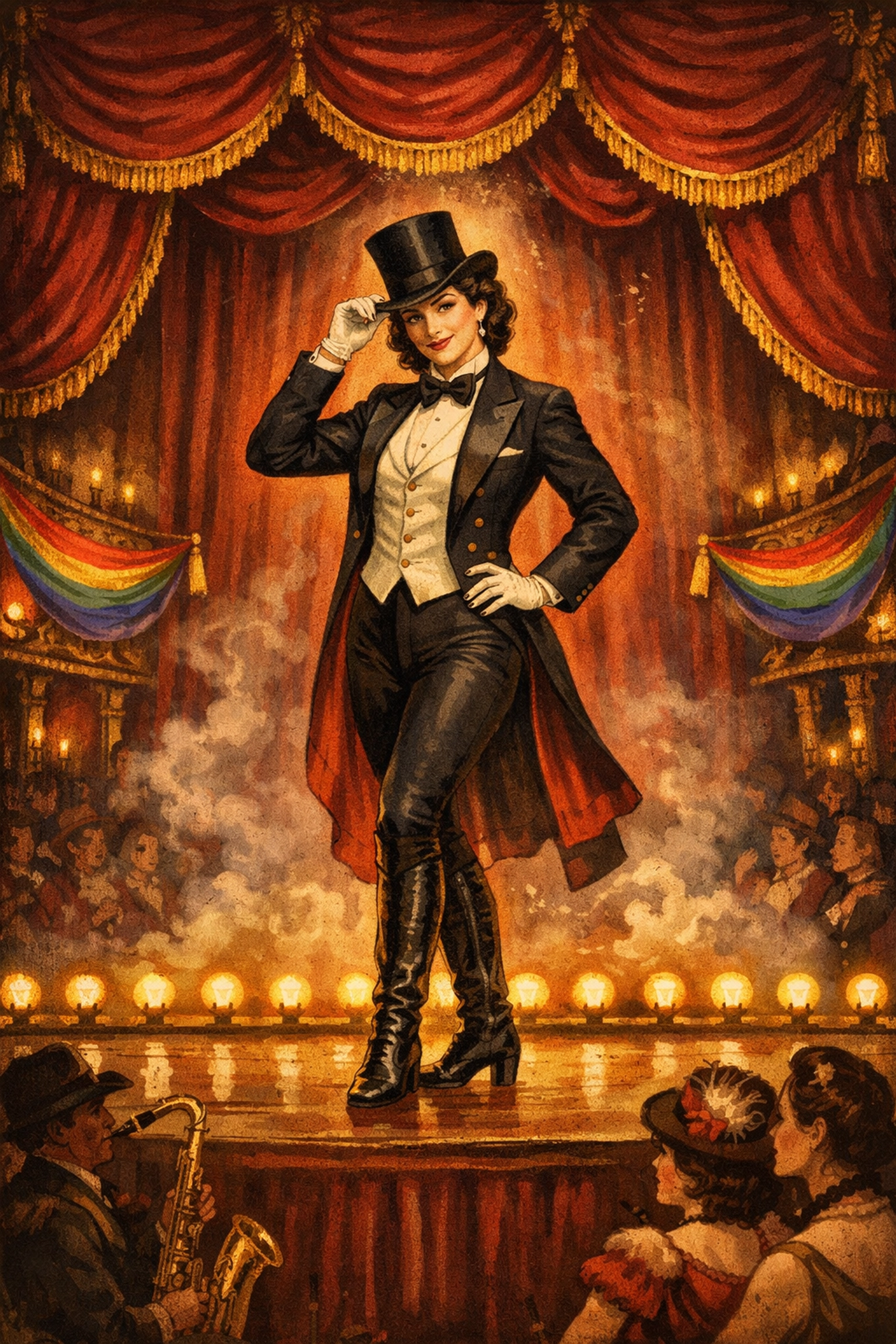
Waters' depiction of Victorian music halls is nothing short of spectacular. These weren't just entertainment venues: they were spaces where gender could be played with, where working-class audiences could see reflections of themselves, and where queer culture thrived in plain sight. Male impersonators like Kitty Butler were hugely popular, and their performances created a fascinating space where desire and identity became deliciously complicated.
The novel captures the glitter and grime of backstage life with such authenticity that you can practically smell the greasepaint and gin. Nan becomes Kitty's dresser, then her partner in both performance and life, and their double act becomes a sensation. It's a heady mix of show business glamour and genuine emotional connection: until, of course, everything comes crashing down in properly dramatic Victorian fashion.
A Journey Through London's Queer Underground
After heartbreak sends Nan spiraling, Tipping the Velvet transforms into something else entirely: a picaresque adventure through Victorian London's hidden queer spaces. Nan becomes a "tom" or "rent boy" (the female equivalent), working as a male prostitute for wealthy women. She experiences poverty, becomes involved with a cruel society woman, and eventually finds herself working for a socialist organization.
This isn't a sanitized queer history. Waters shows us the full spectrum of queer existence in Victorian England: from the relatively privileged spaces of the music halls to the desperate survival strategies of the streets, from exploitative relationships to chosen families. It's gay literature that refuses to present queerness as either tragic or idealized, instead showing it as messy, complicated, and thoroughly human.
Sarah Waters: Architect of Sapphic Historical Fiction
When Tipping the Velvet was published in 1998, Sarah Waters was a PhD student in queer Victorian fiction who decided to write the kind of book she wanted to read. The result changed the landscape of LGBTQ+ romance and historical fiction forever. Waters proved that you could write commercially successful, critically acclaimed novels centered on queer women's lives without making their queerness a tragedy.
The novel's success paved the way for Waters' subsequent works: Fingersmith, The Night Watch, The Little Stranger, and The Paying Guests: cementing her status as the queen of sapphic historical fiction. But Tipping the Velvet remains special. It's her most exuberant work, full of the joy and excess of discovery.
Waters' research is impeccable, but she wears her knowledge lightly. The Victorian slang, the period details, the historical accuracy: it all serves the story rather than overwhelming it. This is how you write historical MM romance (or in this case, WW romance) that feels alive rather than like a museum piece.
Why It Still Matters
Nearly three decades after publication, Tipping the Velvet remains essential reading for anyone interested in queer fiction or gay romance books with historical depth. Here's why it continues to resonate:
Visibility: The novel made Victorian queer women visible in mainstream literature. It showed that our history didn't begin with Stonewall: queer people have always existed, always loved, always built communities.
Unapologetic Sensuality: Waters writes sex scenes that are genuinely sexy while also being emotionally resonant. This was revolutionary in 1998 and remains important in an era where LGBTQ+ romance still sometimes gets relegated to "less explicit" categories.
Economic Realism: Unlike many historical romances, Tipping the Velvet doesn't ignore the brutal economic realities that shaped queer lives. Nan's journey is intimately connected to her class position and economic circumstances.
Complex Relationships: None of Nan's relationships are simple or perfect. Kitty is selfish. Diana is abusive. Florence is complicated. Waters shows us that queer love stories deserve the same complexity as straight ones.
The Language of Desire
The title itself: Tipping the Velvet: is Victorian slang for cunnilingus, and that cheeky frankness sets the tone for the entire novel. Waters has talked about how liberating it was to discover that Victorians had their own rich vocabulary for queer desire and experiences. The novel is full of period slang that brings the world alive: "toms" and "pollies," "molly houses" and "rent boys."
This linguistic playfulness does more than just add authenticity. It challenges the myth that our ancestors were more innocent or repressed than we are. They just used different words. The gay literature of the Victorian era existed: in coded references, in underground publications, in the argot of the streets. Waters brings that language into the light.
From Page to Screen and Beyond
The BBC adapted Tipping the Velvet in 2002, with Rachael Stirling as Nan and Keeley Hawes as Kitty. The miniseries was groundbreaking television, bringing sapphic Victorian life to mainstream audiences and creating a generation of fans. While the novel always remains the definitive version, the adaptation helped cement its place in queer cultural history.
The novel's influence can be seen in the explosion of MM romance books and sapphic historical fiction that followed. From Alexis Hall's Boyfriend Material series to Cat Sebastian's Regency romances, contemporary LGBTQ+ fiction owes a debt to Waters' success in proving that queer historical romance could be both literary and popular.
Read With Pride
Tipping the Velvet is more than just a great read: it's a reclamation of queer history, a celebration of desire, and a reminder that our stories have always been worth telling. Whether you're a longtime fan of gay romance novels or new to LGBTQ+ fiction, this book deserves a place on your shelf.
Sarah Waters gave us a heroine who is messy, passionate, occasionally infuriating, and utterly real. Nan King's journey from innocence to experience, from coastal provincialism to metropolitan sophistication, from heartbreak to hope, is one of the great queer coming-of-age stories. It's historical fiction that makes the past feel urgent and immediate.
Ready to dive into more groundbreaking LGBTQ+ literature? Explore our collection of gay fiction, MM romance, and queer classics at readwithpride.com. Because every page turned is an act of pride.
Follow Read With Pride:
- Facebook: facebook.com/readwithpride
- Instagram: @read.withpride
- X/Twitter: @Read_With_Pride
#ReadWithPride #TippingTheVelvet #SarahWaters #SapphicFiction #LGBTQBooks #HistoricalRomance #QueerLiterature #GayRomance #LesbianFiction #VictorianRomance #MMRomance #LGBTQFiction #QueerBooks #GayBooks #PagesOfPride #SapphicRomance #HistoricalFiction #QueerHistory #LGBTQReads #PrideReading


Leave a Reply
You must be logged in to post a comment.