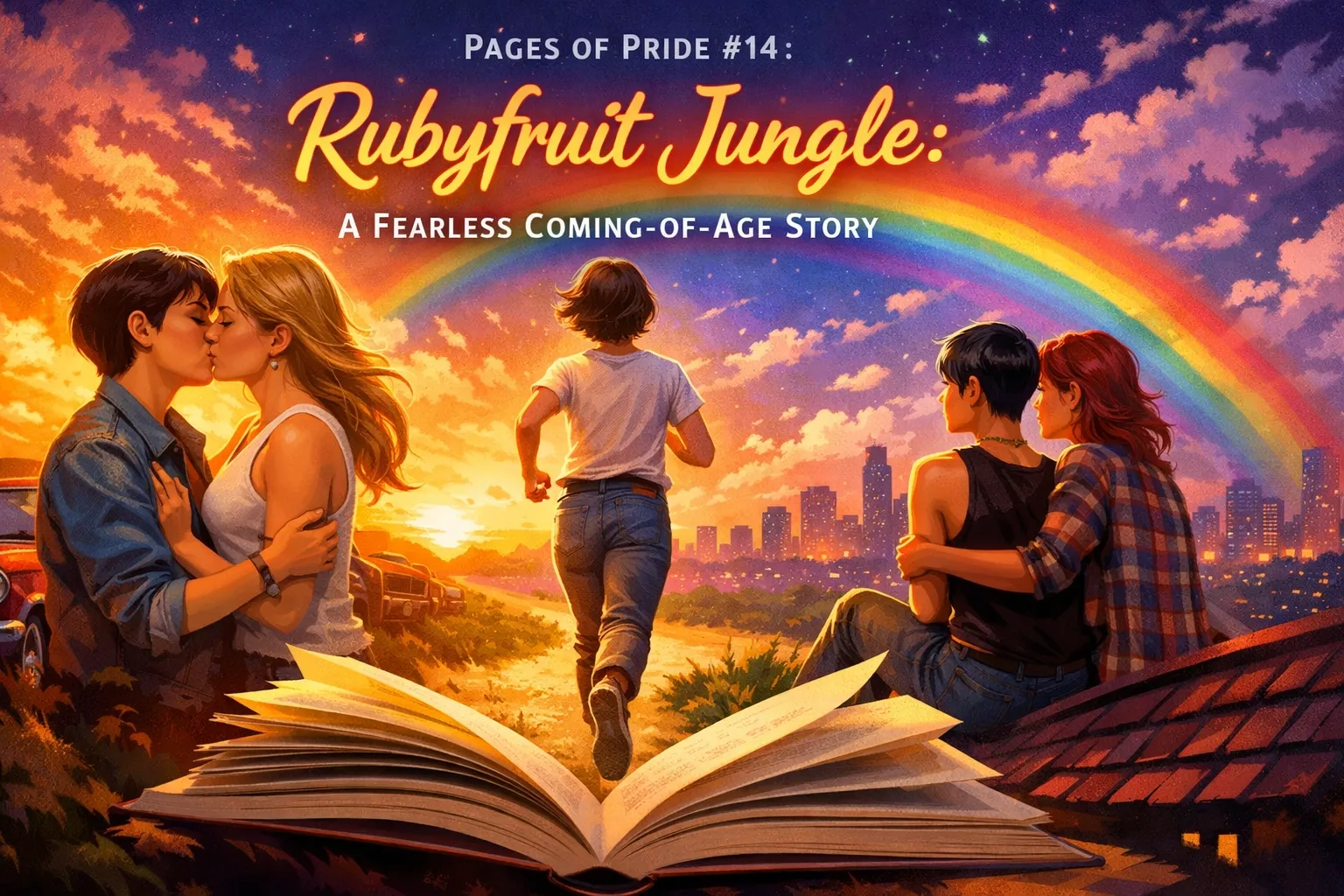
Let's talk about a book that changed everything. Before Rubyfruit Jungle hit shelves in 1973, lesbian fiction was either non-existent or buried in coded language and tragic endings. Then Rita Mae Brown said, "Not today, patriarchy," and gave us Molly Bolt, a character so unapologetically herself that she kicked down doors for generations of queer readers to come.
This isn't your grandmother's coming-of-age story (unless your grandmother was incredibly cool). This is raw, funny, sexy, and absolutely fearless gay literature that refuses to apologize for existing.
The Revolution Will Be Published (By a Feminist Press)
Here's the tea: mainstream publishers wouldn't touch Rubyfruit Jungle with a ten-foot pole. Too controversial. Too explicit. Too… gay. So Daughters, Inc., a feminist press, published it, and it became an underground sensation. We're talking about a book that sold over 70,000 copies through word-of-mouth alone before a major publisher finally picked it up.
That's the power of queer fiction that speaks directly to people's lived experiences. When you've been starving for representation, you'll find the books that feed your soul, no matter how hidden they are.
Meet Molly Bolt: The Hero We Needed
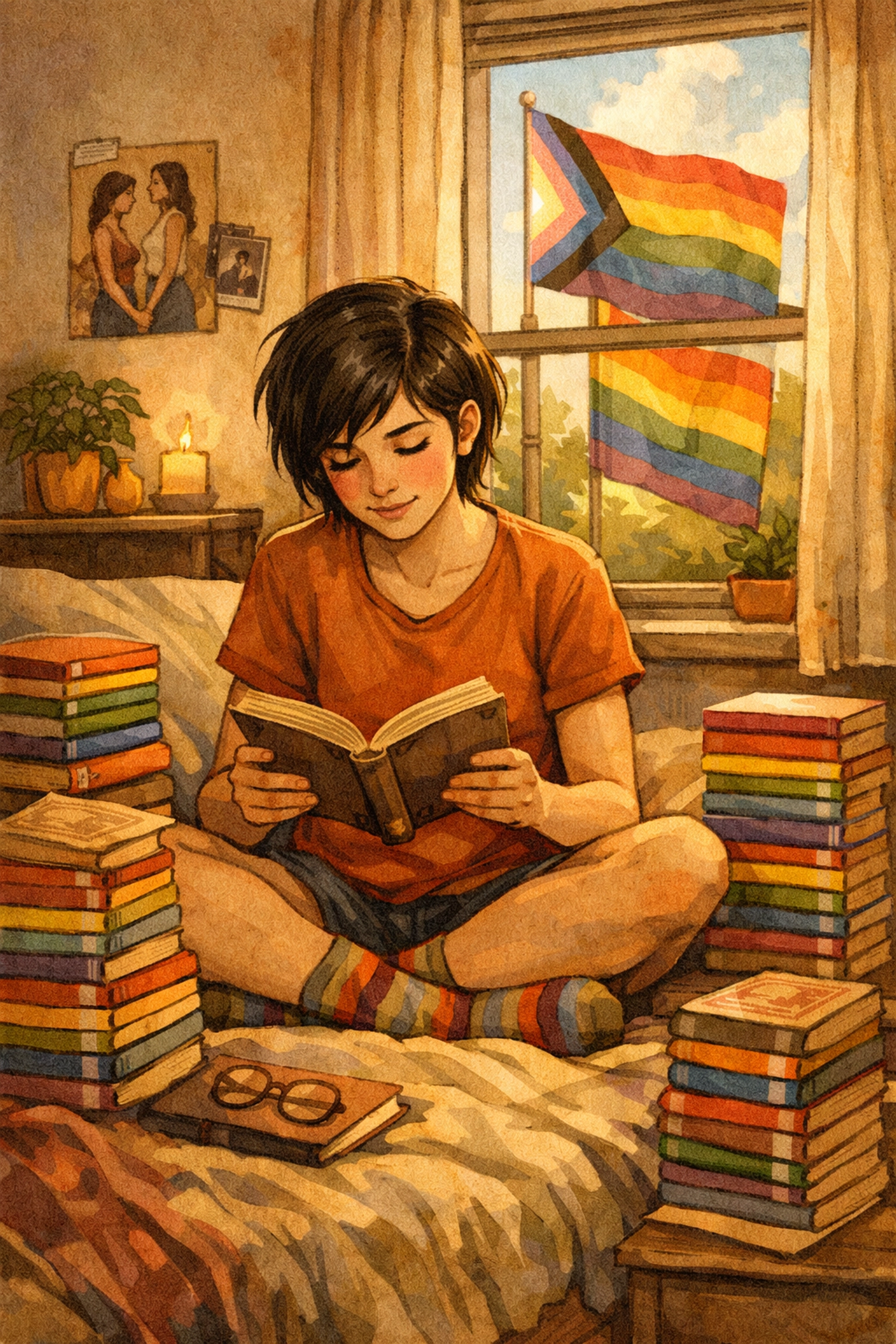
Molly Bolt is adopted, poor, and absolutely certain of who she is from an early age. She's smart, beautiful, witty, and completely unwilling to dim her light for anyone. Growing up in Pennsylvania and later Florida, she faces abuse from her adoptive mother while receiving unwavering support from her father. But what makes Molly unforgettable isn't just her resilience, it's her refusal to feel shame about loving women.
From her first childhood crush in middle school through her relationships in college and beyond, Molly lives her truth with a confidence that was revolutionary for gay novels of the 1970s. She doesn't question whether she should be who she is, she questions why the world has a problem with it.
This is what makes Rubyfruit Jungle such essential LGBTQ+ fiction. Brown didn't write Molly as a tragic figure doomed to a lonely existence. She wrote her as a fully realized person with desires, ambitions, flaws, and an unshakeable sense of self.
The Fearless Part: Sex, Baby
Let's be real, what made this book truly scandalous (and important) was its explicit portrayal of lesbian sexuality. Brown didn't fade to black. She didn't use euphemisms. She wrote about women loving women with the same frank honesty that male authors had been using to write about heterosexual relationships for centuries.
This wasn't gratuitous, it was radical. For queer readers in the 1970s who had never seen their experiences reflected on the page, these scenes were validation. They said: Your desire is real. Your love is real. You exist.
The sexual awakening journey in Rubyfruit Jungle is a core component of Molly's coming-of-age story. It's not separate from her identity, it IS her identity. And Brown refused to sanitize that for straight comfort.
More Than Just a Love Story
While Rubyfruit Jungle is often celebrated as groundbreaking gay romance and lesbian fiction, it's also a sharp critique of American society. Brown uses Molly's journey to examine patriarchy, class inequality, family dysfunction, and the intersections of various forms of oppression.
The book doesn't shy away from showing how Molly's whiteness affords her certain privileges, even as she faces discrimination for her sexuality. She navigates a world that's hostile to queer people, but she also has advantages that queer people of color don't. Brown was writing about intersectionality before we had the language for it.
Molly's path takes her from poverty in Pennsylvania to the supposedly liberated streets of New York City, where she discovers that homophobia exists even in progressive spaces. She faces discrimination in film school, struggles to find work, and learns that being yourself doesn't mean the world will celebrate you, but it's still worth it.
Why This Book Still Matters in 2026
We've come a long way since 1973. We have marriage equality. We have openly queer celebrities, politicians, and yes, even LGBTQ+ ebooks readily available at Read with Pride. So why does a 53-year-old novel still matter?
Because Molly Bolt's journey is still relevant. Young queer people are still coming of age. They're still navigating families that don't understand them. They're still figuring out who they are in a world that often tells them to be someone else.
Rubyfruit Jungle remains one of the most important pieces of gay literature history because it established a template: queer stories don't have to be tragedies. Our protagonists can be complex, flawed, sexual beings who get to live full lives. They can be funny and angry and ambitious and messy and alive.

The Legacy of Fearlessness
Brown's novel paved the way for countless queer authors and gay fiction that followed. It proved there was an audience hungry for authentic queer stories. It showed that MM romance, lesbian fiction, and all forms of LGBTQ+ romance could be commercially successful without compromising their truth.
Today, when you pick up any MM romance books or gay love stories that feature characters unapologetically living their truth, you're benefiting from the ground Rita Mae Brown broke. When you read contemporary gay romance where the characters' queerness is just one aspect of their identity rather than a problem to be solved, that's Molly Bolt's legacy.
The book's impact extends beyond literature, too. It became a cultural touchstone for the lesbian community, a shared reference point that said: we exist, we've always existed, and we're not going anywhere.
Reading Rubyfruit Jungle Today
If you're picking up Rubyfruit Jungle for the first time in 2026, here's what to expect: it's a product of its time in the best way. The language is of the 1970s, the cultural references are dated, and some of the social commentary reflects that era's understanding of gender and sexuality.
But Molly's voice remains electric. Her refusal to be anything other than herself still resonates. And the core message: that queer people deserve to take up space, to be sexual, to be ambitious, to be fully human: is timeless.
This is the kind of gay fiction that reminds us why representation matters. It's not just about seeing ourselves reflected on the page. It's about seeing ourselves living boldly, refusing to apologize, demanding more from the world and from ourselves.
Join the Conversation
Rubyfruit Jungle is #14 in our Pages of Pride series celebrating the best LGBTQ+ books throughout history. Whether you're discovering this classic for the first time or revisiting Molly Bolt's journey, we want to hear from you.
Have you read Rubyfruit Jungle? What did it mean to you? Are there other groundbreaking gay novels from the 1970s that opened doors for modern queer fiction? Share your thoughts with us on social media!
Follow us for more literary deep dives, book recommendations, and celebrations of LGBTQ+ literature:
- Facebook: Read With Pride
- Instagram: @read.withpride
- X/Twitter: @Read_With_Pride
And if you're looking for your next great read: whether it's classic gay literature or the latest MM romance: check out our full collection at Readwithpride.com.
Because every book that lets us see ourselves is an act of revolution. Every story that refuses to apologize for queer love is a victory. And every time we pick up a book like Rubyfruit Jungle, we're honoring the fearless writers who made space for all of us.
Stay proud, stay loud, and keep reading.
#ReadWithPride #RubyfruitJungle #GayLiterature #LGBTQBooks #QueerFiction #LesbianFiction #ComingOfAgeStories #GayRomance #MMRomance #LGBTQHistory #QueerBooks #GayNovels #ClassicGayLit #SapphicFiction #1970sLiterature #FeministLiterature #QueerClassics #GayBookClub #LGBTQReading #RitaMaeBrown

Leave a Reply
You must be logged in to post a comment.