

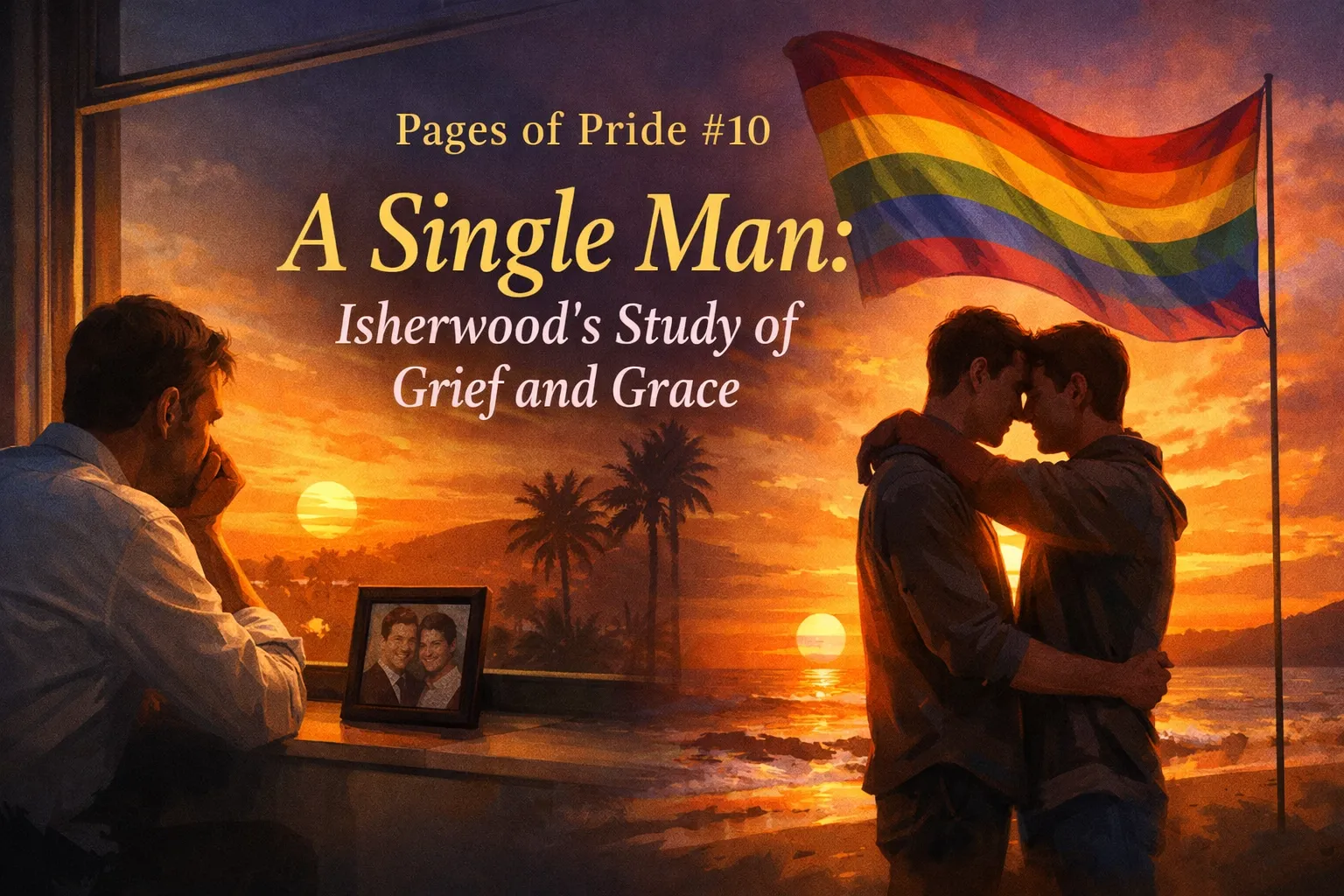
Some books hit you like a tidal wave. Others seep in slowly, like water through cracks in concrete. Christopher Isherwood's A Single Man does both. Published in 1964, this slender novel about one day in the life of a grieving gay man broke ground in ways that still resonate today. If you're searching for gay literature that combines raw honesty with lyrical prose, or craving queer literary classics that don't shy away from the messy reality of loss, you've found your next essential read.
A Snapshot of 1962: When Being Gay Meant Being Invisible
Let's set the scene. It's 1962 in Southern California: Kennedy's in the White House, the Cuban Missile Crisis is brewing, and being openly gay could cost you your job, your friends, your everything. Into this landscape, Isherwood places George, a middle-aged English professor living alone in a canyon home built for two.

George's partner of sixteen years, Jim, has died in a car accident. But here's the kicker: because their relationship wasn't legally recognized, George wasn't even notified by Jim's family. No inheritance. No acknowledgment. No right to grieve publicly. He's been erased from the narrative of Jim's life.
This is the brutal reality that makes A Single Man one of the most important entries in LGBTQ+ fiction. Isherwood didn't write a coming-out story or a tale of secret romance. He wrote about what happens after: when the love story ends and the world tells you that your grief doesn't count.
Twenty-Four Hours of Survival
The genius of A Single Man lies in its structure. We follow George through a single day: waking up, performing his morning rituals, teaching his college class, visiting his friend Charlotte, and having an unexpected encounter with his student Kenny. It sounds mundane, right? But Isherwood transforms the ordinary into something profound.
Every action George takes is weighted with loss. Getting dressed becomes an act of armor. Teaching literature becomes performance art. Driving home means navigating streets filled with memories of Jim. The novel captures something essential about grief that most gay romance books and even literary fiction often miss: it's not about the dramatic breakdowns. It's about the thousand tiny ways absence makes itself known.
George refers to himself in the third person throughout much of the narrative, creating distance from his own pain. "Waking up begins with saying am and now," the novel opens. This fragmentation reveals how grief can make you feel like a stranger in your own life: a sensation many in the LGBTQ+ community know intimately when society refuses to validate our relationships or our losses.
The Weight of Being Unseen
What makes this novel resonate beyond its historical context is how Isherwood captures the dual alienation of being both gay and an outsider. George is English in California, a "foreigner" who sees American culture with critical clarity. He's also gay in a world that pretends people like him don't exist: or worse, that they're sick, sinful, or criminal.
There's a scene where George imagines being interrogated by "the Majority" about his sexuality. It's darkly funny and painfully real. He thinks about the prejudice he faces, the casual cruelty, the way straight people can parade their relationships while he must hide his grief. This rage simmers throughout the novel, never quite boiling over, but always present.

For anyone exploring queer fiction or gay novels that grapple with identity and belonging, this insider-outsider perspective offers something special. George's alienation allows him to see clearly, to empathize with other marginalized people, to understand the stakes of invisibility in ways that insulated people never can.
Flashes of Light in the Darkness
But here's what makes A Single Man more than just a grief memoir: Isherwood doesn't let George (or us) wallow. Throughout the day, there are moments of startling beauty and connection. A swim in the ocean with his student Kenny becomes transcendent: "I am alive, he says to himself, I am alive! And life energy surges hotly through him, and delight, and appetite."
These moments matter. They suggest that even in profound grief, we retain the capacity for joy, for attraction, for surprise. George feels pulled toward Kenny: not just sexually, but as a possibility of renewal. Their conversation over drinks is charged with something George hasn't felt since Jim died: hope.
This tension between despair and possibility is what makes the novel such an important entry in historical MM romance novels: though it's not a romance in the traditional sense. It's about the aftermath of love, and whether love can find us again when we're broken.
The Ending That Divided Readers
Without spoiling too much, the novel's conclusion is controversial. Just as George seems ready to embrace a new beginning, to "live for the present, find love again, and make one last attempt at happiness," Isherwood pulls the rug out. The ending is abrupt, clinical, and has sparked debate for six decades.
Some readers find it devastating. Others see it as liberating. What's undeniable is that Isherwood refuses easy answers. The question at the heart of the novel: "What does a person do when the most important thing in his or her life disappears?": doesn't get resolved with a neat bow.
Maybe that's the point. Maybe grace isn't about achieving happiness but about the courage to keep seeking it, despite everything. For those of us in the queer community who've loved and lost, who've had relationships dismissed or grief invalidated, this ambiguity feels honest.
Why A Single Man Still Matters
In today's world of MM romance and gay love stories, where happy endings are increasingly the norm (and deservedly so), A Single Man offers something different. It's a reminder of what our literary ancestors faced, the stories they had to tell in coded language or tragic endings because anything else was unthinkable.
But it's more than historical artifact. The book speaks to anyone who's felt invisible, anyone who's grieved without societal permission, anyone who's wondered if joy is possible after loss. Its themes of resilience, rage, and the search for meaning remain urgently relevant.

Isherwood's prose is also stunning: spare, precise, occasionally funny, always humane. He writes with the clarity of someone who knows that every word counts when you're telling a story society would prefer not to hear.
Your Next Essential Read
If you're building your library of LGBTQ+ books and want to understand the foundation of modern gay fiction, A Single Man deserves a spot on your shelf. It influenced generations of queer writers and helped pave the way for the rich, diverse landscape of MM novels and queer authors we celebrate today.
At Read with Pride, we believe in honoring the literary history that made today's stories possible while celebrating contemporary gay romance books and MM fiction that continue pushing boundaries. Whether you're drawn to steamy MM romance or emotional MM books that dig deep, understanding where we came from enriches where we're going.
Pick up A Single Man. Sit with George for a day. Let Isherwood show you how grief and grace can coexist, how invisibility can sharpen vision, and how the search for connection persists even when the world says you don't deserve it.
That's the power of gay literature. That's why we read with pride.
Ready to explore more queer literary classics? Follow us on Facebook, Instagram, and Twitter for daily book recommendations, author spotlights, and community discussions. Visit Readwithpride.com to discover your next unforgettable read.
#ReadWithPride #GayLiterature #QueerClassics #ASingleMan #ChristopherIsherwood #LGBTQBooks #MMRomance #GayFiction #QueerFiction #HistoricalMMRomance #GayNovels #LGBTQLiterature #GayBookClub #QueerReading #PrideReading #ClassicGayLiterature

Leave a Reply
You must be logged in to post a comment.