

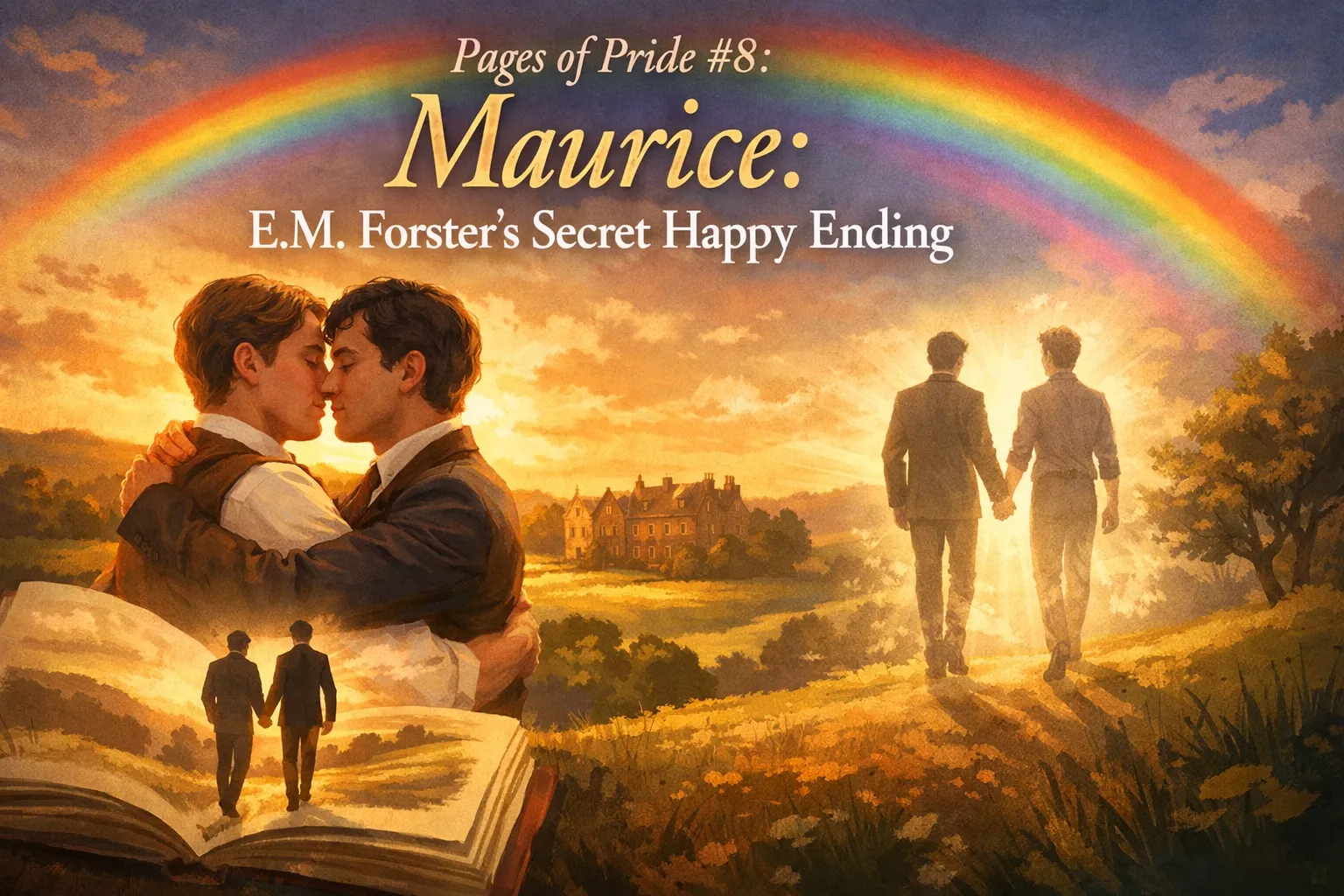
A Love Story Too Dangerous to Tell
Picture this: You've just written the most hopeful, authentic love story of your life. It's beautiful. It's honest. It's exactly what you need to say. And then you lock it in a drawer for fifty-six years because publishing it could literally ruin your life or land you in prison.
Welcome to the story of E.M. Forster's Maurice, one of the most significant historical MM romance novels ever written, and one of the bravest acts of literary faith in LGBTQ+ history.
While we're living in an era where we can openly celebrate gay romance books and MM fiction thanks to platforms like Read with Pride, Forster's masterpiece reminds us just how far we've come. And how much courage it took to even imagine a happy ending for two men in love.

The Novel That Couldn't Be Published
E.M. Forster completed Maurice in 1914, during the height of Edwardian England's rigid social conventions. By that point, he'd already established himself as a respected literary figure with works like A Room with a View and Howards End. But Maurice was different. This wasn't a novel about class tensions or social manners wrapped in subtext. This was a frank, unapologetic exploration of same-sex love that concluded, radically, with happiness.
The manuscript came with a haunting note in Forster's own handwriting: "Publishable, but worth it?"
The answer, in 1914 Britain, was a resounding no. Male homosexuality was illegal under the Criminal Law Amendment Act of 1885, the same law that destroyed Oscar Wilde two decades earlier. Forster understood that publishing Maurice wouldn't just be career suicide; it could result in actual prosecution. The happy ending, in particular, would be seen as promoting "gross indecency."
So he made a choice that speaks volumes about both his integrity and his despair: he would write the truth and hide it until the world was ready to hear it.
What Makes Maurice Revolutionary
If you're used to reading contemporary MM romance books where happy endings are the norm (and thank goodness for that), it's hard to grasp just how transgressive Maurice was for its time.
In 1914, the dominant narrative for queer characters in literature, if they appeared at all, was tragedy. They died, went mad, lived in torment, or repented. The message was clear: there is no happiness for people like you. Love between men was portrayed as a sickness, a perversion, or a tragic flaw that could only end in ruin.
Forster rejected that narrative entirely.
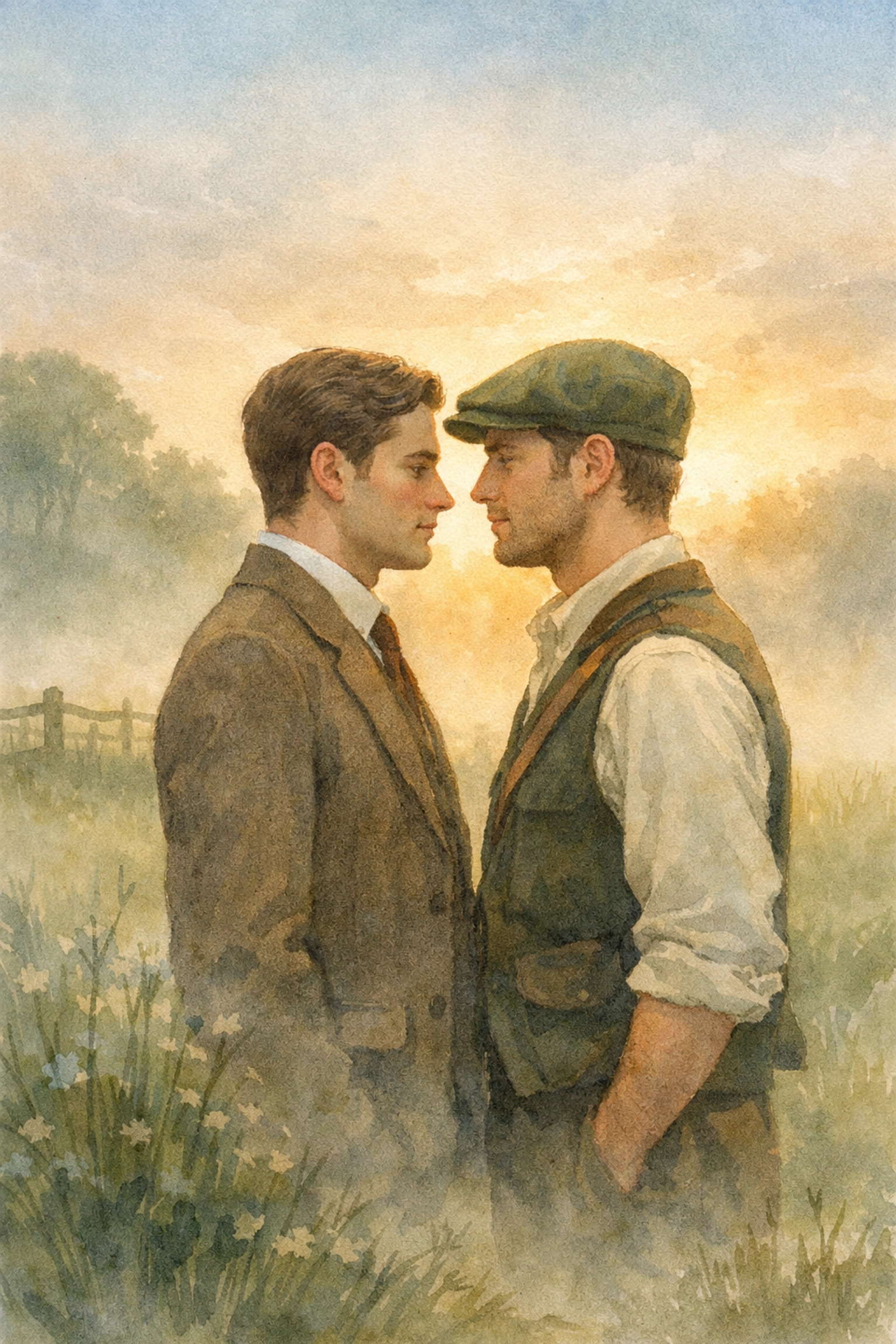
Maurice tells the story of Maurice Hall, a young man coming of age in Edwardian England who slowly comes to understand his attraction to other men. The novel follows his journey through denial, torment, a doomed relationship with his Cambridge classmate Clive Durham (who eventually chooses conventional marriage), and finally, redemption through his love affair with Alec Scudder, a gamekeeper.
What makes this a true slow burn MM romance is Forster's patient, psychologically complex portrayal of Maurice's self-discovery. This isn't instalove; it's the gradual, painful, beautiful process of accepting who you are when the entire world tells you you're wrong.
And then, in an act of literary rebellion, Forster gives Maurice and Alec a future together. They choose each other. They choose authenticity. They walk away from society's expectations and into the "greenwood," a symbolic space of freedom and possibility.
It's a happy ending that Forster knew he might never live to see published.
The Weight of Silence
Forster lived to be 91 years old. He died in 1970, just one year after Maurice was finally published. That means he spent more than five decades carrying this secret, this beautiful, hopeful vision of queer love, knowing it couldn't see daylight in his lifetime.
But here's the gutting part: homosexuality was only decriminalized in England and Wales in 1967. Forster had three years, just three years, of living in a country where his identity wasn't criminal. For the first 88 years of his life, the love story he'd written could have been used as evidence against him.

Yet he never destroyed the manuscript. He revised it several times over the decades, showing it to trusted friends, refining the characters, holding onto the hope that someday, somewhere, this story could exist in the world. That's not just literary dedication, that's an act of faith in a future he might never witness.
In his terminal note, Forster wrote that Maurice was "dedicated to a happier year." He was writing for us. For a generation that could read this gay romance novel openly, celebrate it, and see ourselves reflected in its pages without fear.
Why Maurice Still Matters Today
In 2026, we're blessed with an abundance of incredible LGBTQ+ fiction and MM romance books. The landscape of queer literature has exploded with diverse voices, genres, and stories. We have gay fantasy romance, gay contemporary romance, steamy reads, sweet reads, and everything in between. We have happy endings by the thousands.
And we owe that, in part, to writers like Forster who dared to imagine them first.
Maurice stands as a bridge between the silenced past and our celebrated present. It's a reminder that every gay love story we get to enjoy today exists because someone, somewhere, took a risk. Forster couldn't publish his truth, but he preserved it. He believed in it. He trusted that the world would eventually be ready.
For modern readers exploring historical MM romance, Maurice offers something unique: authenticity rooted in lived experience. Forster wasn't writing a fantasy about Edwardian England; he was writing about the actual, painful reality of being queer in that era, filtered through his own struggles with identity and desire. The emotions are raw because they're real.
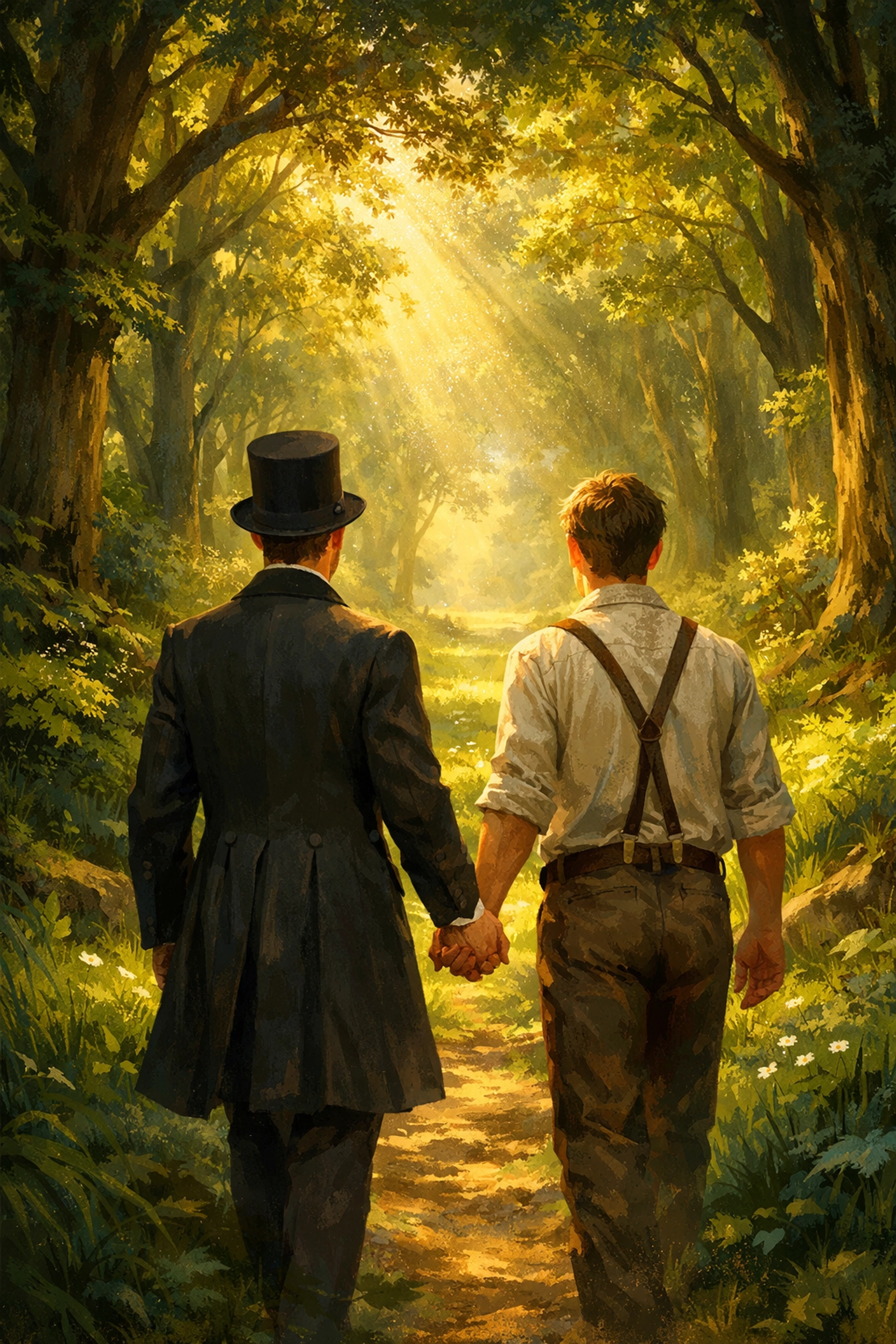
The relationship between Maurice and Alec has all the elements that make MM fiction so compelling: class differences, social obstacles, intense longing, the fear of discovery, and the ultimate choice between safety and authenticity. It's a slow burn that earns its happy ending through genuine character development and emotional depth.
A Happy Ending as Radical Act
Let's talk about that ending, because it's everything.
Maurice and Alec don't just fall in love; they choose to completely step outside the boundaries of acceptable society. They can't have a conventional life, no marriage, no social acceptance, no safety net. What they can have is each other and their freedom, living on the margins, creating their own definition of happiness.
It's not a fairy tale ending. It's something better: a realistic, hard-won, deeply satisfying conclusion that honors both the characters' agency and the historical constraints they faced. Forster gives them as much happiness as was imaginable in that context, and he refuses to punish them for it.
That refusal to inflict tragedy on his queer characters, that insistence on joy, even secret joy, is what makes Maurice such an important entry in gay literature and LGBTQ+ romance. It's a declaration that queer love deserves happy endings, that our stories don't have to conclude in shame or death, that authenticity and love are worth the sacrifice.
Reading Maurice Today
If you're looking for gay romance books with historical depth and emotional complexity, Maurice is essential reading. Yes, it's over a century old. Yes, the language and social context require some adjustment. But the core emotional truth: the experience of discovering and accepting your identity, of finding someone who sees and loves the real you: transcends its era.
For fans of slow burn MM romance recommendations, this is the literary ancestor of the trope. Every lingering glance, every charged conversation, every moment of repressed longing builds toward an ending that feels earned and true.
You can explore more incredible LGBTQ+ books and queer fiction over at readwithpride.com, where we celebrate both the classics that paved the way and the contemporary voices continuing the tradition.
The Legacy of a Secret
E.M. Forster's decision to write Maurice and then hide it for five decades is one of the most poignant stories in literary history. It's a testament to the power of hope, the necessity of truth, and the belief that the future could be different.
Every time we pick up a gay novel or MM romance book today and see characters who get their happy ending, we're living in Forster's "happier year." We're the generation he was writing for, even if he never got to meet us.
Maurice reminds us that representation matters: not just in the stories we can tell today, but in the stories that were hidden, preserved, and finally released when the time was right. It's a love letter to the future, written in an era of silence, delivered to us with all its hope intact.
That's the power of gay love stories. They persist. They survive. They wait for their moment.
And when that moment comes, they change everything.
Discover more groundbreaking LGBTQ+ literature and contemporary MM romance at Read with Pride. Follow us on Facebook, Instagram, and X/Twitter for daily book recommendations and community celebrations.
#ReadWithPride #MauriceForster #MMRomance #GayRomanceBooks #LGBTQBooks #HistoricalMMRomance #GayLiterature #QueerFiction #ClassicGayBooks #SlowBurnRomance #MMFiction #GayRomanceNovels #LGBTQFiction #GayLoveStories #QueerClassics #GayBooks2026 #PagesOfPride #Readwithpride

Leave a Reply
You must be logged in to post a comment.