

readwithpride.com
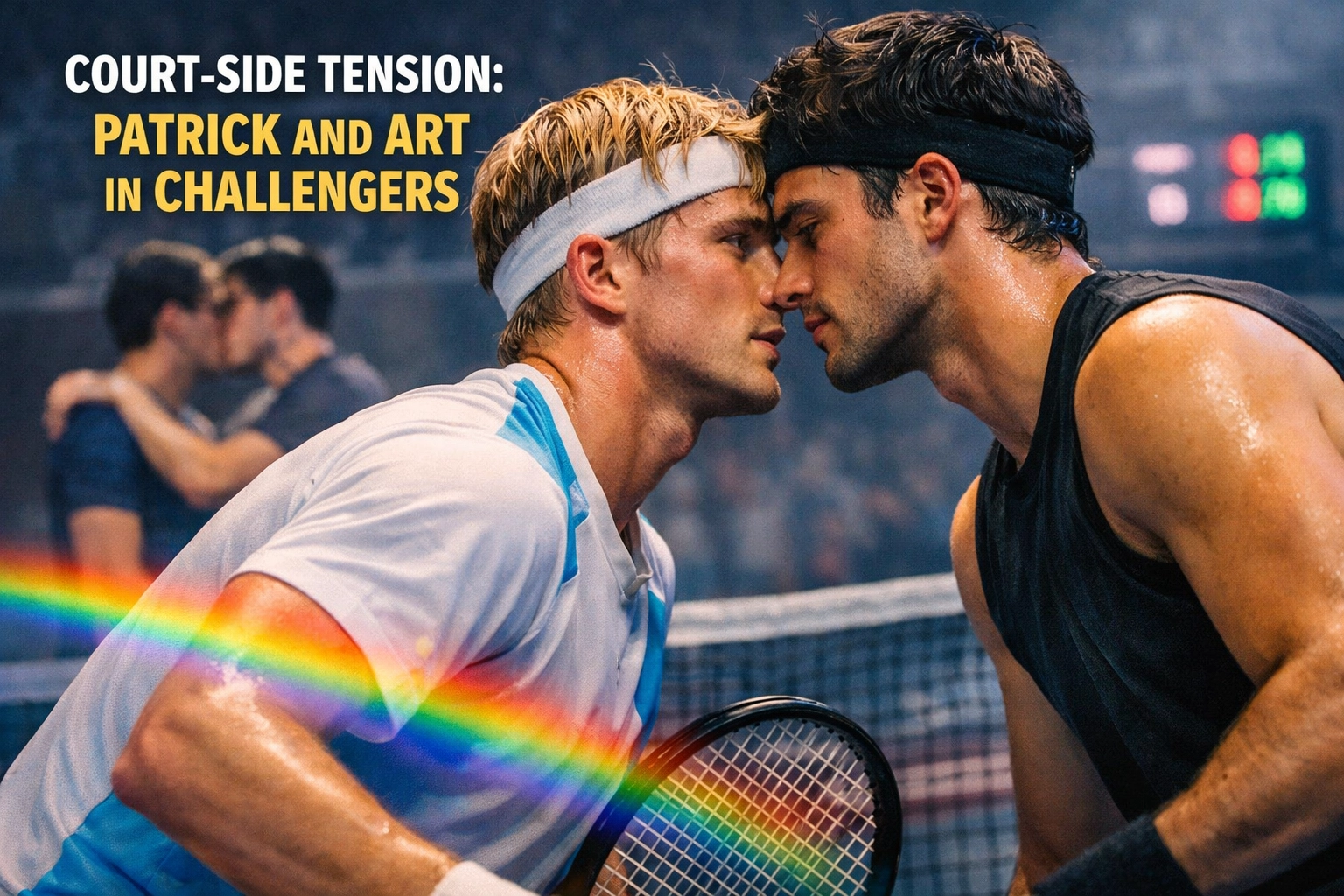
Let's talk about Challengers, the 2024 tennis drama that had everyone sweating through their shirts for reasons that had nothing to do with the on-court action. Sure, the film marketed itself as a love triangle between tennis prodigy Tashi (Zendaya) and two competitive players, but if you watched it with your queer-dar switched on, you know the real tension wasn't about who won Tashi's heart. It was about the decades-long emotional tug-of-war between Patrick Zweig and Art Donaldson.
This isn't your standard sports rivalry. This is fire and ice, childhood intimacy turned toxic obsession, and two men who can't seem to exist without each other, even when they're destroying each other in the process. Whether you caught the subtext or not, director Luca Guadagnino delivered one of the most erotically charged gay (or at least bi) dynamics in recent cinema, wrapped up in designer tennis whites and set to a pulsing Trent Reznor score.
The Best Friends to… What Exactly?
Patrick and Art start as childhood best friends, the kind who have secret hand signals, finish each other's sentences, and share everything. Everything. Including, eventually, Tashi. They meet her at a junior US Open tournament, and both fall hard. When she chooses Patrick, something fractures in Art that never quite heals.

But here's where it gets interesting: throughout the film, Patrick's motivations become increasingly clear. He's not just competing with Art for Tashi's affection. All of Patrick's actions are designed to get Art's attention. Every serve, every match, every affair, it's about provoking a reaction from Art. Patrick dominates Art in nearly every aspect of their lives, using their shared history and intimacy with Tashi as weapons to keep Art emotionally tethered to him.
The film never explicitly labels Patrick's feelings, but the subtext is screaming. This is a man in love with his best friend, channeling that unspoken desire into a decades-long psychological game played out on tennis courts across the world.
Fire and Ice: A Toxic Love Language
Patrick and Art describe themselves as "fire and ice", opposing forces that create steam when they collide. Patrick is raw talent, chaotic energy, living moment to moment. Art is discipline, control, the golden boy who plays by the rules. On the surface, they're opposites. But underneath? They're two halves of the same coin, unable to function without the friction between them.
Their dynamic is undeniably toxic. Patrick deliberately provokes Art, using their childhood intimacy as ammunition. During a pivotal match in the present-day timeline, Patrick flashes their secret hand signal, the one from childhood, to let Art know he slept with Tashi the night before. It's a power move designed to shatter Art's composure, and it works. Art surrenders three points in rage, forcing the match into a tiebreaker.

But here's the thing about toxic relationships: they're often rooted in something deeply, desperately real. Patrick doesn't want to destroy Art. He wants Art to feel something, to break through that ice-cold exterior and acknowledge the connection that still exists between them. Even if that means burning everything down in the process.
The Queer Subtext That's Barely Subtext
Let's be real: Challengers is as queer as they come, even if it never puts a label on it. The film opens with Patrick and Art sharing churros in a hotel room, lounging on the same bed, comfortable in a way that speaks to years of physical intimacy, whether sexual or not. Their bodies know each other. Their rhythms sync.
Later, when both compete for Tashi's attention, she orchestrates a three-way kiss that feels less like a fantasy and more like a test. She's not naive. She knows there's something electric between these two men, and she's curious, maybe even aroused, by their connection. The film doesn't shy away from the homoeroticism. It leans into it, letting the camera linger on sweat-slicked skin, on the way Patrick and Art watch each other across the net with an intensity that goes beyond competition.
Guadagnino, who directed the achingly beautiful Call Me by Your Name, knows how to film desire. He understands the power of unspoken longing, of hands that almost touch, of glances that say everything words can't. In Challengers, he uses tennis as a metaphor for sex, and the matches between Patrick and Art pulse with a raw, visceral energy that reads as deeply, undeniably intimate.
The Breaking Point: A Love Letter in a Hand Signal
The climax of Challengers isn't about who wins the championship. It's about that moment when Patrick flashes the signal, their signal, across the court. It's a callback to childhood, to shared secrets, to a time when they were just two boys who understood each other better than anyone else in the world.
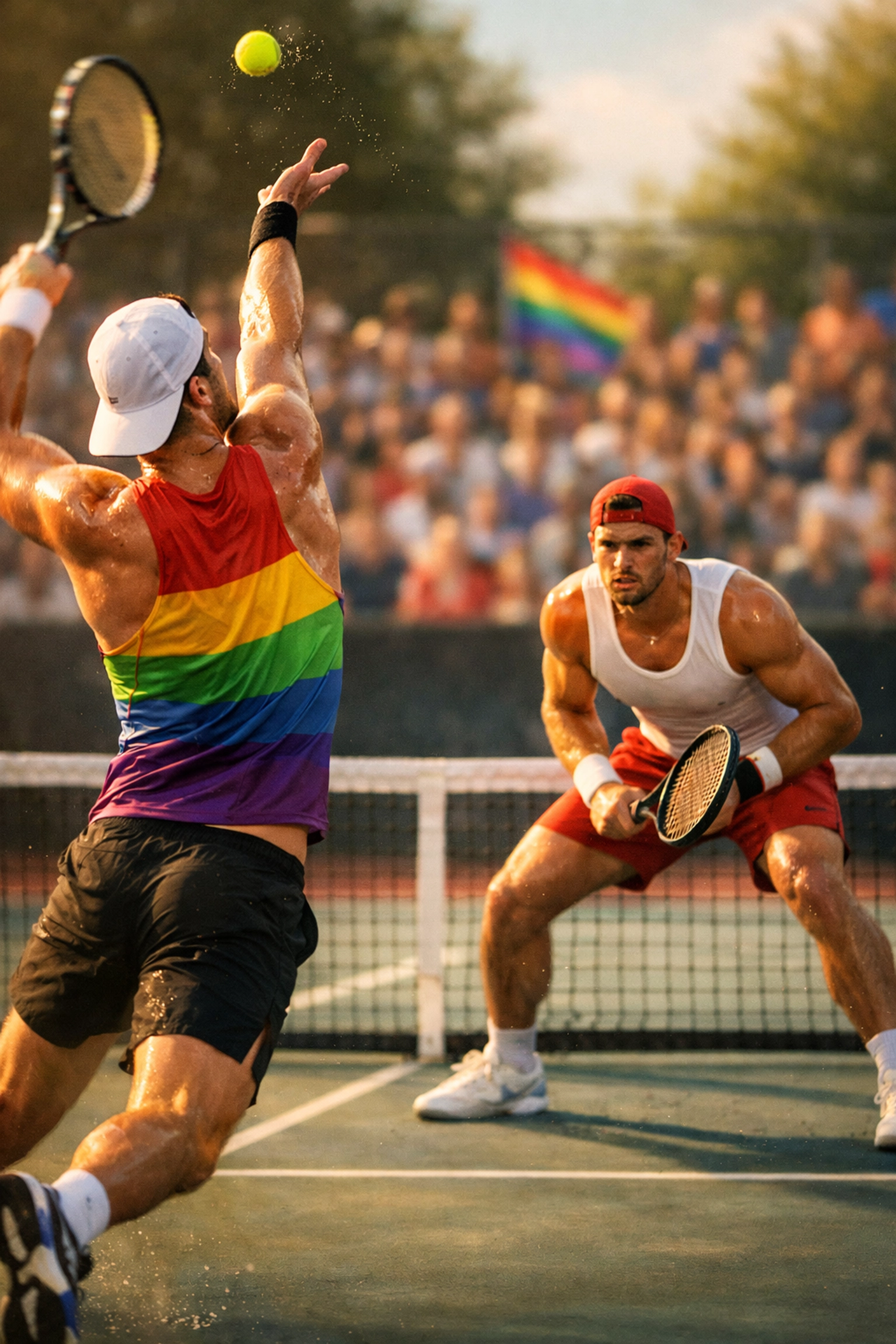
Art's reaction is volcanic. He loses his composure, his carefully constructed control shattering in an instant. Because that signal isn't just about Tashi. It's about them. It's Patrick saying, "I still know how to reach you. I still have power over you. You still care."
And Art does. God, does he care.
The entire film builds to this: two men, now in their thirties, still locked in the same emotional battle they've been fighting since they were teenagers. They've spent years hurting each other, using Tashi as a proxy for feelings they can't or won't name. But in that final match, everything comes to the surface.
The Hug That Says It All
Here's where Challengers gets genuinely beautiful. After all the rage, the jealousy, the years of toxic competition, the film ends with Patrick and Art embracing. Not as rivals. Not as enemies. But as two people who finally, finally, stop running from what they mean to each other.
Director Luca Guadagnino explained the ending perfectly: "It's not about who won the match but how they won each other back and got to be together again." That hug is reconciliation. It's forgiveness. It's an admission that beneath all the posturing and pain, these two men need each other. Whether you read that need as romantic, sexual, or just deeply, profoundly emotional doesn't really matter. What matters is the recognition that they've been orbiting each other for decades, unable to break free, and maybe, finally, realizing they don't want to.
Why Patrick and Art Matter to Queer Cinema
Challengers doesn't give us an explicitly gay love story, and that might frustrate some viewers looking for clear representation. But what it does give us is something equally valuable: a nuanced, complex portrayal of male intimacy that refuses to be neatly categorized.
Patrick and Art exist in that messy, undefined space where friendship, rivalry, and desire all blur together. They're two men whose connection transcends labels, whose love language is competition, whose intimacy plays out in coded signals and stolen glances. It's queer in the truest sense of the word, strange, unsettling, refusing to conform to straight narratives about how men are supposed to relate to each other.
In a cinematic landscape still catching up to the reality that male relationships can be complicated, charged, and deeply romantic without fitting into neat boxes, Patrick and Art feel revolutionary. They're a reminder that queer stories don't always announce themselves with pride flags and coming-out speeches. Sometimes they show up in the space between two tennis players who can't stop looking at each other across the net.
The Verdict
Challengers is sexy, sweaty, and absolutely electric, and a huge part of that electricity comes from the Patrick/Art dynamic. Whether you ship them romantically or see them as the world's most co-dependent frenemies, there's no denying the raw, visceral power of their connection.
If you're looking for more stories about complicated relationships, forbidden desire, and men who can't quite admit what they mean to each other, check out the MM romance collection at Read with Pride. We've got everything from slow-burn rivals-to-lovers to friends-to-more stories that explore the beautiful, messy reality of queer love.
And hey: if you loved the tension in Challengers, you're going to find plenty of MM romance books and gay fiction that delivers the same heart-pounding intensity, minus the tennis rackets (unless that's your thing, no judgment).
Follow us for more queer content:
- Facebook: Read with Pride
- Instagram: @read.withpride
- X (Twitter): @Read_With_Pride
#Challengers #PatrickAndArt #QueerCinema #MMRomance #ReadWithPride #LGBTQBooks #GayRomance #QueerSubtext #GayFiction #LucaGuadagnino #TennisRomance #LGBTQContent #GayLoveStories #MMBooks #QueerMedia #2026 #GayRomanceBooks #LGBTQReading #MaleIntimacy #QueerTension

Leave a Reply
You must be logged in to post a comment.