


World-Building Through Queer Architecture: Exploring Communal Living Beyond the Nuclear Family
In contemporary LGBTQ+ fiction and gay romance books, world-building increasingly challenges heteronormative structures. The concept of architecture designed entirely around chosen family represents a revolutionary approach to queer fiction that reimagines urban planning, domestic spaces, and relationship structures. This speculative framework explores how physical environments would evolve in societies where MM romance and poly-fam structures are the societal norm.

PROMOTIONAL OFFER: Explore Chosen Family Narratives
Read with Pride presents LGBTQ+ ebooks exploring alternative relationship structures and queer world-building. Visit readwithpride.com for gay novels that challenge traditional family narratives. Browse our curated collection at Read with Pride Store – Dick Ferguson featuring MM romance books with innovative social structures.
The Architectural Foundations of Poly-Fam Living
In a world where chosen family supersedes biological ties, residential architecture abandons the single-family dwelling. Buildings feature interconnected living pods designed for flexible household configurations. Central communal spaces: shared kitchens, gathering halls, childcare centers: form the structural heart of each complex.
Key architectural elements include:
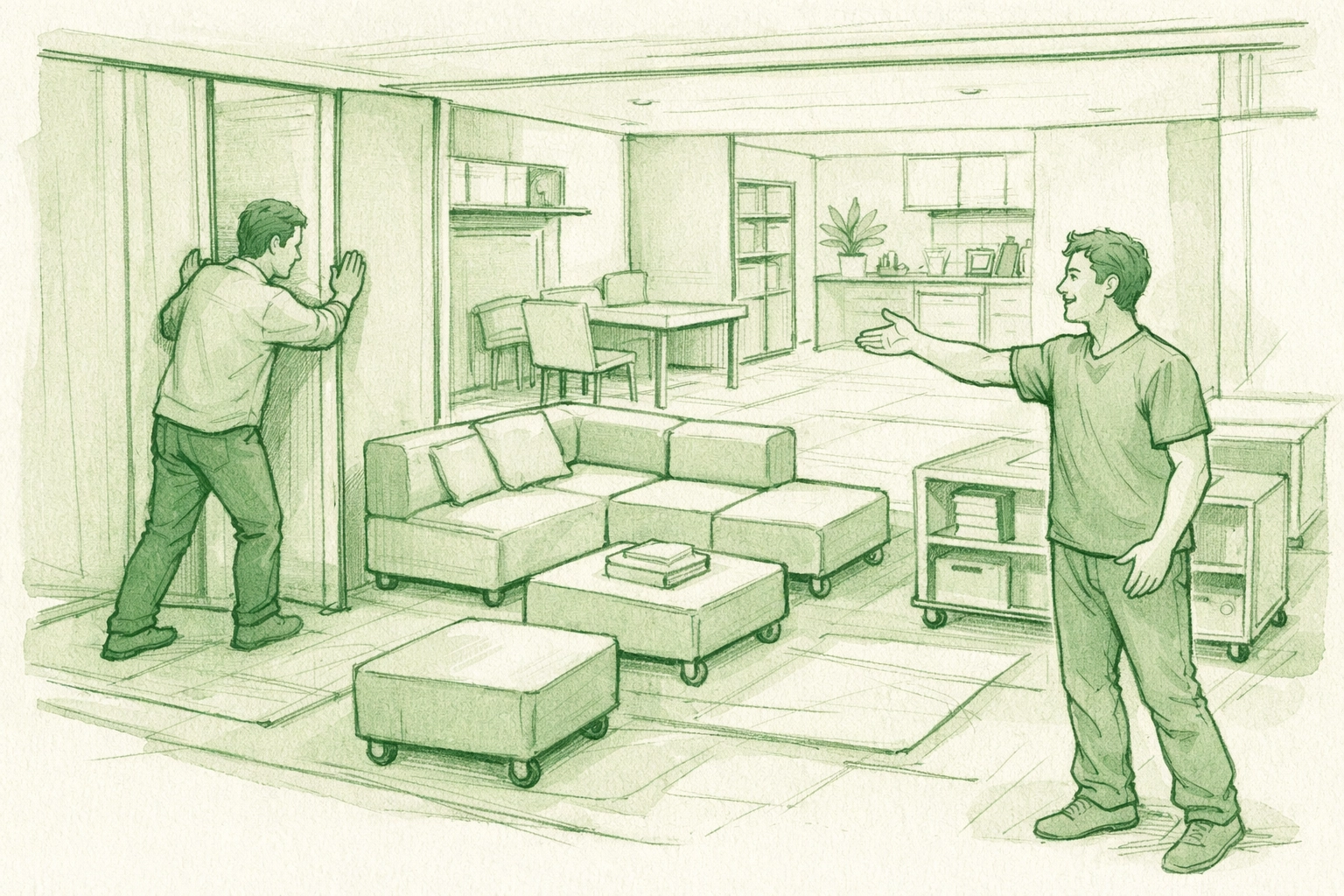
- Modular living units that expand and contract based on family composition
- Shared resource centers for collective meal preparation and community events
- Multi-generational common areas where elders, chosen siblings, and children interact freely
- Intentional gathering spaces designed specifically for emotional support and mutual care
- Privacy zones within communal frameworks, honoring individual needs alongside collective living
This structural approach reflects the research-based understanding that chosen families are intentionally formed through voluntary relationships based on mutual support, love, and emotional connection. The architecture itself becomes a physical manifestation of these values.
Historical Context: The Nuclear Family Home as Relic
In this speculative framework, the traditional two-parent household with private bedrooms and isolated living spaces represents an ancient, inefficient design. Museums preserve these "family boxes" as historical curiosities, demonstrating how biological obligation once dictated residential patterns.

Archaeological tours showcase preserved suburban neighborhoods where each household functioned as an isolated unit. Visitors express bewilderment at the wasted space, redundant kitchens, and barriers preventing mutual aid between neighbors. The concept of "privacy fences" particularly puzzles younger generations accustomed to permeable boundaries between chosen family units.
FEATURED COLLECTION: Queer World-Building in MM Fiction
Explore titles examining alternative social structures in gay fiction:
- The Divided Sky: Secrets of a Secret Love – Historical gay romance examining love beyond traditional boundaries
- A Contract of Blood and Moonlight – Fantasy MM romance exploring chosen bonds and supernatural family structures
Browse additional LGBTQ+ fiction at dickfergusonwriter.com featuring gay love stories that reimagine relationship architecture.
Urban Planning for Intentional Communities
City planning in chosen-family societies prioritizes connectivity over isolation. Neighborhoods organize around affinity groups: artistic communes, athletic collectives, academic households: rather than arbitrary geographic boundaries or economic stratification.
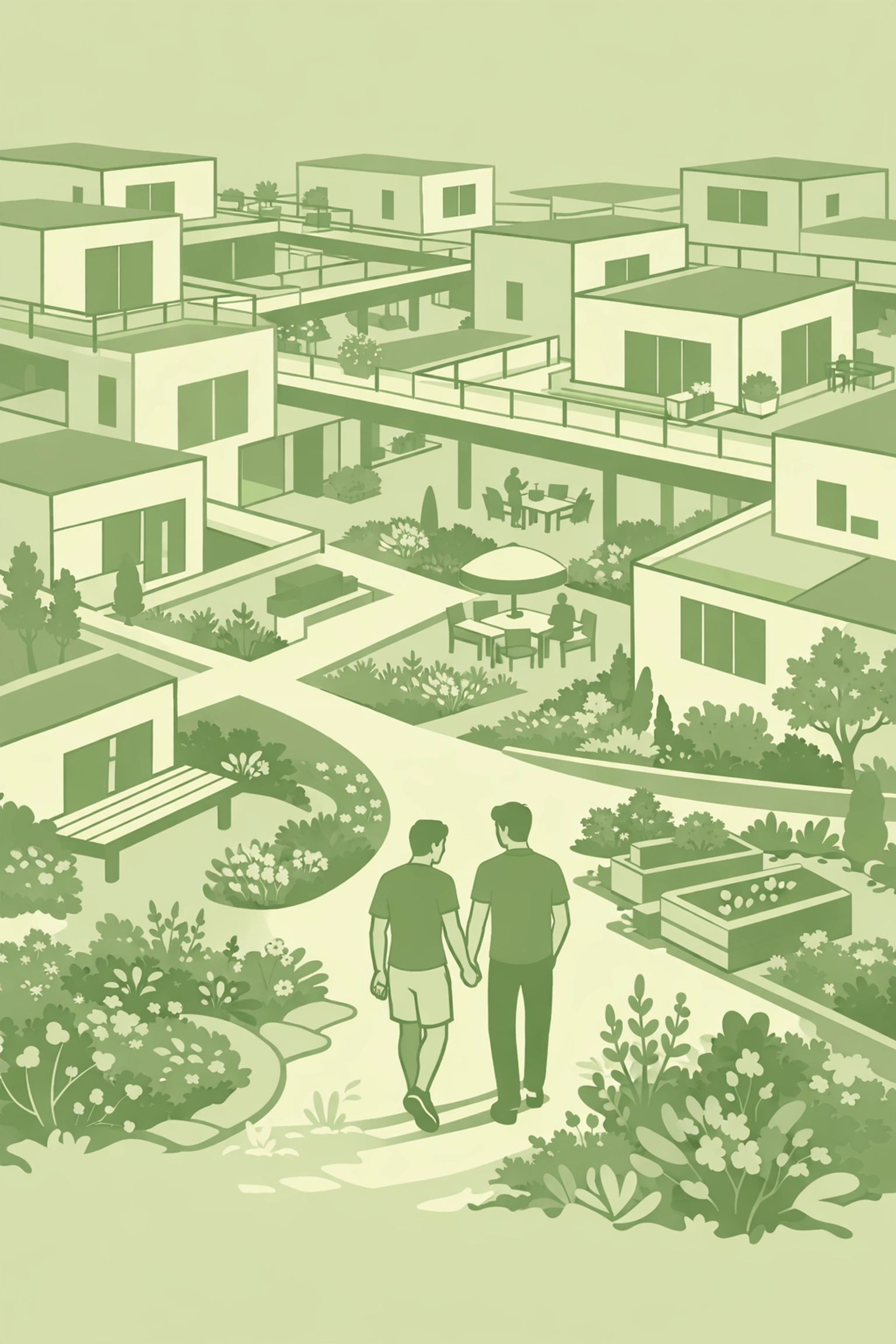
Transportation infrastructure connects communal hubs rather than individual residences. Public spaces dominate urban landscapes, with outdoor amphitheaters, maker spaces, and collective gardens occupying premium real estate. The private automobile, designed for nuclear family transportation, becomes obsolete when community-based transit systems better serve fluid household configurations.
Zoning regulations in this framework mandate minimum percentages of shared space per capita. Buildings failing to provide adequate communal gathering areas face penalties. The economic incentive structure rewards collective resource management over private accumulation.
Flexible Roles Within Architectural Spaces
Physical environments in chosen-family architecture accommodate the flexible, adaptable roles characteristic of intentional kinship networks. Unlike traditional homes with designated "master bedrooms" or "children's rooms," these spaces feature reconfigurable layouts.
Room designation shifts based on current household needs:
- Nurturing spaces for vulnerable family members requiring extra support
- Creative studios for chosen family members pursuing artistic endeavors
- Healing rooms designed for recovery, both physical and emotional
- Celebration halls that accommodate expanding family configurations during gatherings
- Intimate zones for romantic partnerships within larger poly-fam structures
This architectural flexibility mirrors the research finding that chosen families build structures through intentional selection where members actively choose roles based on personality, need, and mutual regard rather than predetermined categories.
EXCLUSIVE ACCESS: MM Romance Exploring Alternative Relationships
Reading with Pride offers comprehensive collections of MM novels examining non-traditional relationship structures. Discover gay romance series featuring polyamorous relationships, chosen family dynamics, and communal living arrangements.
Visit readwithpride.com for steamy MM romance with innovative household configurations. Our 2026 gay books releases feature cutting-edge explorations of queer domestic architecture.
Economic Implications of Communal Architecture
The financial structure supporting chosen-family architecture differs fundamentally from nuclear-family economics. Shared equity models replace individual homeownership. Household budgets pool resources across multiple income streams, creating economic resilience unavailable to isolated couples.
Construction industries adapt to prioritize renovation and reconfiguration over new development. The ability to modify existing structures for changing family compositions becomes more valuable than building static single-family homes. Architects specialize in adaptive design, creating spaces that evolve with their inhabitants.
Insurance, taxation, and inheritance systems recognize fluid household boundaries. Legal frameworks acknowledge that confirmation through time and long-term commitment define family relationships rather than biological connection or marriage certificates.
Literary Applications for Gay Fiction Writers
Queer authors and MM authors exploring alternative world-building can utilize architectural frameworks to examine how physical spaces shape and reflect relationship possibilities. Gay romance books set in communal living environments offer opportunities to explore:
- Jealousy and boundary negotiation within open floor plans
- Privacy and intimacy in spaces designed for collective living
- Power dynamics when traditional markers of status (home ownership, private property) become obsolete
- Emotional vulnerability in environments where isolation isn't architecturally possible
- The tension between individual needs and communal obligations
These narrative possibilities expand contemporary gay romance beyond conventional relationship structures. Literary MM romance with emotional depth gains additional complexity when physical environment actively shapes character interactions.
SUBSCRIBE FOR UPDATES: New Releases in Queer Speculative Fiction
Sign up at readwithpride.com for notifications about new gay releases exploring alternative social structures. Access exclusive previews of award-winning gay fiction featuring innovative world-building.
Follow our curated collections for best MM romance titles examining chosen family, communal living, and architectural innovation in LGBTQ+ romance.

Implementing Chosen Family Architecture in Fiction
Writers developing worlds where chosen family supersedes biological kinship must consider how every aspect of infrastructure: from housing to healthcare to education: reflects this fundamental shift. Architecture provides the physical manifestation of social values, making spatial design a powerful world-building tool.
The key architectural principles include:
Permeability over isolation – Spaces flow between households rather than creating barriers
Collective resources – Shared amenities reduce redundancy and encourage interaction
Adaptive design – Buildings evolve with changing family configurations
Intentional gathering – Public spaces receive architectural priority over private retreat
Multigenerational integration – Age segregation disappears when chosen rather than biological relationships define families
FINAL OFFER: Complete Your LGBTQ+ Library
Explore comprehensive gay book recommendations at dickfergusonwriter.com. Our gay book club selections feature titles examining alternative relationship structures, communal living, and chosen family dynamics.
Access free gay romance samples and discover your next favorite MM fiction series. Browse LGBTQ+ Kindle books optimized for world-building enthusiasts interested in architectural innovation and social speculation.
Visit readwithpride.com for the complete collection of LGBTQ+ ebooks exploring chosen family and alternative social structures.
Follow Read with Pride:
- Instagram: https://www.instagram.com/dickfergusonwriter
- X/Twitter: https://www.x.com/DickFergus94902
- Facebook: https://www.facebook.com/profile.php?id=61572869844598
#ReadWithPride #MMRomance #GayRomance #LGBTQEbooks #QueerFiction #GayBooks #ChosenFamily #MMNovels #GayFiction #LGBTQRomance #QueerAuthors #MMAuthors #GayLoveStories #ReadingWithPride #2026GayBooks #BestMMRomance #GayNovel #LGBTQLiterature #SteamyMMRomance #ContemporaryGayRomance #GayBookRecommendations

Leave a Reply
You must be logged in to post a comment.