readwithpride.com
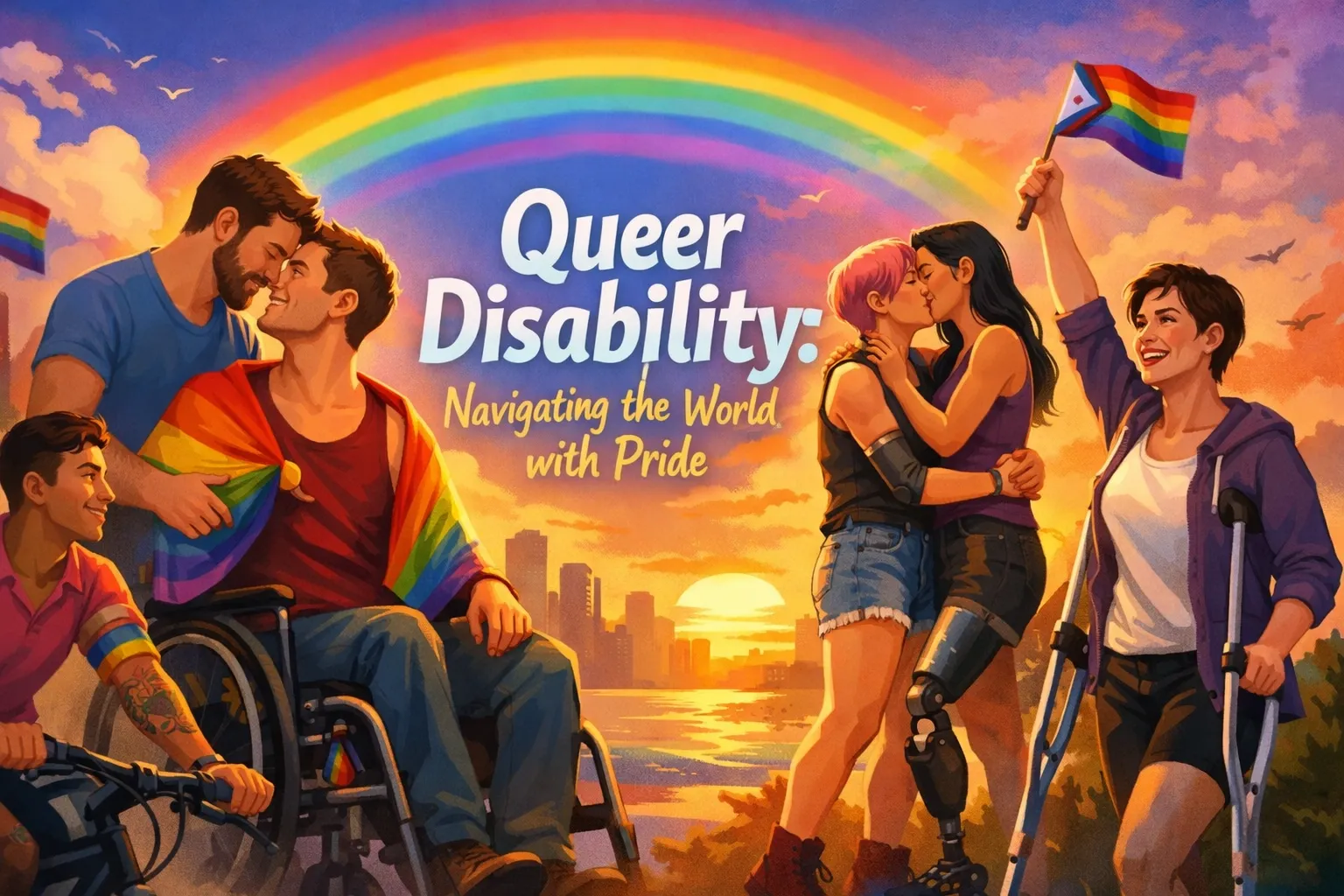
Living at the intersection of queer and disabled identities isn't just about navigating two worlds, it's about existing in a space where those worlds collide, overlap, and sometimes clash in ways that create both unique challenges and unexpected beauty. For disabled LGBTQ+ folks, pride isn't just a parade or a rainbow flag; it's a daily act of resistance, a declaration that we exist, we love, and we deserve to take up space.
Let's talk about what it really means to be queer and disabled in 2026, because these stories matter, and they're not being told nearly enough.
When Identities Intersect
For many people, understanding their queerness and their relationship with disability doesn't happen overnight. It's more like turning on a light switch in a dark room, suddenly, everything clicks into place. One identity doesn't cancel out the other; they weave together to create something wholly unique.
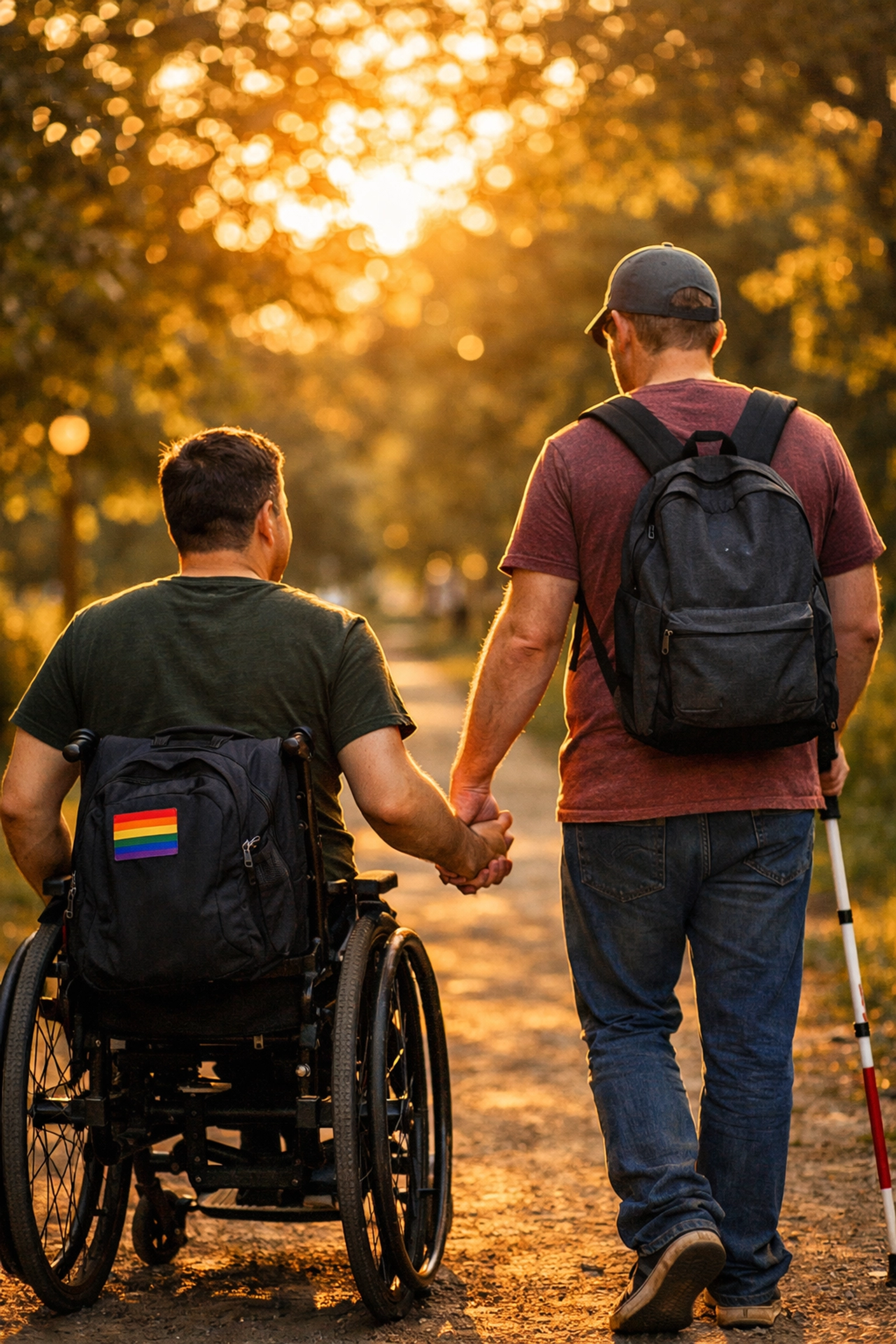
The reality? Disabled LGBTQ+ people face compounded discrimination that creates vulnerabilities most people never have to think about. When a queer disabled couple walks down the street hand-in-hand, they're not just facing homophobia or ableism, they're facing both, often amplified. The stares last longer. The comments cut deeper. And sometimes, the threats become frighteningly real.
This intersection affects everything from healthcare outcomes to mental wellbeing. Research shows that disabled LGBTQ+ people report higher rates of migraines, depression, and cognitive difficulties compared to their disabled non-LGBTQ+ counterparts. It's not surprising when you consider the constant vigilance required just to move through the world safely.
Pride Spaces Aren't Always Accessible, And That's a Problem
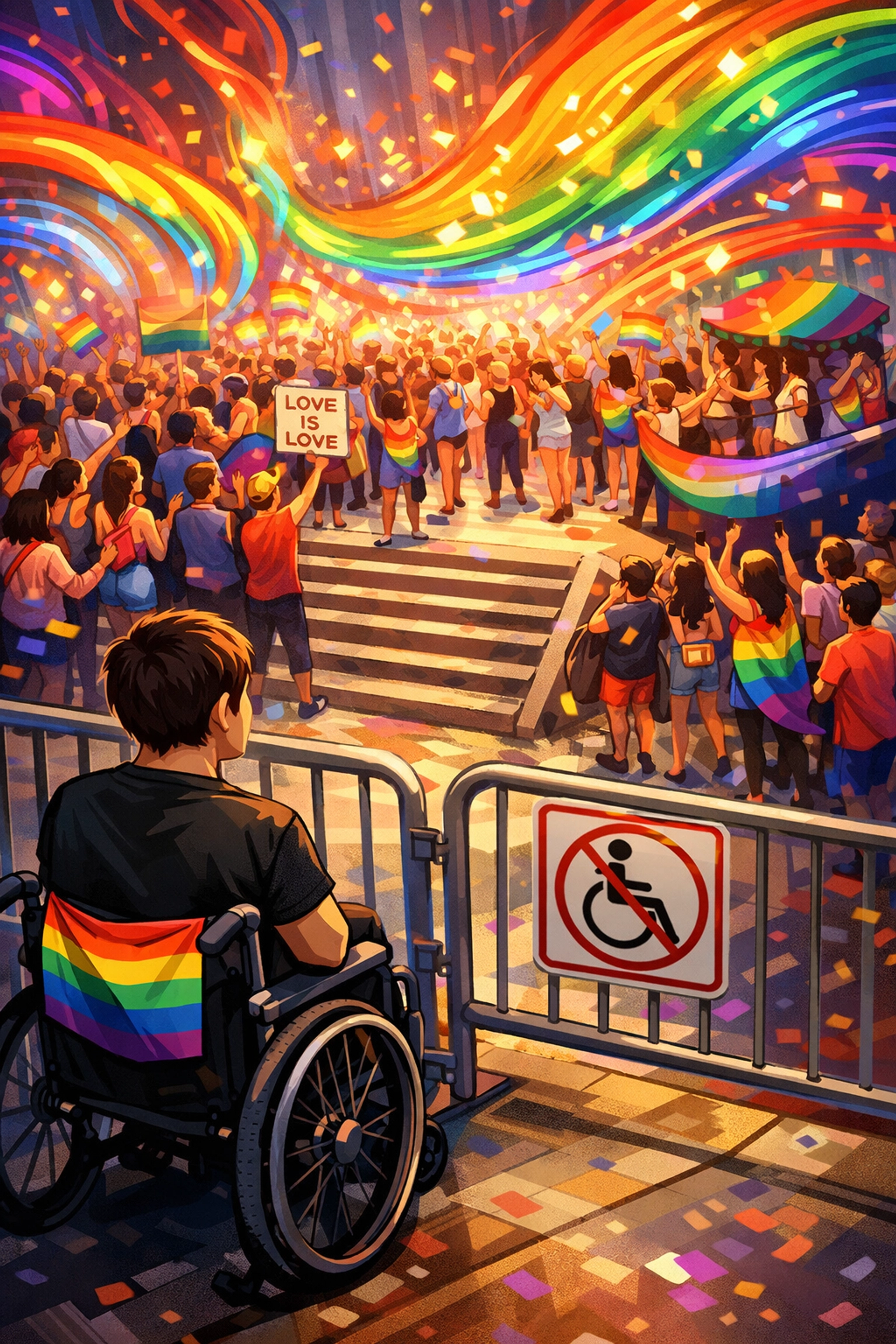
Here's an uncomfortable truth: Pride events, the very spaces meant to celebrate LGBTQ+ identities in all their forms, often fail disabled folks spectacularly. Physical accessibility? Sometimes an afterthought. Sign language interpreters? Rare. Sensory accommodations for autistic attendees? Even rarer.
This exclusion sends a painful message: that some queer bodies are more welcome than others. That Pride is for people who can stand for hours, navigate crowds without mobility aids, and process overwhelming sensory input without support. It's 2026, and we're still fighting to make our own spaces truly inclusive.
The irony isn't lost on anyone. Pride was born from the resistance of marginalized people, trans women of color, drag queens, and yes, disabled activists, who fought for liberation. When we fail to make Pride accessible, we're forgetting our own history.
The Loneliness Epidemic Nobody Talks About
Let's get real about mental health for a second. Disabled LGBTQ+ people experience a unique kind of isolation that compounds in ways that are hard to explain to anyone who hasn't lived it.
In the UK, 70% of young disabled people report chronic loneliness. LGBTQ+ people across multiple countries show higher loneliness rates than their straight or cisgender peers. Now combine those statistics. The result? A perfect storm of social isolation that affects both mental and physical health.
Healthcare inequality creates a vicious cycle. LGBTQ+ people already experience higher rates of chronic illness, complicated by unequal treatment in healthcare settings. Add disability to the mix, and you've got medical professionals who may dismiss pain, refuse to acknowledge queer relationships, or fail to provide culturally competent care. This treatment (or lack thereof) increases social isolation, which worsens both mental and physical health outcomes.
Finding community becomes essential: and incredibly difficult. Where do you belong when the disability community sometimes harbors homophobia and transphobia, while LGBTQ+ spaces remain stubbornly inaccessible? For many, the answer is building new communities, creating spaces that center intersectionality and refuse to choose which part of their identity matters more.
Love as Radical Resistance
Here's something beautiful: queer disabled relationships challenge every stereotype society holds about who deserves love, pleasure, and partnership. When disabled LGBTQ+ people show up in relationships: messy, beautiful, complicated, joyful relationships: they're modeling something revolutionary: that disabled people are worthy of love, desire, and connection.
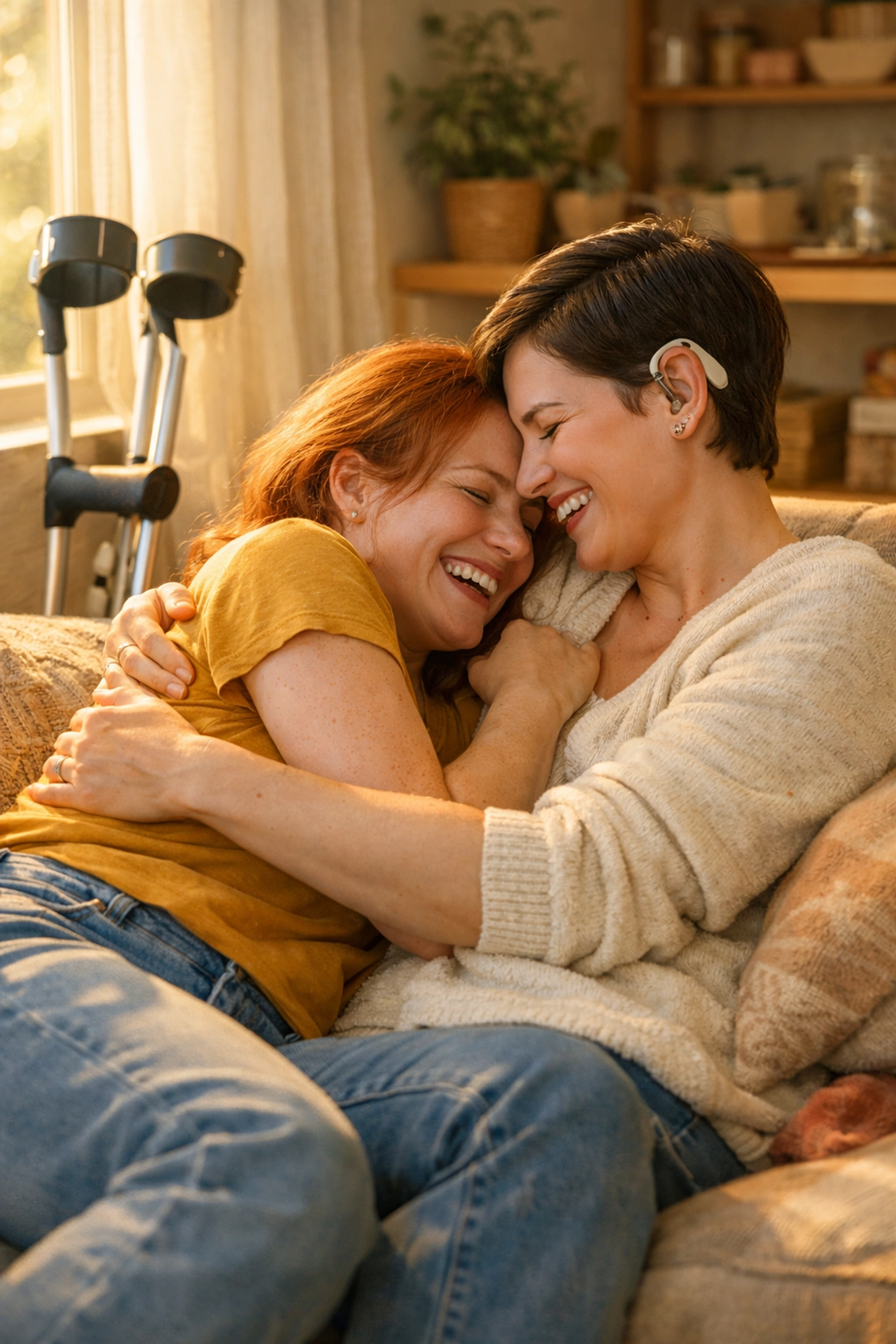
These relationships face unique challenges. Navigating intimacy with chronic pain or mobility limitations requires communication, creativity, and a willingness to redefine what sex and romance look like. It means finding partners who see disability not as something to overcome but as part of the whole person they love.
For some couples, appearing together in public becomes an act of defiance. Every dinner date, every held hand, every moment of visible affection says: we exist, we love each other, and we're not hiding. That takes courage when the world responds with intensified ableism and homophobia.
Pride as Freedom and Visibility
Ask disabled LGBTQ+ people what Pride means to them, and you'll hear stories about freedom: freedom from judgment, freedom to express sexuality and gender identity openly, freedom to simply exist without apology. Pride becomes a reminder of why inclusion matters and why marginalized voices need amplifying.
It's about the courage to exist unapologetically in a world that often wishes you wouldn't. It's wearing your queerness and your disability openly, refusing to shrink, refusing to choose which part of yourself to show. That's the real pride: not perfection, but presence.
The LGBTQ+ community needs to actively challenge ableism in its spaces, programming, and advocacy. Simultaneously, the disability community must confront homophobia and transphobia within its ranks. We can't fight for liberation while leaving parts of our community behind.
Finding Your Stories at Read with Pride
At Read with Pride, we believe in stories that reflect the beautiful complexity of queer lives: including disabled LGBTQ+ experiences. Our collection of MM romance books and gay fiction includes characters who navigate disability alongside their queer identities, because representation matters.
Whether you're looking for gay romance novels with disabled protagonists, LGBTQ+ fiction that centers chronic illness, or queer fiction that celebrates bodies and minds in all their forms, you'll find stories that see you. Because everyone deserves to find themselves in the pages of a love story.
Moving Forward Together
The work of making both queer and disability spaces more inclusive isn't finished: it's barely begun. But every conversation, every accessibility accommodation, every story that centers disabled LGBTQ+ voices moves us closer to true liberation.
Pride isn't just a month or a parade. For disabled LGBTQ+ folks, pride is waking up and choosing to exist fully in a world that often demands you hide. It's finding community in unexpected places. It's loving and being loved exactly as you are.
That's the kind of pride worth celebrating; 365 days a year.
Connect with us:
Follow Read with Pride on Facebook, Instagram, and X/Twitter for more stories celebrating LGBTQ+ lives in all their beautiful diversity.
#ReadWithPride #QueerDisability #DisabledAndProud #LGBTQPride #MMRomance #QueerFiction #DisabilityPride #IntersectionalPride #GayRomanceBooks #LGBTQFiction #QueerRepresentation #DisabilityRepresentation #LoveIsLove #AuthenticStories #InclusivePride #2026Pride #GayBooks #QueerCommunity #DisabledLGBTQ #PrideForAll

Leave a Reply
You must be logged in to post a comment.