


readwithpride.com
Let's talk about something that doesn't get nearly enough airtime in our community: the intersection of sex addiction and the search for genuine connection. And yeah, we're going there, because pretending this doesn't affect LGBTQ+ folks does nobody any favors.
Finding love is already complicated enough when you're queer. Add compulsive sexual behavior into the mix, and you've got a recipe for heartache that can feel impossible to untangle. But here's the thing: understanding sex addiction isn't about judgment or shame. It's about recognizing patterns that might be standing between you and the authentic love you deserve.
What Sex Addiction Actually Looks Like
Sex addiction isn't about having a high libido or enjoying a healthy sex life. It's not about being sex-positive or exploring your sexuality, things our community rightfully celebrates. Instead, it's a compulsive pattern of behavior that takes over your life, relationships, and sense of self.
When someone struggles with sex addiction, they're constantly battling intrusive thoughts and impulses. It might show up as compulsive masturbation, hours lost to pornography, spending money you don't have on sexual outlets, or engaging in risky sexual encounters that feel out of control. The key word here is "compulsive", these behaviors continue despite negative consequences.

Think of it this way: sex becomes a maladaptive coping mechanism rather than an expression of desire, connection, or pleasure. It's how someone numbs unprocessed pain, trauma, or emotional dysregulation. For many, these patterns trace back to childhood experiences, abandonment, abuse, or growing up in environments where their authentic selves weren't safe to express.
And let's be real: plenty of LGBTQ+ people carry trauma from growing up in homophobic or transphobic environments. When you spend your formative years being told your desires are wrong or shameful, it creates complicated relationships with sexuality that can manifest in unexpected ways.
When Addiction Sabotages Connection
Here's where it gets messy. Sex addiction creates massive barriers to the genuine intimacy we all crave. Even when someone desperately wants a real relationship, the addiction gets in the way.
People struggling with compulsive sexual behavior often develop what psychologists call a "fear of intimacy." Sounds contradictory, right? How can someone be addicted to sex but afraid of intimacy? Because sex, especially compulsive, disconnected sex, can be a way to avoid real emotional vulnerability.
The traits show up in relationships as emotional unavailability, difficulty being honest, and struggles with commitment. There's often manipulative behavior, not because the person is inherently manipulative, but because maintaining the addiction requires secrecy and deception. Self-esteem tanks. Relationship patterns become chaotic and unstable.
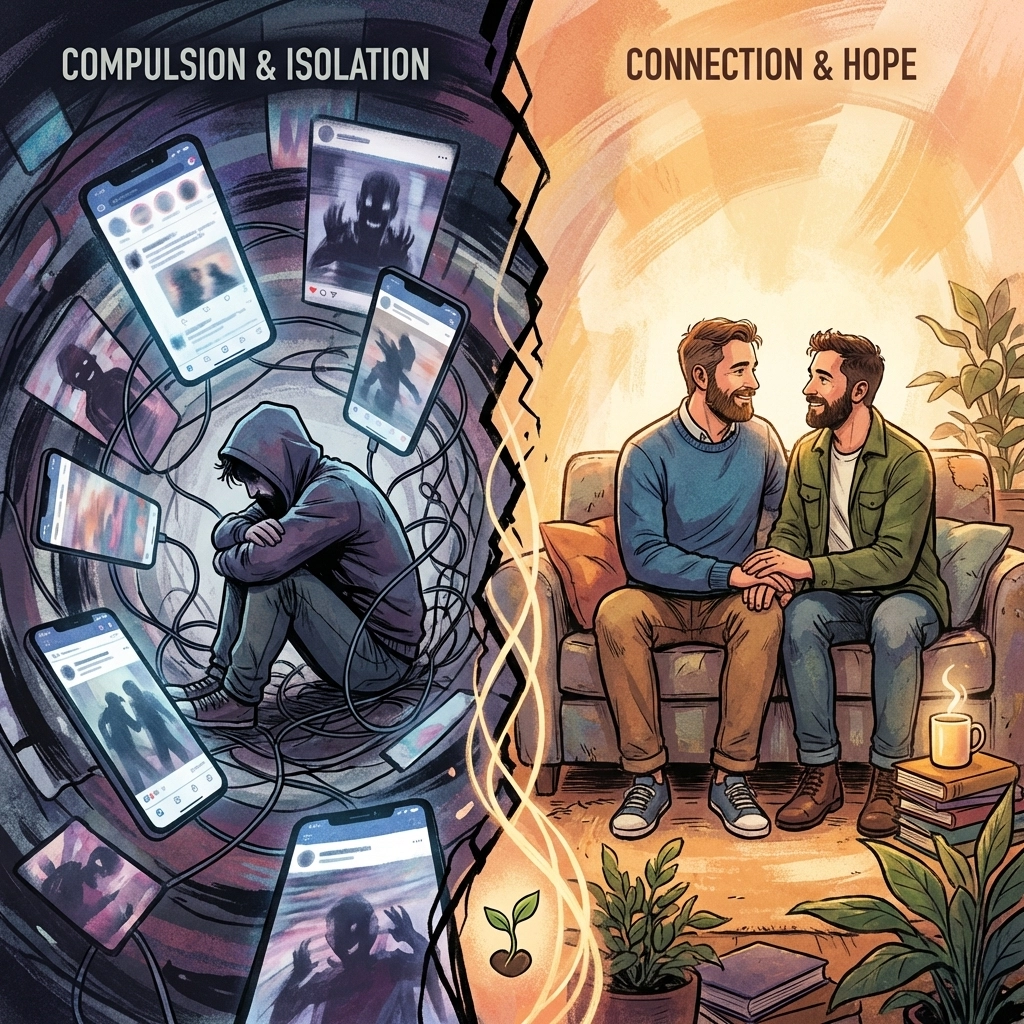
The most heartbreaking part? Maintaining addictive behaviors requires cutting off empathy and compassion, even for people you genuinely care about. This emotional disconnection means that even when love exists, the person can't fully express or reciprocate it without doing serious recovery work.
For those on the receiving end, it's devastating. You might be in a relationship with someone who says they love you, but their actions tell a different story. The constant betrayal, the lies, the feeling that you're never enough, it creates what's known as betrayal trauma, complete with anxiety, hypervigilance, and crushing self-doubt.
The LGBTQ+ Context Matters
Our community faces unique challenges around sex and addiction that deserve acknowledgment. Many LGBTQ+ individuals developed their understanding of sex and relationships in environments of secrecy or shame. Hook-up culture, while liberating for many, can also mask compulsive patterns that would be more obvious in other contexts.
Apps designed for connection can become tools for compulsion. The same platforms that helped us find community and love can feed addictive behaviors when the underlying issues remain unaddressed. There's nothing inherently wrong with apps or casual sex, but when the behavior becomes compulsive and destructive, that's when we need to pay attention.
Add to this the higher rates of trauma, minority stress, and mental health challenges in LGBTQ+ communities, and you've got a perfect storm for maladaptive coping mechanisms to take root.
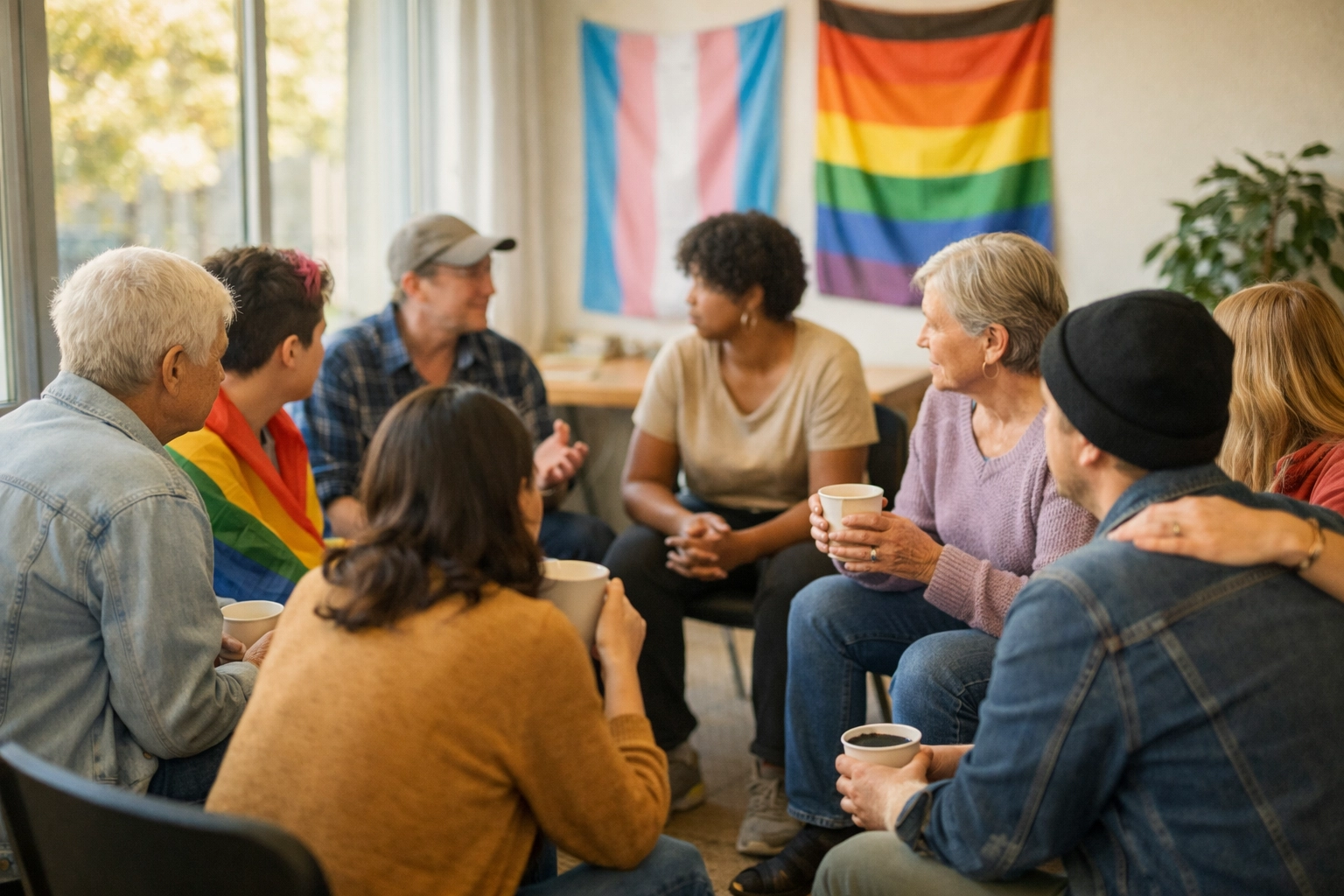
Finding LGBTQ+-affirming treatment can be challenging. Many addiction specialists lack training in queer issues, and some queer-specific resources don't specialize in addiction. The intersection matters because recovery requires addressing the whole person, including how their queer identity intersects with their experiences.
The Path Forward: Recovery and Authentic Love
Here's the hopeful part: recovery is absolutely possible. People with sex addiction can experience and give true love, but it requires pursuing professional healing for the underlying trauma and compulsive behaviors.
Comprehensive therapy that addresses both the behaviors and their root causes is essential. This means processing childhood trauma and emotional pain, developing genuine empathy, and committing to long-term recovery work. Yeah, there might be relapses and setbacks: that's part of recovery, not a failure of it.
Recovery looks like:
- Working with a therapist who understands both addiction and LGBTQ+ experiences
- Joining support groups where you can be honest about your struggles
- Processing the trauma that fueled the addiction in the first place
- Learning healthier coping mechanisms for emotional pain
- Rebuilding trust through consistent actions, not just promises
- Developing the capacity for genuine vulnerability and intimacy
For partners of someone in recovery, your healing matters just as much. You'll likely need support processing your own betrayal trauma. The relationship can survive and even become stronger, but only with mutual commitment to the difficult work.
Finding Your Way to Real Connection
If you're reading this and recognizing patterns in yourself, know that reaching out for help isn't weakness: it's courage. The shame that keeps people trapped in addictive cycles thrives in secrecy. Breaking that silence is the first step toward freedom.
For those who've been hurt by a partner's sex addiction, your pain is valid. You didn't cause it, and you can't fix it: but you can take care of yourself and set boundaries that honor your worth.
The search for true love doesn't have to be derailed by sex addiction. With honest work, professional support, and community connection, authentic relationships are possible. The Read with Pride community celebrates all kinds of love stories: including the messy, complicated ones where people fight their way through darkness to find genuine connection.
Whether you're exploring these themes through MM romance books or living through them in real life, remember: your story doesn't end with addiction. Recovery, healing, and authentic love are all within reach.
Looking for LGBTQ+ stories that explore complex relationships and authentic human experiences? Check out our collection of gay romance novels and MM fiction that celebrate the full spectrum of queer love stories.
Connect with us:
- Facebook: Read With Pride
- Instagram: @read.withpride
- Twitter/X: @Read_With_Pride
#SexAddiction #LGBTQHealth #QueerLove #MMRomance #ReadWithPride #LGBTQCommunity #MentalHealthMatters #AddictionRecovery #AuthenticLove #GayRomance #QueerFiction #LGBTQBooks #MMRomanceBooks #GayLoveStories #QueerHealing #BetrayalTrauma #HealthyRelationships #LGBTQSupport #GayFiction #2026LGBTQBooks

Leave a Reply
You must be logged in to post a comment.