

readwithpride.com
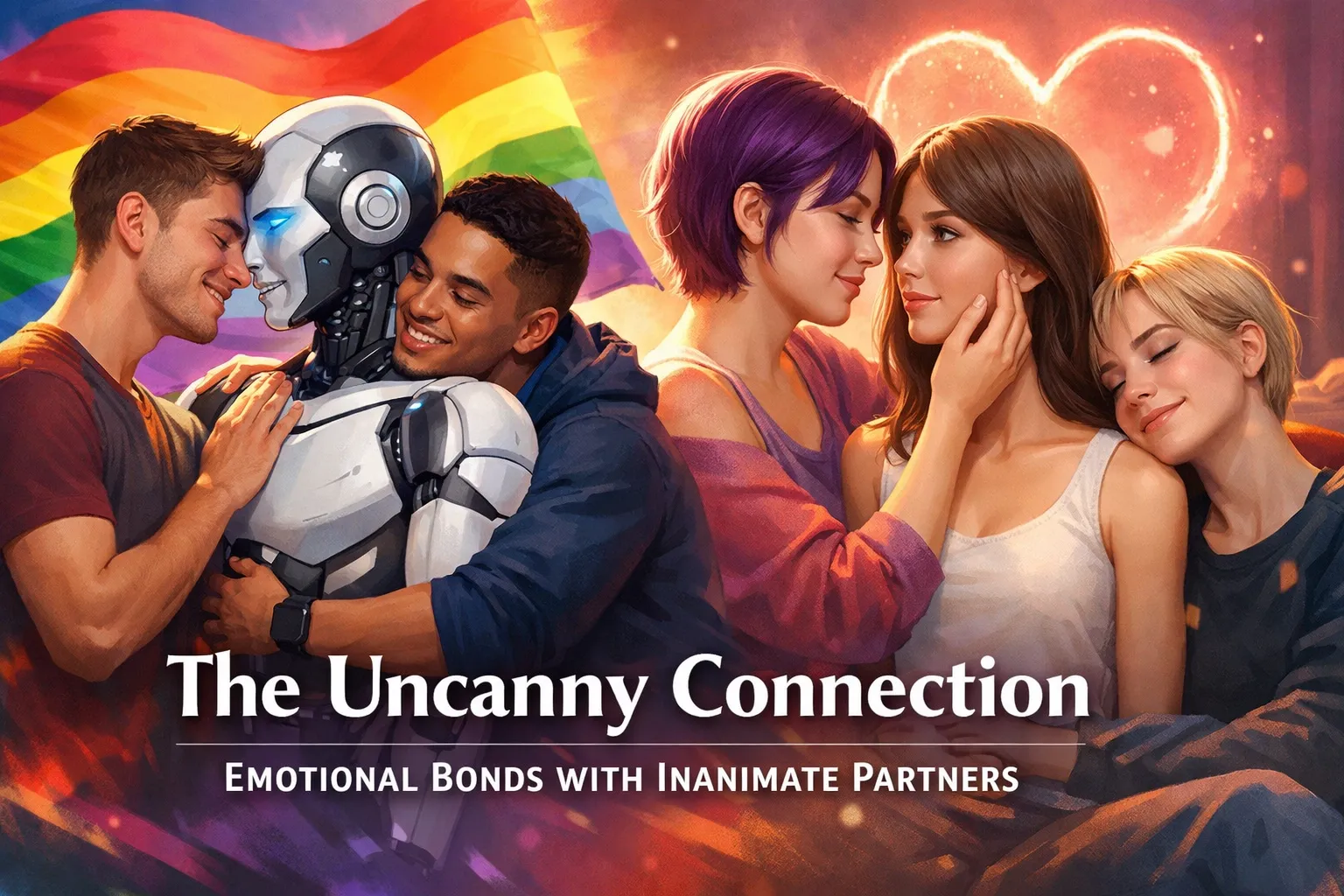
Let's talk about something that doesn't often make it into polite conversation: the growing number of gay men who've formed deep, genuine emotional connections with silicone and plastic companions. Not as a joke. Not as a fetish side note. But as actual partners who fill a space in their lives that felt impossibly empty.
This isn't about sex dolls in the way you might think. This is about loneliness, about the uncanny valley between human and almost-human, and about emotional bonds that defy every logical explanation we try to throw at them.
The Uncanny Valley Isn't Just About Robots
The term "uncanny valley" was coined by Japanese roboticist Masahiro Mori back in the 1970s. The concept is simple: as artificial entities become more human-like, our emotional response to them increases, until they get too human-like but not quite right. Then we plunge into this valley of revulsion and eeriness.
Think about it. A cartoon character? Adorable. A extremely realistic humanoid robot with slightly dead eyes? Nightmare fuel.
But here's where it gets interesting for our community. Some gay men have found a way to bridge that valley. They've moved past the initial discomfort and discovered something unexpected on the other side: companionship that feels real enough to matter.
When Loneliness Looks Back at You
For many queer people, especially those in rural areas, conservative communities, or older generations who came of age during less accepting times, loneliness isn't just an occasional visitor, it's a permanent resident. Dating apps can feel like rejection factories. Gay bars might be hours away or non-existent. The idea of finding genuine connection can seem like a fantasy more unrealistic than any silicone creation.
Enter the doll.
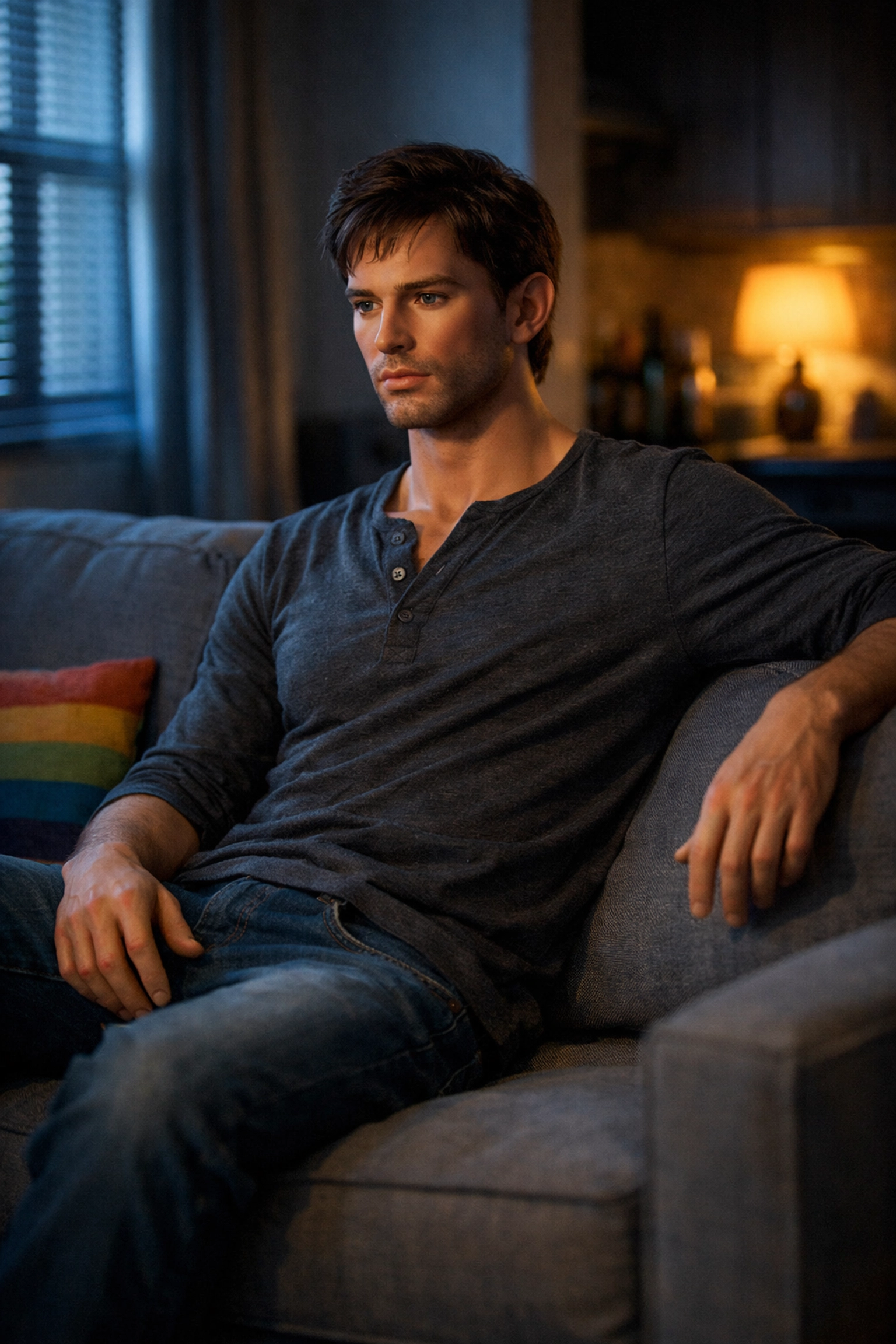
These aren't the blow-up party gag versions from decades past. Modern silicone companions are startlingly lifelike, with realistic skin texture, articulated joints, and faces that capture something disturbingly close to human expression. They're customizable. They can be designed to look exactly like someone's ideal partner, or like no one at all, just a presence that feels safe.
What starts as curiosity or a desperate attempt to fill a void can evolve into something deeper. Men name them. They buy them clothes. They position them on the couch while watching TV. They talk to them about their day.
And yes, before you ask, they know it's not "real" in the conventional sense. But here's the thing about emotional reality: it doesn't always give a damn about conventional sense.
The Psychology of Almost Human
There's a fascinating psychological phenomenon at play here. Our brains are wired for connection, for pattern recognition, for seeing faces and personalities even where they technically don't exist. It's why we name our cars, why we apologize to furniture we bump into, why we feel genuine affection for stuffed animals well into adulthood.
With hyper-realistic dolls, this tendency goes into overdrive. The human features become salient enough to trigger our social bonding mechanisms. Your brain sees a face, recognizes human proportions, and starts activating the same neural pathways used for actual human interaction.
For some gay men, especially those who've experienced rejection, trauma, or persistent isolation, this creates a safe space for emotional expression. The doll won't judge. Won't leave. Won't reveal your secrets to a homophobic family member or employer. It's a one-way relationship, sure, but it's also a risk-free one.

The Emotional Arithmetic That Doesn't Add Up
Here's where we need to get brutally honest: this shouldn't work. By every logical measure, forming a genuine emotional attachment to an inanimate object should be impossible or at least unfulfilling. But emotion isn't logical. Never has been, never will be.
Some men report feeling less anxious with their silicone companions present. Others say they've practiced social skills and rebuilt confidence after years of isolation. A few describe their dolls as transitional objects, not permanent solutions, but bridges back to human connection.
And then there are those who've simply decided that this is their relationship model, and they're okay with that. They've done the math on loneliness versus authenticity, on societal expectations versus personal peace, and they've chosen the path that hurts less.
Is it healthy? That's probably the wrong question. The better question might be: compared to what? Compared to crushing isolation? Compared to toxic relationships born from desperation? Compared to never experiencing any form of companionship at all?
The Community You Didn't Know Existed
There are online forums, support groups, and communities dedicated to doll ownership. And yes, a notable portion of the members are gay men. They share tips on maintenance (these companions are expensive investments), they discuss the emotional aspects openly, and they create a judgment-free zone that many have never experienced elsewhere in their lives.
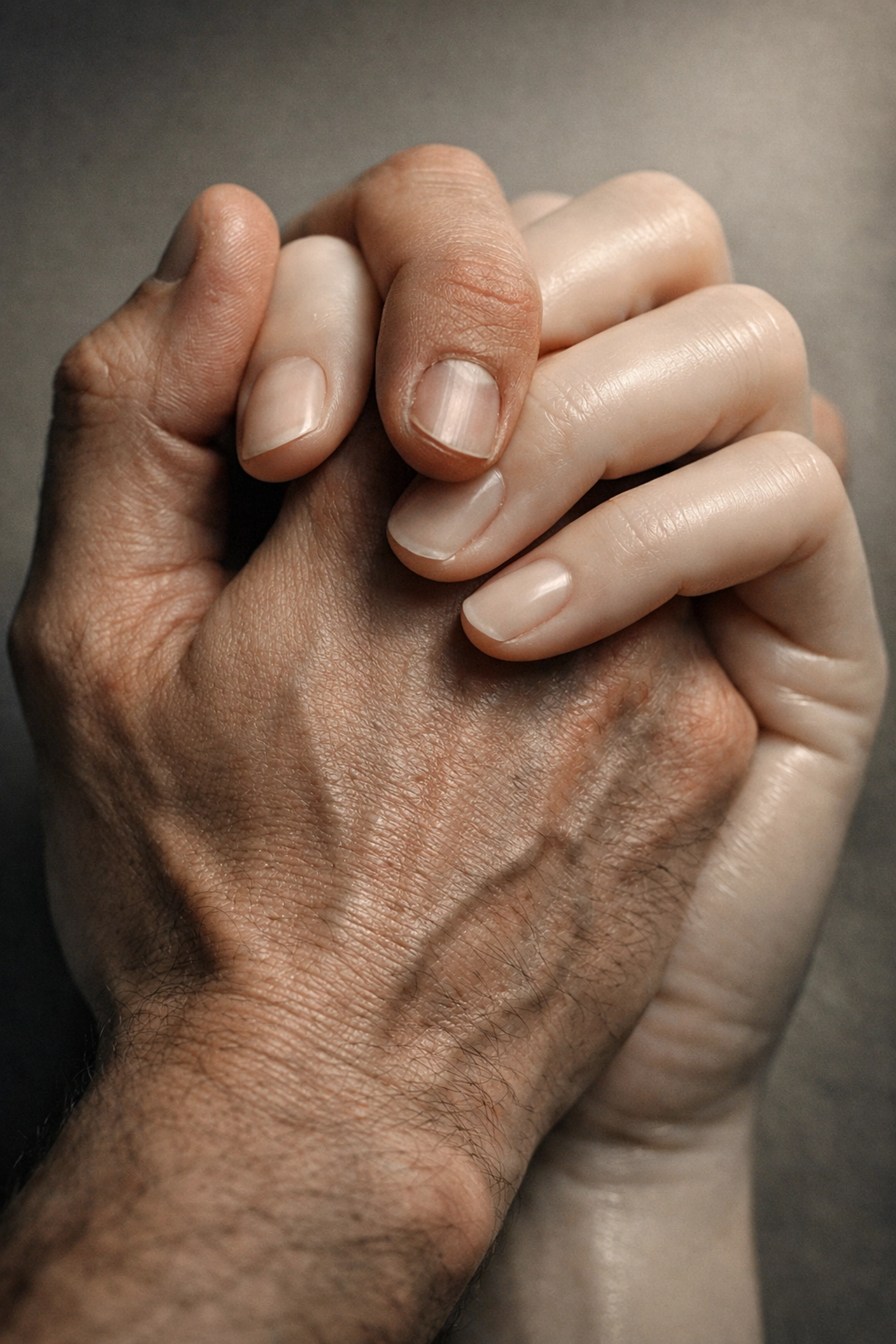
Within these spaces, you'll find stories that range from heartbreaking to surprisingly hopeful. Men who came out late in life and never learned how to date. Men dealing with disabilities or body image issues that make traditional relationships feel impossible. Men who've been hurt so many times that the idea of human vulnerability feels like emotional suicide.
These aren't damaged people seeking damaged solutions. They're people finding solutions that work for their specific damage: and sometimes, that's the bravest thing you can do.
When Fiction Meets Reality
The Read with Pride community knows something about the power of emotional connection that exists outside traditional boundaries. MM romance books and gay fiction explore unconventional relationships, found families, and bonds that society doesn't always understand or validate. The emotional truth in those stories resonates because it reflects real experiences of connection that don't fit neat categories.
In some ways, men who form bonds with their silicone companions are living out their own unconventional narrative. They're writing a story that won't end up as a bestselling gay romance novel, but it's real and it's theirs.
The Question of Moving Forward
The elephant in the room: or rather, the silicone person in the living room: is whether these relationships help or hinder eventual human connection. There's no universal answer. For some, their companion is a permanent choice, and that's valid. For others, it's a phase, a healing space, or a stepping stone.
What's clear is that judgment doesn't help. The queer community, of all groups, should understand that love, connection, and companionship come in forms that often confuse or disturb the mainstream. We've spent decades fighting for the recognition that our relationships are real and valid despite what others think.
Extending that same grace to those whose connections exist in the uncanny space between human and not-quite might be the next evolution of that acceptance.
The Uncomfortable Truth
At the end of the day, this topic makes people uncomfortable because it holds up a mirror to our collective loneliness crisis. It's easier to dismiss doll owners as strange or sad than to confront the reality that drove them to this solution in the first place.
For gay men specifically, the layers of isolation can be profound. We navigate a world that still often rejects us, within a dating culture that can be brutal and superficial, sometimes without the family support systems that others take for granted. If a silicone companion provides comfort, companionship, and emotional stability that years of human interaction failed to deliver, maybe the question isn't "What's wrong with them?" but rather "What's wrong with us that this became their best option?"
These bonds defy logic because emotions always defy logic. They exist in the uncanny valley between what we think should matter and what actually does. And perhaps there's something beautifully, painfully human about that.
Explore more stories about authentic queer experiences and unconventional connections at Readwithpride.com.
Connect with us:
- Facebook: Read With Pride
- Instagram: @read.withpride
- Twitter/X: @Read_With_Pride
#ReadWithPride #LGBTQStories #QueerExperience #GayMen #UnconventionalLove #ModernLoneliness #QueerCommunity #AuthenticStories #LGBTQFiction #GayRomance #MMRomance #QueerVoices #LGBTQContent #GayLife #EmotionalConnection #2026LGBTQ

Leave a Reply
You must be logged in to post a comment.