


readwithpride.com
Behind bars, everything changes. Your freedom, your privacy, your sense of self, all of it gets stripped down to basics. But one thing that never goes away? The human need for connection. For gay men navigating the prison system, that need becomes both more complicated and more essential. The yard, that open-air rectangle of concrete and chain-link, becomes one of the few places where you can breathe, move freely, and maybe, just maybe, find your people.
Let's be real: prisons aren't designed with LGBTQ+ folks in mind. They're hyper-masculine environments where vulnerability can be dangerous and being yourself might mean becoming a target. But queer people have always been survivors, adapting and finding ways to build community even in the most hostile spaces. The recreation yard is where that survival instinct meets the possibility of genuine human connection.
The Art of Recognition
In a place where you can't exactly walk up and introduce yourself as the local gay welcoming committee, recognition becomes an art form. It's all about the subtle signals, the ones that fly under the radar of guards and other inmates but speak volumes to those who know what to look for.
There's the eye contact that lasts just a beat too long. The way someone carries themselves with a certain fluidity that hasn't been beaten out of them by toxic masculinity. Small style choices within the limited options available, how you wear your state-issued clothes, how you keep your hair, the way you move your hands when you talk. These aren't stereotypes; they're survival codes, the same kind of subtle signaling queer people have used for generations when it wasn't safe to be out.
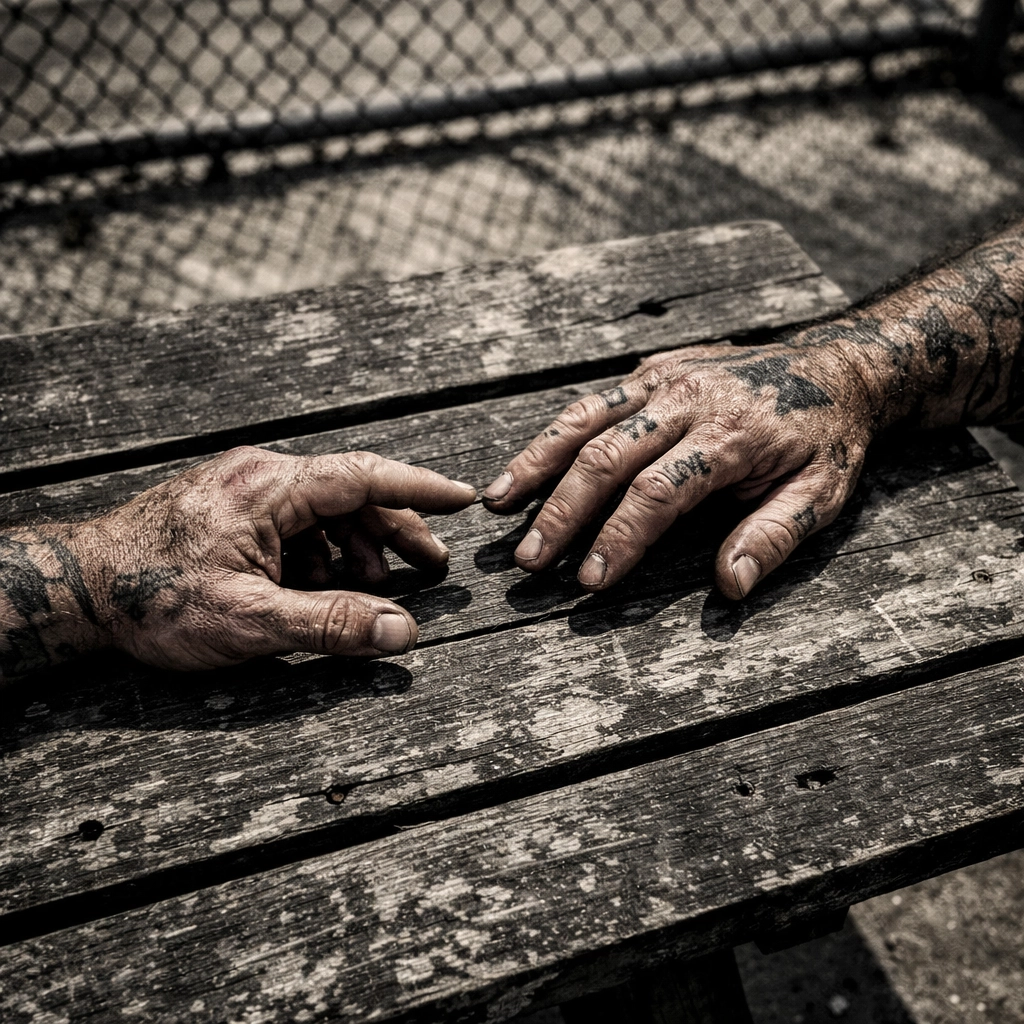
Some guys develop a sixth sense for spotting each other. It's partly pattern recognition, noticing who gravitates toward whom during yard time, and partly intuition honed by years of having to assess safety before being yourself. In MM romance books, we often read about instant recognition and magnetic attraction, but in prison, that recognition is slower, more careful, layered with questions about trust and safety.
Recreation Time as Sacred Space
The yard might not look like much, maybe some basketball courts, a track, some weight equipment, picnic tables scattered around the perimeter. But for gay inmates, rec time represents something precious: choice. You choose where to stand, who to approach, how to spend your limited outdoor time. In a system designed to strip away autonomy, those choices matter.
Some guys stick to the track, walking laps that become impromptu counseling sessions or strategy meetings. The constant movement provides cover for conversation, it's harder for others to eavesdrop, and you can talk about sensitive topics while appearing to focus on exercise. Others claim specific tables or corners of the yard where their crew regularly gathers. Territory matters in prison, and having a spot where you know you'll find your people creates a sense of stability.
Basketball courts and weight areas tend to be dominated by the more openly masculine dynamics of prison culture, but even there, connections form. A shared love of the game, a workout partnership that develops into genuine friendship, these everyday interactions become pathways to building trust.
Building Trust in Small Increments
You don't just walk up to someone and pour your heart out in prison. Trust is earned in tiny increments, tested repeatedly, and never fully complete. For gay men trying to connect with each other, this caution is doubled. You're not just assessing whether someone will steal your commissary or snitch to guards, you're wondering if they'll use your sexuality against you, whether as blackmail or violence.
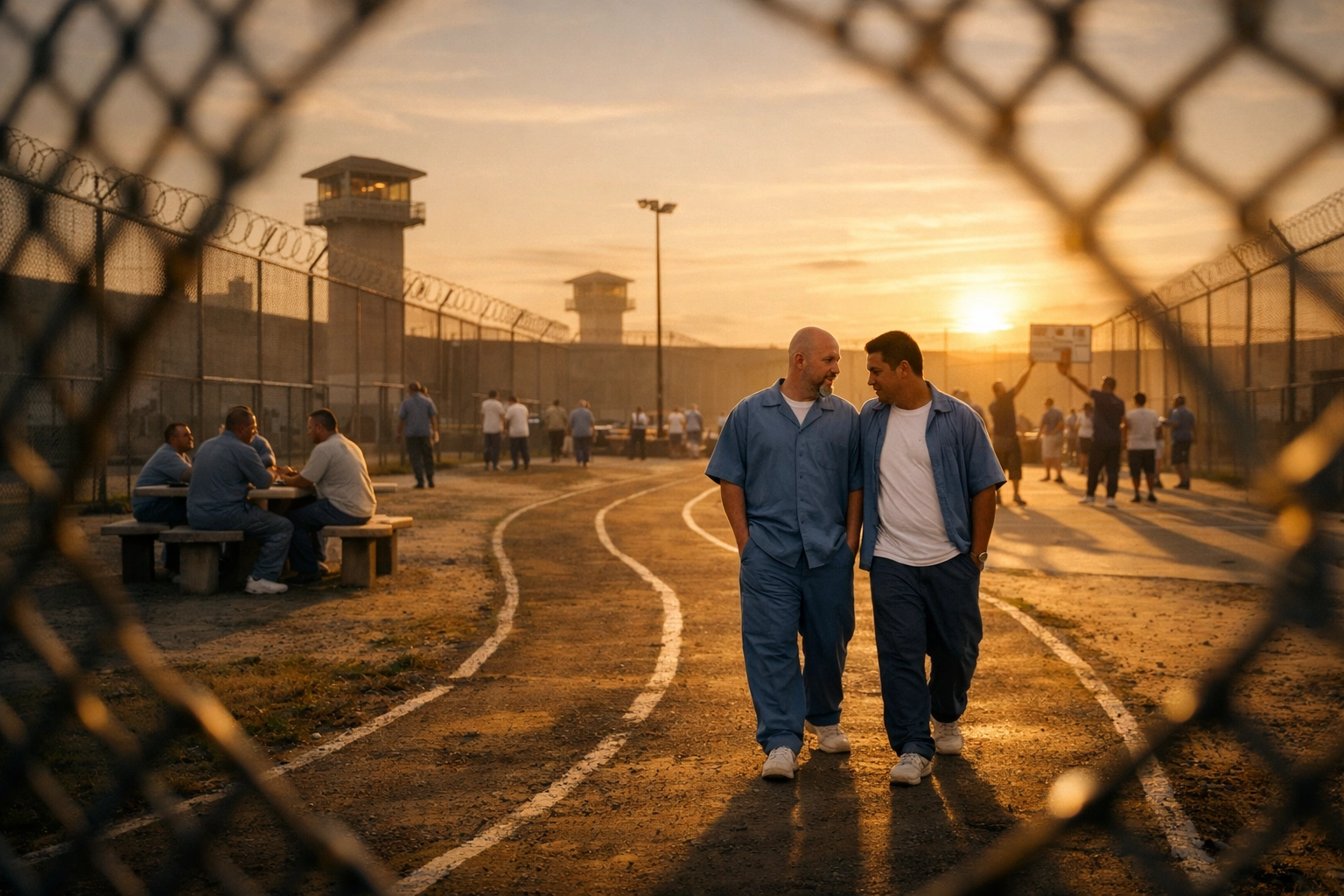
So connections start small. A nod of acknowledgment. Sharing a cigarette or a piece of candy from commissary. Casual conversation about sports or TV shows that gradually deepens into talk about families, pre-incarceration lives, hopes for the future. These conversations happen in public but somehow feel private, the noise and activity of the yard creating a bubble where you can be slightly more yourself.
Sometimes the connection is explicitly about survival. Experienced gay inmates take newer ones under their wing, offering advice on how to navigate the system safely, which guards to avoid, how to handle harassment. This mentorship isn't always romantic or sexual, often it's just about community, about making sure another queer person doesn't face the hardest days alone.
The Complexity of Relationships
Let's address the elephant in the yard: yes, romantic and sexual relationships happen in prison. For some gay men, incarceration is the first time they're able to explore their sexuality without the complications of the outside world: which is its own kind of tragedy and irony. For others who've always been out, prison relationships bring unique challenges.
The reality is messy. Some connections are genuine: two people finding real affection and companionship in an impossible situation. Others are more transactional, born from loneliness, protection needs, or the simple human desire for physical touch. Many fall somewhere in between. Gay romance novels often explore the complexity of love against the odds, and prison relationships are perhaps the ultimate test of that theme.
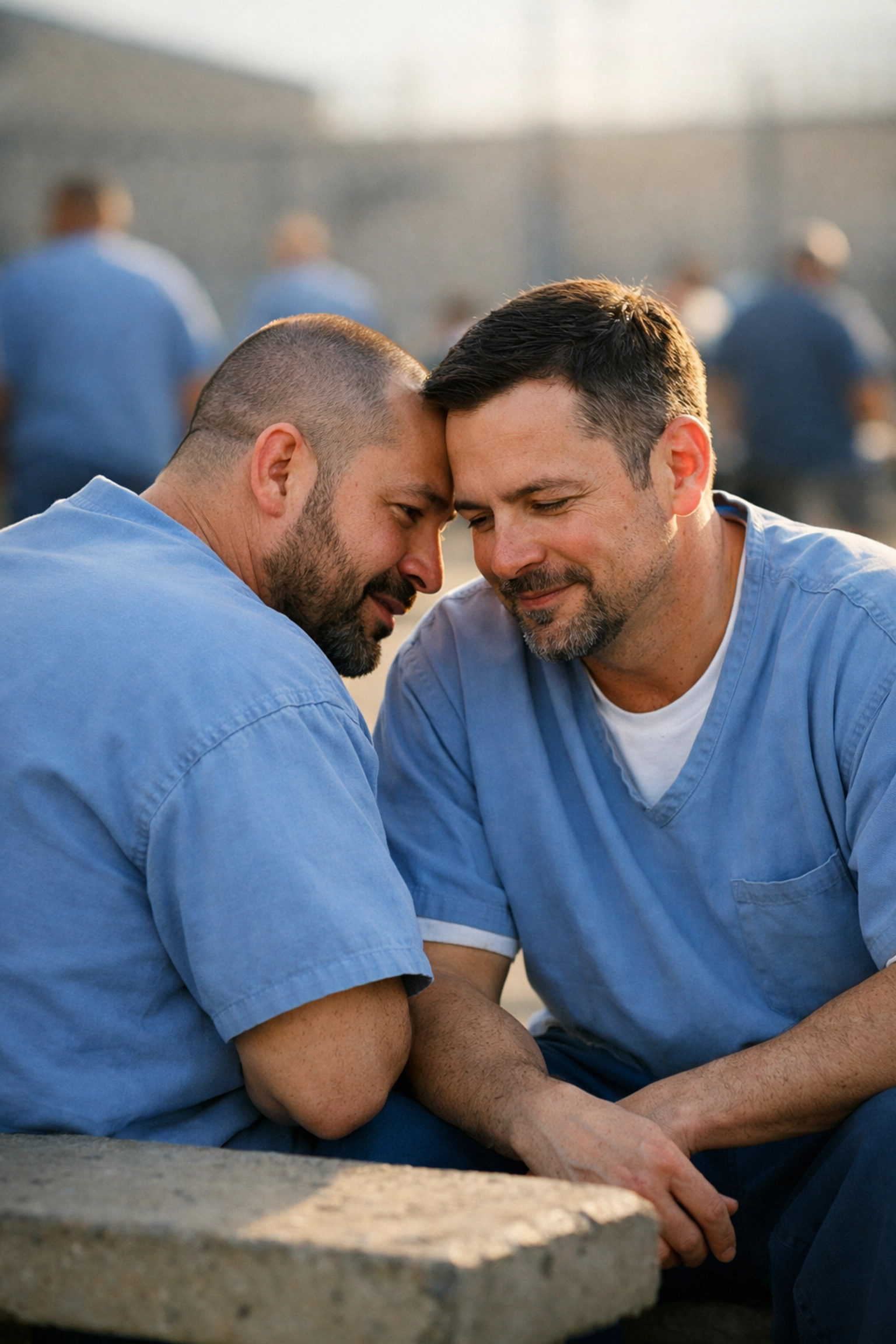
During yard time, couples find ways to be together within the constraints of constant surveillance. A hand brushing against another while sitting at a table. Standing close enough to feel another person's warmth. Stolen moments of eye contact that communicate everything words can't safely say. These tiny gestures of intimacy become lifelines, proof that you're still capable of connection, still human despite a system that tries to reduce you to a number.
But it's not all romantic. Some of the deepest connections are purely platonic friendships: chosen family built in a place where your actual family might not even acknowledge you. These friendships become support systems, keeping each other mentally healthy, protecting each other from harm, providing a sense of belonging that makes the time bearable.
Finding Your Tribe
One of the most powerful aspects of yard time is how it allows for the formation of small communities. In larger facilities, there might be recognizable groups of LGBTQ+ inmates who find safety in numbers. In smaller prisons or more hostile environments, these groups might be less visible, but they still exist: networks of mutual support and protection.
These groups often include not just gay men but the broader queer community: trans women frequently housed in men's facilities, bisexual men navigating complex dynamics, gender non-conforming inmates, and even straight allies who recognize that basic human decency transcends sexuality. The yard becomes a place where this community can gather, even if they can't explicitly identify as such.
Activities become pretexts for gathering. A card game that happens every Tuesday becomes a weekly social event. A book club that trades paperbacks becomes a way to discuss ideas and share experiences. Working out together becomes a statement of solidarity and mutual protection. These routines provide structure and something to look forward to in an otherwise monotonous existence.
Survival and Resilience
Make no mistake: being gay in prison isn't easy, and the yard isn't some utopian safe space. Violence happens. Harassment is common. Guards might look the other way when LGBTQ+ inmates face abuse, or worse, participate in it. The connections formed during rec time are often about survival as much as connection.
But within that harsh reality, there's also remarkable resilience. The same survival skills that helped us navigate homophobic families, hostile schools, and discriminatory workplaces on the outside get deployed inside. We adapt. We find our people. We create moments of joy and authenticity even in the least likely places.
The yard becomes a space of small victories: laughing with friends, feeling the sun on your face, having a conversation that reminds you who you are beyond your conviction. These moments matter. They're what keep you human, what give you hope that there's life waiting when you get out.
For readers at Read with Pride, these stories of resilience might feel familiar. MM romance books often celebrate queer love and community in difficult circumstances, and while prison is an extreme version of that, the themes are universal: finding connection despite obstacles, building chosen family, surviving through solidarity.
Looking Forward
The connections made in the yard don't always end when sentences do. Some relationships continue on the outside, transforming into lasting friendships or partnerships. Others remain as important memories: proof that you weren't alone during the hardest time of your life, that you found community and connection even when everything was stacked against you.
The experience changes you. Living authentically in a space designed to suppress individuality requires courage that carries over once you're free. The friendships forged in that environment teach you about loyalty, trust, and the importance of chosen family: lessons that serve you well in the LGBTQ+ community at large.
Understanding these dynamics matters, not just for those who've been incarcerated but for the broader community. LGBTQ+ people are disproportionately represented in the prison system, often due to discrimination in policing, sentencing, and economic opportunity. These are our siblings, our family members, part of our community: and their stories of finding connection and surviving with dignity deserve to be heard.
The yard is just concrete and chain-link, but for gay men navigating the prison system, it's also a lifeline: a place where humanity persists, where connections form, and where the unbreakable spirit of queer community proves itself once again.
Connect with us:
- Follow us on Facebook
- Visit Readwithpride.com
- Follow us on Twitter/X
- Follow us on Instagram
#GayFiction #MMRomance #LGBTQStories #QueerResilience #ReadWithPride #GayRomanceBooks #LGBTQCommunity #QueerStories #MMBooks #LGBTQFiction #GayLoveStories #QueerSolidarity #PrisonReform #LGBTQRights #GayNovels #MMRomanceBooks #2026 #ChosenFamily #QueerSurvival #AuthenticStories

Leave a Reply
You must be logged in to post a comment.