

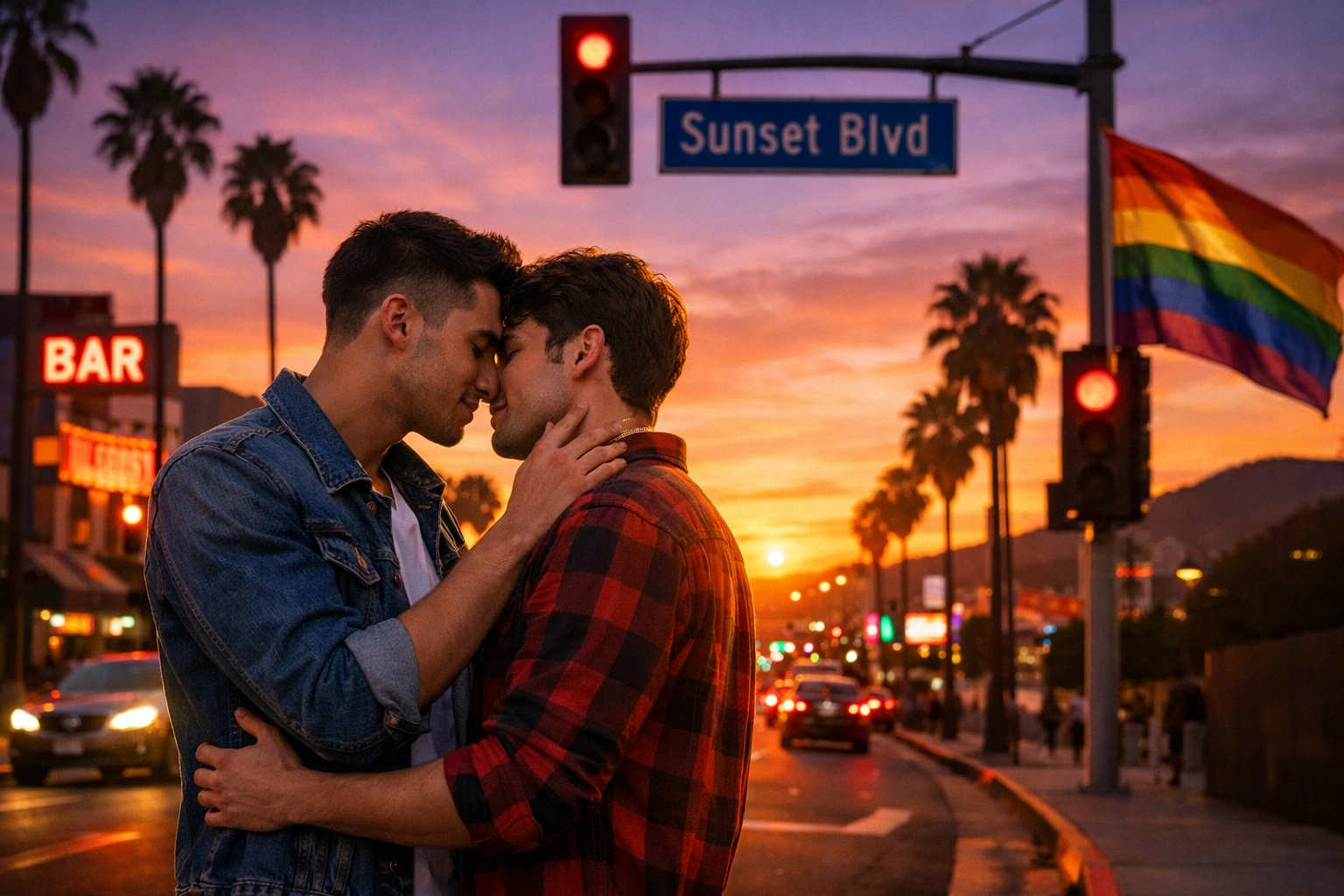
readwithpride.com
Los Angeles has always been a city of dreamers, but for queer folks chasing the spotlight, it's also a place where you learn to navigate an industry that simultaneously celebrates and commodifies LGBTQ+ identity. This is the story of two aspiring actors who discovered that sometimes the greatest performance is simply being yourself, especially when you find someone who sees you for who you really are.
The Audition Circuit Grind
Marcus arrived in LA from Atlanta with a theatre degree, three hundred dollars, and a headshot his mom's friend took in her backyard. He'd been chasing callbacks for eight months, surviving on catering gigs and the occasional commercial audition where they wanted "diverse but not too diverse." The casting breakdowns were exhausting: "Open to all ethnicities" usually meant they'd already cast the lead. "LGBTQ+ friendly project" sometimes translated to "we need a gay best friend stereotype."
Meanwhile, Jamie had been grinding the circuit for two years. He'd moved from Vancouver with slightly more experience, a couple of indie films, regional theatre, and significantly more debt. The Canadian actor discovered quickly that Hollywood had a narrow view of what gay characters should look like, and his six-foot-three athletic build kept getting him called back for "straight jock" roles where coming out would be the third-act plot twist.
They met at an open call for a Netflix series about queer millennials navigating New York. The irony wasn't lost on either of them, two hundred gay actors crammed into a Studio City rehearsal space, all competing for five roles, while straight actors continued booking queer parts across town.
Coffee Shop Commiseration
"That was brutal," Marcus said, standing outside the audition building, script pages still clutched in his sweaty hand.
Jamie laughed, a genuine sound that cut through the performative energy everyone else was radiating. "They wanted me to be more 'authentic.' I literally came out at sixteen in a conservative town. How much more authentic do I need to be?"
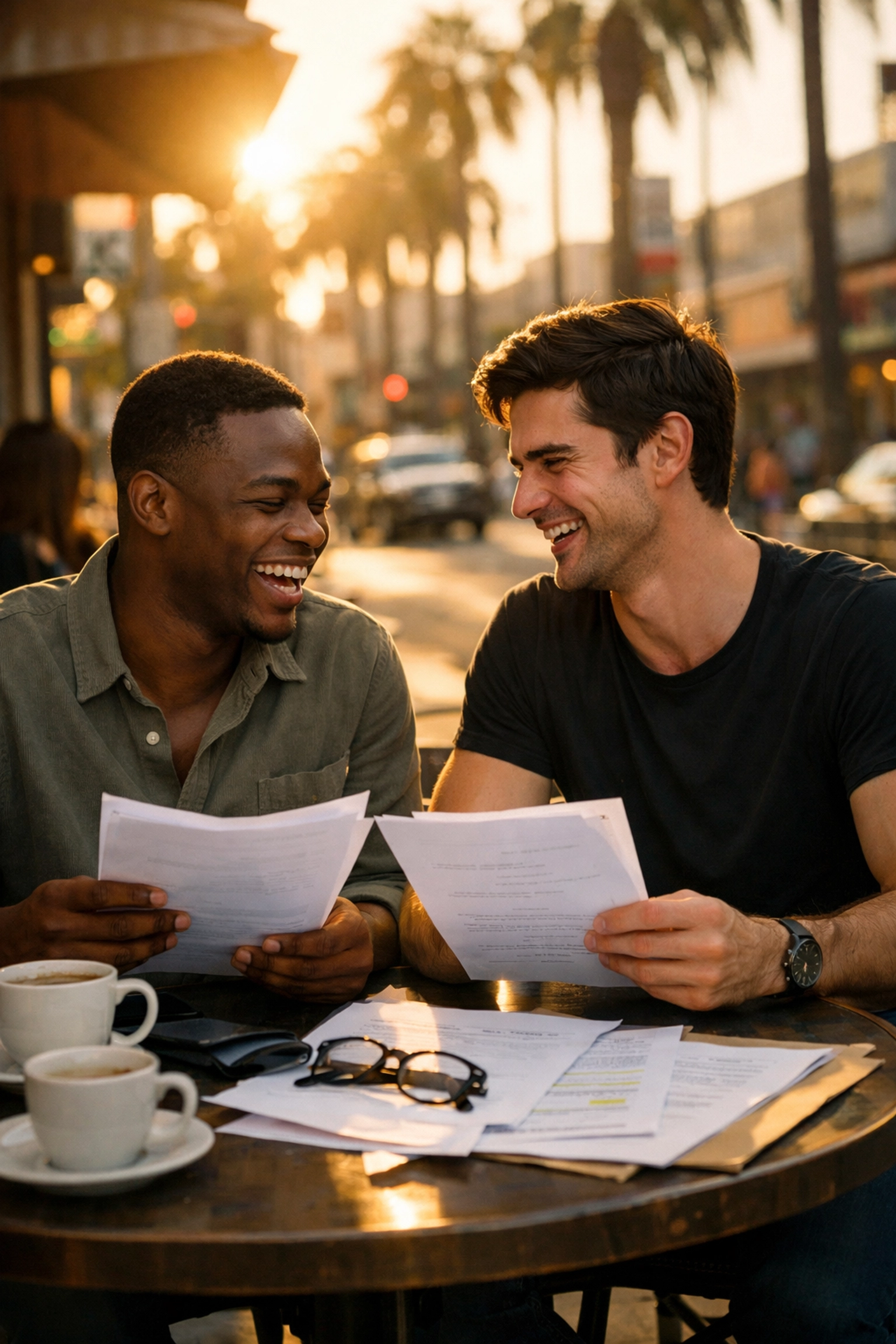
They grabbed coffee, overpriced cold brew that cost more than either wanted to admit, and ended up talking for three hours. About the roles they actually wanted to play. About representation versus tokenization. About whether it was worth staying in a city that chewed up artists and spit out content.
"I just want to play a character who happens to be gay," Marcus admitted. "Not someone whose entire personality is being the sassy sidekick or the tragic victim."
"Exactly," Jamie said. "Give me a gay character who's boring. Who has a mortgage and argues about whose turn it is to do dishes. That's revolutionary."
This conversation, the realness of it, felt more genuine than anything either of them had experienced since arriving in Los Angeles. In a city built on facades and carefully curated Instagram aesthetics, finding someone who understood the specific challenges of being a queer actor felt like stumbling onto an oasis.
The Industry Reality Check
Hollywood's relationship with LGBTQ+ stories has always been complicated. Major studios love to parade their diversity initiatives during Pride Month, but pilot season tells a different story. Marcus and Jamie both noticed the pattern: queer characters written by straight writers, directed by straight directors, marketed to straight audiences as "brave" and "groundbreaking."
The MM romance genre has exploded in publishing, stories with depth, complexity, and actual queer joy, but translating that to screen remained frustratingly limited. Both actors had read scripts that felt like they were written by someone who'd never actually met a gay person, just watched a lot of Queer Eye and called it research.
"I turned down a role last month," Jamie confessed during one of their now-regular coffee meetups. "It was good money, but the character was literally just AIDS crisis trauma porn. No personality beyond suffering. I can't keep doing that to myself."
Marcus understood completely. The emotional toll of constantly portraying pain, of having your identity reduced to struggle narratives, wore you down. He'd started asking in auditions: "Does this character have any scenes where he's just happy? Where being gay isn't the source of conflict?"
Usually, the answer was no.
Finding Each Other in the Chaos
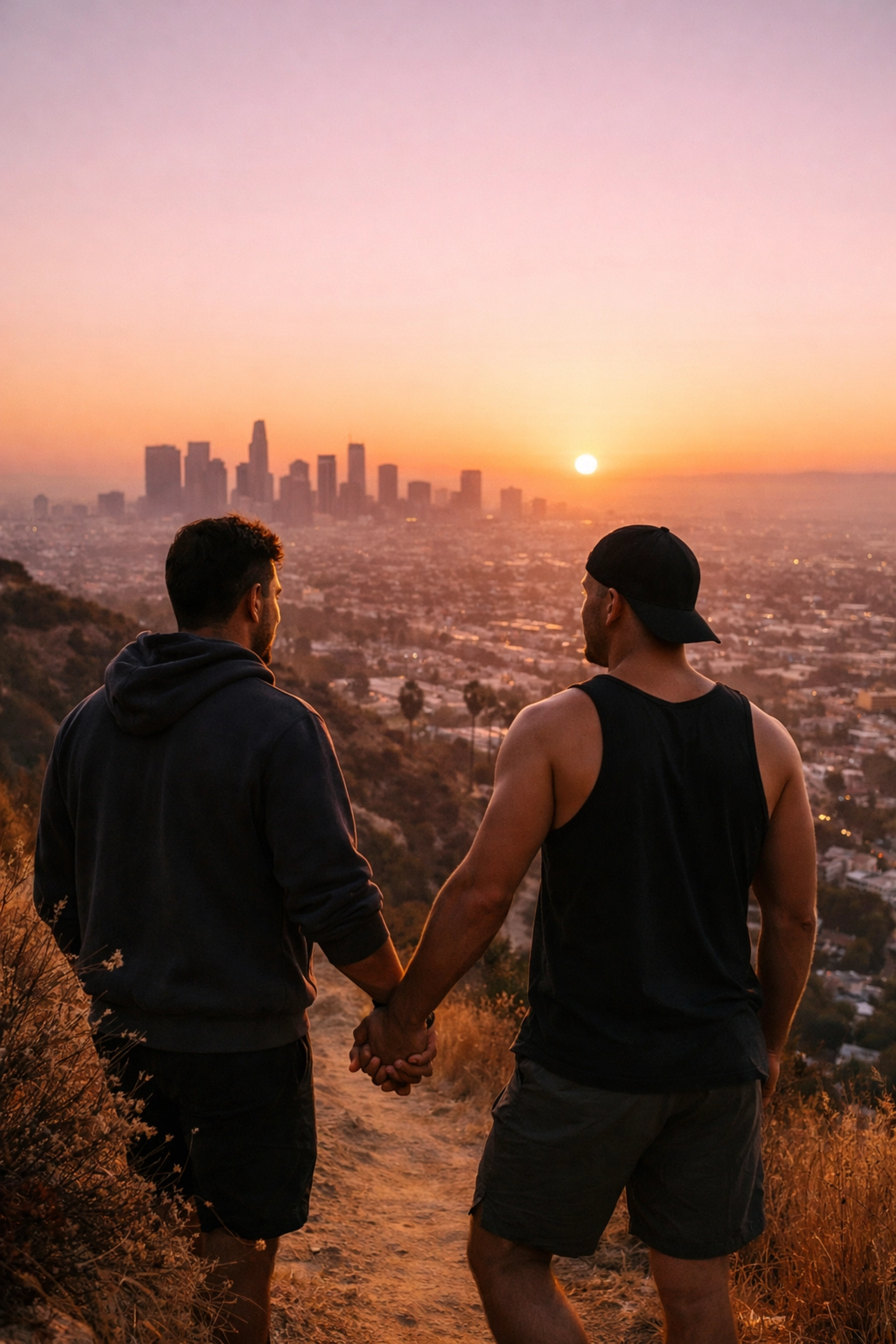
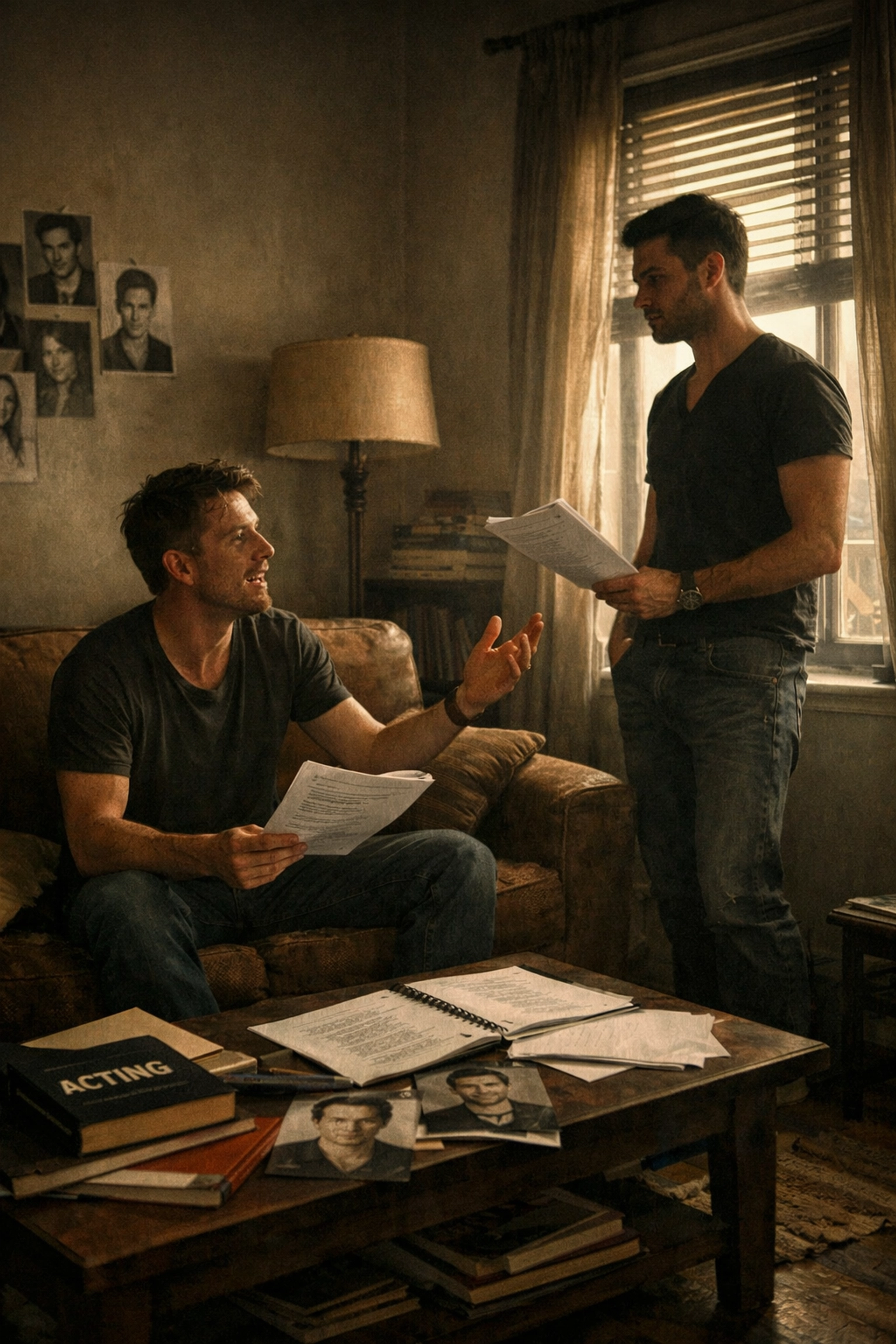
What started as industry venting sessions evolved into something neither of them expected. They'd meet for hiking in Griffith Park before sunrise, running lines for each other's auditions. They'd workshop scenes together, pushing each other to find truth in mediocre writing. They celebrated callbacks with cheap Thai food in Los Feliz and consoled rejection with beach walks in Santa Monica.
Somewhere between "industry friends" and "scene partners," they became something more. It happened gradually, hands touching while sharing popcorn at an indie screening, lingering hugs after particularly rough audition days, the way Jamie's face lit up whenever Marcus texted.
"I think I like you," Marcus said one night, sitting on Jamie's apartment balcony in Koreatown, the city spread out below them in a carpet of lights. "Like, not in a networking way. In a gay romance novel way."
Jamie laughed, that same genuine sound from their first meeting. "I was wondering when you'd figure that out. I've been writing fanfiction in my head about us for two months."
"What trope are we?"
"Forced proximity enemies to lovers slow burn with mutual pining."
"That's like four tropes."
"We contain multitudes."
The Reality of Queer Love in LA
Dating in Los Angeles as an actor is already complicated, add queer identity to the mix and it becomes exponentially more complex. There's the question of being out professionally, of how it might affect casting, of whether holding hands in public in certain neighborhoods is safe. Marcus had been visibly out since college; Jamie was out to friends but kept his Instagram strategically ambiguous for industry purposes.
"I hate that I still think about optics," Jamie admitted. "Like, what if being openly with you costs me roles?"
"Then those aren't roles you want," Marcus said. "I watched my parents hide who they were for years. I won't do that. Not for this industry, not for anyone."
It was a conversation happening across Los Angeles, across the industry: how much of yourself do you sacrifice for opportunities? How do you balance authenticity with pragmatism? The MM romance books they both devoured offered fantasy versions where love conquered all, but reality required negotiation, compromise, and courage.
They decided together: no more hiding. They'd be out, visibly queer, and if the industry couldn't handle two gay actors dating each other, then the industry needed to evolve.
Making Their Own Story
Six months into their relationship, neither had booked their breakout role. But they'd written a short film together: a genuine queer love story set in contemporary Los Angeles, focused on joy rather than trauma. They crowdfunded enough to shoot it, called in favors from crew members they'd met on various sets, and premiered it at a small LGBTQ+ film festival in Silver Lake.
The response was overwhelming. People were hungry for authentic queer narratives, for stories that reflected actual lived experiences rather than straight writers' imaginations. The short didn't make them famous, but it opened doors: meetings with queer producers, interest from LGBTQ+-focused streaming platforms, and most importantly, a sense of creative control they'd never had before.
"We're not waiting for permission anymore," Marcus said, watching their film screen to a packed audience. "We're making the stories we want to see."
Jamie squeezed his hand in the darkness. "Look at us. Two aspiring actors who became filmmakers because the industry wasn't ready for us."
"The industry can catch up."
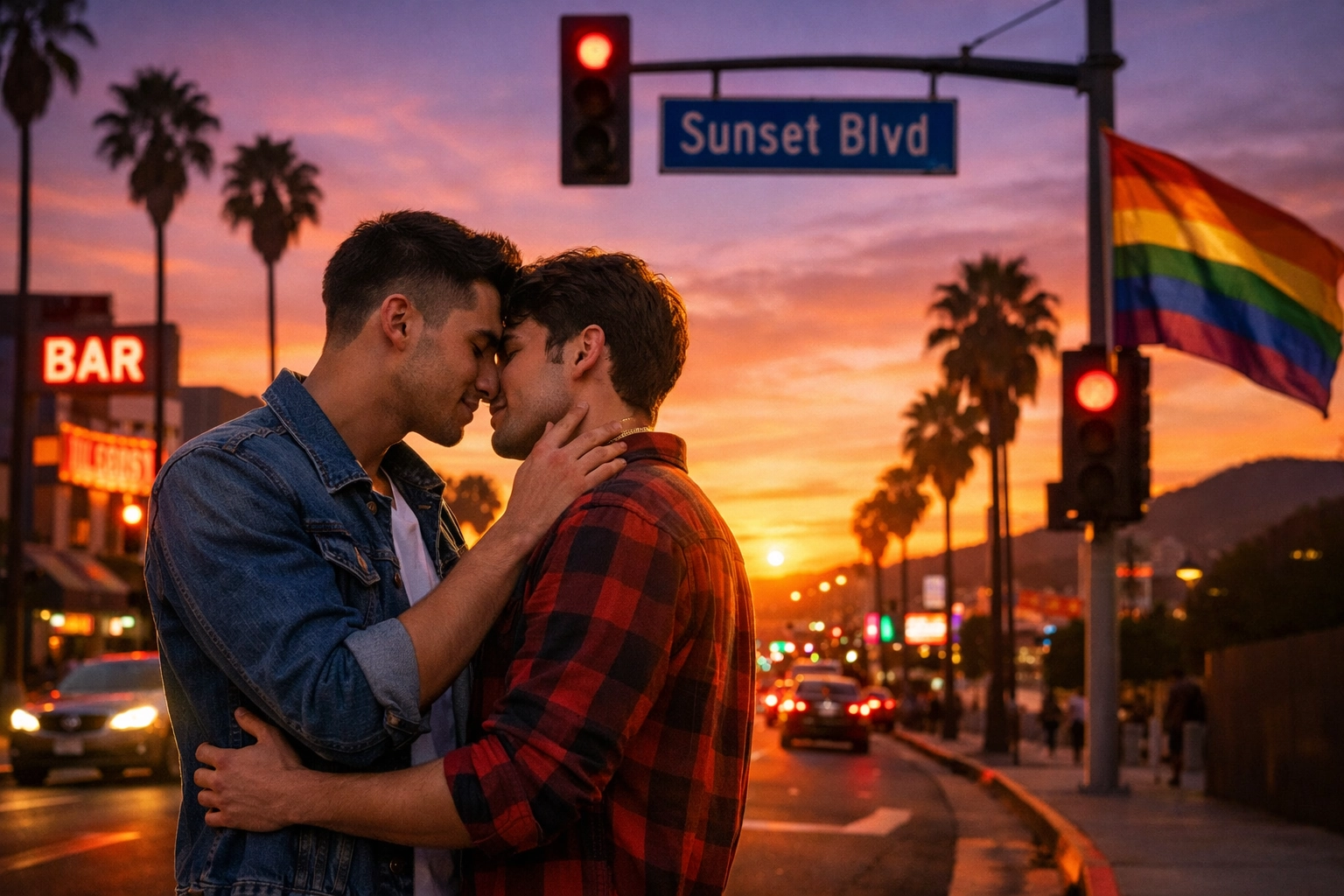
The Sunset Boulevard Promise
Los Angeles remains a complicated city for queer artists: simultaneously progressive and frustratingly limited, championing diversity while perpetuating stereotypes. But it's also a place where community thrives, where queer creatives are building their own infrastructure, telling their own stories on their own terms.
Marcus and Jamie still audition. They still face rejection, still navigate an industry slowly learning how to authentically represent LGBTQ+ experiences. But they do it together now, building something bigger than individual careers: a partnership rooted in mutual respect, shared values, and genuine love.
Their story isn't about making it big or landing that one role that changes everything. It's about finding someone who sees you completely, who understands the specific challenges you face, and who chooses to build a life with you anyway. It's about creating your own opportunities when the traditional paths remain blocked. It's about refusing to compromise your identity for someone else's comfort.
On the boulevard where dreams are manufactured and sold, they found something real. And that, more than any Hollywood ending, feels like the greatest success story of all.
Discover more authentic LGBTQ+ love stories and MM romance at readwithpride.com.
Connect with us:
- Facebook: Read With Pride
- Instagram: @read.withpride
- X/Twitter: @Read_With_Pride
#MMRomance #GayRomance #LGBTQBooks #ReadWithPride #GayLoveStories #QueerFiction #GayRomanceBooks #ContemporaryRomance #LosAngelesLove #HollywoodRomance #AuthenticQueerStories #MMContemporary #GayActors #LGBTQRepresentation #QueerLoveStories #GayFiction #2026MMRomance #SlowBurnRomance #LGBTQReading #GayNovels

Leave a Reply
You must be logged in to post a comment.