

readwithpride.com
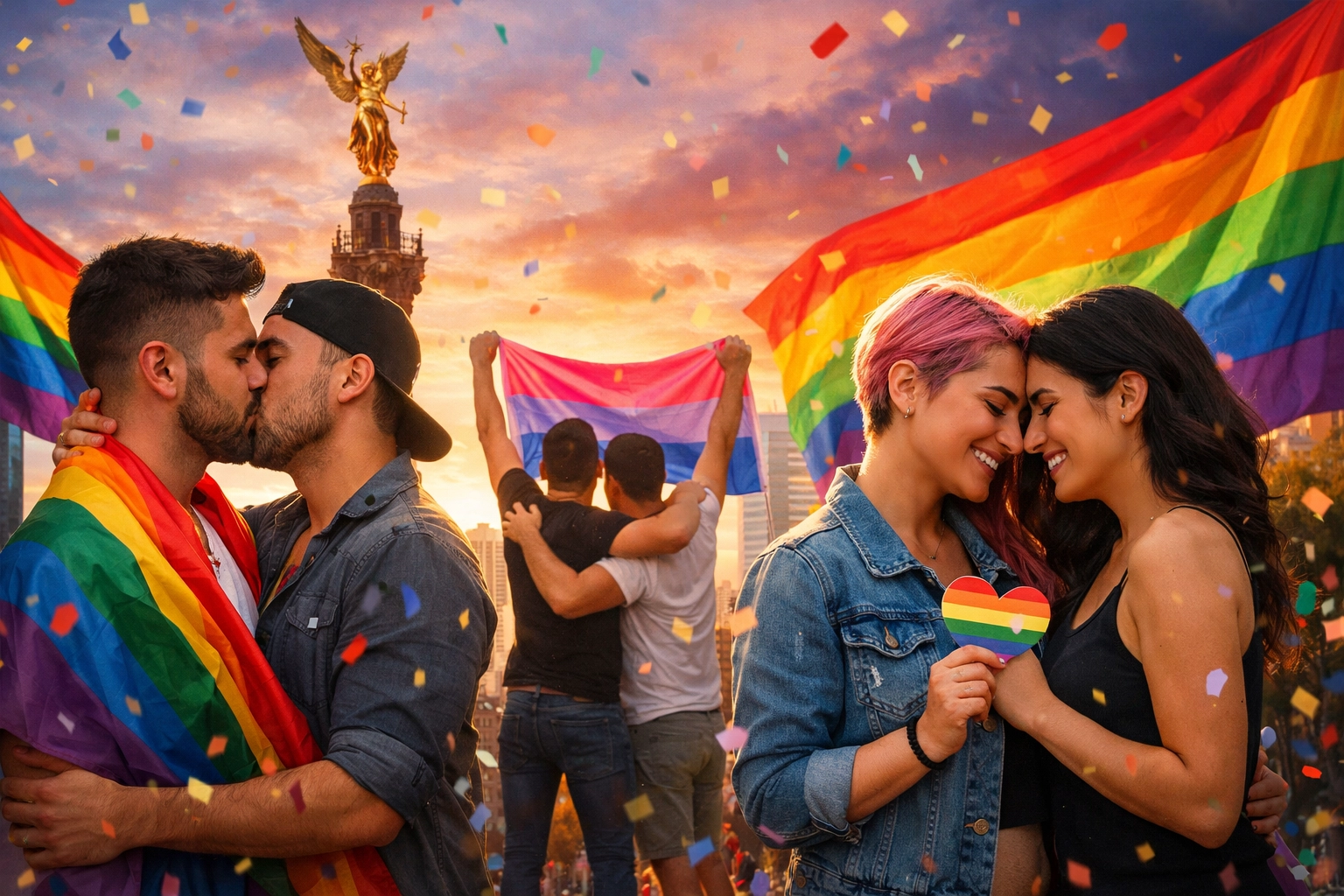
Mexico City doesn't whisper, it roars with life, color, and possibility. For the LGBTQ+ community, this sprawling metropolis has become one of Latin America's most progressive havens, where cobblestone streets meet contemporary queer culture, and where two neighborhoods in particular, Roma and Condesa, pulse with an energy that feels both historic and refreshingly new.
This is the story of Mateo and Santiago, two men whose lives intersected in the heart of Mexico City's most vibrant quarters, proving that sometimes the best gay romance unfolds not in the pages of LGBTQ+ fiction, but in the everyday magic of café conversations and rooftop sunsets.
The Chef Who Found Home in Roma
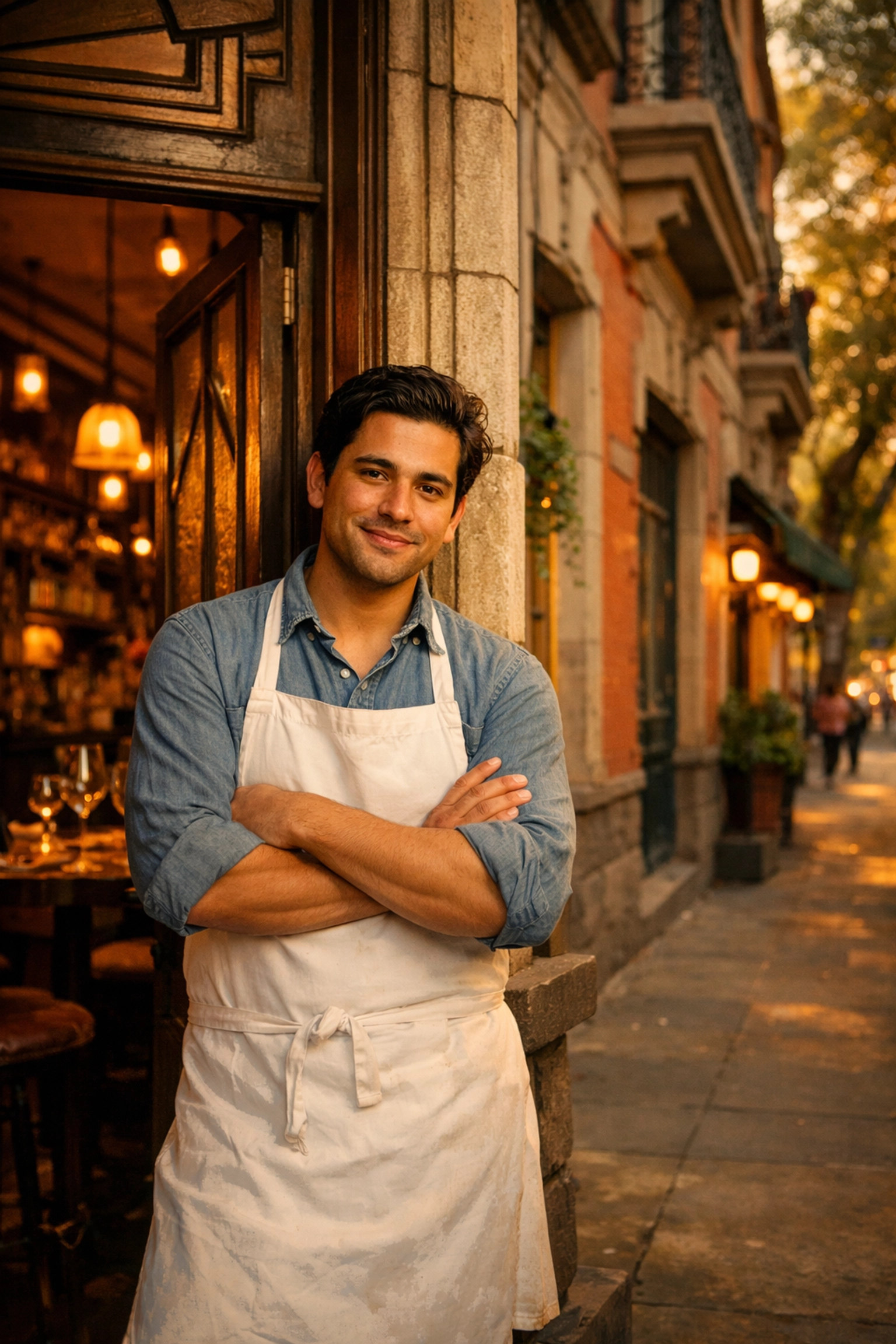
Mateo had always believed that food was a love language. After training in culinary schools across Europe and working in high-end restaurants from Barcelona to Buenos Aires, he returned to Mexico City with a dream: to open a restaurant that celebrated his grandmother's recipes with a modern twist.
Roma Norte became his canvas. The neighborhood's tree-lined streets and early 20th-century architecture felt like a bridge between old and new, exactly what Mateo wanted his cooking to represent. He found a small space on Calle Orizaba, where art deco facades met contemporary street art, and opened "Raíces Modernas."
The restaurant quickly became more than just a dining spot. In a neighborhood already known for its bohemian atmosphere and creative energy, Mateo's place became a gathering point for the local queer community. Thursday nights featured a special tasting menu with proceeds going to LGBTQ+ youth organizations. The walls showcased rotating exhibitions from local queer artists.
"Roma taught me that authenticity isn't just about the ingredients you use," Mateo says, wiping down the bar after another busy service. "It's about creating spaces where people feel seen."
The neighborhood itself felt like a character in Mateo's story. Plaza Río de Janeiro, with its replica of Michelangelo's David, became his morning ritual spot, coffee from one of the trendy cafés, a bench beneath the trees, watching the city wake up. The diversity of Roma Norte meant that holding hands with a date never drew stares, only smiles.
The Architect Dreaming in Condesa
Santiago lived just a few blocks away, but it might as well have been another world. While Roma buzzed with constant creative energy, Condesa offered something softer, wide, tree-lined avenues that felt European, parks that breathed green into the urban landscape, and an art deco architecture that made Santiago's heart sing every time he walked home.
As an architect specializing in historic preservation, Santiago found himself drawn to Condesa's distinctive character. The neighborhood's circular streets around Parque México weren't just beautiful, they told stories of Mexico City's evolution from the Porfiriato era through to its current progressive identity.
His studio apartment overlooked Parque España, and he'd spend evenings sketching in the park, surrounded by joggers, dog walkers, and couples sprawled on the grass. The laid-back atmosphere suited his introspective nature. While Roma Norte partied, Condesa contemplated.
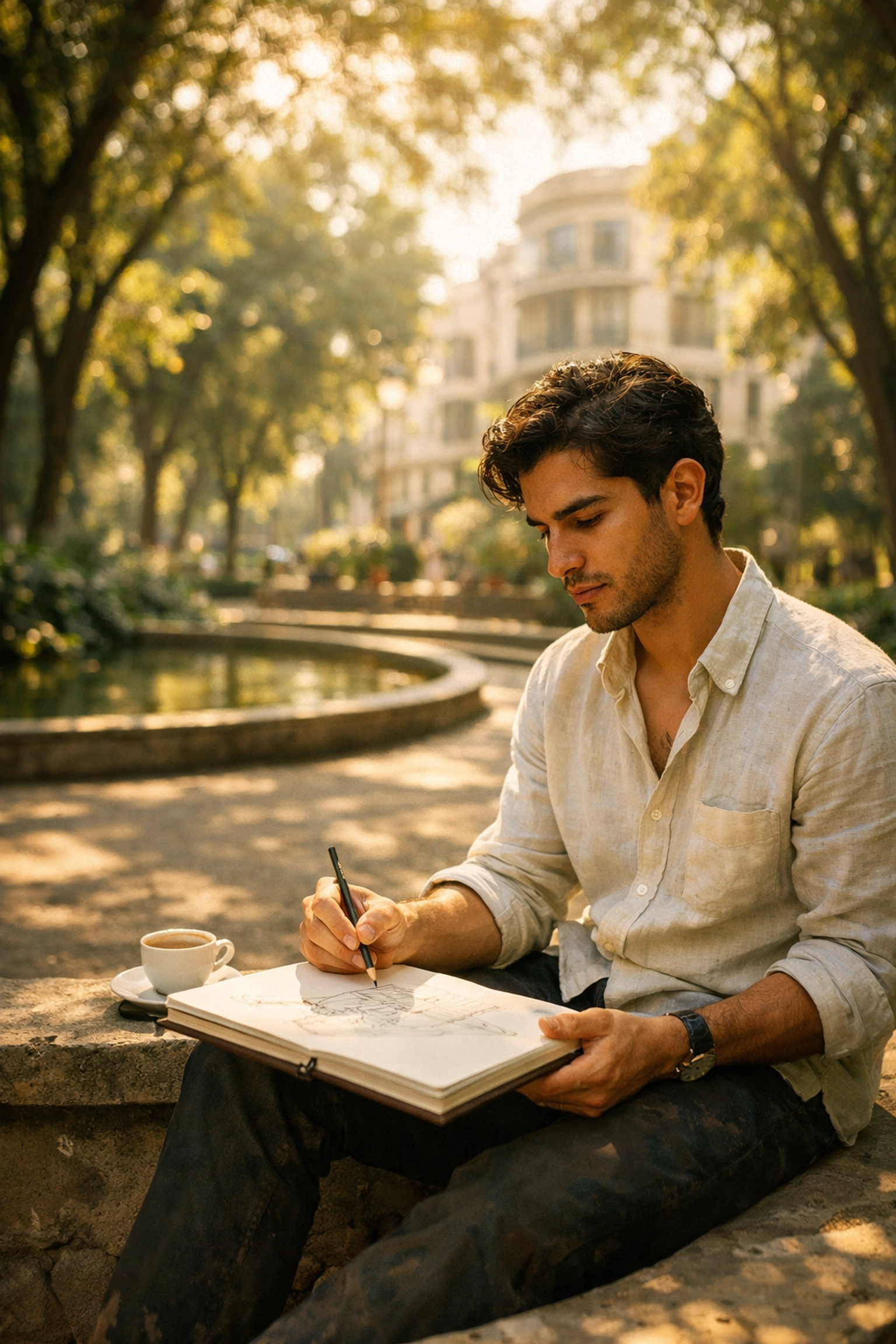
Santiago had moved to Mexico City five years earlier from Guadalajara, seeking not just professional opportunities but also a place where being gay wasn't something to hide. CDMX delivered. The city's 2010 same-sex marriage legalization and strong anti-discrimination laws weren't just policy, they were lived reality, especially in neighborhoods like Condesa.
His favorite routine involved morning runs around Parque México's oval path, followed by breakfast at one of the eclectic cafés on Avenida Amsterdam. The neighborhood's bohemian roots meant diversity was woven into its DNA. Artists, writers, young professionals, and retirees all shared the same sidewalks, the same parks, the same quiet pride in their community.
When Roma Met Condesa
Their first encounter was quintessentially Mexico City: chaotic, unplanned, and perfect.
Santiago had been commissioned to evaluate a historic building in Roma Norte for potential renovation. The structure, built in 1920, sat directly across from Mateo's restaurant. For three weeks, Santiago arrived each morning with his measuring tape, notebooks, and coffee from the corner stand.
Mateo noticed him immediately. The architect with the serious expression and the way he'd stop mid-measurement to simply admire a decorative corbel or an original tile pattern. One particularly hot afternoon, Mateo brought over a glass of horchata.
"You've been staring at that building like it's going to tell you its secrets," Mateo said, smiling.
"It already has," Santiago replied, accepting the drink gratefully. "This façade is original Art Nouveau. Most people just see an old building, but look, these floral motifs, the asymmetry, the way light hits those windows at sunset. It's poetry in plaster."
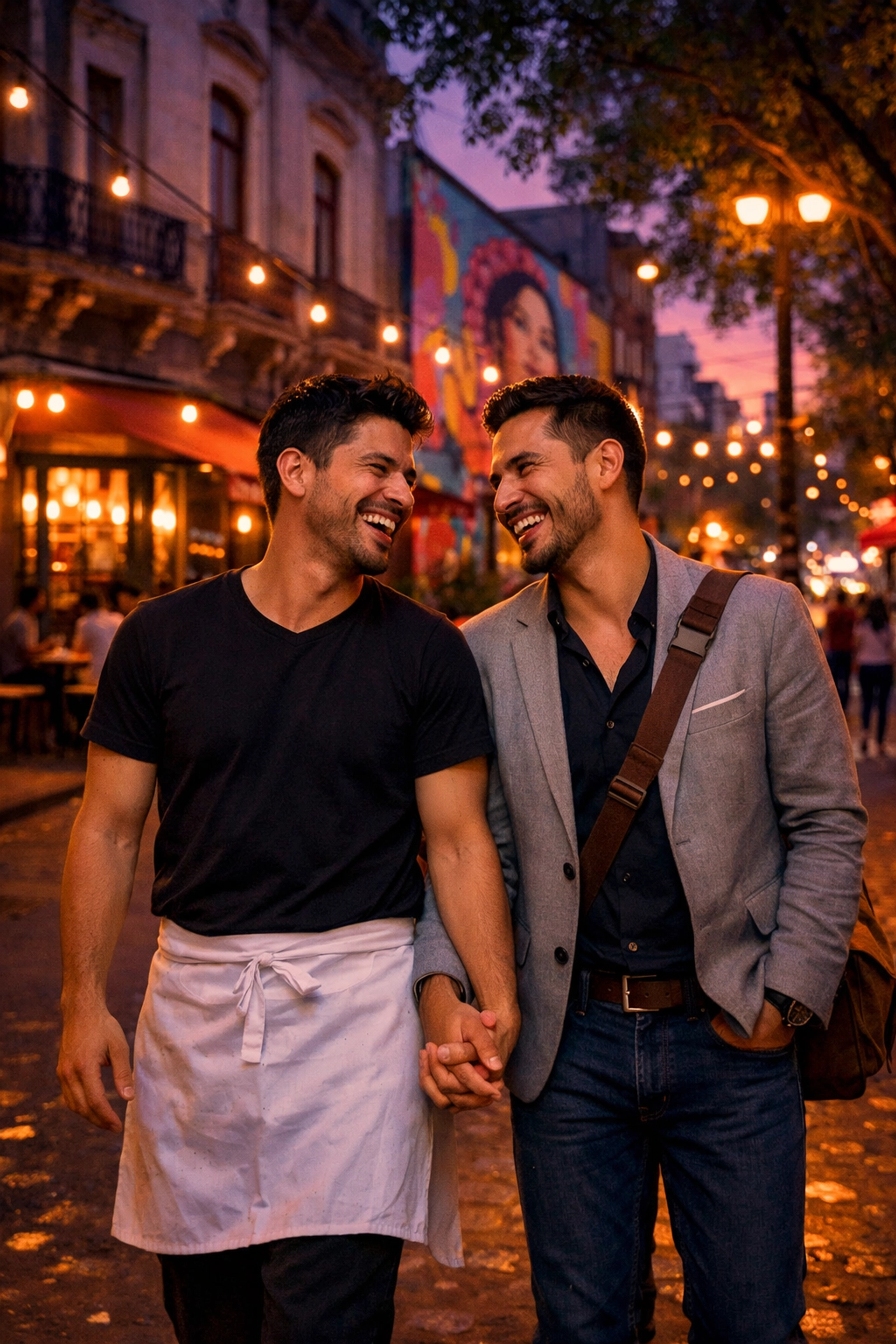
Mateo found himself bringing over drinks more frequently. Then it was lunch, "I made too much, I swear." Then it was an invitation to dinner after Santiago's project wrapped up. They chose a spot in Condesa, neutral territory, where they could walk through Parque México afterward and talk until the streetlights flickered on.
The conversation flowed like mezcal, smooth with an unexpected burn. They discovered shared passions: architecture and food, yes, but also a deep love for Mexico City's contradictions, its ability to honor the past while sprinting toward the future. Both had chosen CDMX specifically for its queer-friendly atmosphere, and both had found not just acceptance but celebration.
"In Roma, I feel seen," Mateo admitted as they circled Parque México for the third time, neither wanting the night to end.
"In Condesa, I feel grounded," Santiago added. "But tonight, I feel both."
Building a Life Between Neighborhoods
Six months later, they were still navigating the delicious tension of living in adjacent but distinct neighborhoods. Mateo's world was Roma's late-night energy, impromptu art gallery openings, mezcal bars that didn't close until dawn. Santiago's was Condesa's Sunday mornings at the farmers market, afternoon reading in the park, early-to-bed sophistication.
Rather than compromise, they celebrated both. Weekend mornings started with runs in Parque México, afternoons found them exploring Roma's street art and vintage shops, evenings might end anywhere from a trendy cocktail bar in Roma Norte to a quiet dinner at home with takeout from one of Condesa's international restaurants.
Their relationship became a reflection of Mexico City itself: diverse, vibrant, unapologetically authentic. They attended Pride in Centro Histórico with hundreds of thousands of others, the entire city seemingly draped in rainbow flags. They explored Coyoacán's bohemian streets, visited Frida Kahlo's Casa Azul, and made friends with other queer couples who'd also chosen CDMX as their home.
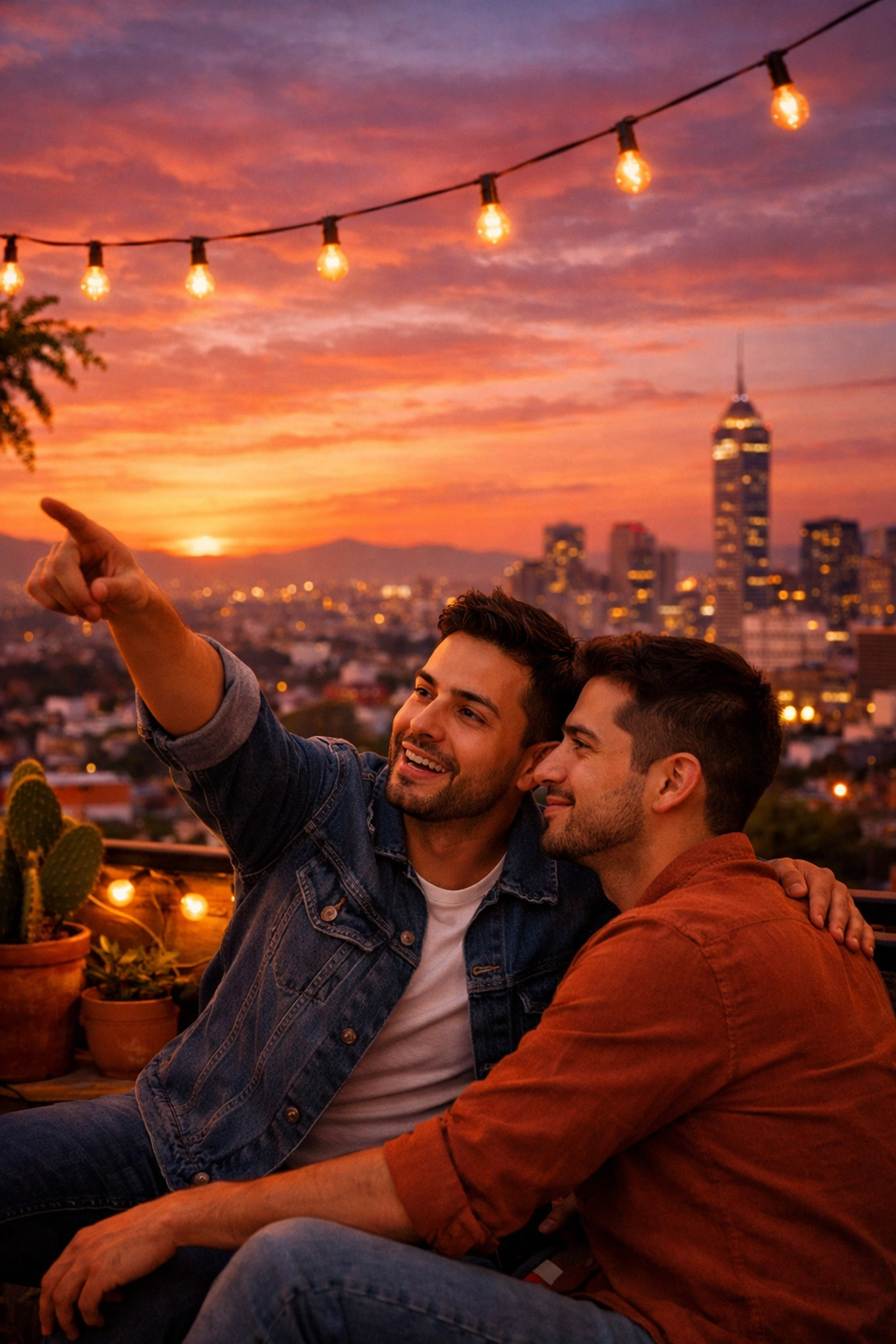
For readers of MM romance and gay fiction, their story might seem like it belongs in a novel: and in many ways, it does. The kind of heartfelt gay love story that publishers like Read with Pride celebrate, where the setting is as much a character as the people, where community and connection matter as much as chemistry.
But this wasn't fiction. This was life in one of the world's most dynamic cities, where being queer wasn't just tolerated but embraced, where neighborhoods like Roma and Condesa offered both history and hope.
More Than a Love Story
A year into their relationship, Mateo and Santiago hosted a dinner party at the restaurant. The guest list read like a who's who of their combined lives: chefs and architects, artists and activists, friends from both neighborhoods and beyond. The theme was "Bridges": both literal and metaphorical.
"Mexico City taught us that you don't have to choose between honoring tradition and embracing change," Santiago said in a toast. "Look around: this restaurant sits in a building from 1920, serving recipes from generations back, but with techniques from tomorrow. We're surrounded by a neighborhood that's both a historic preservation zone and the cutting edge of contemporary culture."
"And," Mateo added, raising his glass, "surrounded by a community that proves love is love, in Spanish, in English, in every language that matters."
The evening embodied what makes Mexico City's LGBTQ+ scene so special. It's not segregated into a single gayborhood: it's woven throughout the city's fabric, particularly in progressive areas like Roma and Condesa. The same cafés where Santiago sketched were where straight couples had breakfast. The parks where they walked hand-in-hand were filled with families, seniors, and everyone in between.
Integration, not isolation. Community, not just scene.
Why Mexico City Matters
For those seeking queer fiction that reflects real lived experiences, or for readers discovering LGBTQ+ ebooks that celebrate diverse perspectives, stories like Mateo and Santiago's matter. They're reminders that the best gay romance novels often take inspiration from the world around us: from cities that dare to be different, from neighborhoods that cultivate creativity, from communities that choose authenticity over assimilation.
Mexico City, with its twenty-plus million residents, offers something increasingly rare: metropolitan anonymity combined with neighborhood intimacy. In Roma and Condesa, you can be anyone, love anyone, build any life you imagine. The tree-lined streets don't judge. The art deco buildings don't discriminate. The cafés serve everyone the same excellent coffee.
And for Mateo and Santiago, that's exactly the point. Their story isn't extraordinary because they're gay: it's extraordinary because they found each other, built a life together, and did it all in a city that gave them room to breathe, dream, and become.
Their contemporary gay romance continues to unfold in real-time: planning a move to a larger space that bridges both neighborhoods, talking about marriage now that it's not just legal but celebrated, dreaming about what comes next while honoring what brought them here.
Mexico City gave them that gift: the freedom to write their own story, one meal, one building, one sunset walk at a time.
Discover more authentic LGBTQ+ stories and celebrate diverse voices at Read with Pride. From heartfelt MM romance to contemporary queer fiction, find books that reflect every color of our community.
Follow us for more stories that matter:
- Facebook: Read with Pride
- Instagram: @read.withpride
- X/Twitter: @Read_With_Pride
#ReadWithPride #MMRomance #GayRomance #LGBTQFiction #QueerFiction #GayLoveStories #MexicoCityPride #RomaCondesa #ContemporaryRomance #GayBooks #LGBTQBooks #QueerLove #GayMexico #PrideReading #MMBooks #AuthenticStories #LGBTQCommunity #GayLifestyle #UrbanRomance #LatinAmericaPride

Leave a Reply
You must be logged in to post a comment.