
readwithpride.com
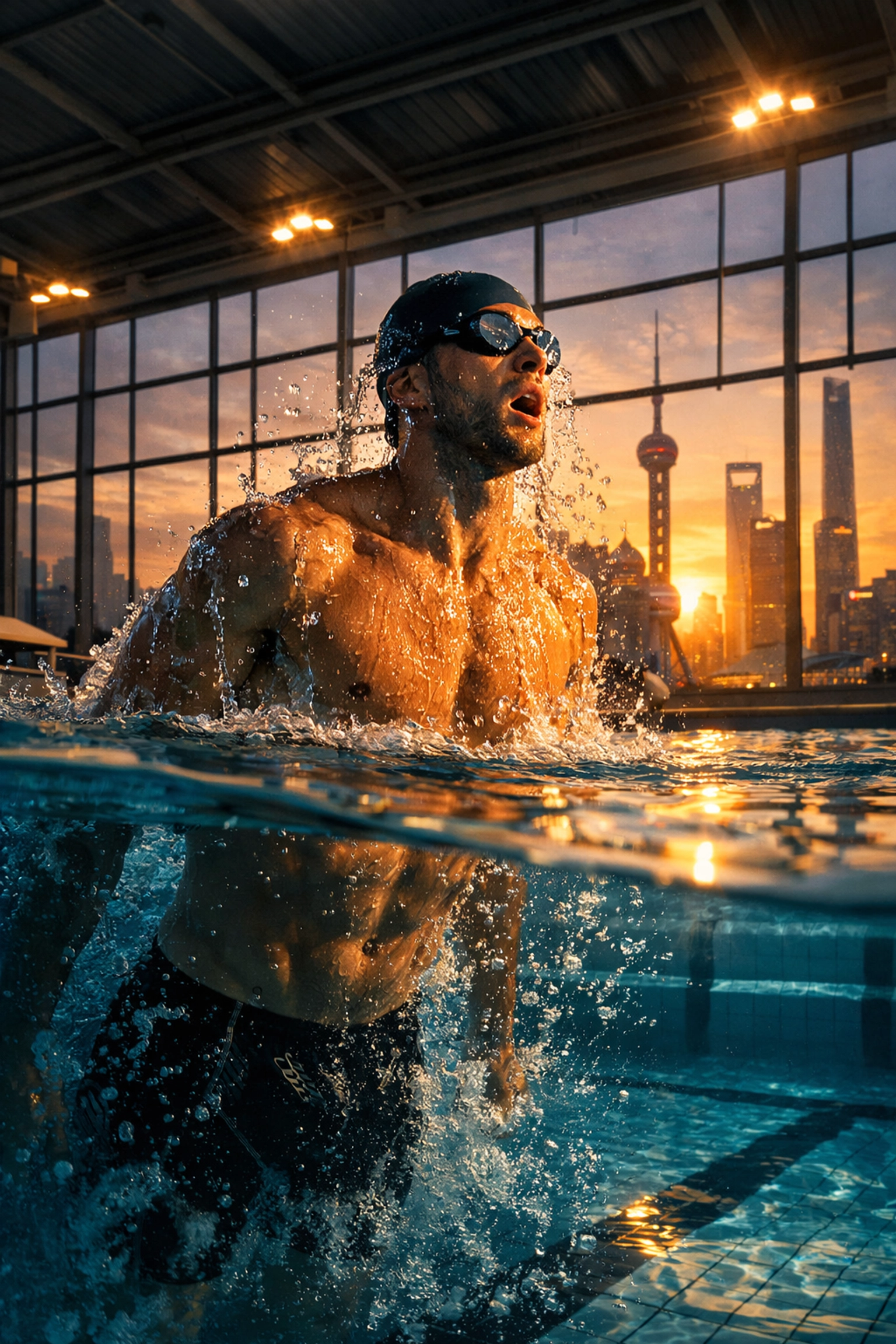
The water doesn't lie. That's what Chen Wei has always believed. When you dive into the pool, everything else falls away, the noise, the expectations, the masks you wear on dry land. It's just you, the rhythm of your stroke, and the truth of your body cutting through the blue.
At twenty-four, Wei is one of Shanghai's most promising competitive swimmers. His apartment overlooks the Huangpu River, where cargo ships glide past glittering skyscrapers that seem to touch the clouds. The city itself is a study in contrasts: ancient temples nestled between modernist towers, street vendors selling jianbing next to luxury boutiques, tradition and progress dancing an intricate tango.
Wei understands this dance intimately. He's been performing it his entire life.
The Weight of Water and Expectation
Growing up in Shanghai, Wei was the golden child. Excellent grades, provincial swimming championships, acceptance into a top university. His parents proudly displayed his medals in the living room, right next to his grandfather's calligraphy scrolls. He was the fulfillment of their dreams, the product of their sacrifices.
But beneath the surface, always beneath the surface, Wei carried a secret that felt heavier than any water pressure.
"I knew I was different when I was fourteen," he recalls during a late-night training session at the Hongkou Sports Center. "I'd see my teammates in the locker room and feel… things I wasn't supposed to feel. Things that had no name in my vocabulary."
In China, conversations about sexuality remain complex, caught between rapid modernization and deep cultural conservatism. While cities like Shanghai have vibrant underground queer scenes, many LGBTQ+ individuals still face family pressure, social stigma, and the expectation to marry and produce children. The tension between filial piety and personal truth can be suffocating.
Wei channeled everything into swimming. The pool became his sanctuary, the one place where he could be honest, even if that honesty was only with himself. Each lap was a meditation, each race a temporary escape from the questions he couldn't answer and the words he couldn't say.
Finding Language in Unexpected Places
The shift began during an international competition in Melbourne. Wei was nineteen, competing in the 200-meter freestyle, and he met another swimmer, a Australian named James who had an easy confidence that Wei both envied and was drawn to. They talked after the preliminaries, sharing stories about training regimens and coaches, and then James mentioned his boyfriend casually, like it was the most natural thing in the world.
Wei's brain short-circuited. Not because the information shocked him, but because James said it with such… normalcy. No shame, no whisper, no looking over his shoulder.
"That conversation changed something in me," Wei says. "I realized that the weight I was carrying wasn't mine alone. It was cultural, generational, imposed. But it didn't have to define me."
He started reading, secretly at first, using VPNs to access international LGBTQ+ resources, devouring gay romance novels and queer fiction that showed him possibilities beyond what he'd imagined. Stories matter. Representation matters. When you've never seen yourself reflected in the narrative, finding even one mirror can be revolutionary.
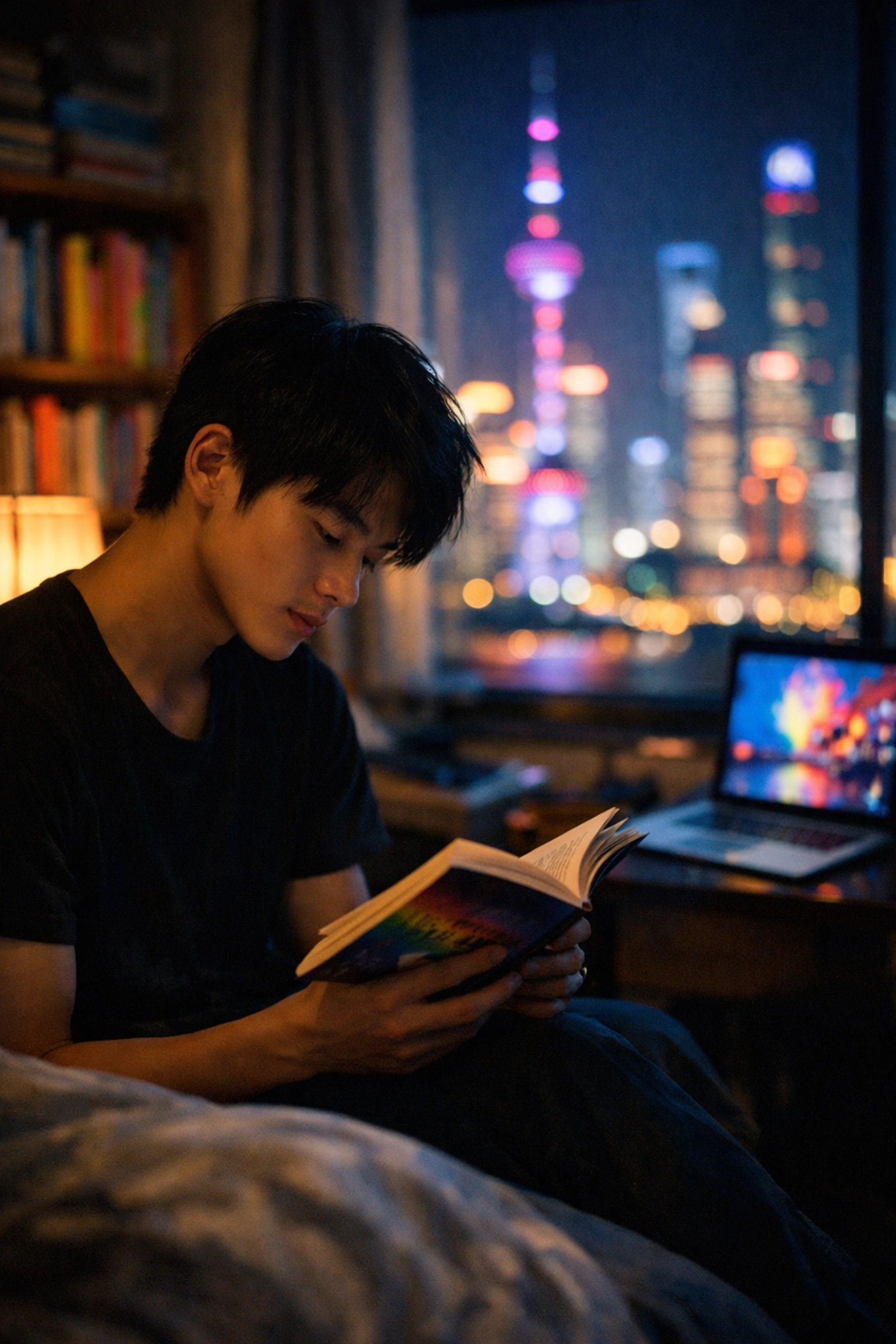
Through these stories, MM romance books that depicted love without apology, gay literature that validated his feelings, Wei began to construct a vocabulary for his identity. The words "gay" and "tongzhi" (同志, a term used in Chinese LGBTQ+ communities) stopped feeling like curses and started feeling like keys.
The Coming Out That Wasn't
There was no single dramatic coming out moment. Instead, Wei's truth emerged gradually, like dawn over the Bund.
First, he told his university roommate after too many beers and not enough sleep. The response was a shrug and "Yeah, I kind of figured." Then a teammate, who responded with questions about his dating life rather than judgment. Slowly, carefully, Wei tested the waters.
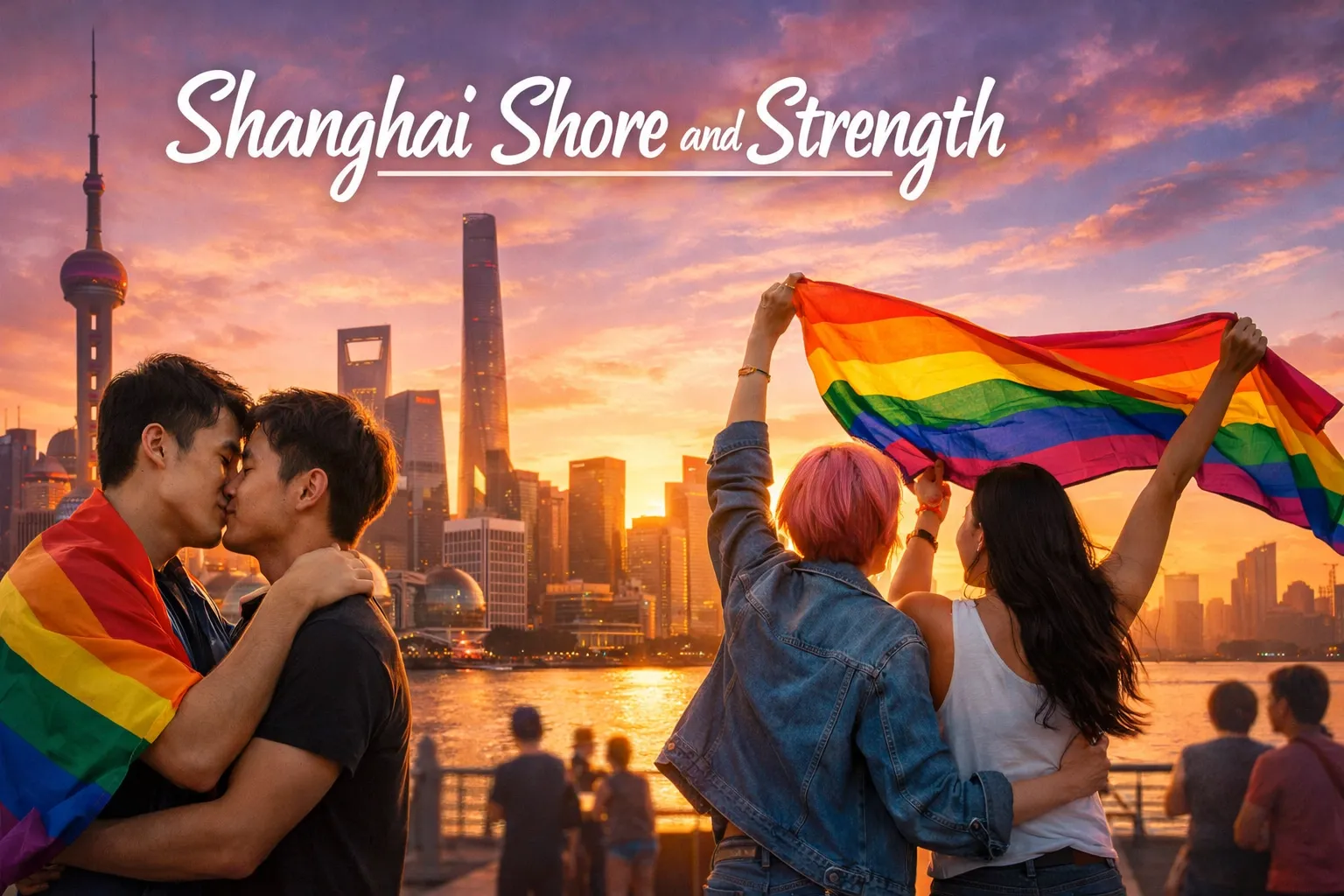
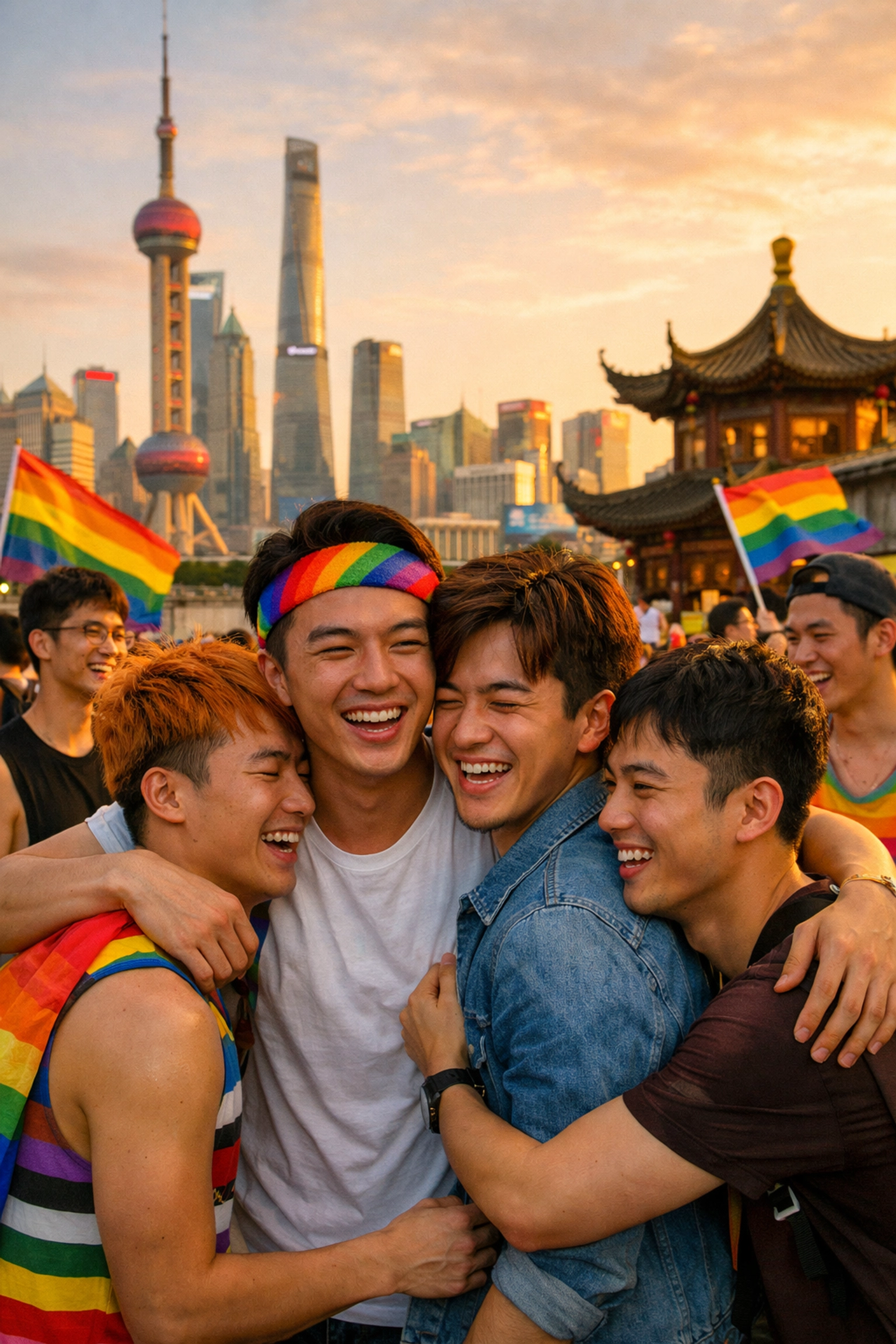
His coach found out when Wei needed time off for a pride march: something that would have been unthinkable just years earlier. Shanghai's pride events are often unofficial, organized through social media, operating in legal gray areas. But they exist, and they're growing.
"Coach asked me if this was going to affect my performance," Wei remembers. "I told him it already had: positively. I was swimming faster, training harder, because I wasn't spending all my energy hiding anymore."
The data backed him up. Wei's times improved. His focus sharpened. The mental bandwidth he'd wasted on secrecy could now be channeled into excellence.
Family Matters
Telling his parents was harder. So much harder.
Chinese culture places enormous emphasis on family continuity, on carrying forward the family name, on filial duty. Wei's parents had weathered poverty, political upheaval, and personal sacrifice to give him opportunities. How could he tell them that their dreams for his future: marriage to a nice girl, grandchildren, traditional respectability: weren't his dreams?
He prepared for the conversation like he prepared for a race: visualizing different scenarios, planning his breathing, knowing when to push and when to hold back.
"I told them after I won the national championship," Wei says. "I wanted them to see my success first, to understand that my sexuality doesn't define my worth or my ability to make them proud."
His mother cried. His father went silent for three days. The initial reaction was everything Wei feared: disappointment, confusion, questions about where they'd gone wrong.
But then something shifted. His mother started asking questions: real questions, not accusations. His father watched a documentary about LGBTQ+ youth in China. They didn't become pride flag-waving advocates overnight, but they were trying. That's what love does: it tries.
Shanghai's Hidden Rainbow
Shanghai has one of China's most active LGBTQ+ communities, though it remains largely underground. Apps like Blued (founded in China) connect people. Bars and clubs in areas like Jing'an and Huangpu offer spaces where queer people can exist without translation. House parties, art exhibitions, book clubs: gay romance readers and activists creating community in the margins.
Wei found his people gradually. A book club that discussed MM romance novels in a café near Fuxing Park. A swimming group for LGBTQ+ athletes. Online forums where people shared coming out stories and gay love stories that mirrored their own experiences.
"We exist everywhere," Wei says. "Even when we're invisible to the mainstream, we're here, we're building, we're loving, we're living."
Strength in Visibility
Today, Wei trains for the Asian Games while also mentoring younger queer athletes. He's not publicly out in the mainstream media: China's restrictions on LGBTQ+ representation in public forums make that complicated: but within the swimming community and on international platforms, he's open about who he is.
His Instagram, which has a growing following, occasionally features pride content alongside training videos. He's careful, strategic, knowing the line between visibility and vulnerability in a country where laws and attitudes are evolving but unpredictable.
"I swim for everyone who's still underwater," Wei says. "For every queer kid in China who thinks they're alone, who thinks they have to choose between their identity and their heritage. You don't. We contain multitudes."
The water still doesn't lie. But now, when Wei dives in, he's carrying less weight and swimming toward something rather than away from it. His strokes are powerful, his breath controlled, his direction clear.
He's not just training for medals anymore. He's training for visibility, for representation, for the teenager he was who needed to see someone like him succeeding, thriving, being authentically himself.
The shore isn't always welcoming. But Wei has learned that strength isn't about fighting the current alone: it's about finding your crew, building your community, and swimming together toward a future where everyone can breathe freely.
Looking for more authentic LGBTQ+ fiction and powerful coming out stories? Discover our collection of gay romance books and MM contemporary reads at readwithpride.com that celebrate queer lives across cultures and continents.
Follow us for more inspiring stories:
Facebook | Instagram | X/Twitter
#ReadWithPride #GayRomance #MMRomance #LGBTQFiction #QueerStories #ComingOutStories #GayAthletes #AsianLGBTQ #MMContemporary #GayFiction #QueerRepresentation #LGBTQBooks #GayLoveStories #MMRomanceBooks #QueerFiction #GayLiterature #Pride2026 #AuthenticLove #LGBTQCommunity #GayBooks

Leave a Reply
You must be logged in to post a comment.