

readwithpride.com
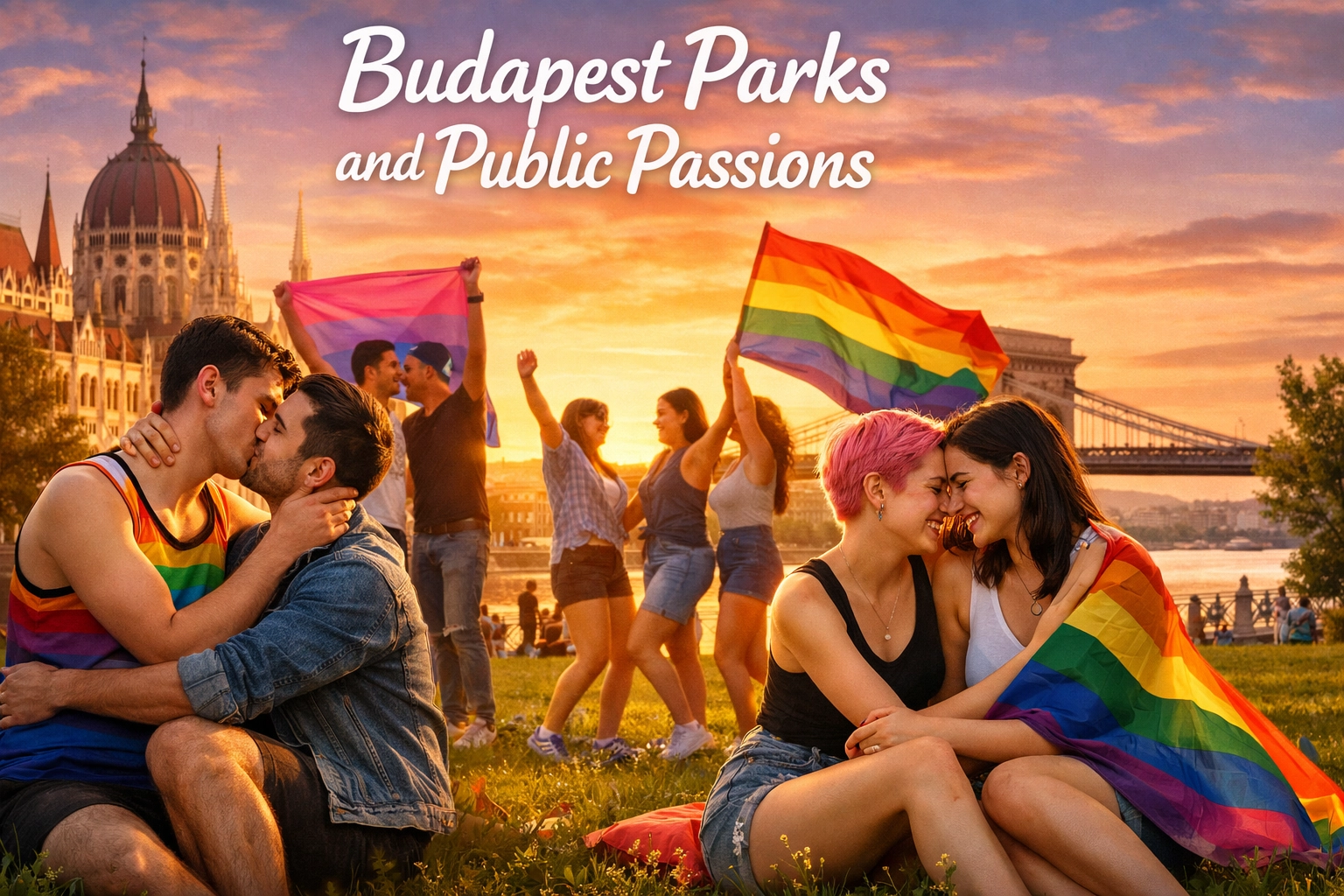
There's something about a Budapest summer afternoon that feels like it was designed for slow revelations. The kind where the sun hangs golden and lazy over the Danube, where the heat settles into your skin like a secret you've been keeping, and where the city's queer community comes out, literally: to claim their space under the open sky.
I'm sprawled on a patch of grass near the water's edge, somewhere between Margaret Island's manicured lawns and the wilder stretches of riverbank where the locals know to gather. Around me, the afternoon unfolds in a tableau of bodies and laughter: shirtless guys tossing a frisbee, a couple sharing a bottle of wine and strawberries, a group of trans women applying sunscreen with the meticulous care of artists preparing a canvas.
This isn't advertised in any guidebook. There's no rainbow flag marking the spot, no official designation. But everyone here knows. The gay community in Budapest has always been good at reading between the lines, at finding each other in spaces that weren't explicitly made for us but became ours anyway through sheer presence and persistence.
The Geography of Belonging
Margaret Island has this reputation: earned over decades: as a neutral zone where queerness doesn't require explanation. It's a green lung in the middle of the Danube, accessible only by foot or bike, which means it filters out the casual drive-by hostility that can plague other public spaces. The island feels contained, protected, like someone drew a circle in the sand and declared it safe.
But it's not just Margaret Island. The banks along Római Part in the north become a summer cruising ground after dark, where the Danube laps against concrete and men meet under the cover of twilight. City Park's wilder corners, near the back of Vajdahunyad Castle, host afternoon sunbathers who aren't interested in the family-friendly tourist zones. Even Gellért Hill, with its Philosopher's Garden and sweeping views, attracts couples: same-sex and otherwise: looking for a quiet bench where they can just exist together without commentary.
These aren't officially designated "gay spaces." They're claimed spaces. Earned through years of showing up, of refusing to hide, of transforming public parks into community commons through nothing more revolutionary than presence.
Summer Rituals and Unspoken Rules
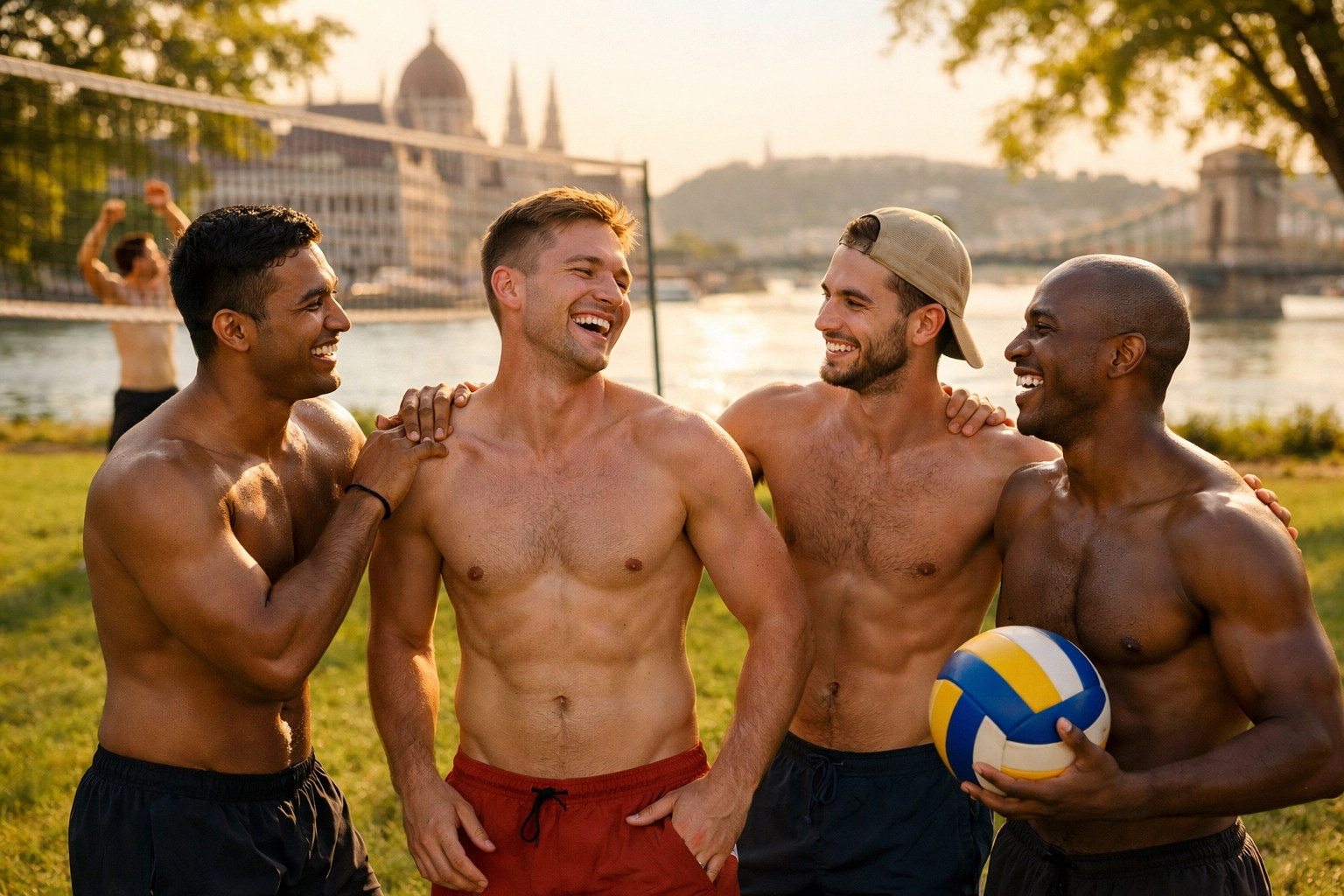
By mid-afternoon, the dynamics are clear. The volleyball net has attracted a rotating cast of players: mostly guys in their twenties and thirties who've clearly done this before, who know each other's names or at least recognize each other's faces from previous summers. There's a competitive energy but also something gentler underneath: the way they cheer for both teams, the casual touches on shoulders and backs that linger just a second longer than strictly necessary.
A few meters away, someone's set up a portable speaker playing a mix that bounces between Hungarian pop and international house music. It's not loud enough to be obnoxious but present enough to create atmosphere, to mark this patch of grass as claimed territory. People drift in and out of its orbit like satellites, drawn by the music or the energy or just the magnetic pull of finding your people.

I watch a couple in their fifties set up camp nearby: folding chairs, a small cooler, a rainbow-striped beach umbrella that feels like both a statement and a dare. They've clearly been doing this for years, have that comfortable ease with each other that comes from decades together. One of them catches me looking and raises his beer bottle in a silent toast. I raise my water bottle back. No words needed.
This is what community looks like when you strip away the bars and clubs and official Pride events. It's this: people claiming sunshine and grass and the simple right to exist in public without apology.
The Weight of Visibility
But there's a tension too, isn't there? Budapest isn't Amsterdam or Berlin. Hungary's political climate has become increasingly hostile to LGBTQ+ rights in recent years, with laws restricting representation and rhetoric painting queer people as threats to traditional values. The constitutional ban on same-sex adoption, the "propaganda" law targeting LGBTQ+ content: these aren't abstract political gestures. They create a climate where visibility becomes an act of defiance.
So these summer afternoons carry weight. Every same-sex couple holding hands on a park bench, every group of trans people laughing too loudly, every rainbow anything: it's all a small rebellion against a government that would prefer we stayed hidden. The act of sunbathing becomes political when your existence is politicized.
Yet there's also defiance in the ordinariness of it all. We're not here staging a protest or making a statement (though our presence is both). We're just… being. Existing. Taking up space in the same mundane, gloriously boring ways that straight people have always taken for granted: eating snacks, reading books, getting slightly sunburned, complaining about the heat.
Finding Stories in the Shade
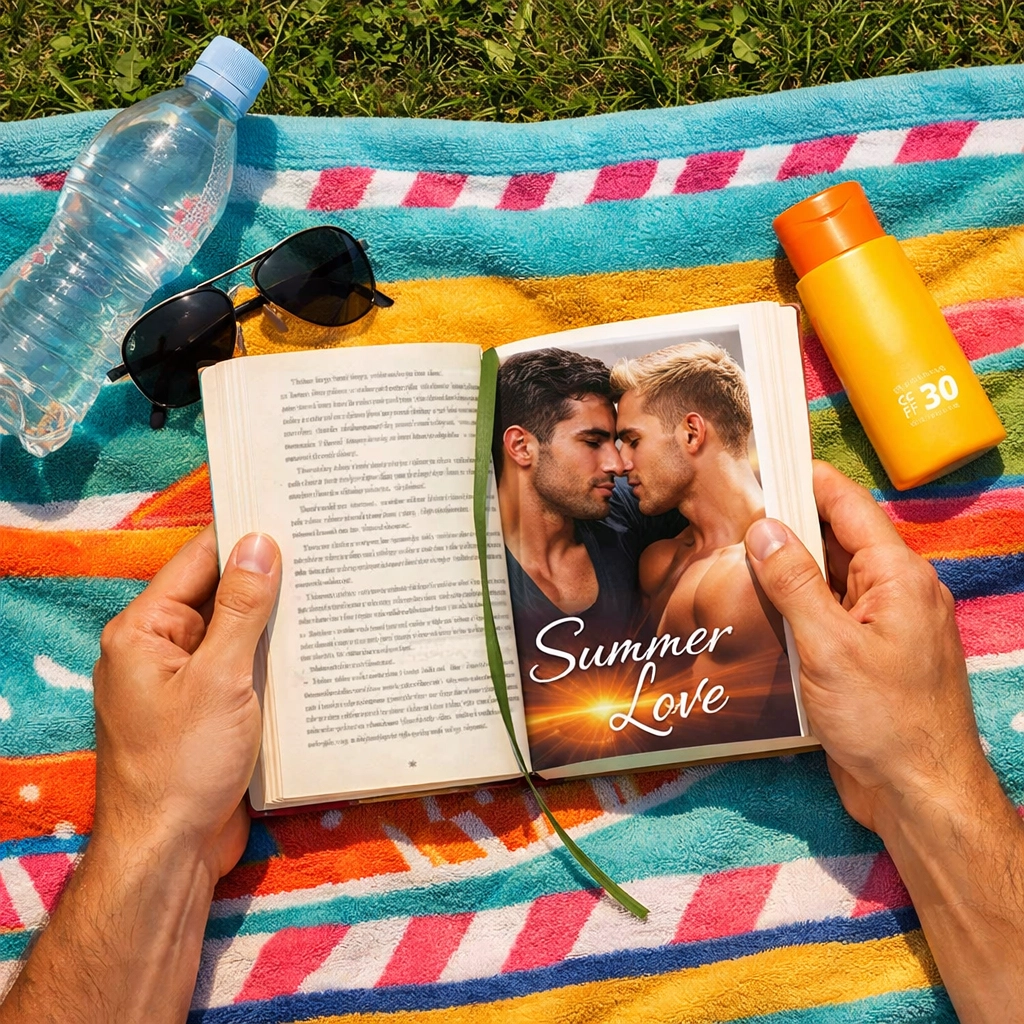
I've brought a book with me: a gay romance novel I picked up from Read with Pride, one of those MM romance books where two men find each other against impossible odds and somehow make it work. The protagonist is navigating coming out in a small conservative town, and there's something both familiar and escapist about reading it here, in this context.
Because that's what these spaces offer, isn't it? A temporary escape from the weight of being different, a few hours where queerness isn't the exception but the norm. Where you can let your guard down, where you don't have to calculate every gesture and glance, where you can just read your gay romance novel in public without wondering if someone's going to have a problem with it.
The stories we read matter, but so do the spaces where we read them. The ability to sit in a public park with a book featuring two men falling in love on the cover: that's not a small thing in a country where such content has been legally restricted. It's an assertion of the right to our own narratives, literally and figuratively.
As the Sun Shifts
The afternoon stretches long, the way summer afternoons do when you're in no hurry to be anywhere else. The volleyball game wraps up, players dispersing to join other groups or claim their own patches of grass. The couple with the rainbow umbrella pack up their chairs with the efficiency of practice. New arrivals take their place, and the space refreshes itself, the community recycling through in shifts.
Someone nearby is reading too: looks like LGBTQ+ fiction based on the cover art: and we exchange that small smile of recognition that says "I see you, fellow reader, fellow queer person, fellow human claiming space in the world."
This is what it means to find community in public spaces: these small acknowledgments, these unspoken connections, this web of recognition that turns strangers into something like family, at least for an afternoon. It's not the dramatic coming-out stories or the grand romantic gestures you find in the best MM romance novels (though those have their place too). It's quieter than that. More sustaining.
By the time the sun starts its descent toward the Buda hills, painting the sky in those impossible shades of orange and pink that make you believe in magic, I'm both exhausted and renewed. My skin smells like sunscreen and Danube water. My book is half-finished, marked by a blade of grass pressed between pages. And I'm already looking forward to next weekend, when the weather holds, when the community will gather again in this unofficial, un-advertised, absolutely essential space we've carved out for ourselves.
Because that's what we do, isn't it? We find each other. We claim our spaces. We turn public parks into sanctuaries and summer afternoons into acts of resistance simply by showing up and refusing to hide.
The grass is still warm beneath my feet as I finally pack up to leave. Around me, others are doing the same, slowly, reluctantly, already counting down to the next gathering. The park will empty eventually, return to neutral territory, wait for us to claim it again.
But for now, for these perfect summer hours, it was ours. And that's everything.
Discover more LGBTQ+ stories and MM romance books at Read with Pride. Follow us on Facebook, Instagram, and X/Twitter for the latest in gay romance novels, queer fiction, and LGBTQ+ literature.
#ReadWithPride #MMRomance #GayRomanceBooks #LGBTQFiction #QueerCommunity #BudapestPride #GayBudapest #LGBTQTravel #QueerSpaces #GayRomanceNovels #MMRomanceBooks #LGBTQEbooks #QueerFiction #GayLiterature #PrideReading #LGBTQCommunity #QueerStories #GayBooks2026 #LGBTQReading #AuthenticStories

Leave a Reply
You must be logged in to post a comment.