

readwithpride.com
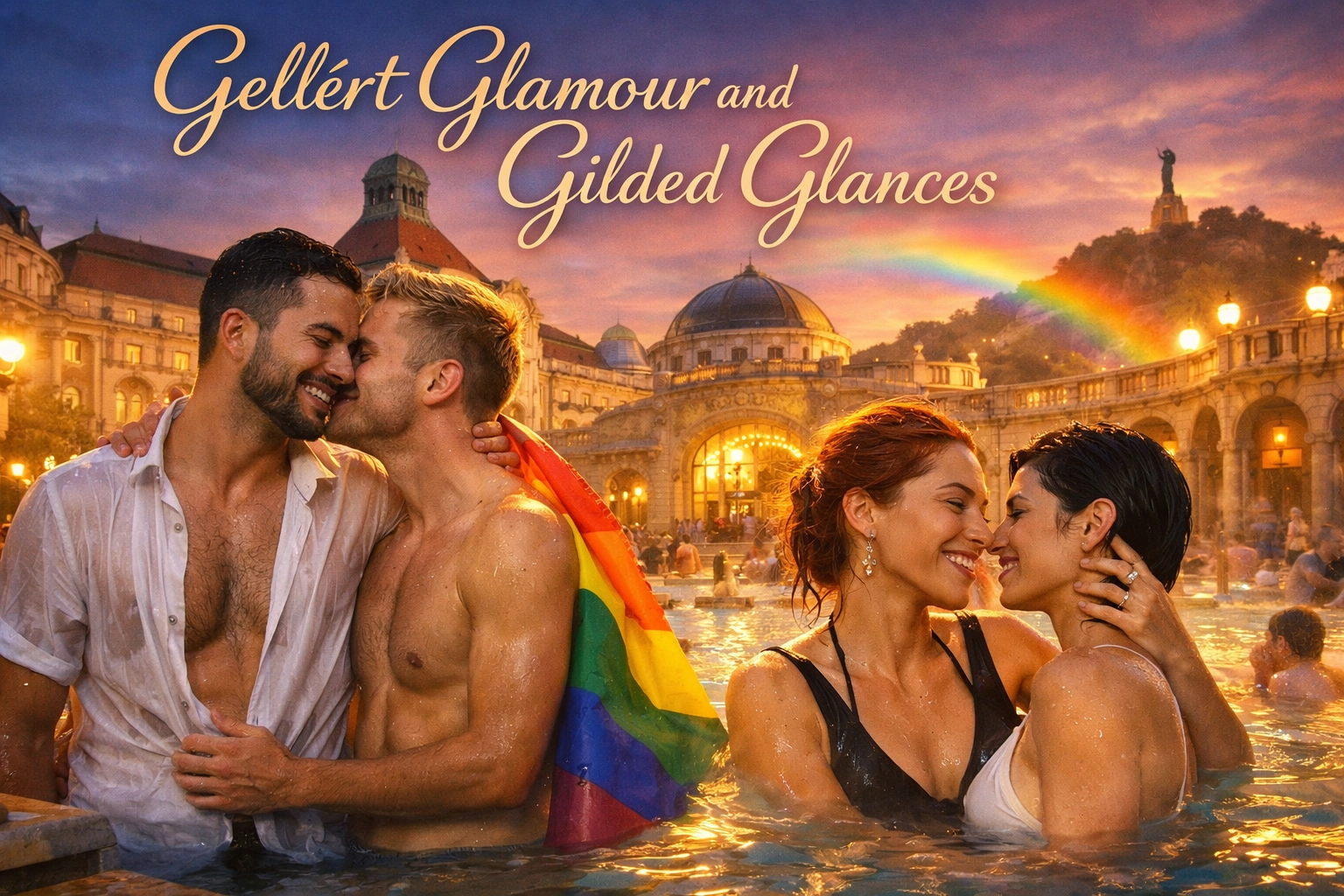
There's something intoxicating about walking into a space that was built for indulgence. The Gellért Thermal Bath in Budapest isn't just a place to get clean: it's a cathedral of steam and stolen glances, a Belle Époque masterpiece where Art Nouveau curves meet the oldest kind of human connection: desire wrapped in discretion.
For queer travelers, Gellért offers something rare: a space where history, beauty, and possibility converge. The kind of place where you can lose yourself in the gilded reflections of a century-old mirror while catching the eye of someone across a turquoise pool. It's not explicitly a gay sauna: this is a heritage site, after all: but within its ornate walls, there's always been room for those who understand the language of lingering looks.
A Palace Built for Pleasure
Built in 1918 as part of the legendary Hotel Gellért, the baths emerged from the ruins of World War I like a defiant celebration of life. While Europe was recovering from devastation, Budapest chose beauty. The result is a sprawling thermal complex adorned with intricate mosaics, stained glass windows that scatter rainbow light across the water, and grand colonnades that make you feel like you've stepped into a queer historical romance novel.
The architectural details aren't just decorative: they're seductive. Every surface seems designed to catch light and shadow in ways that flatter the human form. The ceramic tiles gleam. The bronze fixtures shine. And in the changing rooms, those gilded mirrors have witnessed a century of bodies in various states of undress, transformation, and self-discovery.
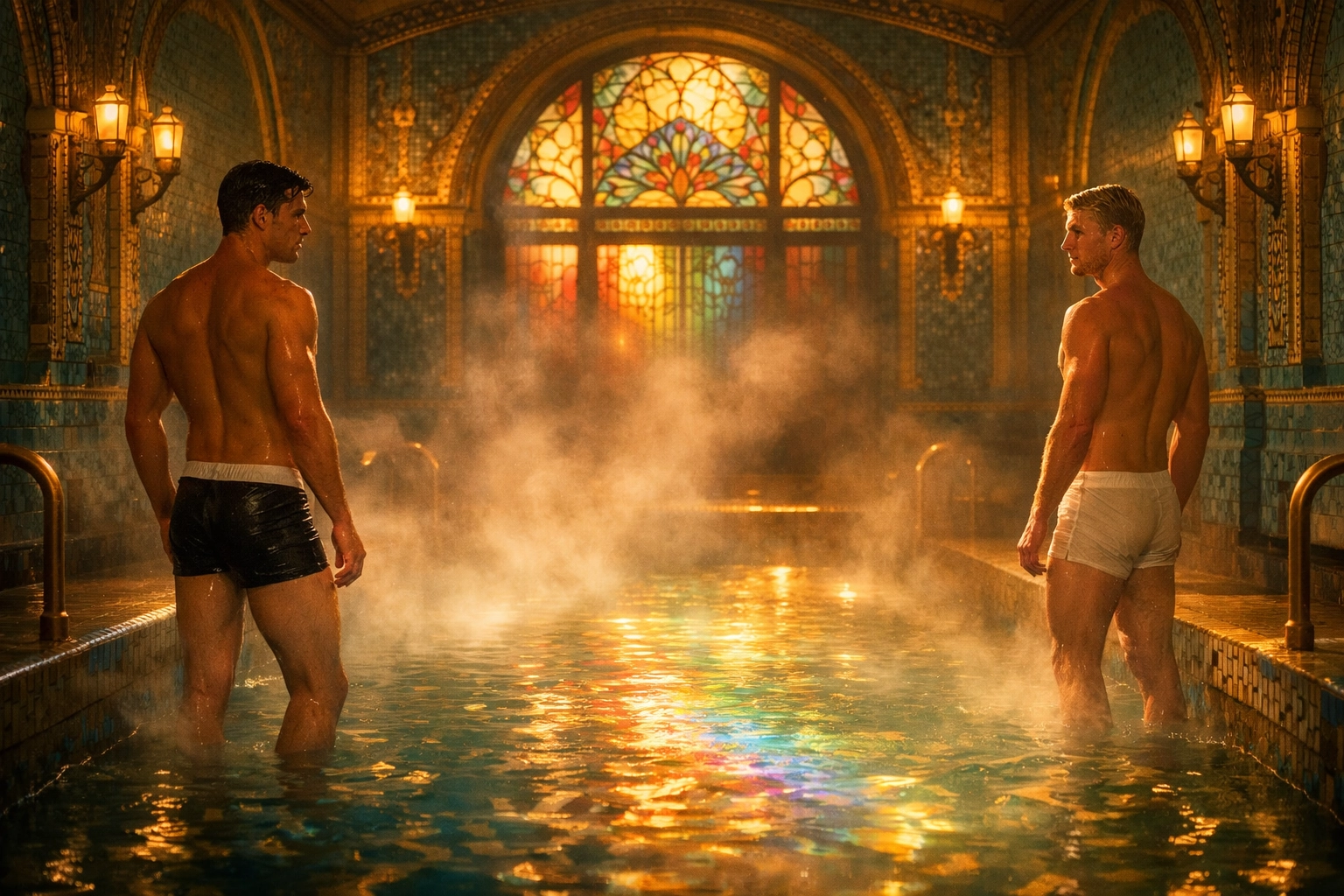
For LGBTQ+ visitors familiar with the contemporary gay romance books and MM romance tropes of forbidden glances and slow-burn tension, Gellért feels like stepping into one of those stories. The atmosphere practically demands a protagonist who catches someone's eye across the main pool and spends the rest of the visit navigating the delicious uncertainty of whether the interest is mutual.
The Choreography of the Changing Rooms
Let's talk about what really matters: the changing rooms at Gellért are a study in controlled chaos and unspoken etiquette. Unlike the more overtly cruisy spaces you might find at gay-specific saunas elsewhere in Europe, Gellért operates in a more subtle register. But for those who know how to read the room, the potential is there.
The men's changing area features rows of wooden cabins and open benches where you'll transition from street clothes to swimwear. There's a particular rhythm to these spaces: the casual-but-not-casual way someone might fold their clothes, the brief eye contact that lasts just a fraction too long, the strategic choice of locker placement.
It's sophisticated in its restraint. This isn't about overt displays. It's about the art of the possible, the maybe, the what-if. The kind of tension that would work perfectly in slow burn MM fiction, where two characters orbit each other for chapters before anything actually happens.
Ten Pools of Possibility
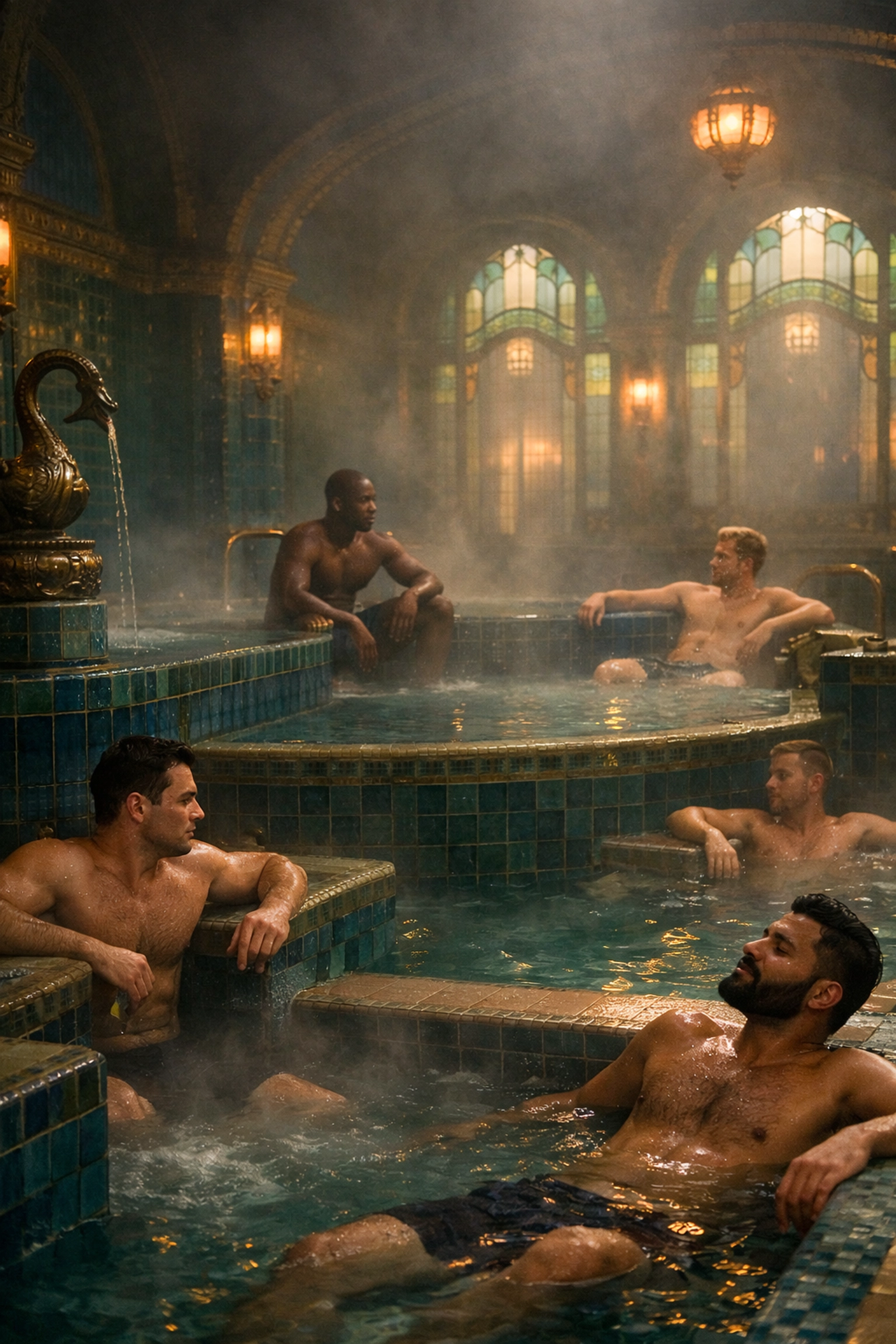
Gellért features ten different pools of varying temperatures, from the shock-cold plunge pool to the languid warmth of the main thermal bath. Each one offers its own atmosphere, its own social dynamics, its own opportunities for connection: or at least aesthetic appreciation.
The outdoor wave pool, installed in 1927 and once considered Europe's first, becomes a summer theater of bodies in motion. Surrounded by sunbathing terraces with loungers and greenery, it cultivates what can only be described as "laid-back but upscale" energy. Think less spring break chaos, more sophisticated European sensuality.
But it's the indoor thermal pools where the real magic happens for those seeking quieter moments. The steam rising from heated water creates a kind of gauzy filter, obscuring just enough to make everything feel dreamlike. You might float there for an hour, watching light filter through stained glass, occasionally meeting the gaze of someone else who's also pretending not to notice.
It's the kind of setting that appears frequently in contemporary gay fiction: that liminal space between public and private, where strangers can acknowledge each other without commitment, where desire can exist in potential form without demanding resolution.
The Unwritten Rules
Here's what you need to know: Gellért is a mainstream tourist destination. Families come here. Elderly locals come for therapeutic soaks. International visitors come for the Instagram aesthetic. But woven through all of that is a quieter current, a parallel experience available to those who know how to navigate it.
Eye contact means something here, but it's subtle. A glance held for three seconds instead of two. A slight smile that might mean "I see you" or might just mean "nice day for a soak." The ambiguity is part of the pleasure: that delicious uncertainty that drives every good romance narrative, whether you're reading MM romance books or living your own story.
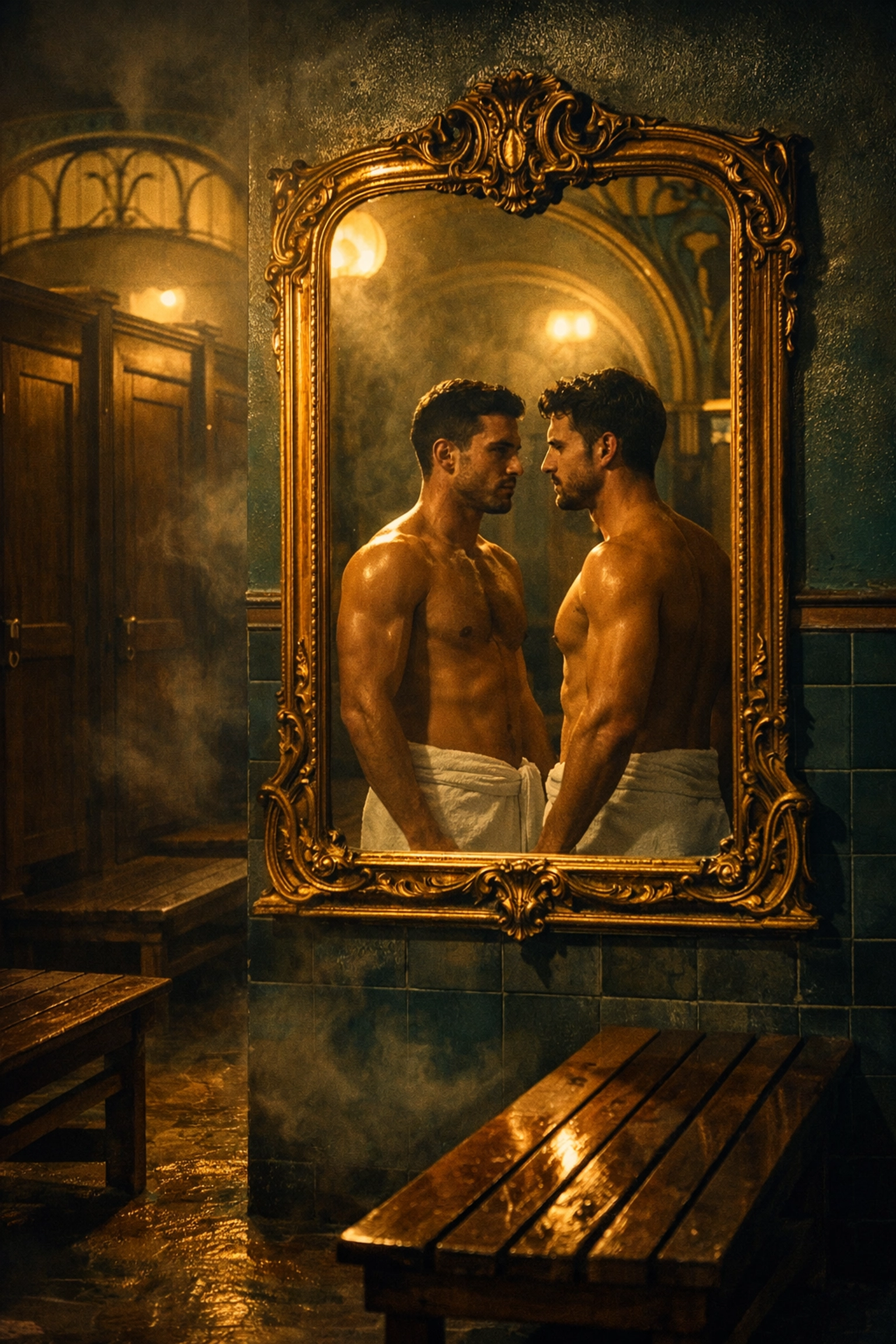
The sauna and steam rooms offer the most privacy and, consequently, the most possibility. These are small spaces where proximity is unavoidable, where bodies glisten with condensation, where everyone's defenses are literally steamed away. It's intimate without being explicit, charged without being obvious.
Budapest's Queer Context
Understanding Gellért requires understanding Budapest's particular position in European gay culture. Hungary's political climate has become increasingly challenging for LGBTQ+ people in recent years, with laws restricting LGBTQ+ content and limiting rights. But Budapest itself remains a surprisingly vibrant queer destination, with a thriving gay scene concentrated in the Jewish Quarter.
Gellért exists in an interesting space within this context. It's a historic site, a tourist attraction, a legitimate thermal spa: and also a place where queer men have always carved out space for themselves in the margins. It's not a statement. It's not activist. It's just… there, available, if you know how to read the room.
For queer travelers, especially those coming from countries where LGBTQ+ spaces are more explicitly defined, this kind of coded environment might feel both refreshing and frustrating. There's something appealing about a space that doesn't announce itself, that operates on subtlety and suggestion. But there's also the challenge of uncertainty: of not quite knowing if you're reading the signals correctly.
Practical Magic
If you're planning a visit, timing matters. Weekday mornings tend to be quieter, dominated by locals and serious spa-goers. Weekend afternoons bring tourist crowds and families. Evenings, particularly Thursday and Friday, attract a younger crowd: including more LGBTQ+ visitors who've figured out the rhythm.
The entrance fee is higher than Budapest's other thermal baths, but that's part of what maintains the atmosphere. Gellért has managed to avoid becoming either a tourist trap or a cruise spot by maintaining its identity as a luxury heritage site that happens to create space for all kinds of human connections.
Bring flip-flops, bring a sense of adventure, bring your ability to appreciate both architectural beauty and the subtle choreography of shared space. Whether you're a fan of gay romance novels or just someone who appreciates the thrill of possibility, Gellért delivers.
The Morning After
There's a particular quality to the light in Gellért's main hall in the morning, when sunshine streams through those stained glass windows and fractures into a thousand colors across the water. It feels like the opening scene of a movie, or the first chapter of one of those award-winning gay fiction novels where atmosphere does half the storytelling work.
Maybe you'll meet someone's eyes across that prismatic light. Maybe that glance will become a conversation at the edge of the pool. Maybe it'll turn into coffee at one of the nearby cafés, then dinner in the Jewish Quarter, then a chapter in your own personal romance story.
Or maybe it'll just be a moment: brief, beautiful, complete in itself. A reminder that queer life isn't just about explicitly gay spaces, but about the ability to find each other anywhere, to create connection in the margins, to recognize kindred spirits even in the most gilded and grandest of settings.
Either way, you'll leave with damp hair, wrinkled fingers, and the sense that you've experienced something that goes beyond simple spa tourism. You've touched something older and more universal: the human need for both beauty and belonging, for spaces that allow us to be seen and to see others in return.
Discover more LGBTQ+ travel stories and explore the best MM romance books that capture these moments of connection at Read with Pride.
Follow us for more queer content:
#ReadWithPride #GayTravel #BudapestGay #LGBTQTravel #GellertBaths #MMRomance #GayRomanceBooks #QueerTravel #LGBTQFiction #GayBooks #ThermalBaths #BudapestBaths #QueerEurope #GayRomance #LGBTQReading #GayLiterature #MMBooks #QueerFiction #GayNovels #ContemporaryGayRomance

Leave a Reply
You must be logged in to post a comment.