

readwithpride.com
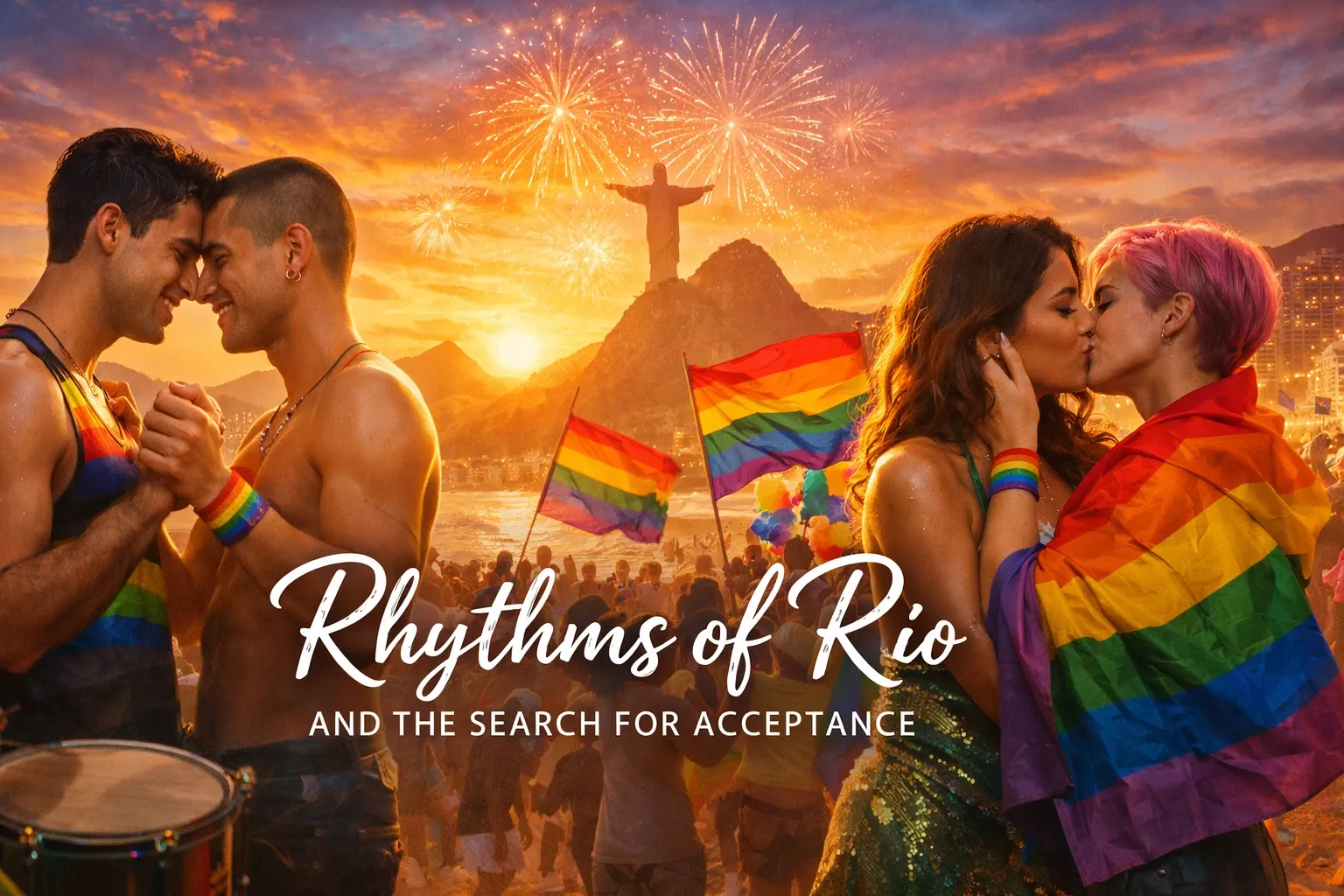
The drums start before sunrise. In the favelas overlooking Rio de Janeiro, the rhythms of samba pulse through narrow streets, carrying promises of transformation. For a few precious days each year, during Carnival, the city becomes something else entirely: a place where Black gay men can dance without apology, love without fear, and exist in their full, glorious truth.
But when the confetti settles and the last float rolls away, reality returns with the morning light.
The Magic and The Myth
Rio de Janeiro sells itself as a paradise of acceptance. The beaches are beautiful, the music is intoxicating, and during Carnival, it feels like the whole world is invited to the party. Samba schools: those incredible community organizations rooted in poor, Afro-Brazilian neighborhoods: transform the streets into rivers of sequins, feathers, and pure joy. The tambourine, cuíca, and pandeiro create rhythms that make your body move before your brain can process it.
For Black gay men navigating Rio's complex social landscape, Carnival represents a brief window of visibility that feels almost magical. Under the neon lights and amid the swirling crowds, they can kiss their partners, wear whatever makes them feel powerful, and claim space in a city that spends the rest of the year trying to make them invisible.
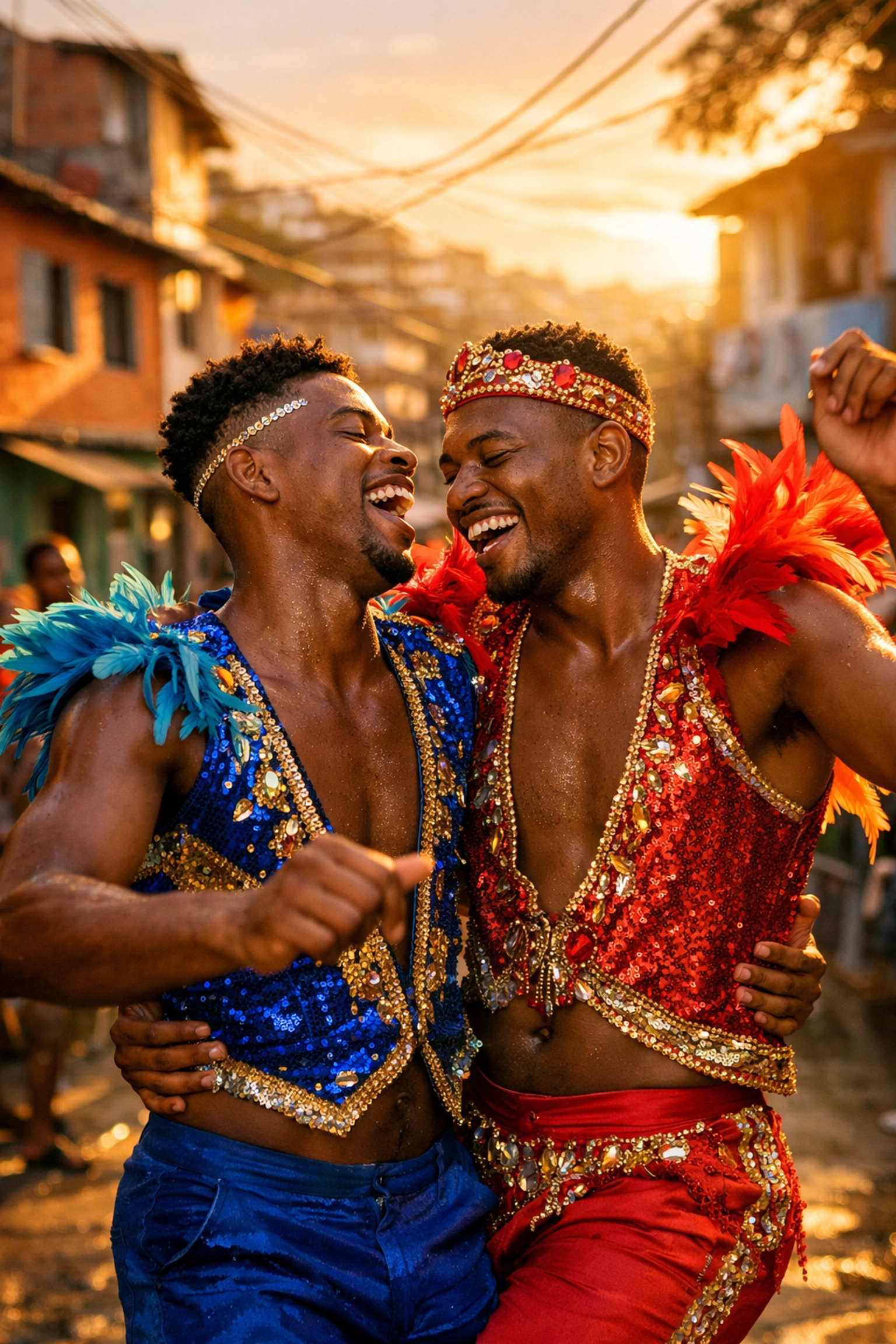
The samba schools themselves have always been more than entertainment. Born from African, European, and Brazilian influences, these institutions became spaces where communities could celebrate identity and belonging. They're proof that culture can be resistance, that music can be protest, that dancing can be an act of defiance.
The Other Three Hundred and Sixty-Two Days
But here's the uncomfortable truth that doesn't make it into the tourism brochures: being Black and gay in Rio means carrying multiple targets on your back simultaneously.
Brazil has one of the highest rates of violence against LGBTQ+ people in the world. Add being Black to that equation, and the statistics become even more brutal. The same streets that pulse with life during Carnival can turn hostile the moment you're perceived as "too much": too loud, too femme, too visible, too unapologetically yourself.
For many Black gay men in Rio, daily life requires a constant calculation of risk. Which neighborhoods are safe? Which beaches? What time is too late to be out? Can you hold your partner's hand on this street, or will it invite violence? The mental energy required for these calculations is exhausting, a tax that straight people never have to pay.
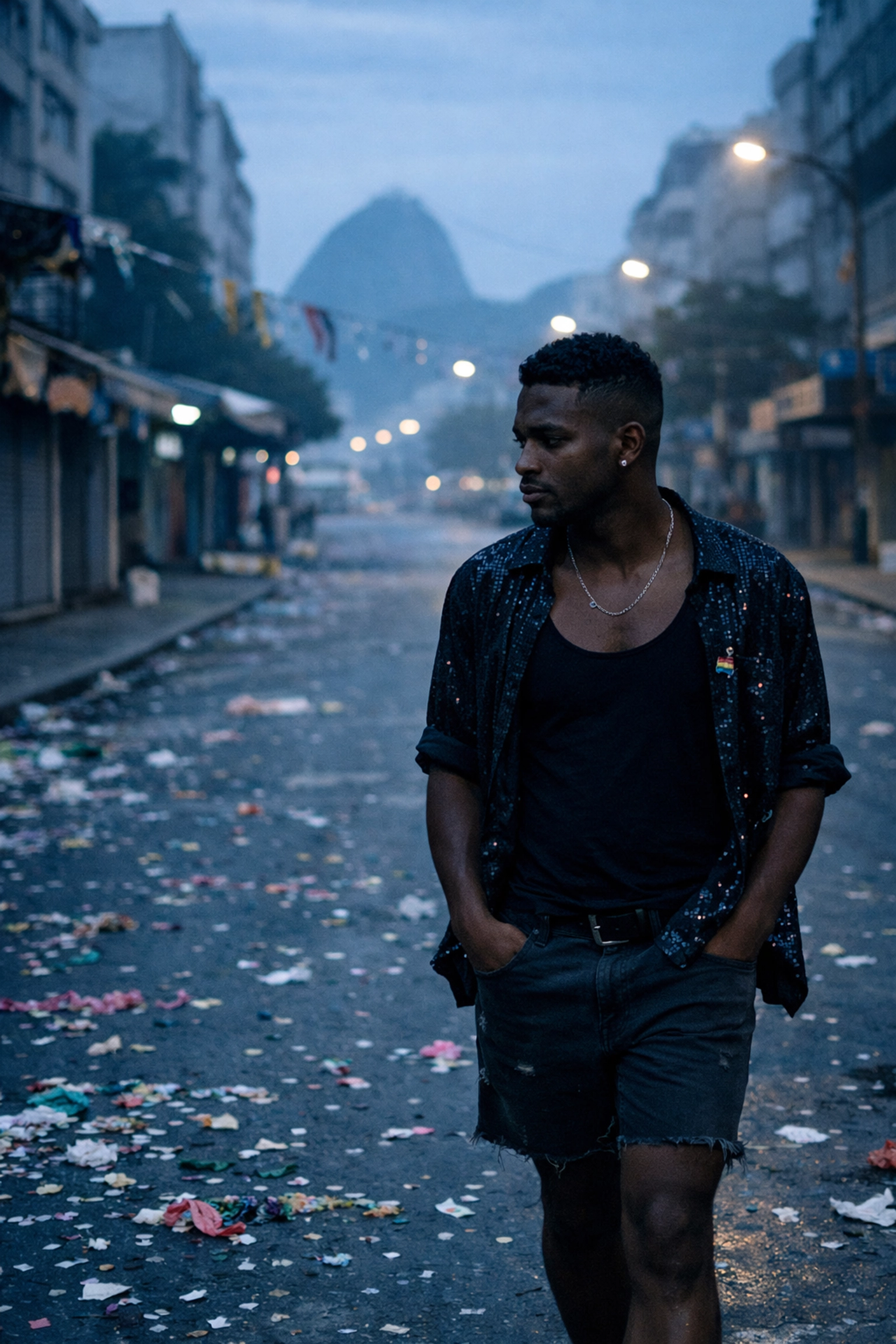
Economic inequality compounds everything. While Rio's wealthy neighborhoods enjoy relative safety and progressive attitudes, the favelas: where many Black LGBTQ+ people live: face different realities. Police violence, gang control, and evangelical churches wielding significant political power create environments where being openly gay can mean losing your job, your housing, or worse.
The Complexity of Community
The Black community in Brazil, like everywhere, is not a monolith. While samba and Carnival have roots in Afro-Brazilian culture, that doesn't automatically translate to acceptance of queer identities. Many Black gay men in Rio find themselves caught between worlds: rejected by parts of their racial community for their sexuality, and facing racism within predominantly white gay spaces.
Rio's gay scene, centered in neighborhoods like Ipanema, often reflects Brazil's broader racial inequalities. Lighter-skinned gay men dominate the visible spaces: the clubs, the bars, the dating apps. Black gay men frequently report experiencing racism in these supposedly progressive spaces, from being denied entry to clubs to facing fetishization and discrimination on dating platforms.
This double marginalization creates a unique kind of loneliness. You're searching for acceptance in communities that claim to embrace you while constantly reminding you that your Blackness or your queerness makes you "less than."
Finding Joy in the Struggle
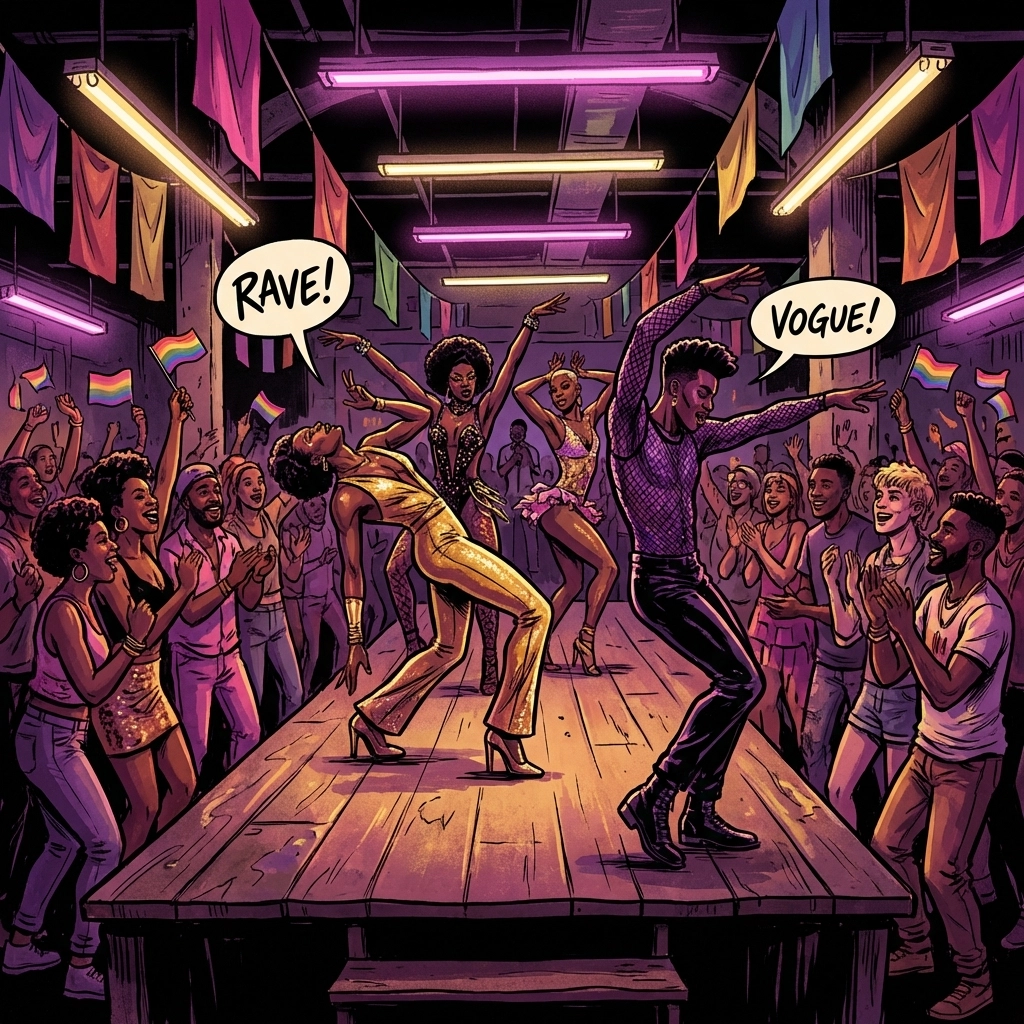
Yet despite everything: or perhaps because of it: Black gay men in Rio have created their own spaces of resistance and celebration. Underground parties, chosen families, and informal networks provide support and community in ways that formal institutions often fail to deliver.
The tradition of voguing has found passionate practitioners in Rio's Black LGBTQ+ community, creating spaces where dance becomes therapy, competition becomes art, and chosen families become lifelines. These balls: inspired by New York's ballroom scene but infused with Brazilian flavor: offer what mainstream society denies: a place to be fabulous, Black, queer, and celebrated for it.
Social media has also become a powerful tool for visibility and connection. Black gay influencers, activists, and artists are using platforms to challenge stereotypes, build community, and demand the acceptance that should have been theirs from the start.
The Search Continues
Reading stories about Black gay men in Rio: whether in MM romance books or personal essays: reveals a common thread: resilience. Not the toxic "pull yourself up by your bootstraps" kind, but the deeper resilience that comes from surviving systems designed to erase you and still finding reasons to dance.
These stories matter because representation matters. When Black gay men see themselves reflected in queer fiction and gay novels, when their specific struggles and joys are acknowledged rather than erased, it validates experiences that society often tries to dismiss.
The search for acceptance in Rio is ongoing. It happens in the grand spectacle of Carnival and in the quiet moments when someone finds the courage to come out to their family. It happens when a Black gay couple walks hand-in-hand down Copacabana beach and when a teenager in the favelas reads a story about someone like them and realizes they're not alone.
Looking Forward
Change is slow but it's happening. Activists continue pushing for better protections, more visibility, and genuine acceptance. Artists are creating work that refuses to sanitize the Black gay experience in Brazil. Communities are organizing, supporting each other, and refusing to be invisible.
The rhythms of Rio will keep pulsing. Samba will continue to evolve. Carnival will return each year with its promise of transformation. And Black gay men will keep searching, dancing, loving, and demanding the acceptance they deserve: not just during Carnival, but every single day.
Because the joy shouldn't be seasonal. The freedom shouldn't be temporary. And the search for acceptance shouldn't require choosing between being Black or being queer when you've always been beautifully, completely both.
Connect with us for more LGBTQ+ stories and authentic queer fiction:
🌈 Read With Pride
📘 Facebook
📸 Instagram
🐦 X/Twitter
#ReadWithPride #MMRomance #QueerFiction #LGBTQStories #GayRomanceBooks #BlackLGBTQ #QueerVisibility #GayFiction #MMRomanceBooks #QueerReads #LGBTQReading #GayNovels #AuthenticQueerStories #DiverseRomance #IntersectionalPride #BrazilianLGBTQ #BlackAndQueer #2026QueerReads #LGBTQCommunity #PrideReads

Leave a Reply
You must be logged in to post a comment.