

readwithpride.com
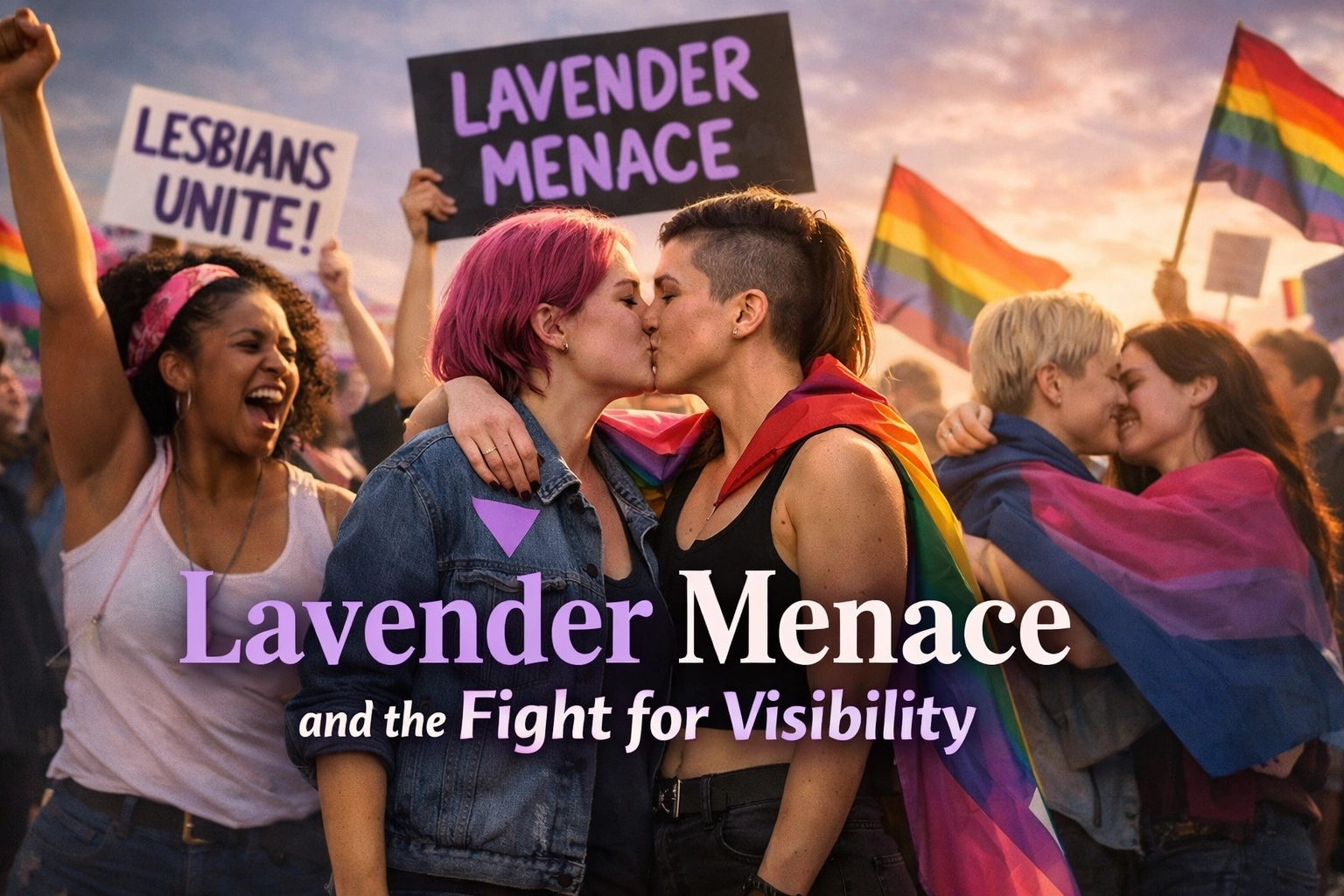
Sometimes the best way to fight erasure is to show up wearing the insult on your chest, literally. In 1970, a group of radical lesbian feminists did exactly that, turning Betty Friedan's dismissive slur into a rallying cry that would reshape the entire feminist movement.
When Feminism Had a "Lesbian Problem"
Picture this: It's 1969, and the women's liberation movement is gaining serious traction. Gloria Steinem is everywhere, NOW is organizing, and feminism is finally becoming a household word. But there's a problem: or so the leadership thought. That problem? Lesbians.
Betty Friedan, president of the National Organization for Women, wasn't exactly subtle about it. She publicly warned that lesbians were the "Lavender Menace": a threat to feminism's credibility and political goals. The logic was painfully simple: if mainstream America saw feminism as synonymous with lesbianism, the movement would lose support. Better to keep the lesbians quiet, or better yet, invisible.
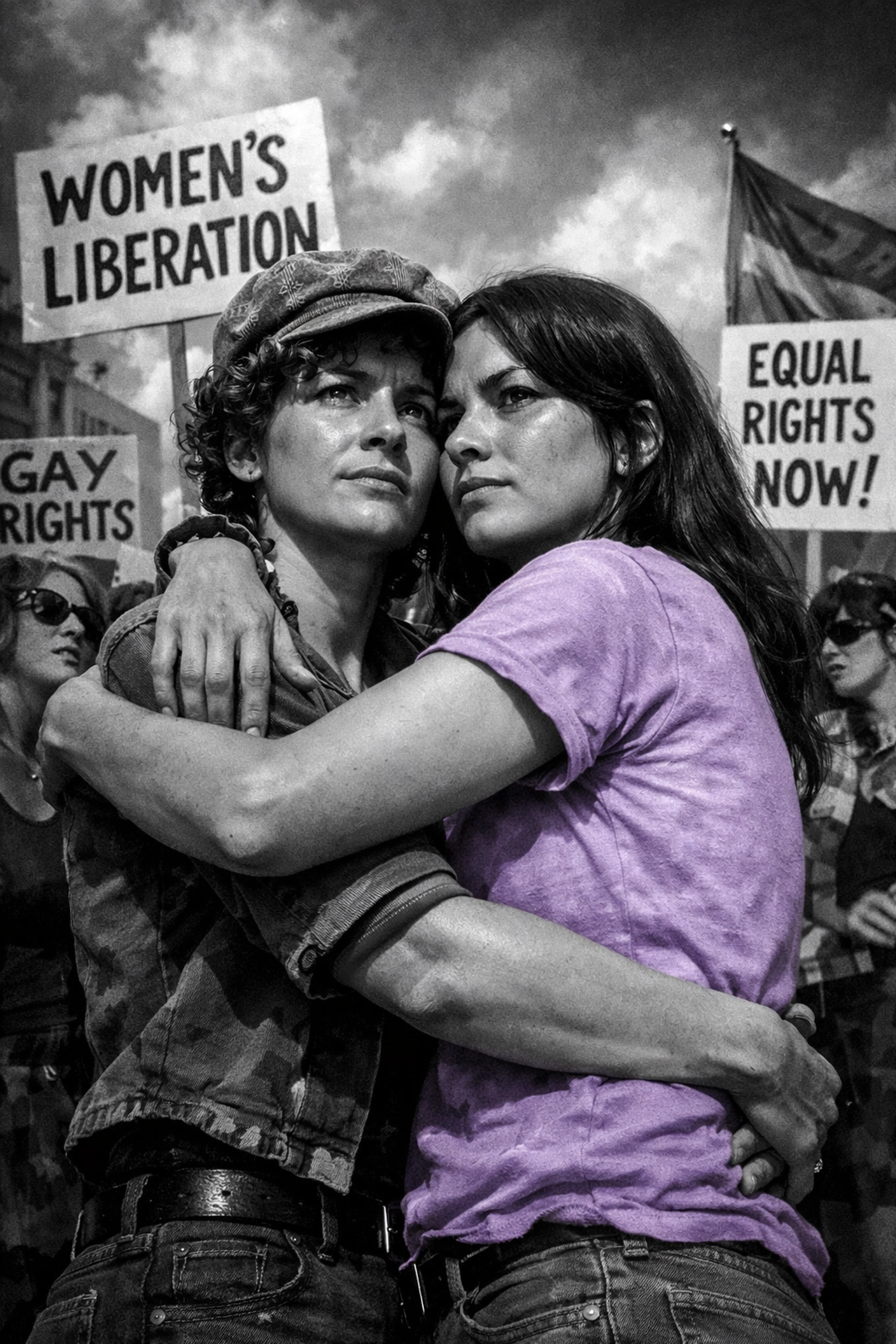
For lesbian feminists who'd been fighting for women's rights alongside their straight sisters, this was a gut punch. They were organizing, marching, writing, and advocating: but their identities were considered too controversial, too threatening, too much.
The Quiet Exclusion
By early 1970, the pattern was clear. Feminist conferences featured no openly lesbian speakers. Organizations actively discouraged lesbian participation. Women who were too vocal about their sexuality found themselves pushed to the margins or kicked out entirely. Rita Mae Brown, a talented writer and activist, was even purged from NOW's New York chapter.
The Second Congress to Unite Women, scheduled for May 1, 1970, was shaping up to be more of the same. The program? Zero lesbian representation. Zero acknowledgment of homophobia within the movement. Zero space for the women who'd been there from the beginning but were now being told to stay in the closet for the "greater good."
Some women decided they'd had enough.
Lights Out for Invisibility
The planning was meticulous. Karla Jay, Martha Shelley, Rita Mae Brown, and about seventeen other women prepared their response. They silk-screened t-shirts in lavender: reclaiming the color from Friedan's slur: emblazoned with "LAVENDER MENACE" across the front. They created signs declaring "Women's Liberation IS A Lesbian Plot" and "Take a Lesbian to Lunch."
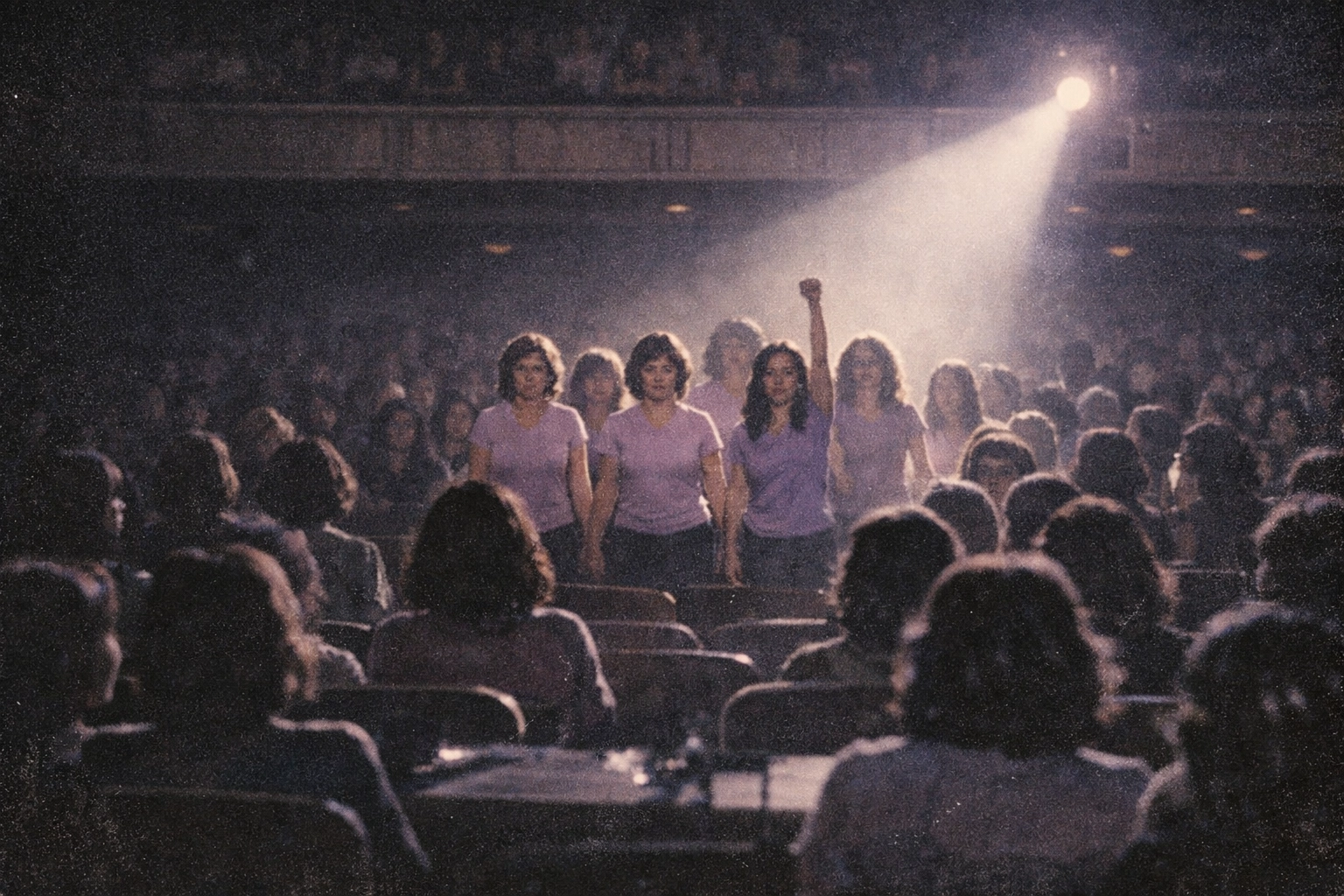
On the evening of the congress, they showed up wearing cover-up shirts, blending into the crowd of 300 attendees. When the opening speaker took the stage, members of the Gay Liberation Front (who were in on the plan) killed the lights and unplugged the microphone.
In the darkness, the Lavender Menace emerged. They ripped off their cover-up shirts, revealing their lavender declarations, and took over the stage. With the lights back on, they distributed copies of "The Woman-Identified Woman," a manifesto that articulated what it meant to center women: all women, including lesbians: in feminist politics.
Then they did something revolutionary: they talked. In an impromptu speak-out, they shared their stories, their pain, their anger at being erased from a movement they'd helped build. They demanded visibility. They demanded to be heard.
The Room Changed That Night
Here's what's remarkable: it worked. Instead of being thrown out or shouted down, the Lavender Menace were invited to lead workshops on lesbian rights and homophobia. Conversations that had been suppressed for years suddenly burst into the open. Women who'd never questioned the movement's heteronormativity started asking uncomfortable questions.
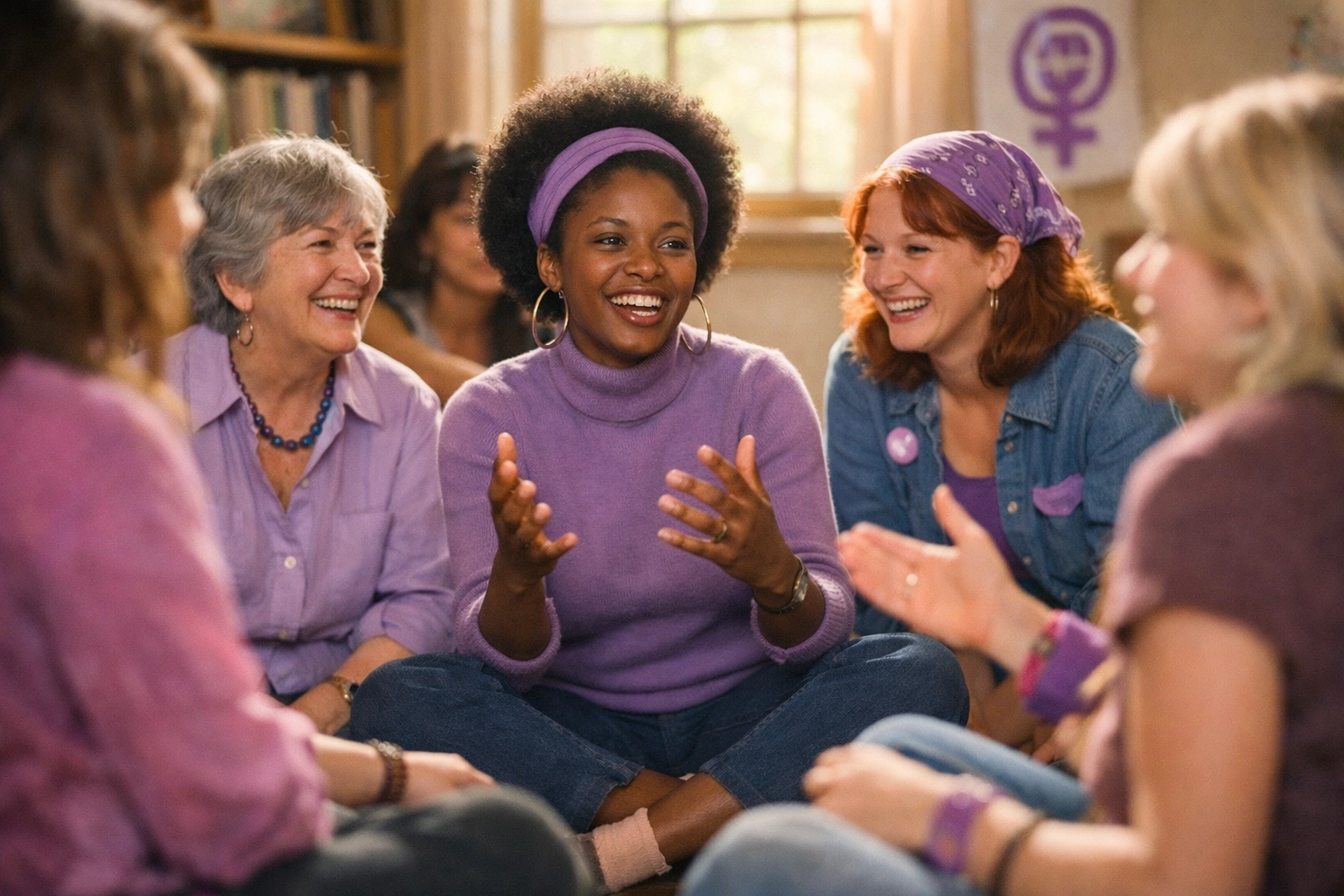
The protest became a catalyst. Throughout the rest of the congress, lesbian visibility and rights became a central topic. Women who'd been silent about their sexuality found courage to speak up. Straight feminists began to understand how they'd been complicit in the erasure.
By September 1971: just over a year later: NOW's national conference adopted a resolution recognizing lesbian rights as "a legitimate concern for feminism." The organization that had coined "Lavender Menace" as a slur now formally acknowledged that lesbian rights and women's rights were inseparable.
Beyond the Protest: A Movement Transformed
The Lavender Menace action did more than change feminist organizations: it changed how movements think about intersectionality before we even had that word. The protest proved that liberation can't be achieved by leaving some people behind or asking them to hide who they are.
The visibility fight inspired other marginalized groups within feminism: women of color, working-class women, trans women: to demand their own recognition and space. It connected the women's movement more directly with gay rights organizing, breaking down the artificial walls between liberation struggles.
For LGBTQ+ literature and storytelling: the kind of authentic, diverse narratives you'll find when you Read with Pride: this history matters. The gay romance novels, MM romance books, and queer fiction we celebrate today exist because people fought for visibility. Every gay love story, every MM contemporary romance, every piece of LGBTQ+ fiction carries forward that legacy of refusing to stay hidden.
The Power of Reclamation
What makes the Lavender Menace story so resonant is the act of reclamation itself. Betty Friedan weaponized "lavender" as an insult, trying to create fear and shame around lesbian identity. The protesters grabbed that slur, dyed it onto t-shirts, and wore it with pride.
Sound familiar? It's the same spirit that turned "queer" from a slur into a powerful identity. The same energy that makes Pride celebrations so defiant and joyful. The same refusal to let others define us that runs through the best gay fiction and MM romance: stories where LGBTQ+ characters aren't tragic or apologetic, but complex, proud, and fully human.
Karla Jay later reflected that the Lavender Menace action was "the single most important action organized by lesbians who wanted the women's movement to acknowledge our presence and needs." She noted it "completely reshaped the relationship of lesbians to feminism for years to come."
Why This History Still Matters
In 2026, as we continue exploring New York's rich LGBTQ+ history, the Lavender Menace reminds us that visibility is never given: it's demanded. Progress isn't linear, and inclusion doesn't happen automatically. Every generation has to fight for it again.
When you're reading gay romance novels or discovering new MM fiction, you're participating in that visibility. Every queer book published, every gay author celebrated, every reader who openly embraces LGBTQ+ literature is saying: we're here, we matter, and we're not going anywhere.
That's what the Lavender Menace understood in 1970, and what we're still asserting today through stories, community, and pride. They fought for the right to be seen. We honor that fight every time we read, share, and celebrate authentic queer narratives.
Want to explore more LGBTQ+ stories and history? Follow us on Facebook, Instagram, and X for daily recommendations, historical deep dives, and the best in gay romance books and MM romance novels.
#LavenderMenace #LGBTQHistory #QueerHistory #LesbianVisibility #NewYorkGayHistory #MMRomance #GayRomanceBooks #QueerFiction #ReadWithPride #LGBTQBooks #GayLiterature #PrideHistory #FeministHistory #GayRights #LGBTQCommunity #QueerActivism #GayFiction #MMRomanceBooks #LGBTQReading #GayNovels

Leave a Reply
You must be logged in to post a comment.