

readwithpride.com
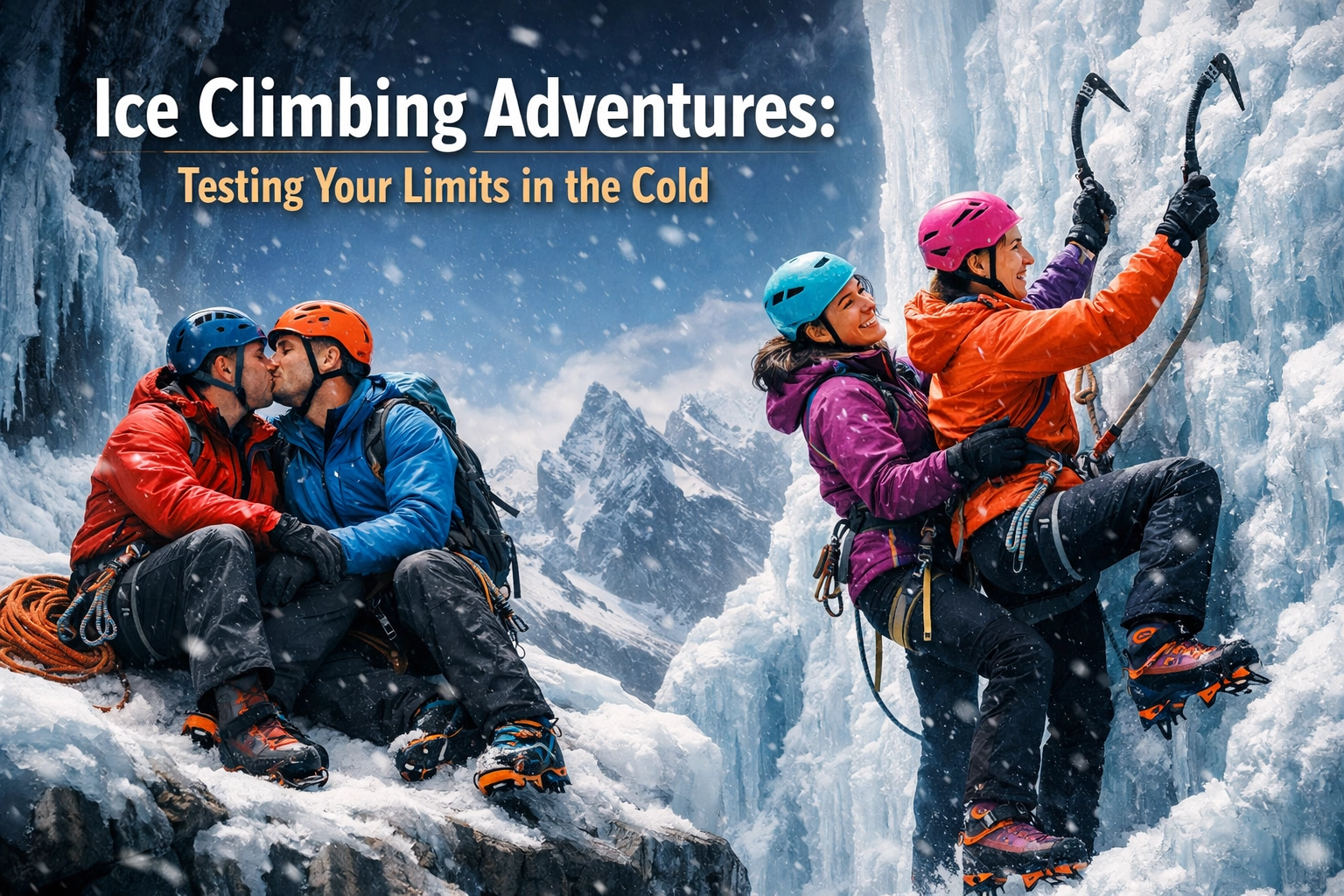
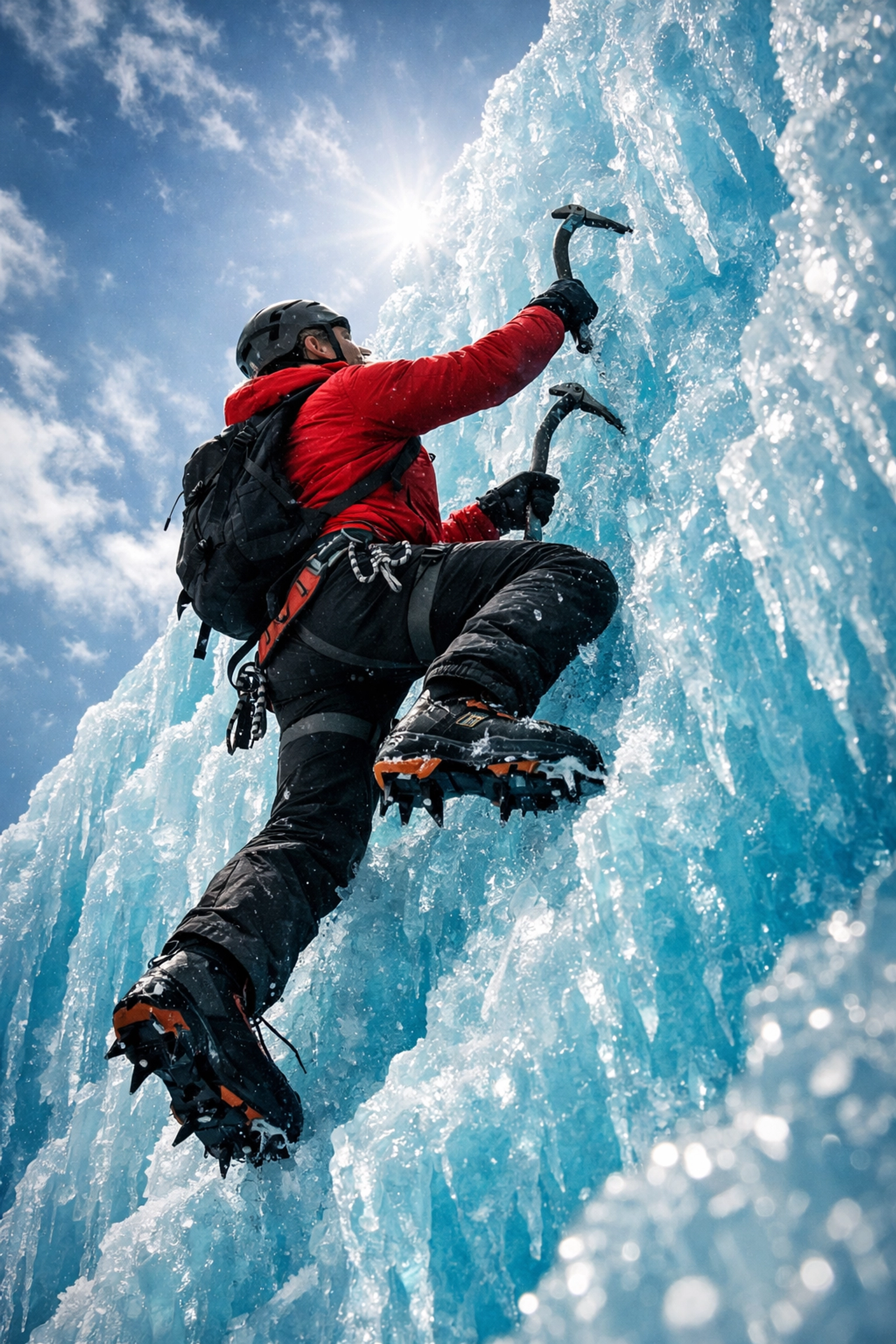
There's something undeniably badass about strapping metal spikes to your boots, grabbing a pair of ice axes, and scaling a frozen waterfall. Ice climbing isn't for everyone, and honestly, that's part of the appeal. It's raw, it's intense, and it demands everything you've got: physical strength, mental focus, and the kind of determination that makes you dig deep when your forearms are screaming and the wind is howling.
For the adventurous gay man looking to push boundaries and test limits, ice climbing offers an experience unlike anything else. It's not just about conquering the cold, it's about discovering what you're truly capable of when nature throws everything it has at you.
Why Ice Climbing Hits Different
Let's be real: most of us spend our winters curled up indoors with hot cocoa and Netflix. But there's a growing crew of LGBTQ+ adventurers who head in the opposite direction, seeking out the harshest conditions winter can offer. Ice climbing isn't just another winter sport, it's a full-body, full-mind commitment that strips away all the noise and leaves you face-to-face with pure challenge.
Unlike rock climbing where the holds are predetermined, ice climbing puts you in control. You create your own holds with each swing of your axe. You decide where to place your crampon points. Every move is a calculation, every placement a commitment. There's no guidebook showing you exactly where to grab, just you, the ice, and your instincts.
The mental game is just as intense as the physical one. When you're halfway up a frozen waterfall and your arms are pumped, that voice in your head starts getting loud. This is where ice climbing becomes meditation in motion. You learn to quiet the doubt, focus on technique, and trust your training. It's therapy with axes.
Gear That Makes It Possible
Let's talk equipment, because you can't fake it out here. Ice climbing gear is specialized, technical, and absolutely essential for survival. Here's what you need to know:
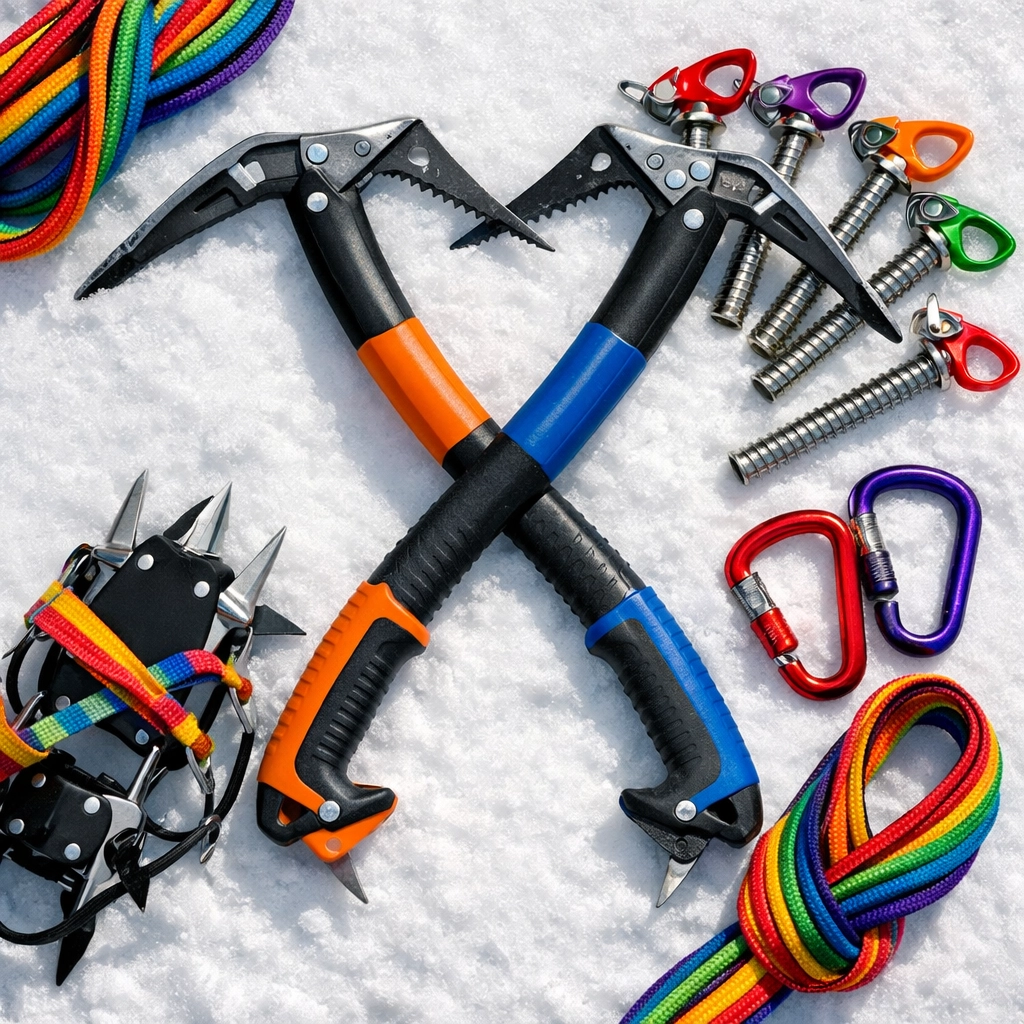
Crampons are the foundation of everything. These metal spikes attach to your boots and dig into the ice with each step. Modern crampons typically have twelve points, ten around the sides and two aggressive front points for vertical sections. The difference between good crampons and mediocre ones is literally the difference between confidence and terror on steep ice.
Ice axes (or ice tools) are your lifeline. Forget the image of a basic mountaineering axe, ice climbing tools are curved, aggressive, and designed for precision strikes. You'll carry two, and they become extensions of your arms. The key is in the wrist action, think of throwing darts, not swinging a hammer. Keep your grip relaxed between your first and second knuckles rather than death-gripping the handle. Your forearms will thank you.
Ice screws provide protection as you climb. These specialized pieces have sharp teeth that bite into ice as you twist them clockwise. Proper placement is crucial, too much force actually weakens them. You thread them in until the hanger contacts the ice surface, creating an anchor point that could save your life if you fall.
Beyond the essentials, you'll need a climbing harness, helmet, rope, carabiners, and proper layering. The clothing game is critical, too much and you'll overheat on the approach, too little and you'll freeze while belaying. Think moisture-wicking base layers, insulating mid-layers, and a windproof shell.
The Learning Curve
Here's the good news: you don't need rock climbing experience to start ice climbing. In fact, rock climbers often need to unlearn certain habits. Ice climbing requires staying square to the wall rather than turning sideways, and the movement patterns are distinctly different.
The basic footwork techniques form your foundation. On lower-angle ice (up to about 40 degrees), you'll use French technique, keeping all crampon points except the front ones in contact with the ice. It's efficient and reduces calf strain. As the angle steepens beyond 45 degrees, you transition to German technique, driving those front two or four points straight into the ice. There's also a hybrid approach called the "3 o'clock position" that mixes both methods, one foot flat, one foot front-pointing, which saves energy on moderate terrain.
The fundamental movement pattern follows what climbers call the "triangle of power." Keep your feet wide and level, drive your hips into the wall, lean your shoulders back, then place a tool high before moving your feet up beneath it. This creates stability and efficiency, conserving the arm strength you'll desperately need later in the climb.
Practice at ground level is non-negotiable. Before attempting any climb, spend serious time drilling footwork and tool swings on flat ground or a practice wall. The movements need to become automatic because when you're twenty meters up and pumped, you won't have mental bandwidth for conscious technique.
The Grading System
Ice climbing uses the WI (Water Ice) grading system to communicate difficulty. WI1 is basically a snow slope requiring one tool and basic footwork. WI2 introduces rolling terrain with bulges and requires two tools and some front-pointing. WI3 brings moderately steep ice with good rest spots and solid screw placements, this is where most beginners start feeling the real challenge. WI4 means sustained near-vertical or steeper climbing with fewer rest opportunities.
The grades continue beyond that, but let's be honest, if you're reading this as an introduction to the sport, WI4 is already aspirational territory. Focus on building solid fundamentals before chasing grades.
Finding Your Tribe
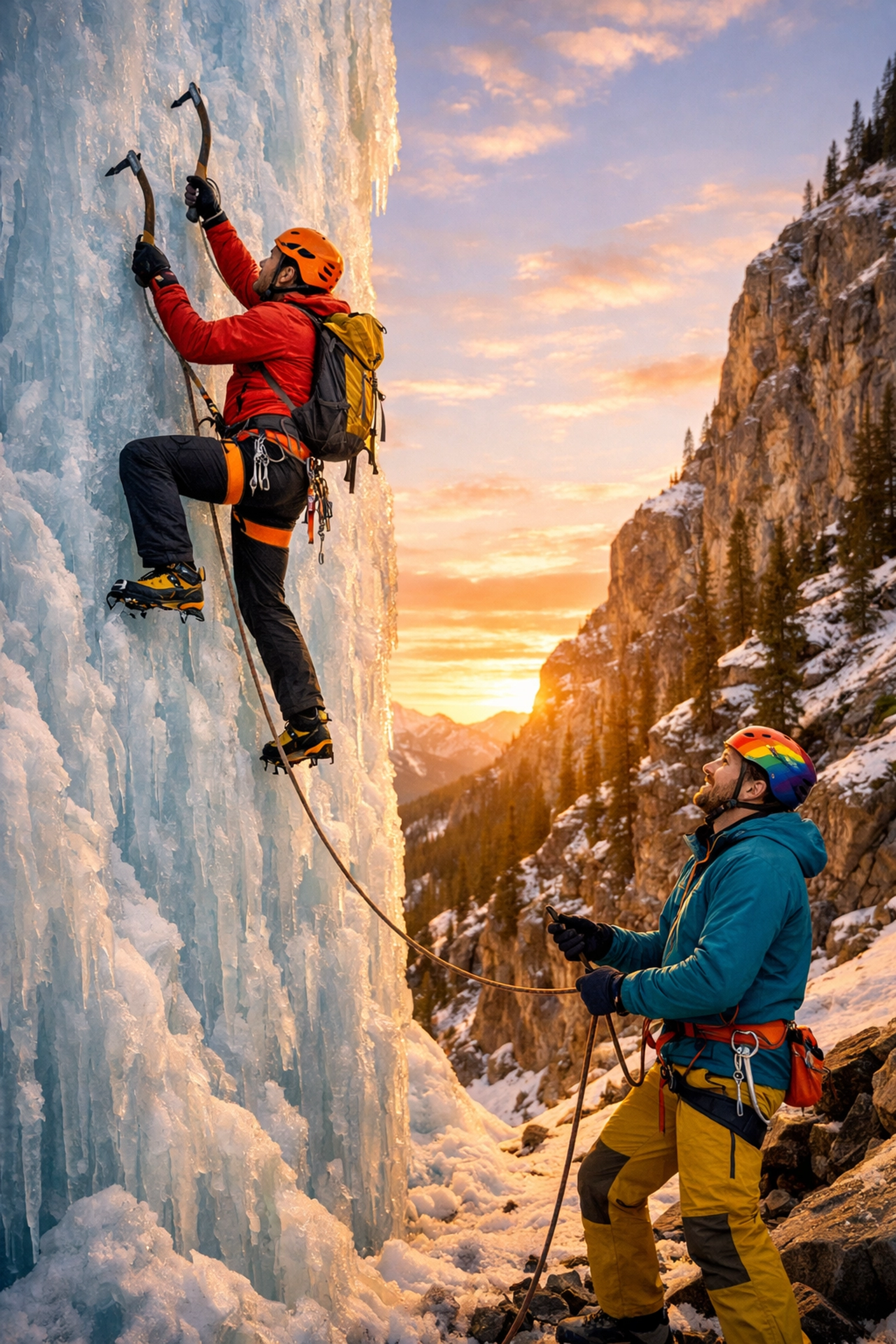
One of the unexpected joys of ice climbing is the community. The sport attracts people who are willing to embrace discomfort for the sake of adventure, and there's a camaraderie that forms naturally when you're sharing intense experiences in harsh conditions. The LGBTQ+ climbing community is vibrant and growing, with organizations and informal groups creating welcoming spaces across major climbing destinations.
Popular ice climbing hubs like Ouray, Colorado, and the Canadian Rockies host festivals and climbing events throughout the winter season. These gatherings are perfect opportunities to meet other climbers, learn from experienced guides, and discover that yes, there are plenty of other queer folks who think spending a Saturday dangling from frozen waterfalls sounds like a great time.
Safety First, Always
Ice climbing carries inherent risks. The ice itself is dynamic: it melts, shifts, and can break unexpectedly. Weather conditions matter enormously. Temperatures need to be consistently cold for quality ice formation, and sudden warming can make routes dangerous or impossible.
Never climb alone as a beginner. Hire certified guides for your first experiences. They'll teach proper technique, manage the risks, and ensure you're set up for success rather than disaster. As you gain experience, climb with partners you trust and always prioritize communication and safety protocols.
Understand avalanche awareness basics if you're climbing in mountainous terrain. Check conditions reports. Know your limits and respect them: ego has no place on the ice.
The Transformation
What keeps people coming back to ice climbing isn't just the adrenaline rush, though that's definitely part of it. It's the transformation that happens when you push through fear and discomfort to accomplish something extraordinary. There's a clarity that comes from moving through vertical ice, where nothing matters except the next placement, the next breath, the next move.
For many in the LGBTQ+ community, we're no strangers to facing challenges and pushing through resistance. Ice climbing becomes a physical manifestation of that resilience: proof that we're capable of far more than we sometimes give ourselves credit for. Every route completed is a reminder that limits are often self-imposed, and breaking through them is always possible with the right preparation and determination.
Ready to explore more adventures and stories that celebrate our community? Check out Read With Pride for MM romance books, gay fiction, and LGBTQ+ literature that pushes boundaries in its own way. Whether you're scaling frozen waterfalls or diving into a compelling love story, it's all about embracing what makes you come alive.
Follow us for more LGBTQ+ content and adventure inspiration:
Facebook | Instagram | Twitter/X
#IceClimbing #LGBTQAdventure #GayTravel #WinterSports #ReadWithPride #QueerAthletes #AdventureTravel #ExtremeSports #GayOutdoors #LGBTQFitness #MMRomance #GayBooks #QueerCommunity #IceClimbingAdventure #GayMen #OutdoorAdventure #WinterActivities

Leave a Reply
You must be logged in to post a comment.