

readwithpride.com
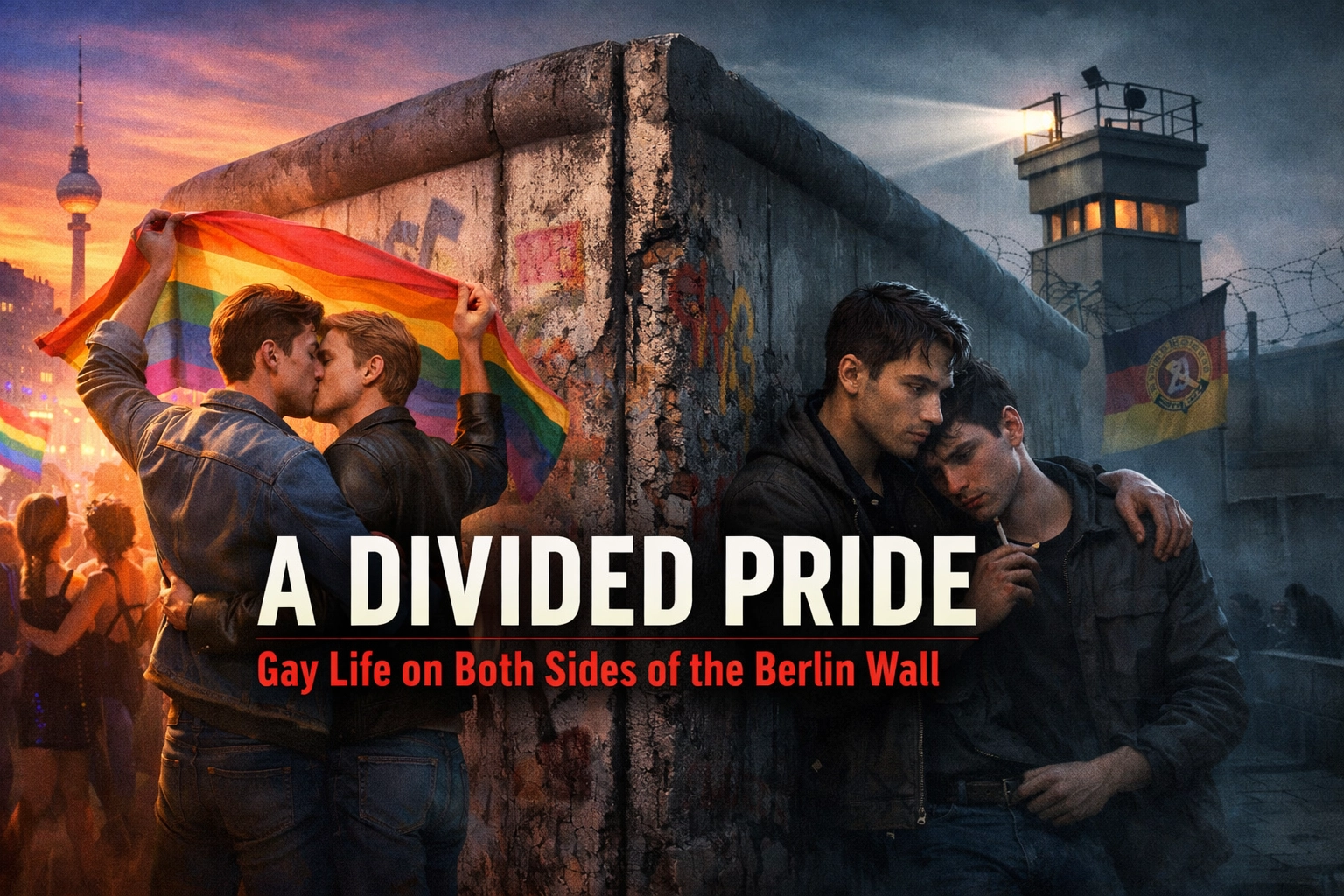
When most people think about Cold War Berlin, they picture espionage, checkpoint confrontations, and political drama. But for queer folks living in the divided city, the wall represented something far more personal: two radically different realities for gay men and lesbians separated by concrete and barbed wire. What makes this story particularly fascinating is how the "free" West and the communist East flipped the script on expectations, with East Germany eventually becoming the more progressive side.
West Berlin: Freedom's Paradox
The irony wasn't lost on anyone. West Berlin positioned itself as a beacon of freedom and democracy, yet gay men lived under constant threat from laws inherited from the Nazi regime. Paragraph 175, the infamous sodomy law that criminalized homosexual acts, wasn't just kept on the books: it was enthusiastically enforced.
In 1957, the West German Constitutional Court doubled down on this repression, re-confirming Paragraph 175 as constitutional. This wasn't some dusty law gathering cobwebs in legal archives. Between 1949 and 1969, West German authorities prosecuted more than 100,000 gay men, securing convictions against over 50,000 of them. Those numbers represent real lives destroyed, careers ended, families torn apart.
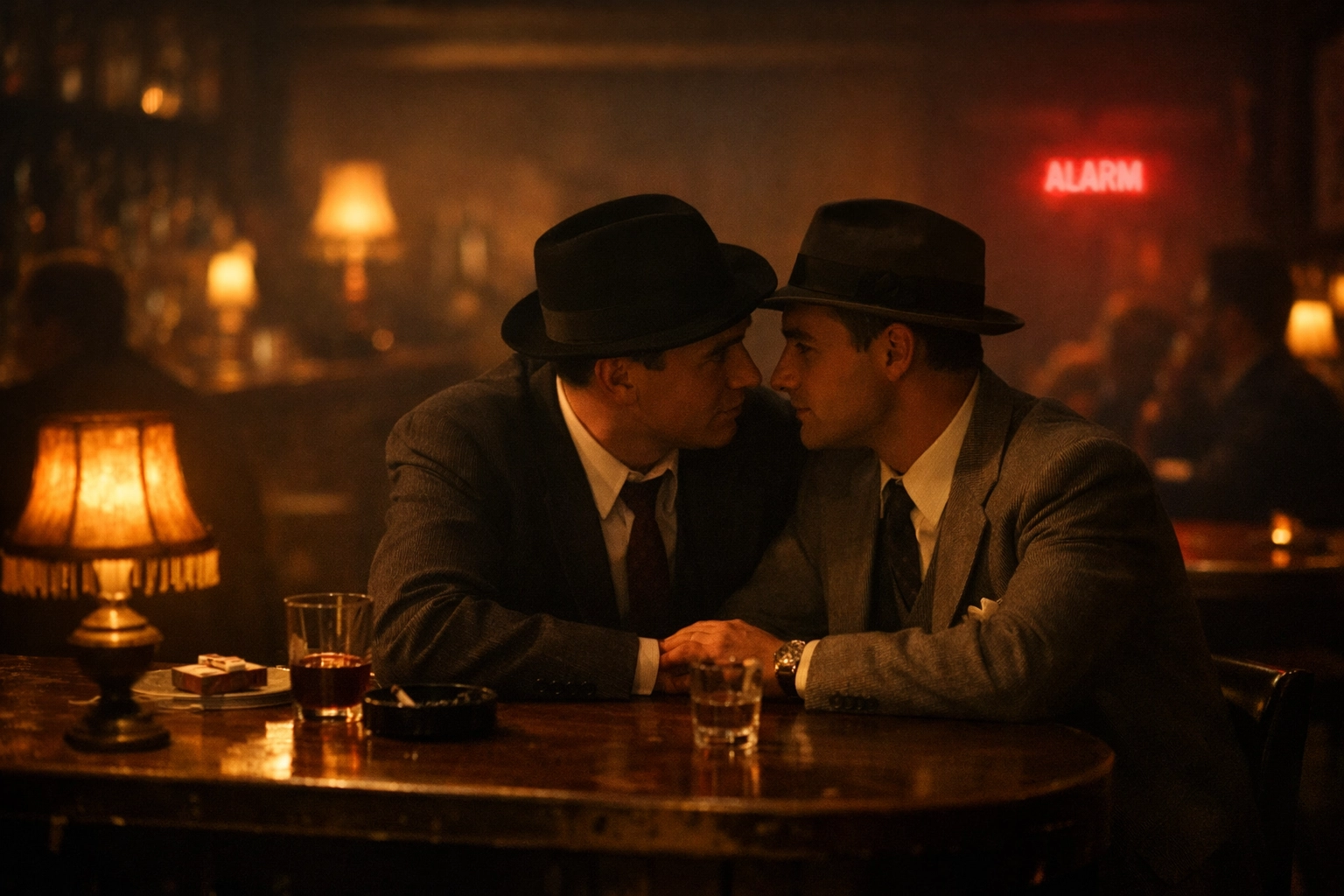
The gay bar scene in West Berlin during the 1950s and 60s operated like a resistance movement. Owners installed warning bells and flashing lights to alert patrons when police were approaching. Some establishments used misleading signage to confuse authorities. In 1959, police estimated they raided gay bars two to three times per month. Imagine trying to find community and connection while constantly looking over your shoulder, ready to bolt at a moment's notice.
Yet West Berlin's queer community refused to be stamped out. By the late 1960s, something began to shift. The city started developing what historians describe as "a liberal and open environment." The sexual revolution, student movements, and changing social attitudes created space for a more visible gay culture to emerge. By the 1980s, West Berlin had established a thriving, commercialized gay scene with bars, clubs, and businesses catering specifically to LGBTQ+ clientele.
East Berlin: The Unexpected Ally
Life for queer people in East Berlin started out just as bleak, if not worse. There were no gay bars, no visible community, no safe spaces. Gay men cruised in parks, train stations, public toilets, and bathhouses: dangerous locations where they were vulnerable to assault and robbery. Lesbians had it even harder, with virtually no infrastructure for meeting others at all.
The Stasi, East Germany's notorious secret police, viewed homosexuality through a Cold War lens. They believed gay men were security risks, potentially vulnerable to recruitment by Western intelligence agencies. This paranoia meant surveillance, intimidation, and isolation for those suspected of being gay.
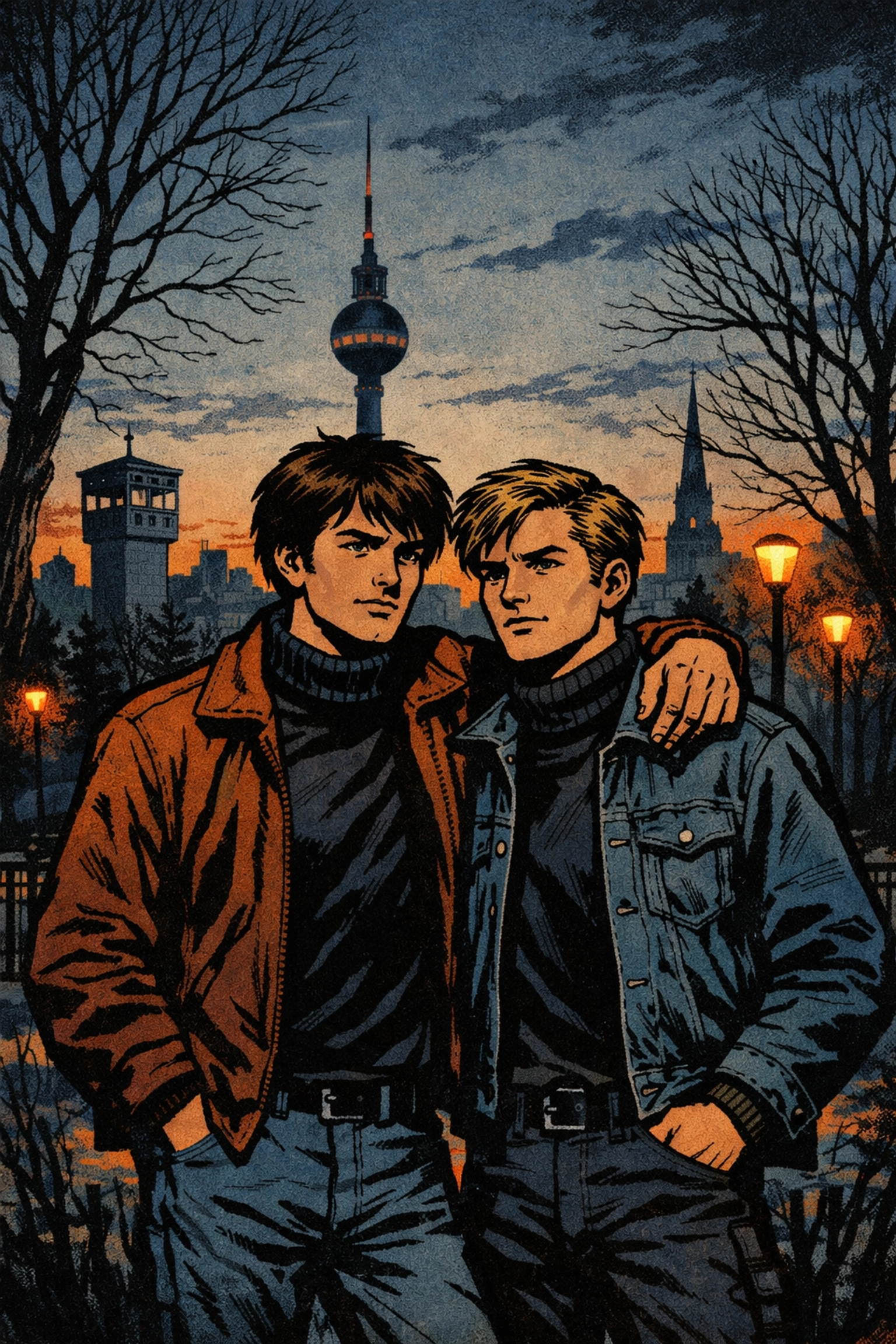
But something remarkable began happening in the 1970s. Young activists like Frank Rausch and Dirk Eggert started organizing, eventually forming the Homosexual Interest Group Berlin (HIB). They began pushing for visibility and rights within a system that seemed fundamentally opposed to both. And somehow, against all odds, they started making progress.
The turning point came in the mid-1980s when the East German government's calculus suddenly shifted. From 1985 until the Berlin Wall fell in 1989, East Germany implemented policy changes that were genuinely radical. Gay people gained the right to serve in the military. The state authorized gay discos like Die Busche. State-controlled media began publishing stories about gay life. Periodicals started accepting personal advertisements from gay men and lesbians.
Most remarkably, the government officially recognized gay groups like the Sunday Club and mandated that all members of the Free German Youth (FDJ): the state youth organization: attend educational sessions about homosexuality. Overnight, gay activism went from underground resistance to mainstream acceptance.
The Wall That Divided and United
The construction of the Berlin Wall in 1961 fundamentally transformed queer life in the city. For those who had been crossing between East and West to access bars, cruising spots, or social networks, the wall represented what historian Andrea Rottmann calls "queer death": a sudden severance from community and connection.
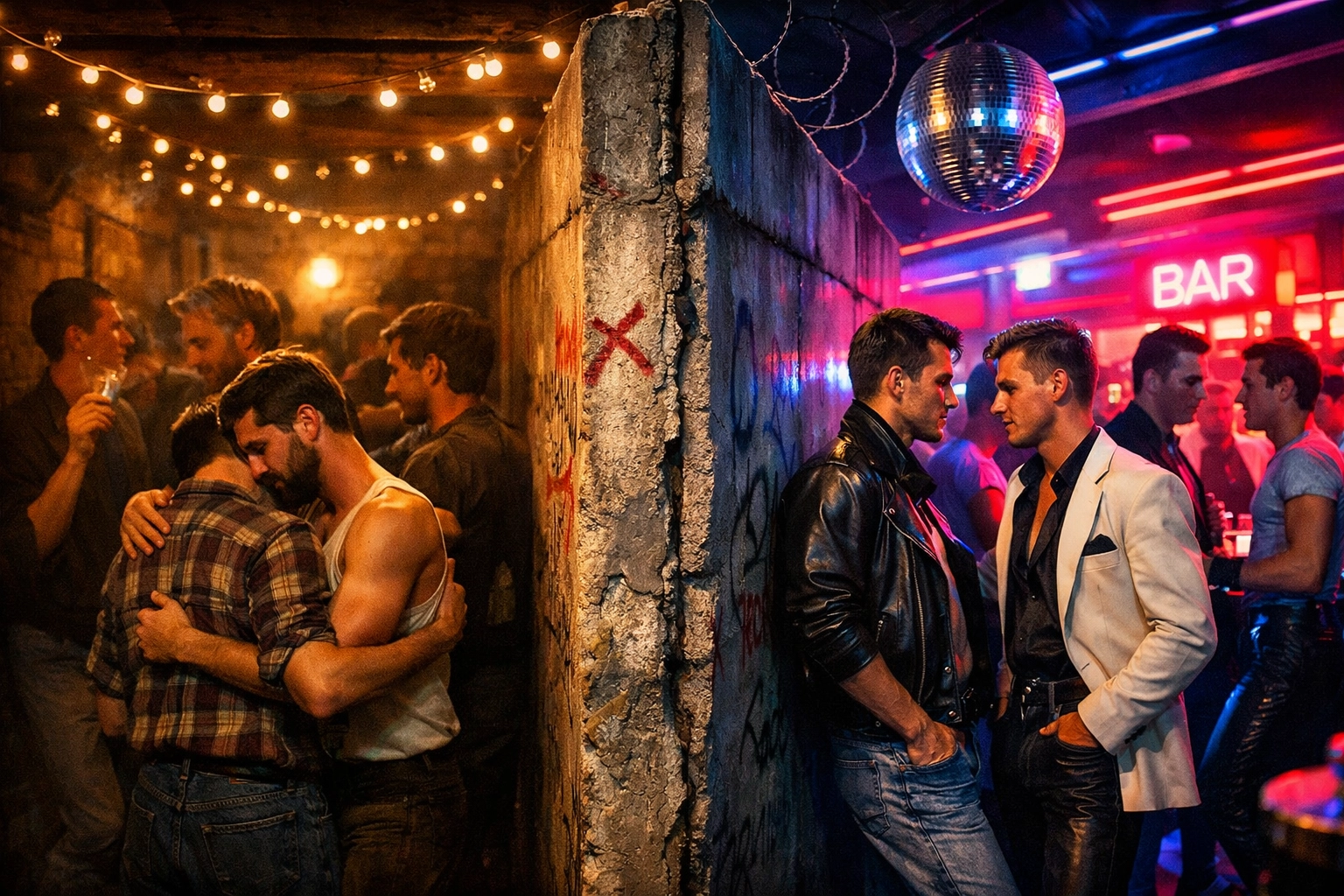
But walls have a funny way of creating unexpected consequences. Cut off from West Berlin, East Berlin's queer community had to build something from scratch. Gay and lesbian bars began appearing along the Friedrichstraße. Private social networks developed and strengthened. Without the ability to cross over, people invested in creating community where they were.
By the 1980s, some gay men actively preferred East Berlin's scene to what they found in the West. They described the East as "warmer and more friendly," contrasting it with West Berlin's increasingly commercialized gay culture. While West Berlin had more bars, clubs, and visible infrastructure, East Berlin had built something that felt more intimate, more authentic, more community-oriented.
This isn't to romanticize life in East Germany: surveillance, political repression, and limited freedoms were very real. But for some queer Berliners, the East's gay community offered something that money couldn't buy in the West: genuine connection and solidarity born from shared struggle.
Legacy and Lessons
The story of divided Berlin challenges our assumptions about freedom, progress, and LGBTQ+ rights. The capitalist West, with all its proclaimed liberties, spent decades actively prosecuting gay men while the communist East eventually embraced policies that were ahead of their time. Neither side was perfect, but both demonstrated that queer communities find ways to survive and even thrive under the most challenging circumstances.
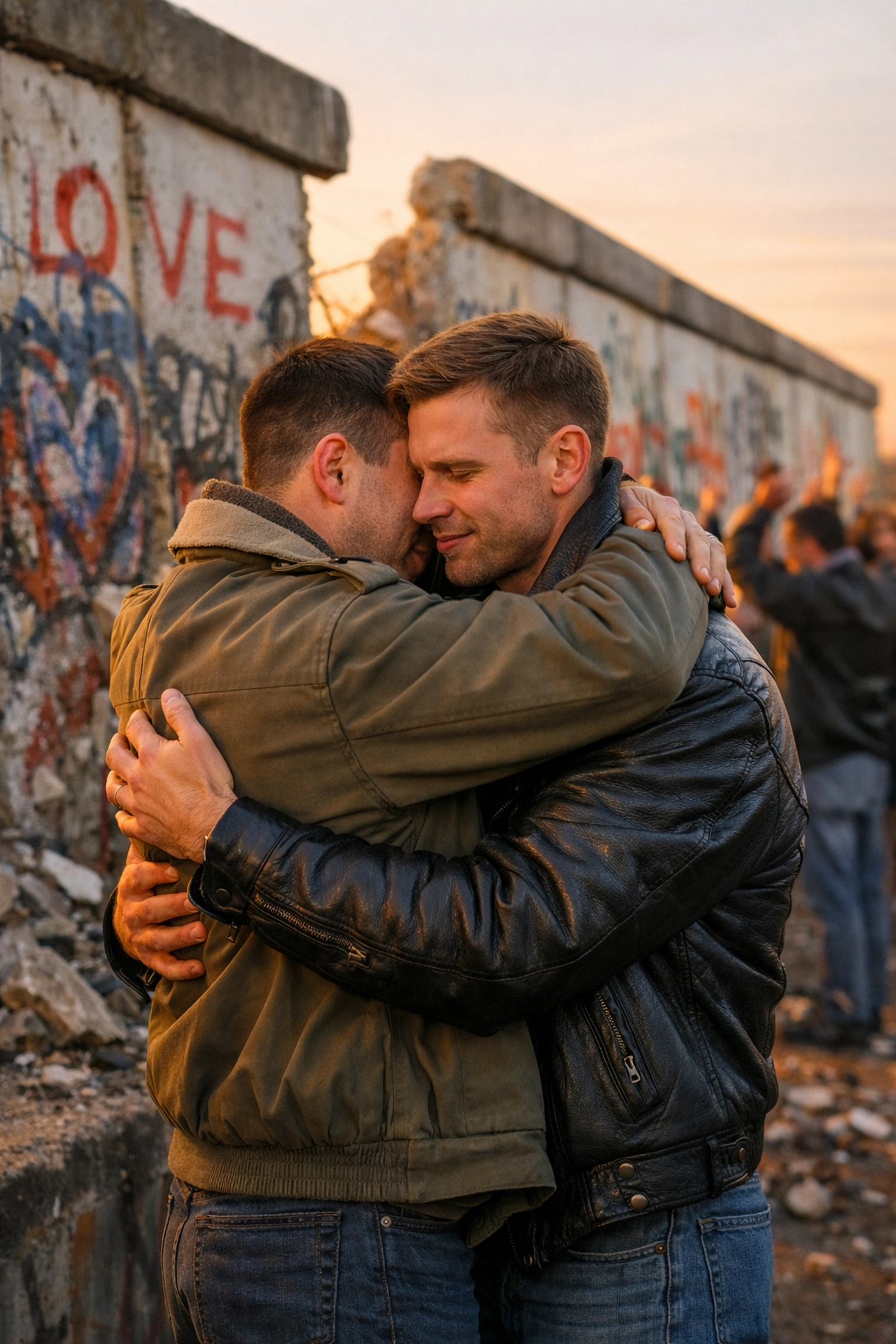
When the wall finally fell in 1989, these two distinct queer cultures suddenly had to merge. The commercialized, established West Berlin scene met the intimate, activist-oriented East Berlin community. The collision wasn't always smooth, but it created a unified Berlin that would go on to become one of Europe's most LGBTQ+-friendly cities.
For readers interested in exploring more LGBTQ+ historical narratives and contemporary gay fiction, Read with Pride offers a curated collection of MM romance books and gay literature that celebrates our diverse stories across time and place.
The divided city reminds us that progress isn't linear and freedom isn't simple. Sometimes the most unexpected places become sanctuaries. Sometimes the most repressive systems crack open to reveal possibilities. And always, always, queer communities find each other, build networks, and create spaces of belonging: even when there's a wall in the way.
Discover more compelling LGBTQ+ stories and gay romance novels at readwithpride.com
Connect with us:
- Facebook: Read With Pride
- Twitter: @Read_With_Pride
- Instagram: @read.withpride
#ReadWithPride #LGBTQHistory #GayBerlin #BerlinWall #QueerHistory #GayRomanceBooks #MMRomance #LGBTQFiction #QueerLiterature #GayBooks #HistoricalLGBTQ #GayGermany #ColdWarHistory #PrideHistory #LGBTQCommunity #GayRights #QueerStories #MMRomanceBooks #GayLiterature #2026GayBooks

Leave a Reply
You must be logged in to post a comment.