

readwithpride.com
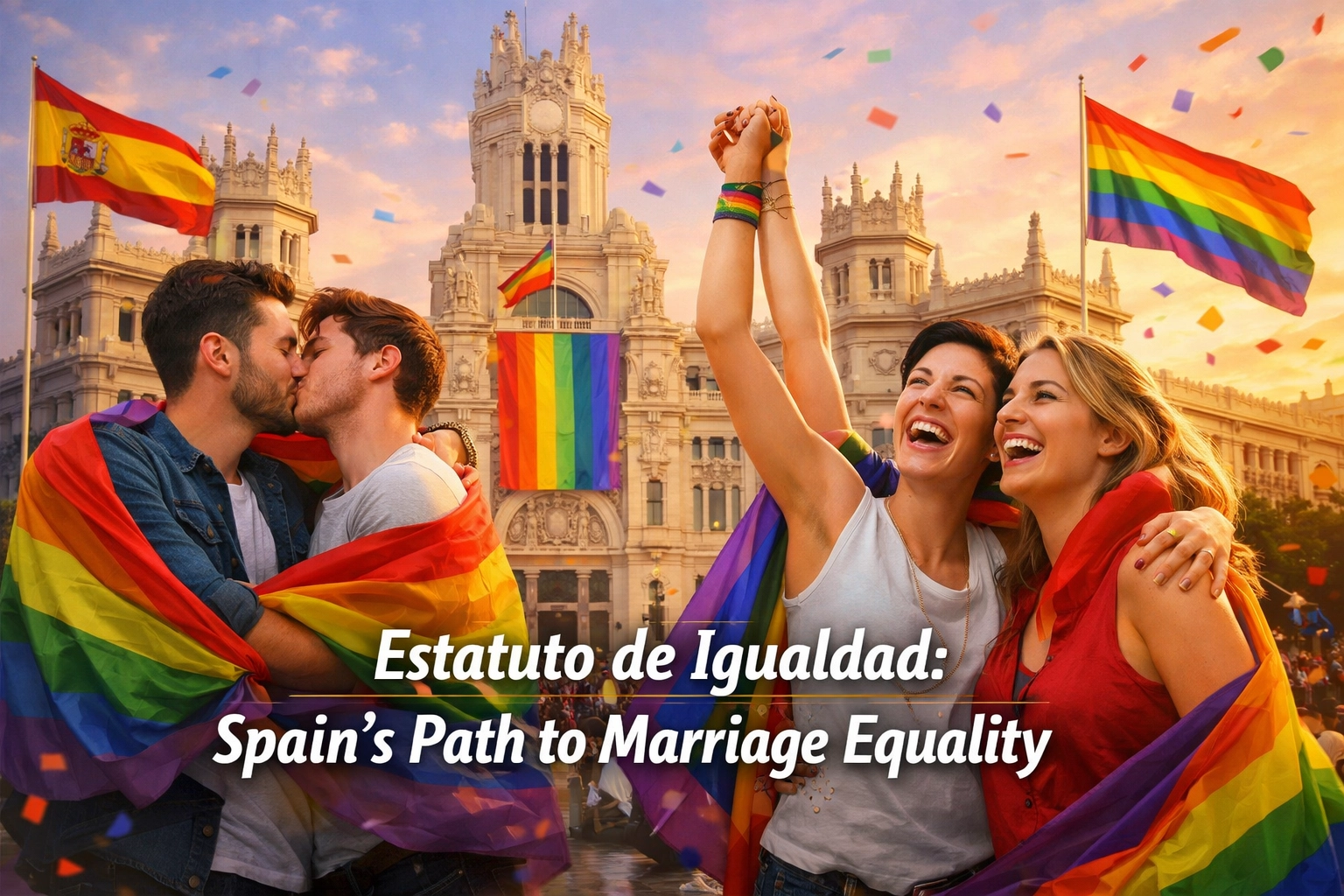
On June 30, 2005, Spain did something that shocked the world: and honestly, probably shocked itself. The country that had spent decades under Franco's authoritarian rule, where being gay could land you in prison, became the third country on Earth to legalize same-sex marriage. Not through a quiet administrative change or a court ruling, but through a full-throated vote by elected representatives who said, loud and clear: love is love.
Spain didn't just legalize marriage equality. It became the first predominantly Catholic country to do so, sending shockwaves through the Vatican and inspiring LGBTQ+ movements across the globe. This wasn't a small step: it was a giant leap that proved even the most traditional societies could embrace progress.
So how did Spain go from criminalizing homosexuality to celebrating gay weddings in just over two decades? Let's dive into this incredible journey.
From Franco's Shadow to Freedom
To understand Spain's marriage equality triumph, we need to rewind to 1975. That's when Generalísimo Francisco Franco: a dictator who'd ruled Spain with an iron fist for nearly 40 years: finally died. Under Franco's regime, being gay wasn't just frowned upon; it was literally illegal. LGBTQ+ people faced persecution, arrest, and horrific "treatments" designed to "cure" them.
But Franco's death cracked open a door to possibility. Spain entered what historians call the Transición: the transition to democracy. And once that door opened, it swung wide. Within three years, Spain adopted a new Constitution in 1978 that declared all Spaniards equal "without any regard or discrimination for birthplace, race, sex, religion, opinion or any other condition or circumstance personal or social."
That language mattered. Those words became the foundation for every equality fight that followed.
By 1979, Spain decriminalized homosexuality. Throughout the 1980s, the country legalized divorce, abortion, and contraception, basically speedrunning through decades of social change that other countries had taken generations to achieve. In 1988, Spain repealed the last laws specifically targeting gay people. The transformation was breathtaking.
Building Blocks: Regional Rights and Growing Momentum
Spain doesn't do things halfway. Before the country even considered nationwide marriage equality, individual cities and regions started creating their own partnership registries. In 1994, the city of Vitoria became the first to recognize same-sex domestic partnerships. Four years later, Catalonia became the first autonomous region to establish parejas de hecho: domestic partnerships that gave same-sex couples some legal recognition.
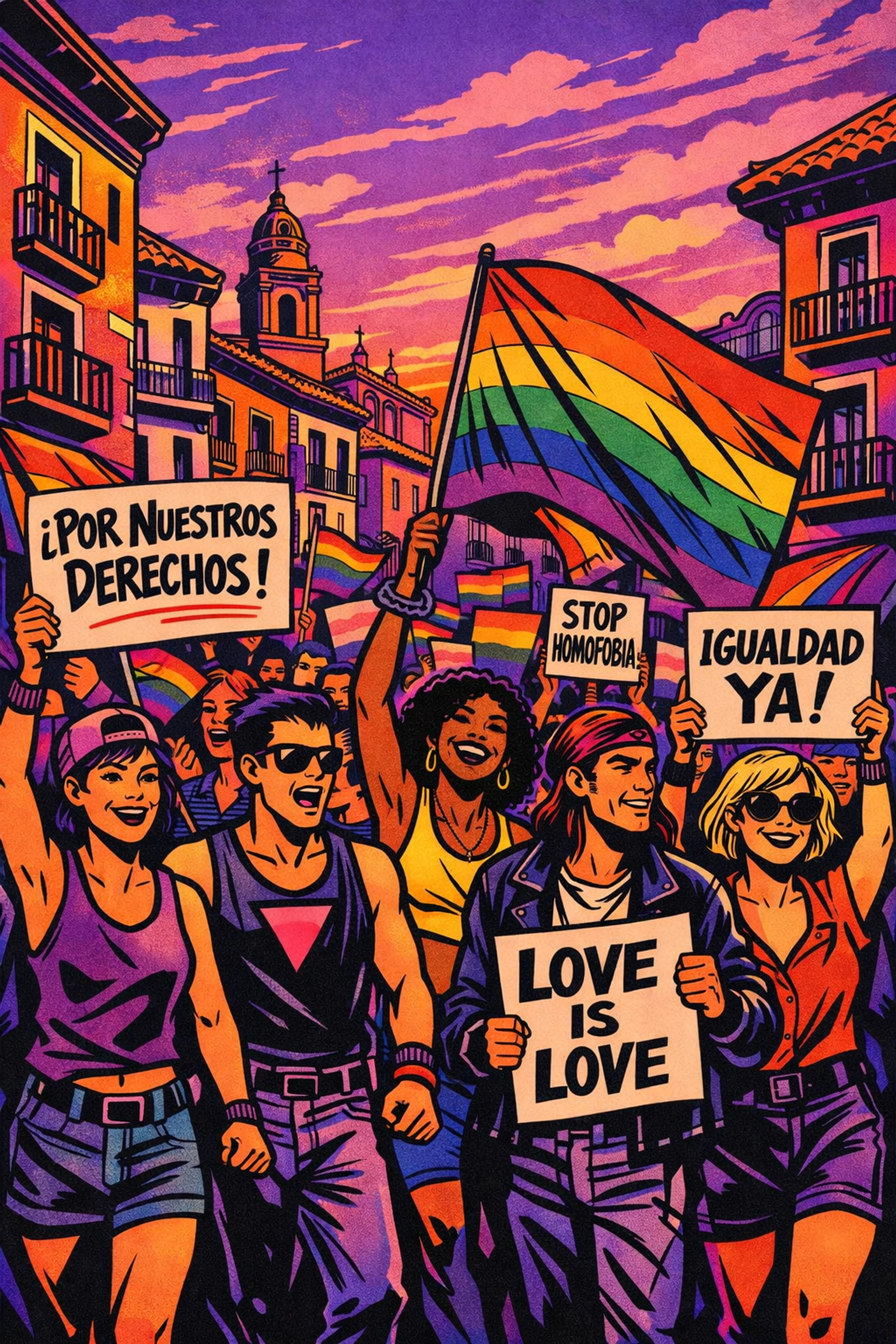
By 2005, twelve of Spain's nineteen regions had created their own partnership registries. These weren't marriage: couples didn't get all the same rights, and the protections varied wildly from place to place: but they represented something crucial: visible, official acknowledgment that LGBTQ+ relationships existed and mattered.
This patchwork of regional rights did something important. It normalized the idea of legal recognition for same-sex couples. When the time came to push for full marriage equality, advocates could point to years of regional partnerships and say: "Look, the sky hasn't fallen. In fact, things are working just fine."
The Advocates Who Made It Happen
Behind every major civil rights victory, there are tireless advocates who refuse to give up. In Spain, that force was the Federación Estatal de Lesbianas, Gays, Transexuales y Bisexuales (FELGT): try saying that three times fast.
Formed in the late 1990s, FELGT brought together regional LGBTQ+ organizations across Spain, pooling resources and coordinating strategy. Instead of dozens of small groups working in isolation, suddenly there was one unified voice demanding equality. They organized protests, lobbied politicians, shared personal stories, and kept marriage equality in the public conversation.
Their timing was perfect. In 2004, the Socialist Workers' Party (PSOE) campaigned for election with a bold promise: if elected, they'd legalize same-sex marriage. Not civil unions. Not partnerships. Full marriage equality, with every single right that straight couples enjoyed.
And then, miraculously, they won.
July 2005: The Day Everything Changed
Prime Minister José Luis Rodríguez Zapatero didn't waste time. His government introduced a bill to amend the Spanish Civil Code, changing the definition of marriage from "between a man and a woman" to "between two persons." Simple. Elegant. Revolutionary.
The debate was fierce. The Catholic Church mobilized opposition, organizing massive protests in Madrid. Conservative politicians warned of moral decay and the destruction of traditional families. But PSOE held firm, and so did their allies.
On June 30, 2005, the Congress of Deputies voted. The amendment passed. Just like that, Spain became the third country in the world: after the Netherlands and Belgium: to legalize same-sex marriage nationwide. The new law, Civil Code 13/2005, granted same-sex couples every right that heterosexual married couples enjoyed: adoption, inheritance, pension benefits, hospital visitation, tax status: everything.
No asterisks. No caveats. Full equality.
Why Spain's Victory Mattered So Much
Spain's achievement sent ripples around the world for several reasons. First, the speed. Spain had gone from dictatorship to marriage equality in thirty years. Countries that had been democracies for centuries still hadn't managed it.
Second, Spain was (and is) a predominantly Catholic country. The Vatican had lobbied hard against the law, and the Church's influence in Spanish society was significant. When Spain passed marriage equality anyway, it proved that even deeply religious societies could embrace LGBTQ+ rights. If it could happen in Spain, it could happen anywhere.
Third, Spain didn't half-ass it. This wasn't "separate but equal" civil unions or partnerships with limited rights. This was full marriage equality from day one, including adoption rights. Spain set a gold standard that other countries would measure themselves against.
The Legacy Lives On
Nearly twenty-one years later, Spain remains one of the most LGBTQ+-friendly countries in the world. Madrid's Pride celebration draws millions of people each year. Same-sex couples walk hand-in-hand through ancient Spanish cities without a second thought. Spanish law protects LGBTQ+ people from discrimination in employment, housing, and public services.
Of course, challenges remain. Hate crimes still happen. Acceptance isn't universal, especially in rural areas. Trans rights continue to evolve. But the foundation laid in 2005 created a framework for ongoing progress.
For LGBTQ+ readers and allies exploring gay romance novels and MM fiction, Spain's story resonates deeply. It's a real-world love story about courage, persistence, and the power of people refusing to accept second-class citizenship. It's the kind of enemies-to-lovers arc where an entire country shifts from persecution to celebration: though admittedly, it took a few decades instead of 300 pages.
Spain proved that change is possible. That hearts and minds can shift. That laws can be rewritten and societies can evolve. In 2005, Spain didn't just pass a law: it sent a message to LGBTQ+ people everywhere: You belong. Your love matters. And we'll fight to protect it.
That's a story worth celebrating. And at Read with Pride, we're here for every story that reminds us love always wins: whether it's in the pages of contemporary gay fiction or written into the law books of a nation that decided equality couldn't wait.
Follow us for more LGBTQ+ stories and history:
- Facebook: facebook.com/readwithpride
- Instagram: @read.withpride
- X/Twitter: @Read_With_Pride
- Website: readwithpride.com
#LGBTQHistory #SpainPride #MarriageEquality #GayRights #LGBTQRights #ReadWithPride #MMRomance #GayRomance #QueerHistory #LoveIsLove #PrideHistory #LGBTQBooks #GayFiction #SpanishHistory #CivilRights #Equality2026 #LGBTQCommunity #QueerStories

Leave a Reply
You must be logged in to post a comment.