

readwithpride.com
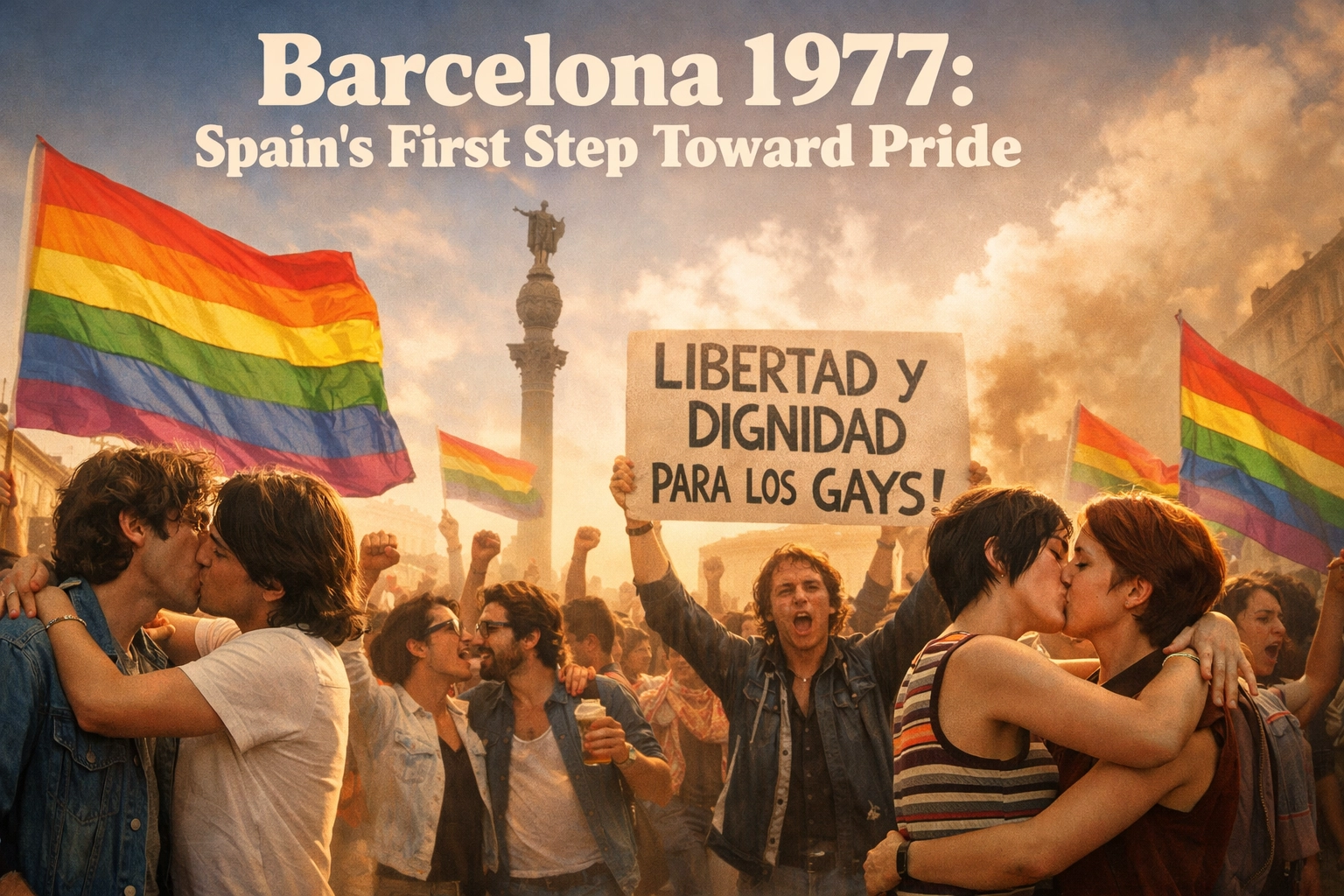
Picture this: It's June 26, 1977. Barcelona's famous La Rambla boulevard is about to witness something extraordinary: something that would've been unimaginable just two years earlier. Approximately 4,000 to 5,000 LGBTQ+ people and allies are gathering, ready to march openly through the city streets. Their crime? Simply existing. Their demand? Freedom.
This wasn't just another protest. This was Spain's first major Pride demonstration, and it happened at a time when the ghosts of Franco's dictatorship still haunted every corner of the country.
The Shadow of Franco's Spain
To understand the magnitude of what happened in Barcelona that June day, you need to know what came before. For nearly four decades, Francisco Franco's regime ruled Spain with an iron fist, and queer people were squarely in the crosshairs.
Under Franco, homosexuality wasn't just stigmatized: it was criminalized and pathologized. The "Law of Vagrants and Thugs," enforced until 1970, targeted anyone who didn't fit the regime's narrow definition of acceptable behavior. But even after that law was repealed, things didn't improve. The "Law on Dangerousness and Social Rehabilitation" replaced it, continuing to punish homosexual acts with fines, imprisonment, or forced psychiatric "treatment."
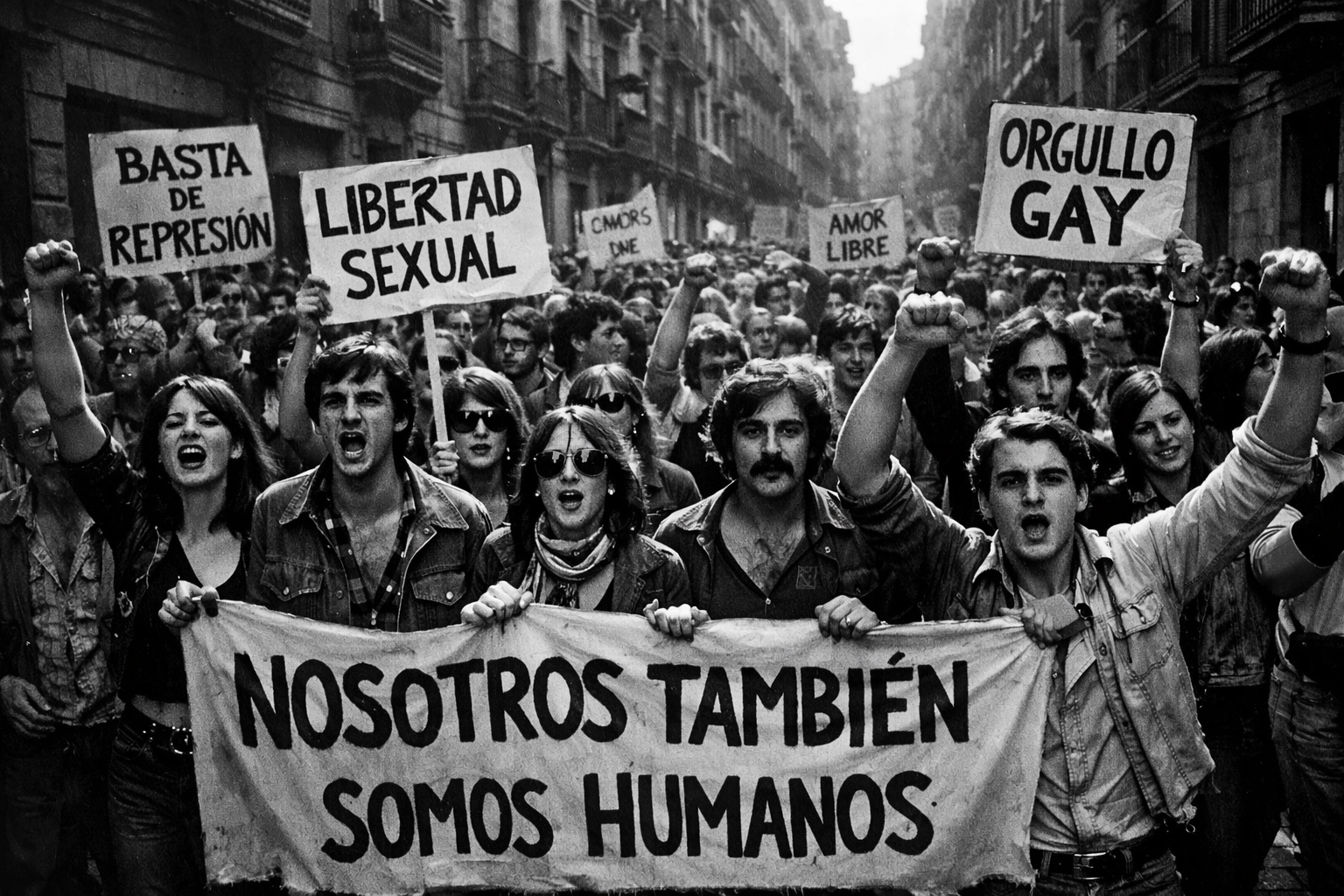
Think about that for a moment. Being gay could land you in a psychiatric institution because the state literally considered you mentally ill and socially dangerous. Love was treated as a disease that needed to be cured.
Franco died in November 1975, but his laws didn't die with him. When those brave souls gathered in Barcelona in 1977, they were still living under legislation that classified them as criminals.
A March Led by the Fearless
The demonstration was organized by the Front d'Alliberament Gai de Catalunya (Gay Liberation Front of Catalonia), a newly formed organization that was part of a broader wave of activism sweeping through post-Franco Spain. But what made this march particularly powerful was who led it: a group of transvestites.
In a society that had spent decades trying to erase them, trans and gender non-conforming people walked at the front of the march, visible and unapologetic. They weren't asking for permission to exist: they were declaring it.
The slogans they chanted still resonate today: "We have no fear, we are," "My body is mine and I do with it what I want," and perhaps most powerful of all, "Sexual amnesty!" These weren't just catchy phrases. They were revolutionary declarations in a country where such statements could still get you arrested.
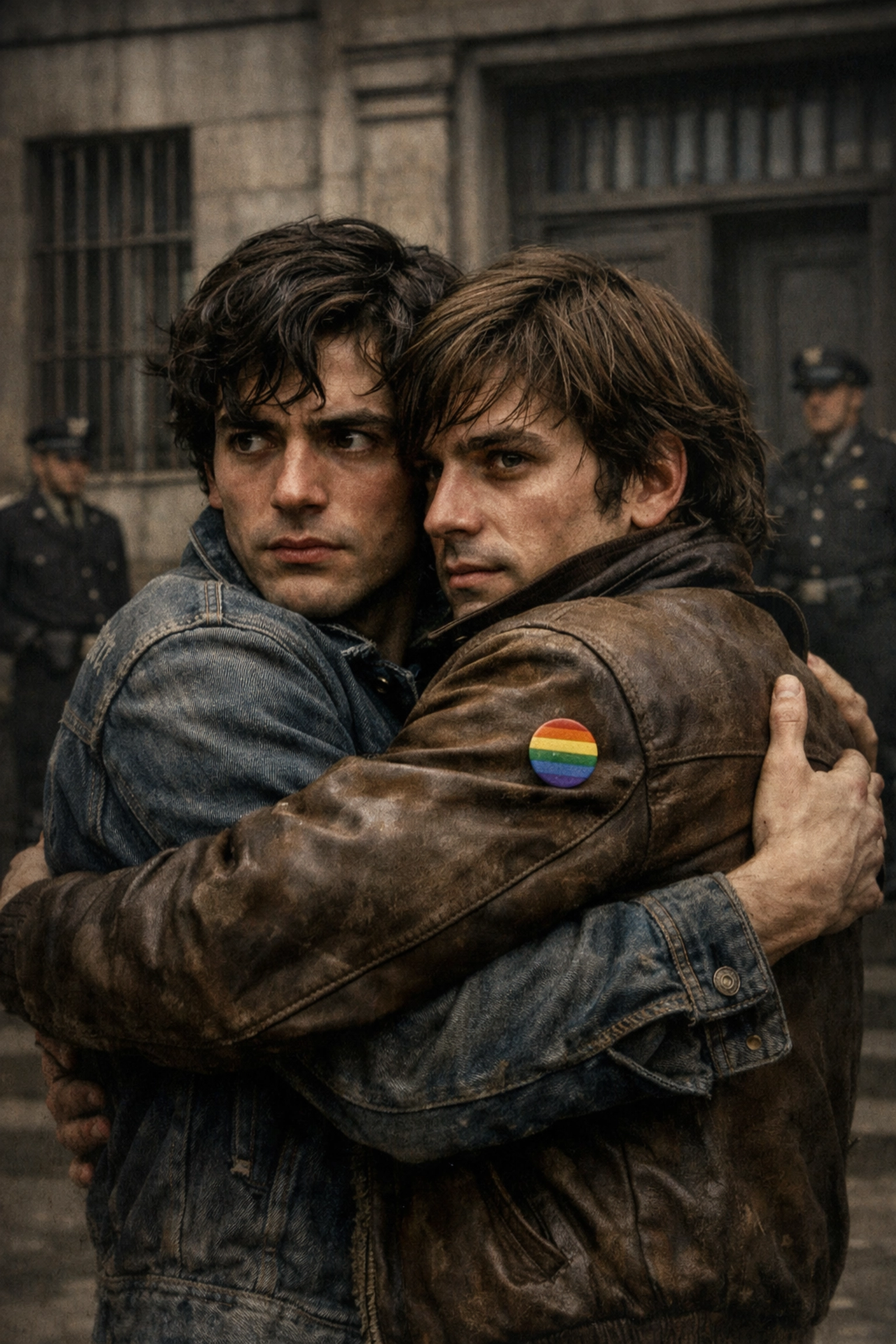
The crowd was beautifully diverse. Feminists marched alongside communists. Bisexuals walked with libertarians. Trade unionists stood shoulder to shoulder with activists. This wasn't just a gay and lesbian movement: it was a coalition of people who understood that liberation is interconnected, that justice for one means justice for all.
When Rubber Bullets Met Rainbow Flags
The police response was swift and brutal. Officers on horseback charged into the peaceful demonstrators. Rubber bullets flew through the air. At least three people were seriously injured, and many more were beaten.
Among those arrested was Doctor Oriol Martí. After being beaten by police, he was charged with attacking officers: a classic case of blaming the victim. Martí spent 56 days in La Model prison, a stark reminder that even in "democratic" Spain, the state still viewed queer people as threats.
But here's the thing about repression: sometimes it backfires spectacularly.
The Ripple Effect
The violent police response to the Barcelona march didn't crush the movement: it galvanized it. News of what happened spread across Spain and internationally. Images of peaceful demonstrators being attacked by police created sympathy and outrage. The very brutality meant to silence LGBTQ+ voices ended up amplifying them.
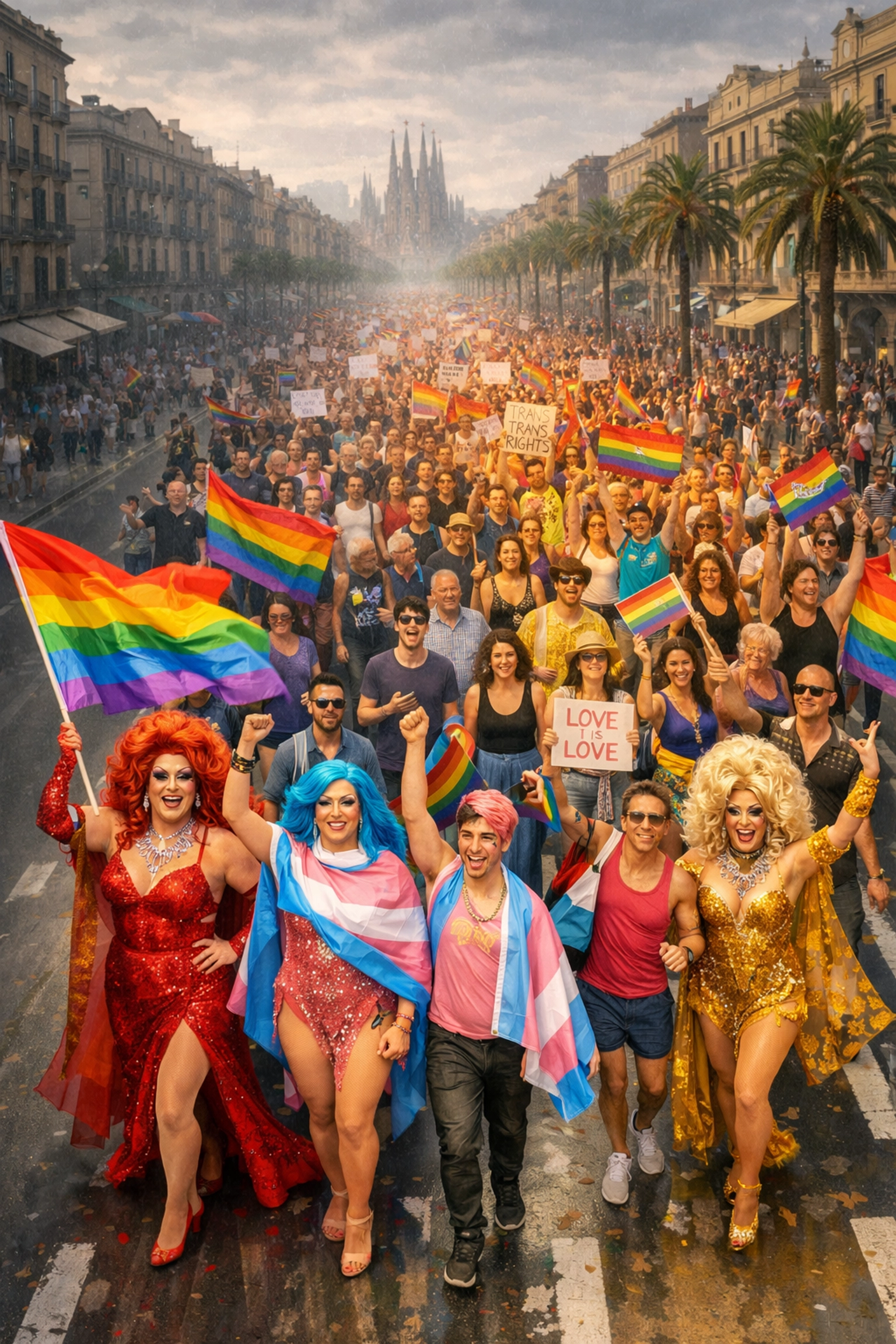
Public opinion began to shift. More people started questioning why their neighbors, friends, and family members were being treated as criminals simply for who they loved. The march proved that Spain's queer community wasn't a tiny, isolated group: there were thousands of them, and they had powerful allies.
Within just two years, in 1979, Spain decriminalized homosexual acts. The laws that had terrorized queer people for decades were finally repealed. It wasn't the end of discrimination by any means, but it was a massive legal victory that the Barcelona marchers had helped make possible.
From La Rambla to Marriage Equality
The legacy of that 1977 march extends far beyond those initial legal reforms. The courage displayed on La Rambla planted seeds that would continue to grow.
In 2005: less than three decades after Spain's first Pride march: the country legalized same-sex marriage, becoming only the third country in the world to do so. Spain went from criminalizing homosexuality to full marriage equality faster than most people could have imagined.
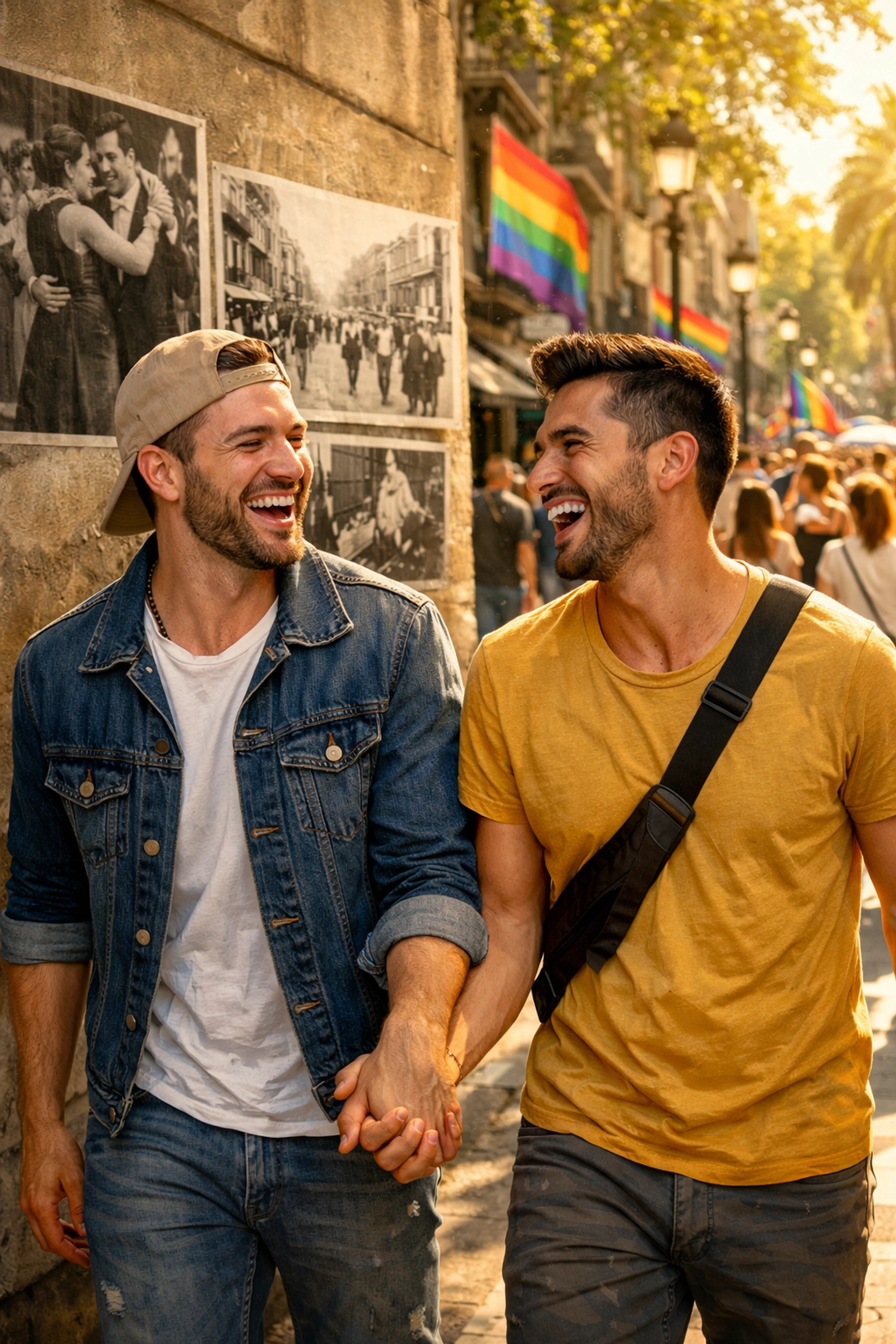
Today, Barcelona hosts one of Europe's largest Pride celebrations, with hundreds of thousands of attendees from around the world. It's a stark contrast to those 5,000 brave souls who faced down police horses and rubber bullets in 1977.
Why This History Matters
When we read MM romance books or gay romance novels today, we're enjoying freedoms that people fought and bled for. Every love story we celebrate, every gay book we recommend, every piece of LGBTQ+ fiction we share exists because activists refused to stay silent.
The Barcelona march reminds us that visibility matters. Those marchers could have stayed home, stayed safe, stayed invisible. Instead, they chose to be seen, knowing full well the consequences. They marched so that future generations wouldn't have to hide.
This history also serves as a warning. Rights can be won, but they're never guaranteed forever. The same police who cracked down on peaceful demonstrators in 1977 were agents of a democratic government, not Franco's dictatorship. Vigilance and activism remain essential.
Connecting Past and Present
At Read with Pride, we believe that understanding our history is crucial to shaping our future. The stories we publish: from contemporary MM romance to gay historical fiction: are all part of a continuum that includes those courageous marchers in Barcelona.
When you pick up one of our gay novels or LGBTQ+ ebooks, you're participating in that same act of visibility and defiance that defined the Barcelona march. Every time someone reads a queer love story openly, every time someone recommends their favorite MM romance books to a friend, we're continuing the work those activists started.
The path from La Rambla 1977 to today's vibrant Spanish LGBTQ+ community wasn't straight or easy. It was paved with protest, resistance, joy, and an unwavering commitment to dignity. Those marchers faced rubber bullets and jail time so we could have rainbow crosswalks and Pride parades.
That's not just history: that's inspiration.
Want to explore more LGBTQ+ stories and history? Visit readwithpride.com to discover our collection of gay romance books, MM fiction, and queer literature that celebrates our community's past, present, and future.
Follow us for more LGBTQ+ content:
- Facebook: facebook.com/profile.php?id=61586883027069
- Instagram: @read.withpride
- Twitter: @Read_With_Pride
#ReadWithPride #LGBTQHistory #PrideHistory #Barcelona1977 #SpanishPride #GayHistory #MMRomance #QueerFiction #LGBTQBooks #GayRomanceBooks #LGBTQRights #PrideMovement #BarcelonaPride #SpanishLGBTQHistory #QueerHistory #LGBTQActivism #GayBooks #MMRomanceBooks #LGBTQFiction #ReadPride2026

Leave a Reply
You must be logged in to post a comment.