

readwithpride.com
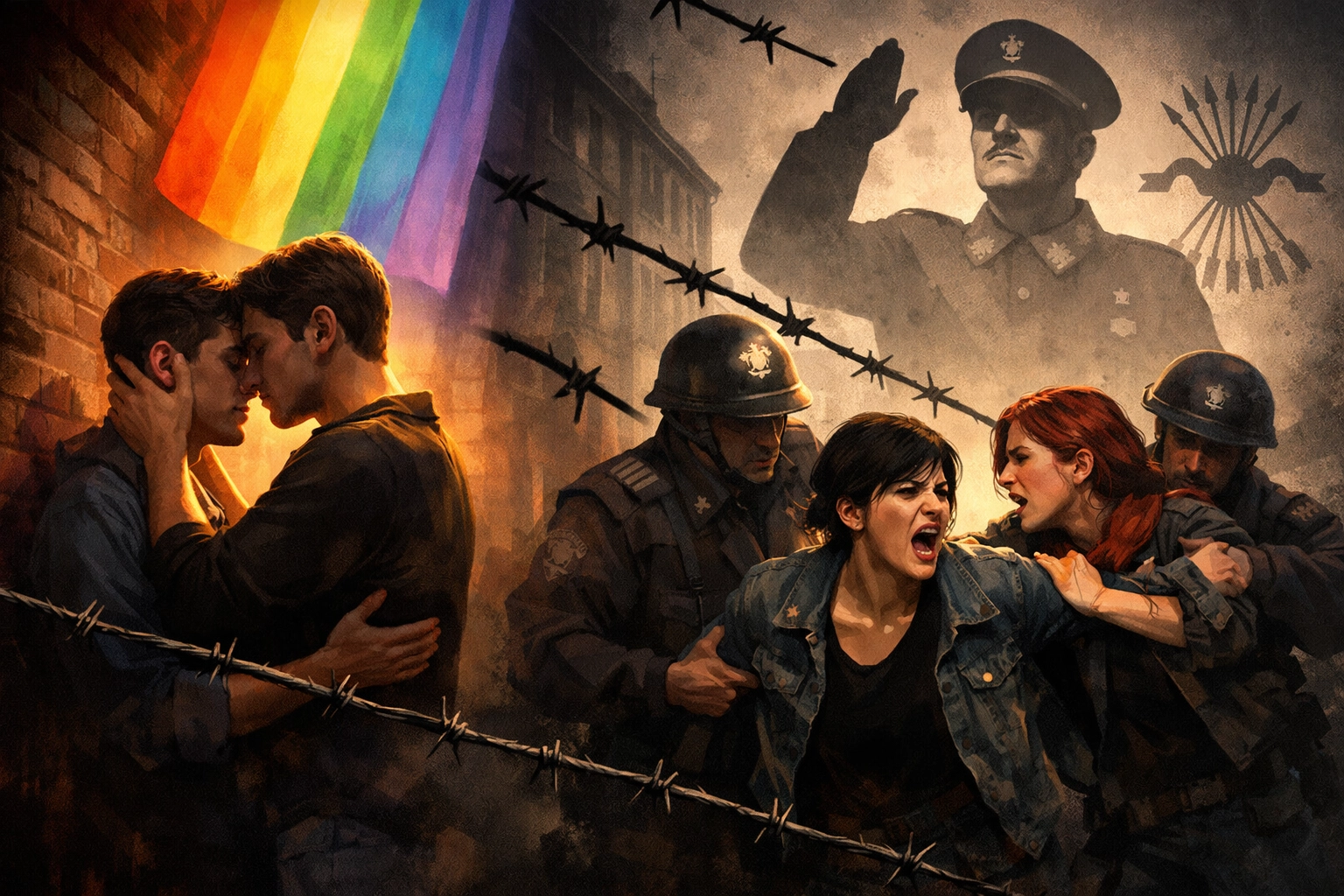
When we talk about queer history, we can't skip over the dark chapters. And honestly? Spain under Francisco Franco's dictatorship from 1939 to 1975 was one of the darkest periods for LGBTQ+ people in European history. This isn't just ancient history we're dusting off, it's living memory for many, and understanding it helps us appreciate how far we've come while staying vigilant about what we could lose.
The Iron Grip of National Catholicism
Franco's Spain wasn't just politically repressive, it was a full-on theocratic nightmare wrapped in fascist ideology. The regime imposed National Catholicism as the state religion, creating a rigid social structure that demanded submissive women and aggressively masculine men. Any deviation from this binary was considered diseased, aberrant, and a direct threat to Spain's national identity.
Lieutenant General Gonzalo Queipo del Llano put it chillingly: "Whatever effeminate or diverted that insults the movement, it will be killed like a dog." That wasn't empty rhetoric. It was policy.
For gay men and transgender individuals, simply existing became an act of resistance, and a potentially fatal one. The regime viewed queerness not just as immoral, but as something that needed to be eradicated entirely. We weren't just marginalized; we were pathologized, criminalized, and systematically destroyed.
The Legal Machinery of Oppression
Franco's government didn't just rely on social stigma, they built an entire legal framework to hunt down and punish LGBTQ+ people. The 1954 reform of the Ley de Vagos y Maleantes (Vagrancy Act) made homosexuality explicitly illegal, lumping us in with "vagrants" and procurers. Think about that for a second: loving someone of the same gender was legally equivalent to being homeless or running a brothel.
But Franco wasn't done. In 1970, the regime introduced the Ley de peligrosidad social (Social Danger Laws), which ramped up punishments to include forced confinement in psychiatric asylums and banishment from hometowns. You could be ripped away from everything you knew simply for being who you were.
Here's what really gets me: even after Franco died in 1975, even after amnesties in 1976 and 1977 freed political prisoners, LGBT people remained locked up. Police raids continued. The Vagrancy Act wasn't repealed until 1996, 1996. That's not ancient history. That's within many of our lifetimes.
The Camps: Spain's Secret Shame
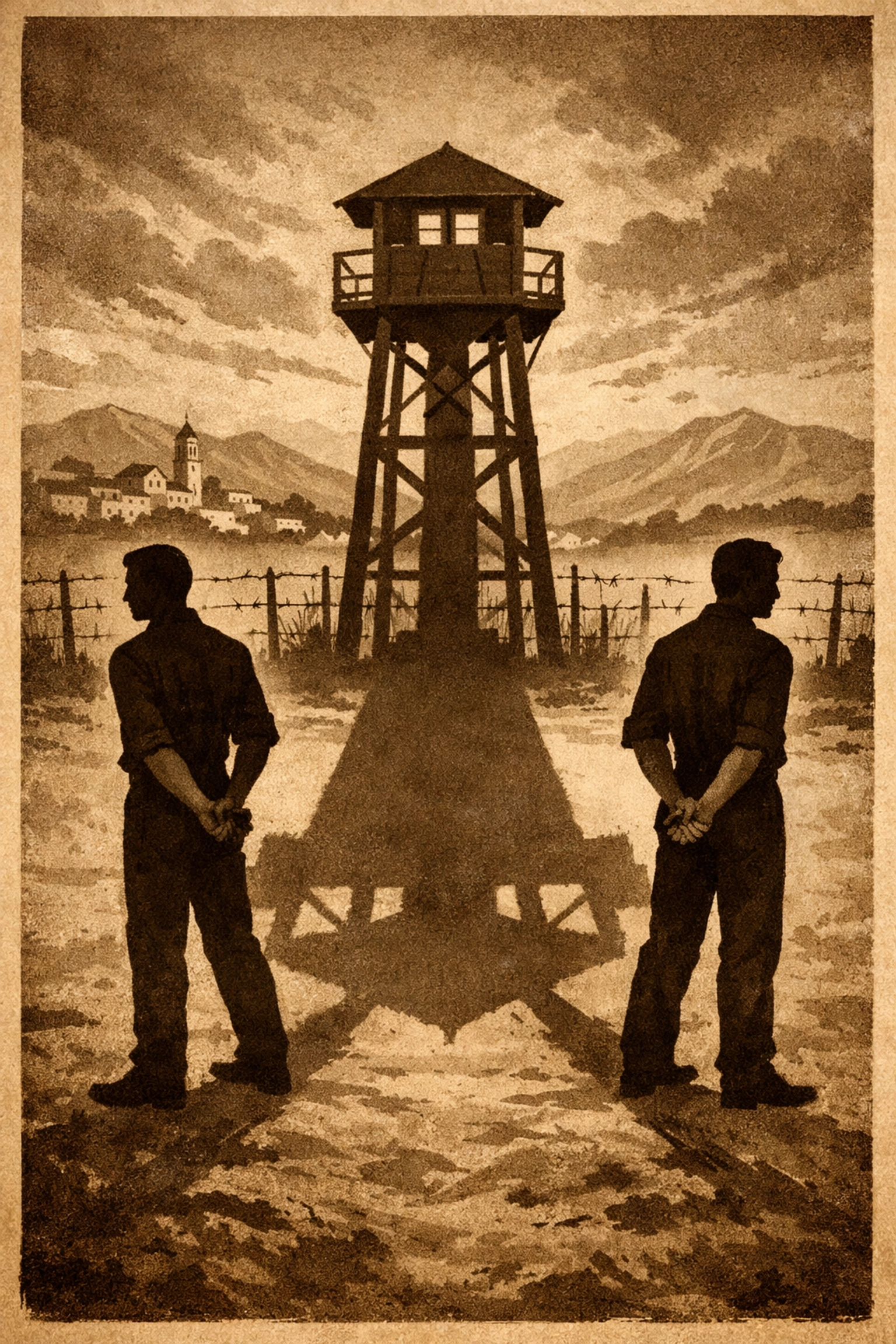
More than 5,000 people, predominantly gay men and transgender individuals, were imprisoned in what the regime euphemistically called "colonies." These internment camps in Badajoz, Huelva, and Fuerteventura were designed as "re-educational" facilities. In reality, they were torture chambers.
The abuse was systematic and horrific. Guards routinely tortured and sexually assaulted inmates. Some guards even accepted payments from other prisoners to rape and beat the queer inmates. Food and water were withheld as punishment. Electroshock "therapy" and aversion therapy, now recognized as harmful conversion practices, were standard procedure.
The goal wasn't just punishment. It was erasure. The regime wanted to literally shock the queerness out of people, to break them so completely that they'd either conform or cease to exist.
Lesbians faced a different but equally insidious form of oppression. Under Franco's worldview, women weren't supposed to have sexuality at all, so lesbianism was rendered invisible. Many queer women were forced into prostitution or trapped in loveless marriages. Their stories are harder to document precisely because the regime refused to acknowledge they existed.
Living in Fear: Daily Life Under Franco
Imagine waking up every morning knowing that a casual glance, a mannerism, a rumor from a neighbor could land you in a camp. That was reality for queer Spaniards for nearly four decades. You couldn't hold hands. You couldn't meet in bars or clubs. Even private gatherings were dangerous, raids were common, and anyone present could be arrested for "scandalous public behaviour."
The fear was all-consuming. People married opposite-sex partners they didn't love. They suppressed every natural impulse. They lived split lives, showing one face to the world while dying inside. Some fled the country if they had the means. Others took their own lives rather than face arrest and torture.
The trauma from this era reverberates through generations. Many survivors never spoke about what they endured, carrying that pain in silence until their deaths. Others are only now, in their seventies and eighties, beginning to share their stories.
The Transformation: From Persecution to Pride
When Franco died in 1975, Spain didn't transform overnight. But slowly, painfully, the country began to reckon with its past. By 1979, homosexuality was decriminalized. It took another generation, but Spain eventually became a global leader in LGBTQ+ rights.
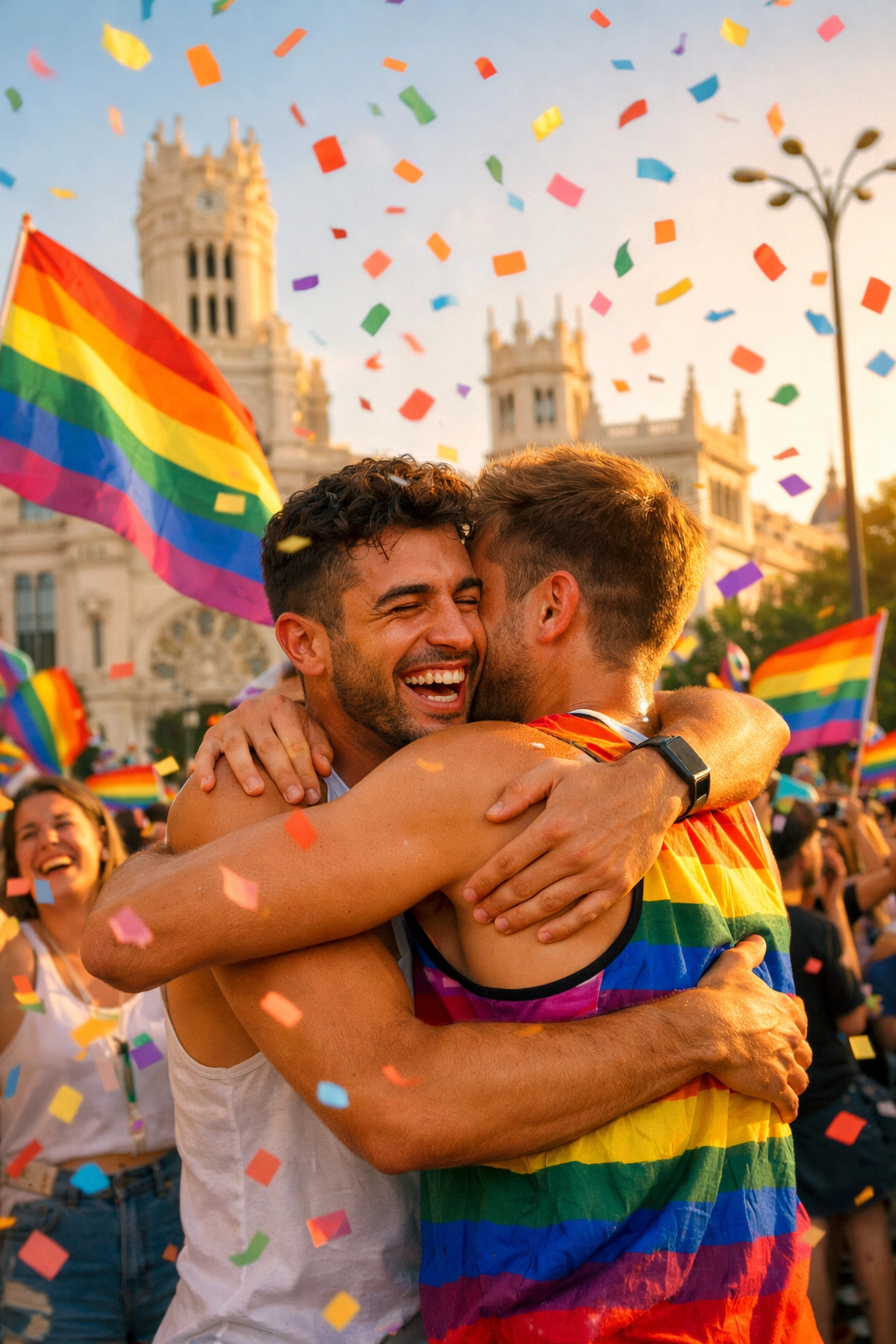
Today's Spain looks radically different. Same-sex marriage has been legal since 2005. In 2023, the Ley Trans (Trans Law) allowed anyone 16 and older to change their legal gender through simple self-declaration, no medical diagnoses, no psychological evaluations, no gatekeeping. It's one of the most progressive trans rights laws in the world.
Madrid hosts one of Europe's largest Pride celebrations. Barcelona is a queer tourism mecca. The contrast couldn't be starker: from a country that imprisoned and tortured us to one that celebrates us openly. But we can't forget the cost of that transformation or the people who suffered and died to make it possible.
Why This History Matters Now
You might wonder why we're digging into this dark chapter of Spanish history at Read with Pride. Because these stories matter. Because queer history, all of it, including the painful parts, is our history. And because fascism and religious extremism aren't relics of the past. They're ever-present threats that require constant vigilance.
When we read LGBTQ+ fiction, gay romance novels, and MM romance books, we're celebrating the freedom to tell our stories openly. That freedom was paid for with tremendous suffering. Every gay love story we publish, every queer author we amplify, every piece of LGBTQ+ literature we share is an act of defiance against the forces that tried to erase us.
The Francoist regime wanted to eliminate queerness entirely. They failed. We're still here. We're thriving. We're creating art, building families, and living authentically. That's the ultimate victory.
Moving Forward, Looking Back
Learning about Franco's Spain isn't about dwelling in trauma, it's about understanding resilience. It's about honoring the people who survived and those who didn't. It's about recognizing that our rights are never guaranteed and that complacency is dangerous.
Modern Spain shows us that transformation is possible, that societies can evolve from brutal oppression to genuine acceptance. But it also reminds us that this evolution requires constant work, constant advocacy, and constant resistance to backsliding.
So yeah, this is heavy stuff. But at Read with Pride, we believe in telling the whole story: the joy and the pain, the victories and the losses. Because that's what authentic queer literature does. It holds space for all of it.
Exploring LGBTQ+ history helps us understand our present. Discover more stories, perspectives, and queer fiction at readwithpride.com.
#LGBTQHistory #QueerHistory #FrancoSpain #GayHistory #TransHistory #MMRomance #QueerFiction #ReadWithPride #LGBTQRights #GayRomanceBooks #NeverForget #QueerResilience #LGBTQLiterature #AuthenticStories
Follow us on Facebook, Instagram, and Twitter/X for more LGBTQ+ content and history.

Leave a Reply
You must be logged in to post a comment.