

readwithpride.com
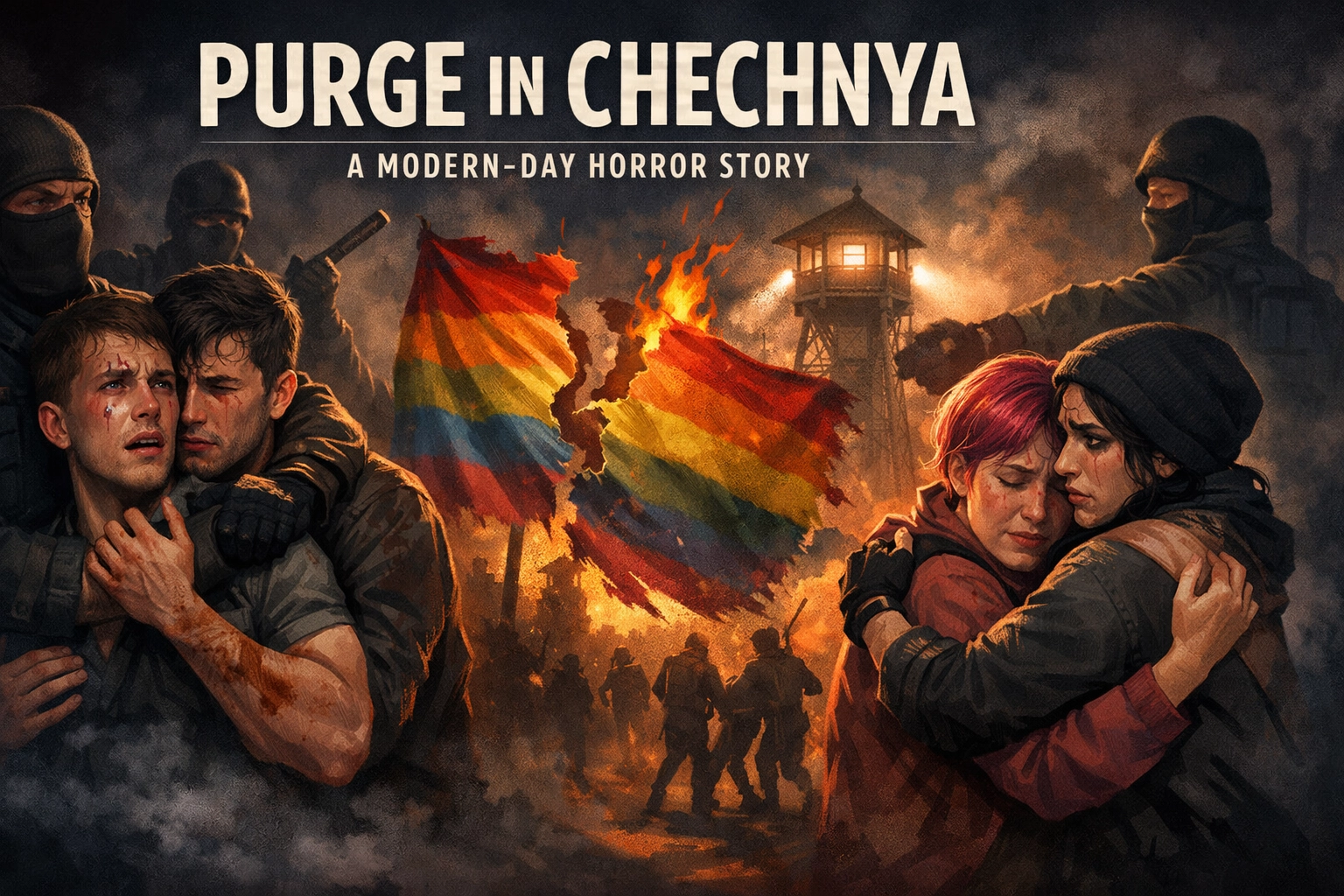
When we talk about the darkest moments in LGBTQ+ history, we often look back at the past: the Nazi persecution, the criminalization laws, the AIDS crisis. But sometimes the horror isn't history at all. Sometimes it's happening right now, in 2026, in places where being gay isn't just illegal: it's a death sentence.
Chechnya's anti-gay purge is one of those nightmares that makes you realize we're not as far from the darkness as we'd like to believe.
When Silence Became Screaming
In April 2017, a Russian opposition newspaper called Novaya Gazeta broke a story that sent shockwaves through the international community. Over 100 men had been detained, tortured, and in some cases killed: simply for being gay. But here's the thing: it had actually started months earlier, in December 2016, operating in the shadows while the world looked away.
The first wave ran from December 2016 through February 2017. Then came a second wave during Ramadan in March through May. A third began in late July. And in January 2019, it started up again with approximately 40 more people detained and at least two killed.
This wasn't a one-time event. This was: and arguably still is: a systematic campaign of state-sponsored violence.

The Hunting Method
Here's how the nightmare unfolded: Chechen authorities used online dating profiles and underground intelligence networks to identify gay men. They'd pose as potential dates, lure men to meet-ups, then round them up in abduction-style detentions. Once in custody, victims faced horrific torture designed to force them to reveal the names and identities of other LGBTQ+ individuals in the region.
It was a self-perpetuating machine of terror. Each person caught became a tool to catch more people. Each confession under torture led to more arrests. The campaign involved police, military personnel, and other state actors: this wasn't rogue vigilantes, this was the government itself.
Survivors who managed to escape reported being held in secret detention facilities, subjected to beatings, electrocution, and psychological abuse. Some were released only to face threats from their own families, who were told by authorities that having a gay family member brought shame that could only be washed away through "honor killings."
The Scale of Horror
The numbers are both concrete and frustratingly vague. We know of at least 100 men detained in the first wave. We know of at least three deaths initially reported, then two more in 2019. But the real numbers? They're likely much higher.
Many victims never reported what happened to them. The stigma, the fear of retribution, the trauma: it all creates a wall of silence. And in a place where the government actively denies gay people exist, how do you count the victims of a crime the perpetrators claim never happened?
Human rights organizations worked frantically to evacuate survivors. Rainbow Railroad alone relocated more than 70 individuals from Chechnya and the broader Caucasus region. The Russian LGBT Network, along with international partners, created underground railroads to spirit people to safety: often with Chechen agents pursuing them even after they fled.
The World Responds (Sort Of)
The international response has been a mix of outrage and frustrating inaction. In May 2017, three France-based human rights organizations filed a genocide complaint with the International Criminal Court. The U.S. State Department called the reports "credible" and expressed deep concern. Various countries imposed sanctions and issued condemnations.
But words don't stop torture chambers.
The most significant legal victory came in 2023 when the European Court of Human Rights ruled in favor of Maxim Lapunov, the only survivor brave enough to pursue legal justice using his real name. The court officially established that he was detained and tortured "solely on account of his sexual orientation." It was a landmark ruling that confirmed what everyone already knew: this was real, it was state-sponsored, and it was targeted persecution.
Yet Chechnya remains largely autonomous, protected by its position within the Russian Federation and led by Ramzan Kadyrov, a brutal dictator who enjoys the backing of Russian President Vladimir Putin.
The Denial That Makes It Worse
Perhaps the most chilling aspect of this entire horror show is the official response from Chechen and Russian leadership: complete denial with a side of mockery.
Kadyrov's infamous statement? "You cannot detain and persecute people who simply do not exist in the republic." His spokesman elaborated: "If such people existed in Chechnya, law enforcement would not have to worry about them, as their own relatives would have sent them to where they could never return."
It's gaslighting on a national scale. It's the government saying "we didn't kill them, but if they existed, their families would have done it for us."
Russian President Putin's spokesman endorsed these denials. The Foreign Minister claimed reports weren't "based on fact." This despite survivor testimony, despite evacuees speaking out, despite evidence from multiple human rights organizations.
The message was clear: we can do what we want, and the world won't stop us.
Why This Matters Right Now
You might be reading this from London, New York, Sydney, or Amsterdam: places where being openly gay doesn't carry a death sentence. You might think this is someone else's problem, happening far away in a place you'll never visit.
But here's why Chechnya matters to all of us in the LGBTQ+ community: because it's a reminder that our rights, our safety, our very existence is always conditional. It's granted by governments that can take it away. It's protected by laws that can be changed. It's defended by public opinion that can shift.
What's happening in Chechnya could happen anywhere if we're not vigilant. The language of denial, the dehumanization, the systematic targeting: these are patterns we've seen before, and they don't stay contained to one region.
Reading stories, understanding history, and staying informed isn't just about honoring the past. It's about protecting the future. That's why platforms like Read with Pride matter: they keep these stories alive, they educate, they build empathy through LGBTQ+ literature and content.
When we read MM romance books with happy endings, when we celebrate queer love stories, when we immerse ourselves in gay fiction where characters live freely: we're not escaping reality. We're affirming what should be reality everywhere. We're declaring that LGBTQ+ lives deserve happy endings, safety, and dignity.
What Happens Next
As of 2026, the situation in Chechnya remains precarious. Reports still emerge, though less frequently, of detentions and persecution. The fear never really left: it just learned to stay quieter.
Human rights organizations continue their work, evacuating people when possible, documenting abuses, and keeping international pressure alive. Survivors continue to speak out, often at great personal risk. And the LGBTQ+ community worldwide continues to demand justice.
The story of Chechnya's purge isn't over. It's ongoing, it's urgent, and it deserves our attention. Not just our outrage, but our sustained commitment to ensuring it never happens again: anywhere.
Because every queer person who can't live freely is a reminder that our freedom is interconnected. When they suffer, we all feel it. When they're silenced, we must speak louder. When they're erased, we must make sure their stories are told.
That's what bearing witness means. That's what community means. That's what pride: real pride: demands of us.
Stay informed and connected with LGBTQ+ stories that matter.
Follow us:
- Facebook: https://www.facebook.com/profile.php?id=61586883027069
- Website: https://readwithpride.com
- Twitter/X: https://x.com/Read_With_Pride
- Instagram: https://www.instagram.com/read.withpride/
#ReadWithPride #LGBTQHistory #ChechnyaPurge #HumanRights #QueerHistory #MMRomance #GayFiction #LGBTQBooks #NeverForget #QueerSolidarity #LGBTQRights #GayRomanceBooks #PrideMatters #QueerCommunity #LGBTQSupport

Leave a Reply
You must be logged in to post a comment.