

readwithpride.com
Imagine going to school and being bullied for being different, for liking someone of the same gender, and when you turn to a teacher for help, they literally can't talk to you about it. They're not allowed. By law.
That was the reality for an entire generation of LGBTQ+ young people in the UK, thanks to a piece of legislation so insidious it didn't just discriminate, it mandated silence. Welcome to Section 28, one of the darkest chapters in British queer history.
What Was Section 28?
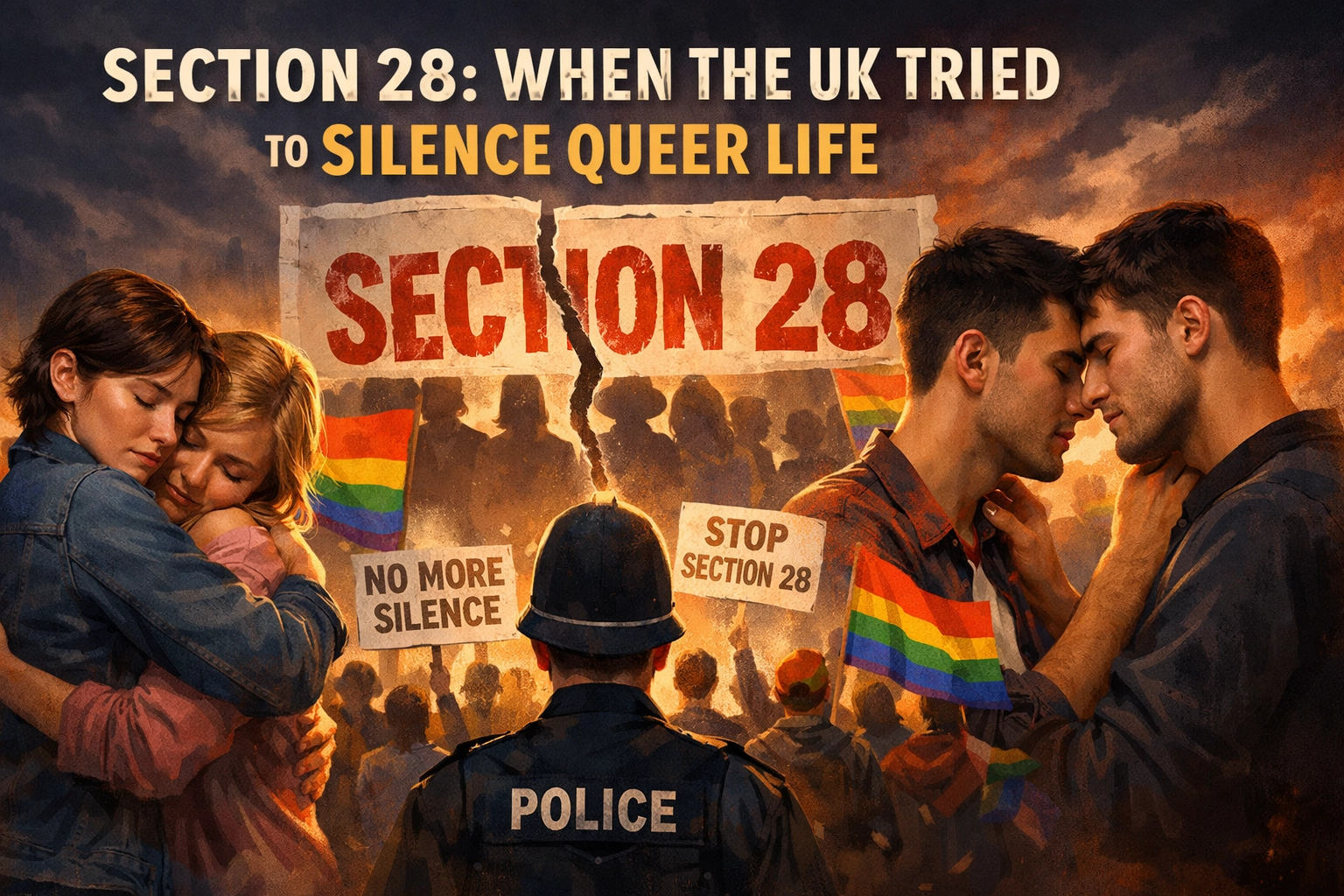
On May 24, 1988, the UK government passed what would become one of the most damaging pieces of anti-gay legislation in modern British history. Section 28 was an amendment to the Local Government Act that prohibited local authorities from "intentionally promoting homosexuality" or publishing material that promoted homosexuality.
But here's where it got truly Orwellian: the law also banned promoting "the acceptability of homosexuality as a pretended family relationship." Yes, you read that right. Pretended. The UK government officially declared that same-sex relationships and families were fake, make-believe, not real.
Conservative MP David Wilshire introduced this poisonous amendment during Margaret Thatcher's premiership, and despite opposition from Labour and Liberal parties, it sailed through Parliament and came into force by June 1988. The message was clear: queer people could exist, but society: especially schools: shouldn't acknowledge them as valid, real, or worth discussing.
The Chilling Effect on Education
Section 28 didn't just affect policy: it created a culture of fear that permeated every school, library, and council office across Britain. Teachers became terrified of their own words. What counted as "promotion"? Was answering a student's question about having two dads considered promotion? Could mentioning a same-sex partner cost you your job?
The vagueness was the point. When no one knows exactly where the line is, everyone stays far away from it.
Educational institutions were legally obligated to view homosexuality negatively. Teachers who were themselves gay lived in constant fear of being outed, knowing that simply being honest about their lives could be interpreted as "promoting" homosexuality. Many stayed firmly in the closet, erasing a fundamental part of themselves just to keep their careers.
Books that depicted same-sex relationships: like the infamous Jenny Lives with Eric and Martin, a Danish children's book about a girl with two dads: were pulled from classrooms and school libraries. Any resource that showed LGBTQ+ families as normal, loving, and real became contraband.
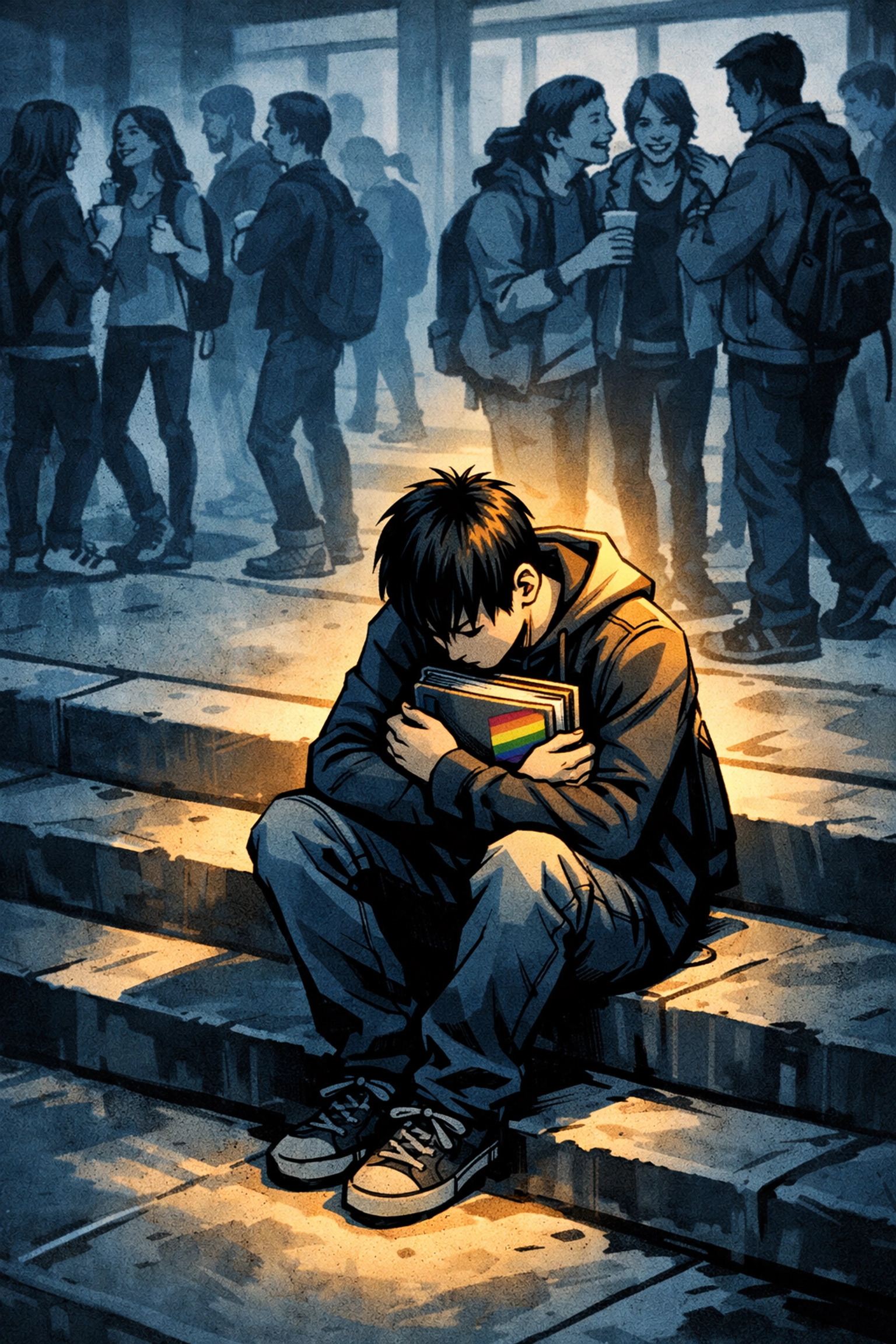
For straight teachers who wanted to be supportive, the law tied their hands. They watched queer students struggle, face bullying, and spiral into isolation: and they couldn't help. Not really. Not without risking their jobs and potentially breaking the law.
Young People Left in the Dark
If you were a queer teenager in the UK during the Section 28 era, you were essentially invisible in the education system. At a time when you needed support, information, and affirmation most, you got nothing. Worse than nothing: you got the message that you were "pretend."
LGBTQ+ student support groups that had begun forming in schools and colleges across Britain shut down almost overnight. Council legal teams warned institutions against hosting them, terrified of breaching the law. Young people who desperately needed community, who needed to know they weren't alone, found those lifelines cut.
Mental health support? Forget it. How could school counselors address sexuality-based discrimination or help students struggling with their identity when the law essentially forbade acknowledging that identity as legitimate?
The suicide rates, the depression, the self-harm: all of it hidden, unaddressed, untreated. An entire generation of queer youth was left to navigate their identities completely alone, with their schools legally barred from offering any affirmation or support.

Parents of LGBTQ+ children found themselves equally powerless. They lost control over whether their children could access age-appropriate information about different family structures and identities. Schools couldn't educate; families couldn't advocate. The silence was enforced from every angle.
The Fight Back
But here's the thing about trying to silence queer people: we're really, really loud when we need to be.
Almost immediately, activists mobilized. Organizations like Stonewall UK were founded partly in response to Section 28, channeling rage into organized resistance. The law galvanized a generation of LGBTQ+ activists who understood that legal discrimination had to be fought in every arena: the streets, the courts, and the ballot box.
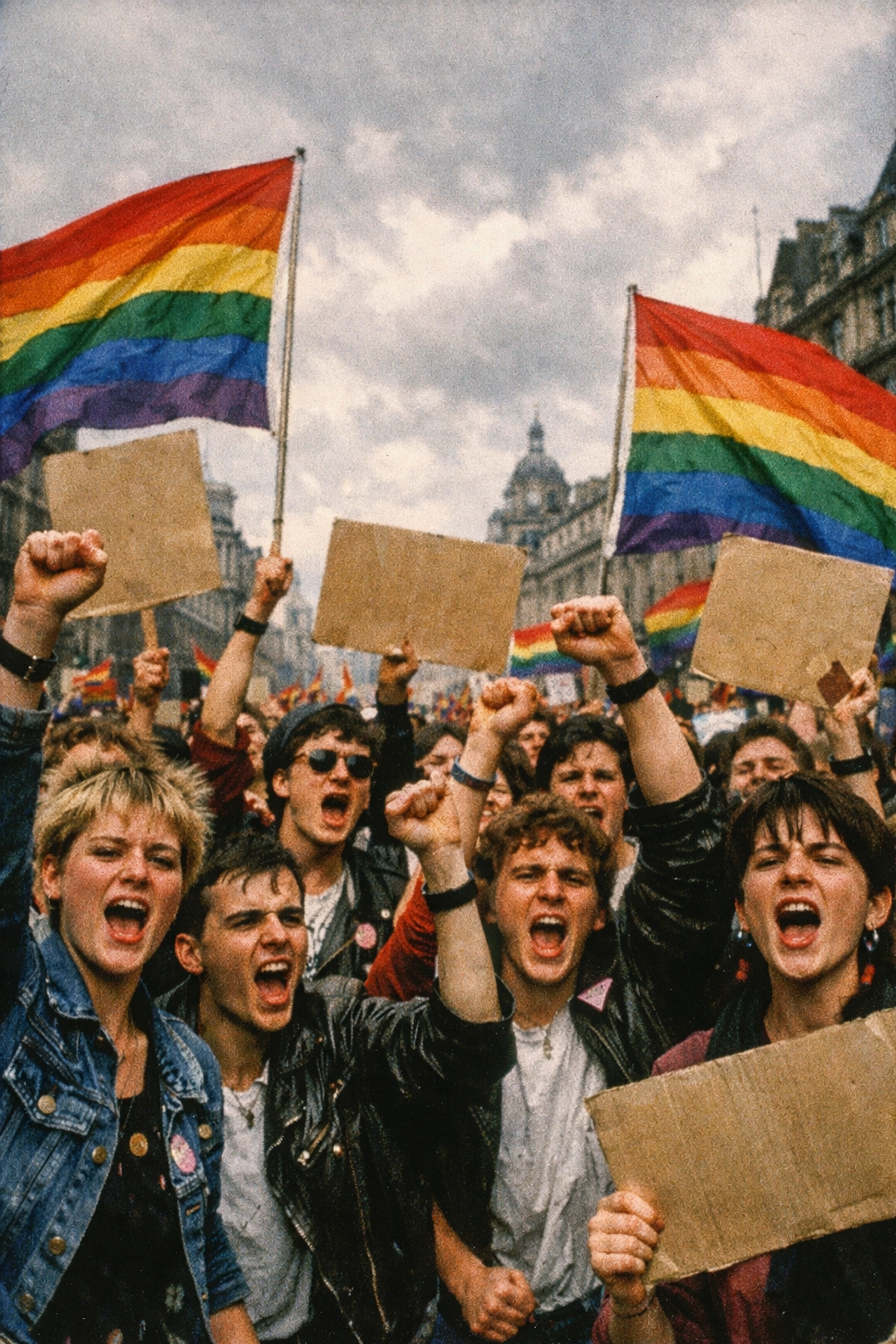
Protests erupted across the country. In one of the most iconic acts of resistance, lesbian activists abseiled into the House of Lords during a live BBC broadcast in 1988, and others invaded the BBC Six O'Clock News studio, all to protest the legislation. The message was unmistakable: you can pass your laws, but you can't silence us.
Despite the law, some brave teachers found ways to support their students: subtle acts of rebellion, quiet conversations, a recommended book slipped discreetly into a backpack. These small acts of courage kept hope alive during the darkest years.
The Long Road to Repeal
It took over a decade, but eventually, the tide began to turn. Scotland led the way, repealing Section 28 on June 21, 2000. The rest of the United Kingdom followed on November 18, 2003: fifteen years after the law was enacted.
Even then, the fight wasn't over. Conservative-run Kent County Council attempted to maintain Section 28's effects through their own local provisions, showing how deeply the discriminatory mindset had taken root. But the legal battle had been won, and the national consensus had shifted.
The repeal didn't undo the damage, though. An entire generation had grown up in schools where their identities were legally classified as "pretend." The psychological scars, the missed support, the isolation: those effects lasted far beyond 2003.
The Legacy We're Still Living With
Today, looking back at Section 28 feels almost surreal. How did a supposedly modern, democratic country pass a law that explicitly discriminated against its own citizens and children? How did it last fifteen years?
Yet the legacy persists. Many of the teachers who were trained during the Section 28 era still carry that ingrained hesitation about discussing LGBTQ+ issues in schools. Some of the students who grew up under its shadow are now adults still processing the harm of institutionalized erasure.
But there's also a legacy of resistance. The fight against Section 28 built organizations, activated communities, and created a blueprint for LGBTQ+ advocacy that continues today. Every gain in marriage equality, adoption rights, and anti-discrimination law stands on the shoulders of those who refused to be silenced in the late '80s and '90s.
For those of us who love MM romance books and gay fiction, stories set during this period carry particular weight. They remind us that the freedom to read queer love stories, to see ourselves reflected in literature, to access LGBTQ+ ebooks without shame: these weren't always givens. They were fought for.
Section 28 tried to erase queer life from public view, to render us "pretend." Instead, it ignited a movement that said: We're here, we're real, and we're not going anywhere.
Read stories that affirm, celebrate, and honor LGBTQ+ lives at readwithpride.com.
#Section28 #LGBTQHistory #QueerHistory #GayRights #UKHistory #MMRomance #ReadWithPride #GayFiction #LGBTQBooks #QueerLiterature #GayRomanceBooks #LGBTQCommunity #NeverForget #PrideHistory #GayBooksForever

Leave a Reply
You must be logged in to post a comment.