

When Words Are Forbidden, Let the Ceremony Speak
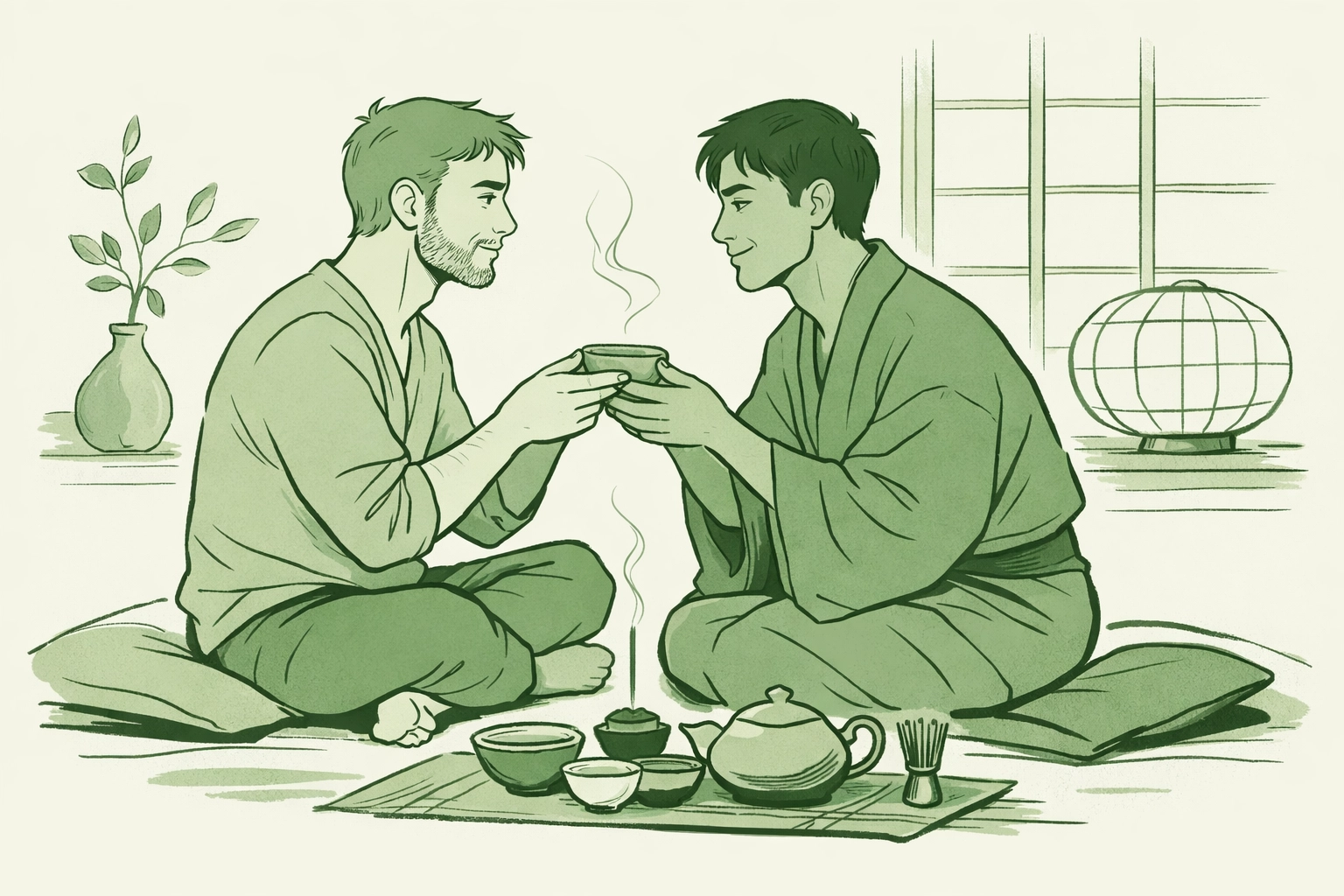
In a culture where honne (true feelings) must remain hidden beneath tatemae (public face), two men find a language older than words. The Japanese tea ceremony: chanoyu: becomes their sanctuary, a ritual so precise that every gesture, every pause, every shared breath carries the weight of everything they cannot say aloud.
This is not a story of grand declarations. This is the story of connection forged in silence, where the angle of a bow speaks louder than any confession, and the way steam rises from a chawan becomes a prayer for a future that may never come.

The First Meeting: A Bowl Between Two Hearts
Takeshi kneels in the tatami-floored tea room, his spine perfectly straight, his breath controlled. Across from him, separated by less than a meter but by an entire society's expectations, sits Haruki. They have known each other for three years: colleagues at the same architectural firm, friends in the careful, measured way that Japanese men are permitted to be friends.
But friendship has boundaries. And what Takeshi feels when Haruki enters a room has no boundaries at all.
The mizuya (preparation area) holds all the tools: the chasen whisk, the natsume tea caddy, the folded chakin cloth. Each object is positioned with millimeter precision, because in tea ceremony, there is no room for carelessness. There is only intention. Only meaning.
Haruki's hands: strong, calloused from weekend carpentry, impossibly gentle: lift the tea bowl. He rotates it twice, clockwise, as tradition demands. The gesture is so small. The gesture contains everything.
Ichi-go ichi-e, the tea masters say. One time, one meeting. This moment will never come again.
Takeshi watches the way Haruki's throat moves as he sips. He memorizes the slight tremor in those capable fingers, the way Haruki's eyes close for just a heartbeat longer than necessary. In the outside world: the world of salaries and family obligations and omiai marriage meetings: these details would be invisible.
Here, in the chashitsu (tea room), they are everything.
The Language of Ritual: What Cannot Be Spoken
The beauty of the tea ceremony is its structure. Every movement is prescribed, passed down through centuries. The host bows. The guest bows. The tea is whisked exactly 75 times in a specific pattern. The bowl is presented with both hands, rotated, received, admired, sipped, returned.
But within this rigid framework, there is infinite room for expression.

When Takeshi places the chawan before Haruki, their fingers do not touch: they would never touch, not here, not anywhere: but the distance between them is charged with such electricity that the air itself seems to shimmer. The bowl's placement is perfect, its decorated side facing Haruki as respect demands, but Takeshi's gaze lingers half a second too long.
Haruki notices. Of course he notices.
The return bow is slower than protocol requires. Haruki's eyes meet Takeshi's for a fraction of a moment, and in that fraction, entire conversations happen. I see you. I understand. I am here too, in this impossible space between duty and desire.
This is how they speak. In millimeters and microseconds. In the particular way Haruki cradles the tea bowl, as though it were something infinitely precious. In the way Takeshi's hands shake: just barely, almost imperceptibly: as he wipes the rim of the chawan with the folded cloth.
The tea ceremony gives them permission to be careful with each other. To show gentleness, attentiveness, care: all the things that men in their world are not supposed to show other men, unless it is within the bounds of this ancient ritual.
The Weight of Tradition, The Lightness of Steam
Outside this room, Haruki is engaged. His parents have arranged a match with a woman from a good family. The wedding is in six months. He has told Takeshi this over lunch in the office cafeteria, his voice flat and mechanical, discussing his own future as though it were a quarterly business projection.
Takeshi had nodded. Had said, "Congratulations." Had felt something inside him calcify into stone.
But here, now, with the bitter green matcha on his tongue and the smell of tatami mats and the sound of water boiling in the kama iron kettle, Takeshi allows himself to grieve. The ceremony permits it. Grief is part of wabi-sabi: the acceptance of impermanence, the beauty in transience.
Their connection is transient. It has always been transient. Japanese culture has taught them both that some things are not meant to last, only to be appreciated in their fleeting perfection.
Mono no aware: the pathos of things. The deep, poignant awareness that all beauty is temporary.
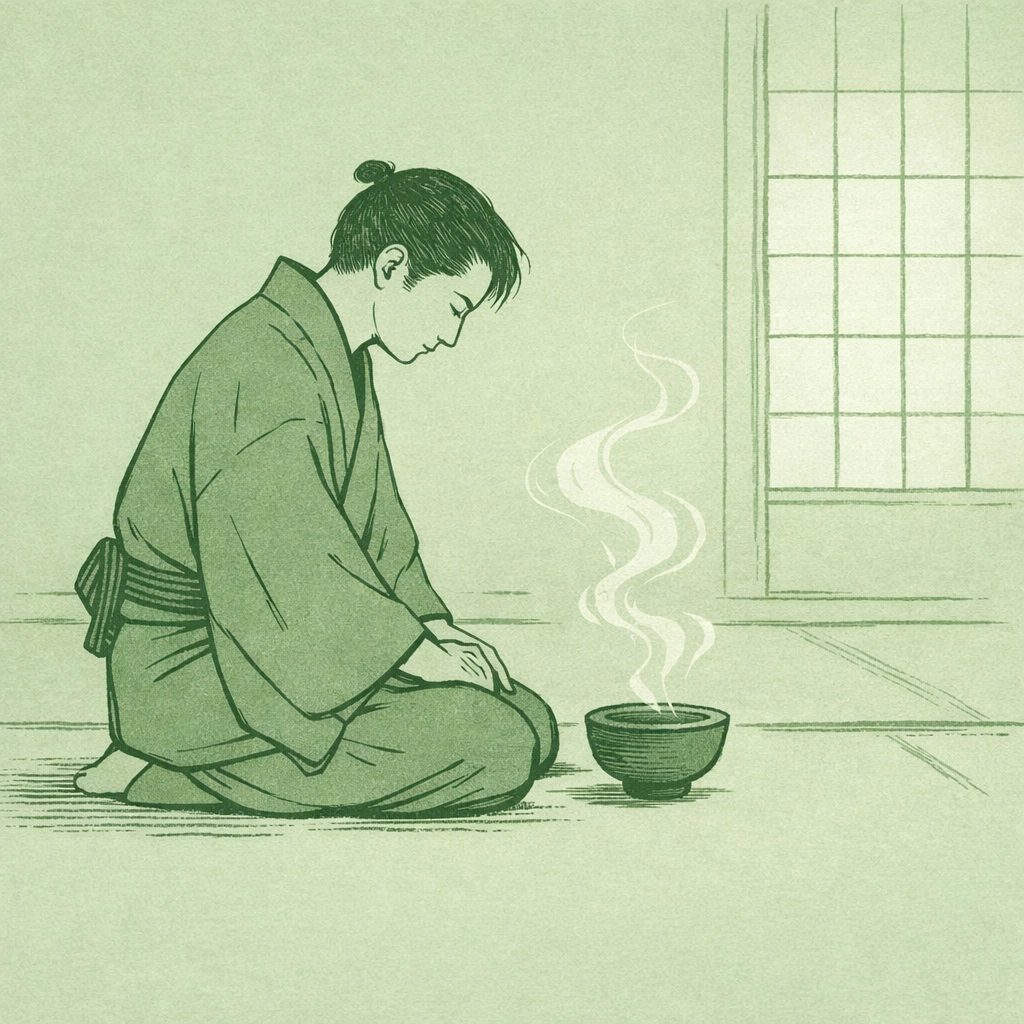
Haruki sets down the empty bowl. His movements are slower than they should be, as though he is trying to stretch this moment, to make it last just a little longer. When he bows: the final bow, the one that signals the ceremony's end: his forehead nearly touches the mat.
"Gochisōsama deshita," he whispers. Thank you for the feast. But his voice cracks on the last syllable, and Takeshi knows he is not talking about the tea.
What the Ceremony Cannot Change
They will leave this room. They will return to their separate lives, their separate futures. Haruki will marry his suitable bride. Takeshi will attend the wedding, because that is what friends do. He will smile and bow and toast the happy couple, and he will feel nothing at all, because numbness is the only way to survive.
But for now: for this ichi-go ichi-e moment: they are here together. Two men in a small room, surrounded by four hundred years of tradition, participating in a ritual that gives them permission to be tender with each other in a world that offers them no other avenue for tenderness.
The tea ceremony does not change their circumstances. It does not give them a future. But it gives them this: a language for the unspeakable, a space where their truth can exist, if only in the way steam rises from hot water, visible for a moment before disappearing into air.
And sometimes, in a life of silence and duty and carefully maintained facades, a single moment of visible truth is enough to sustain you through all the invisible years ahead.
Exploring Connection in MM Romance and LGBTQ+ Fiction
The tension between public duty and private desire is a powerful theme in gay romance and MM fiction. Stories that explore cultural pressures, family expectations, and the weight of tradition resonate deeply with readers seeking emotional MM books and heartfelt gay fiction.
If you're drawn to narratives that prioritize subtle emotional depth and the unspoken language between characters, explore our collection of literary MM romance at Read with Pride.
For stories that examine how men navigate love in spaces that don't allow them to exist openly, consider reading about authentic bisexual representation and literary MM romance versus pure erotica.
Gay fiction that honors cultural specificity while exploring universal themes of longing and connection continues to be among the most impactful in LGBTQ+ literature. These are the gay love stories and queer fiction narratives that stay with readers long after the final page.
Follow us on social media:
Instagram: @dickfergusonwriter
X/Twitter: @DickFergus94902
Facebook: Dick Ferguson Writer
Visit us: dickfergusonwriter.com | readwithpride.com
#MMRomance #GayRomance #LGBTQBooks #GayFiction #QueerFiction #MMFiction #JapaneseCulture #TeaCeremony #GayLoveStories #ReadWithPride #EmotionalMMBooks #LiteraryMMRomance #GayLiterature #QueerAuthors #MMAuthors #HeartfeltGayFiction #ContemporaryMMRomance #LGBTQRomance #GayNovels #GayBookRecommendations #ReadingWithPride

Leave a Reply
You must be logged in to post a comment.