

The Two Faces Every Japanese Salaryman Wears (And What Happens When One Is Gay)
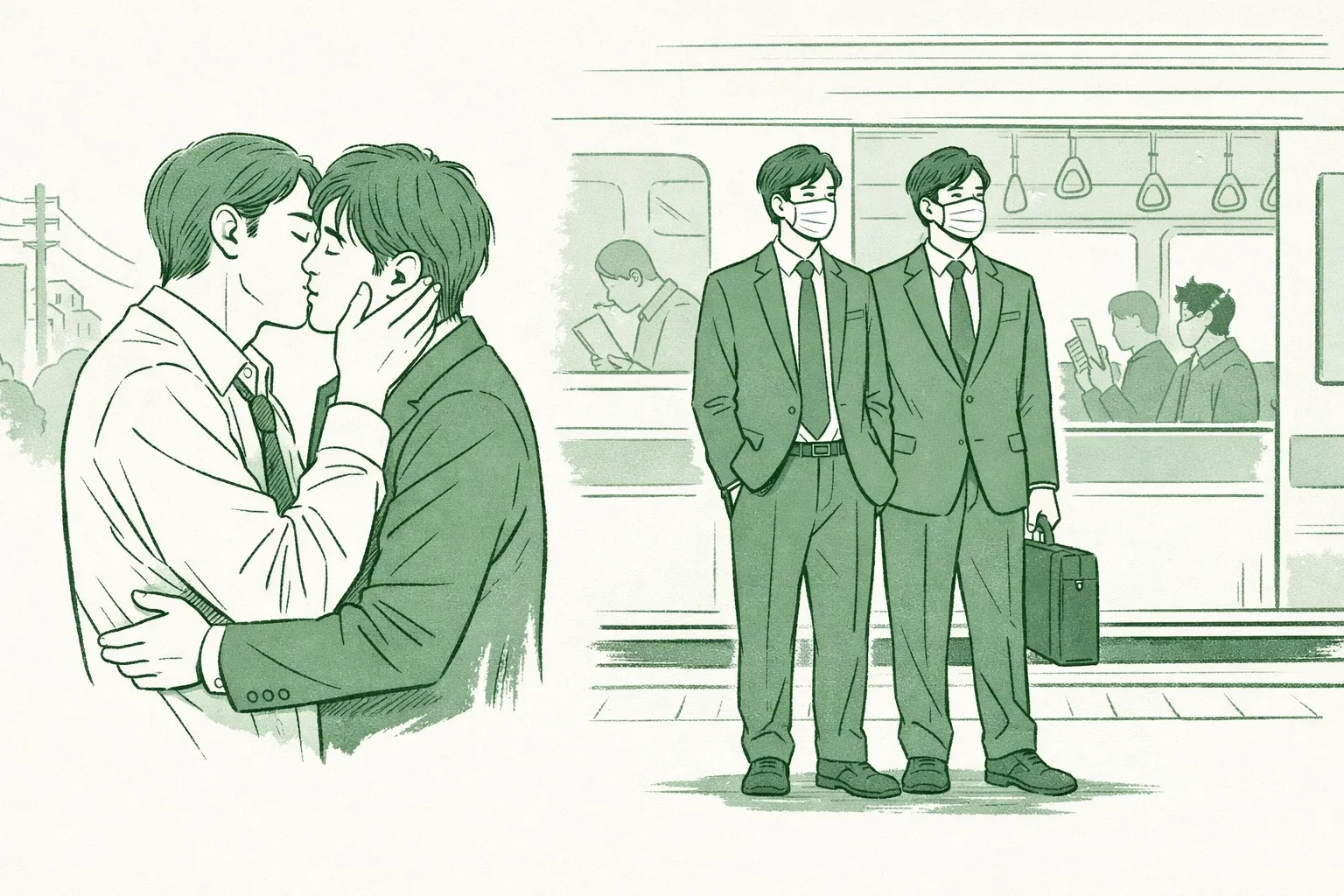
Picture this: It's 6:47 PM on a Thursday in Tokyo. Takeshi straightens his tie in the restroom mirror of his corporation's 23rd-floor office. His reflection shows exactly what he's supposed to be: impeccable suit, neutral expression, the perfect image of a diligent salaryman who never complains, never disagrees, never reveals what's actually churning beneath the surface.
This is tatemae: the public mask. The face that keeps the peace.
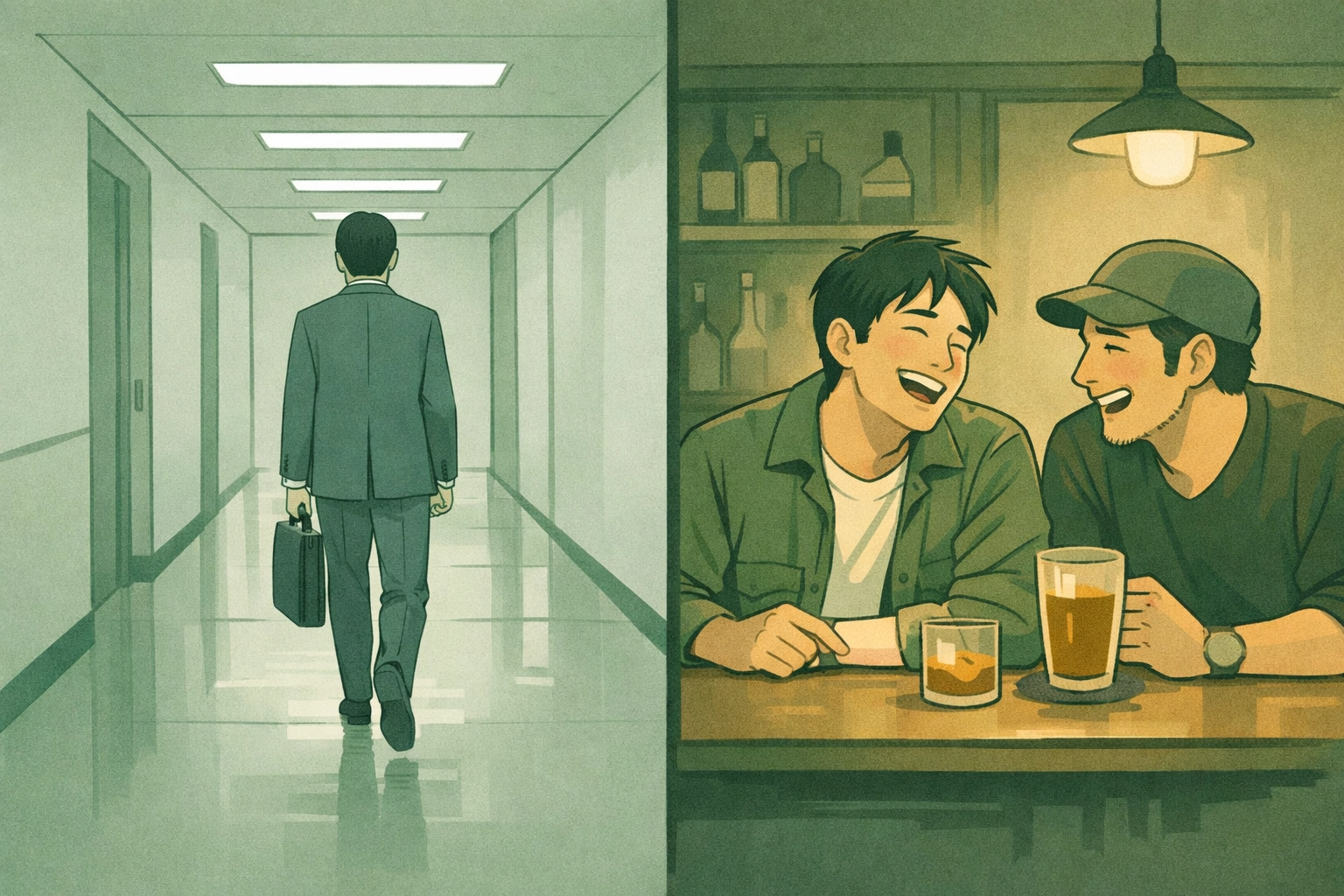
But in ninety minutes, after the obligatory drinks with colleagues, Takeshi will slip into Shinjuku Ni-chōme. He'll exchange his grey suit jacket for something that actually fits his body instead of hiding it. He'll order a drink at a bar where no one expects him to bow or apologize for existing. Where his honne: his true feelings, his real self: can finally breathe.
For gay men in Japan's rigid corporate culture, the gap between these two selves isn't just wide. It's a chasm.
Understanding Honne and Tatemae: More Than Just "Lying"
If you're not familiar with Japanese workplace culture, honne and tatemae might sound like elaborate terms for dishonesty. They're not. This duality is fundamental to how Japanese society functions, particularly in professional settings.
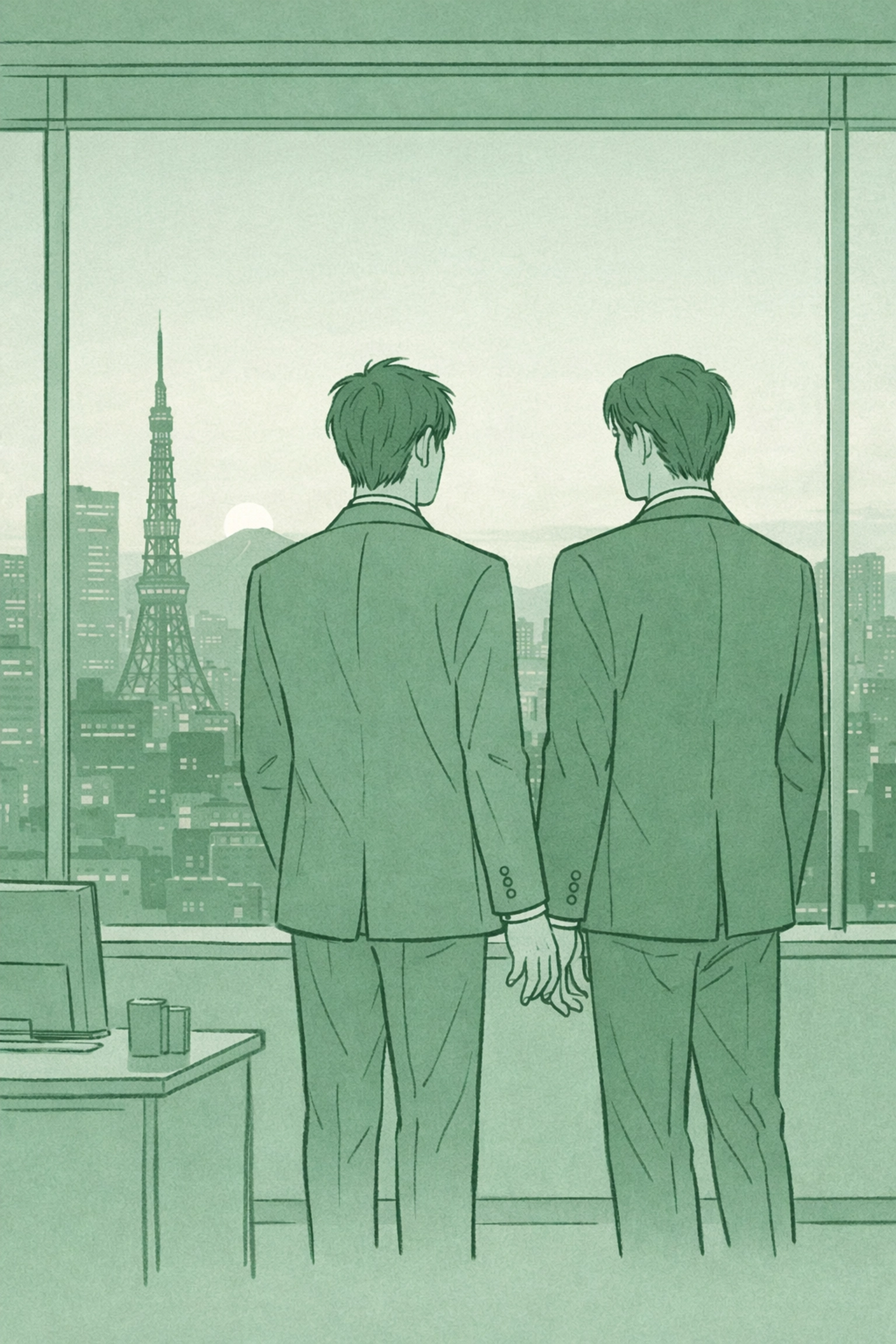
Tatemae is your public facade: the socially acceptable opinions and behaviors you display to maintain wa (harmony). In the office, this means unfailing respect for hierarchy, withholding criticism, never openly disagreeing with superiors, and suppressing frustration no matter how justified.
Honne represents your genuine thoughts and feelings: the things you'd never say in a meeting but might whisper after several drinks at the izakaya.
For straight salarymen, this split is manageable. Frustrating, exhausting, but manageable. Their honne might involve complaints about the boss or admitting they hate their job. But their fundamental identity aligns with social expectations.
For gay salarymen, the stakes are exponentially higher. Their honne isn't just about workplace frustrations: it's about their entire existence, their capacity to love, their authentic self. And Japanese corporate culture leaves almost no room for that truth.
The Salaryman's Double Life: When Your Identity Is Your Secret
Japan's corporate culture demands conformity that goes beyond professional conduct. There's an unspoken expectation that employees: especially men: will eventually marry (a woman), have children, and fulfill their duty to family and society. Office small talk revolves around these milestones. "When will you find a nice girl?" isn't a casual question: it's social pressure wrapped in pleasantry.
For gay salarymen, every Monday morning conversation about the weekend becomes a minefield. Every office drinking party where colleagues discuss their wives and girlfriends requires careful navigation. The constant performance of straightness isn't just exhausting: it's erasing.
Many develop elaborate cover stories. Some maintain fake relationships or arrange marriages of convenience. Others simply deflect, becoming the mysterious bachelor who works too hard for dating. Each strategy is another layer of tatemae, another mask over the mask.
The psychological toll is immense. Studies on LGBTQ+ individuals in Japan consistently show higher rates of depression and anxiety, particularly among those unable to be open about their identity at work. The person you are from 9 to 6 bears no resemblance to who you actually are. That disconnection hollows you out.
Shinjuku Ni-chōme: Where Honne Can Finally Emerge
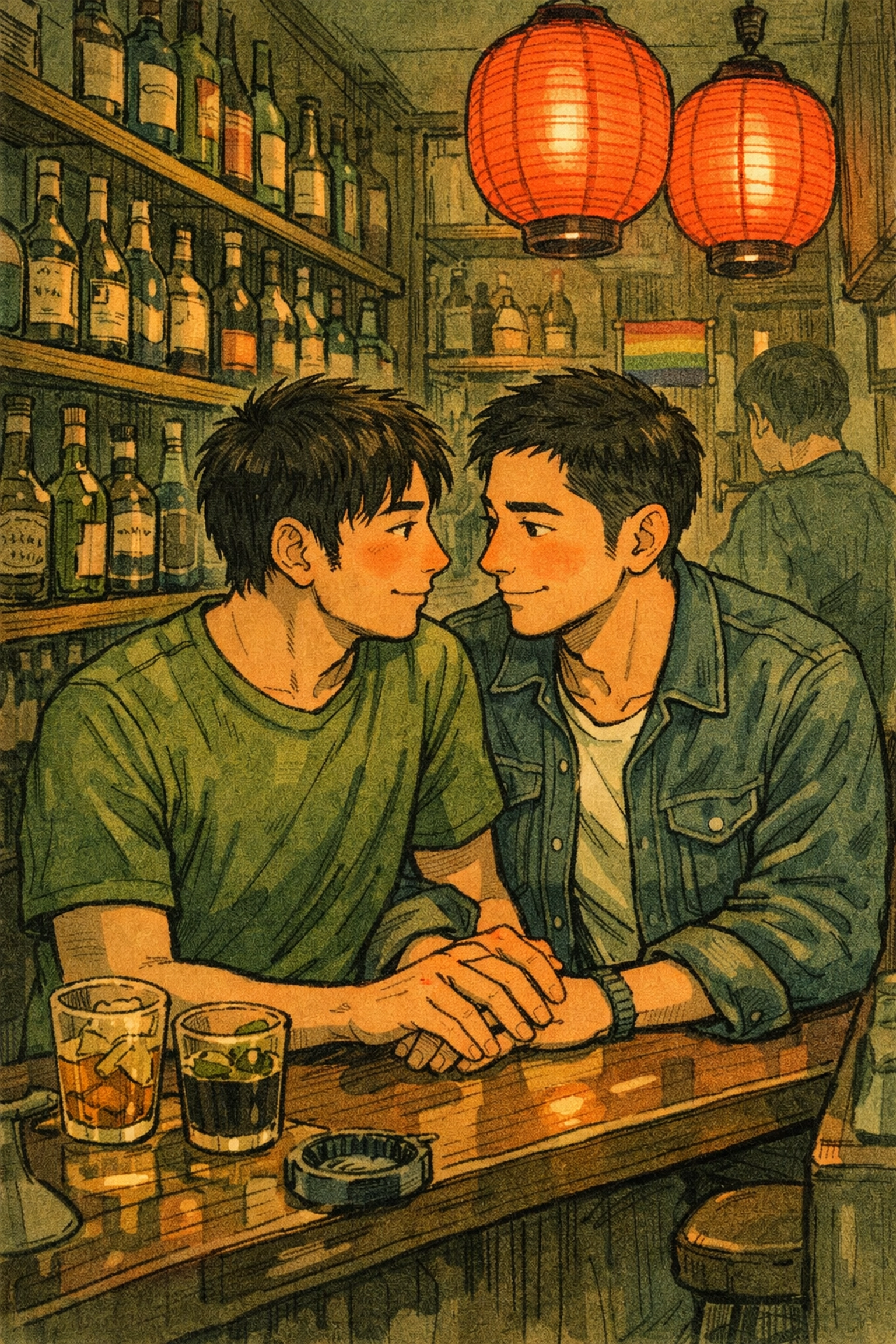
Then there's Ni-chōme: Tokyo's gay district in Shinjuku, a dense collection of over 300 LGBTQ+ bars packed into just a few blocks. For many gay salarymen, it's not just a nightlife destination. It's oxygen.
In these tiny bars: some barely large enough for ten people: the suffocating formality of Japanese professional life dissolves. Here, you can touch another man's hand without fear. You can laugh loudly. You can talk about your actual weekend plans without editing out the gender of your date. You can simply exist without calculation.
The contrast is stark and intentional. While the corporate towers of Shinjuku gleam with steel and glass and fluorescent efficiency, Ni-chōme feels intimate, almost defiant in its warmth. Red lanterns, narrow staircases leading to second-floor bars, mama-sans who remember your drink order and actually ask how you're doing.
For a few precious hours, honne becomes the default. The mask comes off.
But here's the heartbreak that makes for compelling gay romance fiction: even in Ni-chōme, many men can't fully let go. The fear of being seen, of somehow being traced back to their day job, of losing everything they've built: it lingers. Some men still use pseudonyms. Some arrive and leave alone, never willing to be photographed with someone who might be traced to them.
Even in their sanctuary, tatemae whispers at the edges.
Why This Matters for MM Romance Readers
If you're drawn to literary MM romance with emotional depth: stories that go beyond the physical to explore the psychological weight of living in two worlds: this cultural framework offers something profound.
The best gay romance books don't just depict attraction and sex (though those are great too). They explore what it costs to love when society demands you hide. They examine the courage required to be vulnerable when vulnerability can destroy your livelihood.
Japanese settings intensify this dynamic because the cultural expectations are so deeply embedded. There's no easy "come out at work and everyone applauds" narrative. The stakes feel real, the sacrifice tangible.
Think about the romantic tension when two salarymen meet at the same bar in Ni-chōme, both terrified the other might recognize them from their corporate worlds. The slow-burn trust required before either can reveal their real name. The devastating choice between career advancement and being seen publicly with the person you love.
This is the territory of heartfelt gay fiction that stays with you long after you've finished reading. It's the kind of emotional MM books that make you think about identity, belonging, and what we sacrifice for acceptance.
Recommended Reading: Stories That Capture This Duality
While Dick Ferguson's catalog primarily explores Western LGBTQ+ experiences, the themes of hidden identity and the cost of authenticity resonate across cultures.
The Price of Desire examines the psychological weight of maintaining appearances while navigating forbidden attraction: a universal experience for closeted individuals regardless of geography.
For readers specifically interested in gay fiction exploring the tension between public and private selves, Beyond the Closet Door offers powerful perspectives on the coming-out journey across different cultural contexts.
Explore the full collection at Read with Pride, where you'll find LGBTQ+ ebooks that prioritize authentic emotional journeys over superficial representation.
The Universal Truth Behind the Cultural Specific
Here's what makes the honne/tatemae framework so powerful for MM romance storytelling: while it's specifically Japanese, the underlying tension is universal for LGBTQ+ individuals.
We all navigate versions of this duality. The self we show at family gatherings versus the self we are with chosen family. The careful editing we do when colleagues ask about our weekend. The split-second calculations about whether it's safe to hold your partner's hand in public.
Gay romance books that honestly depict this navigation: rather than pretending prejudice doesn't exist or has been magically overcome: resonate because they reflect lived experience. They validate the exhaustion of code-switching, the relief of safe spaces, the courage required for authenticity.
For literary MM romance readers seeking gay novels with psychological depth, stories exploring cultural frameworks like honne and tatemae offer rich, nuanced territory. They remind us that the personal is always political, that love is always braver than it appears, and that authenticity carries different costs in different contexts: but always carries profound value.
Find Your Next Read
Discover new releases and bestselling gay romance books at Read with Pride : your destination for queer fiction that prioritizes emotional authenticity and complex characters over cliché.
Subscribe to our newsletter for exclusive previews of upcoming MM novels, author interviews, and special offers on LGBTQ+ fiction that challenges and moves you.
Follow us on social media:
Instagram: @dickfergusonwriter
X/Twitter: @DickFergus94902
Facebook: Dick Ferguson Writer
Visit www.readwithpride.com for the complete catalog.
#MMRomance #GayRomance #LGBTQBooks #QueerFiction #GayFiction #ReadWithPride #JapaneseCulture #LiteraryRomance #GayLoveStories #MMNovels #GayBooks #LGBTQFiction #EmotionalDepth #AuthenticRepresentation #GayRomanceBooks #ContemporaryRomance #MMLiterature #QueerLiterature #GayRomanticFiction #2026GayBooks #HeartfeltGayFiction #EmotionalMMBooks #LGBTQEbooks

Leave a Reply
You must be logged in to post a comment.