readwithpride.com
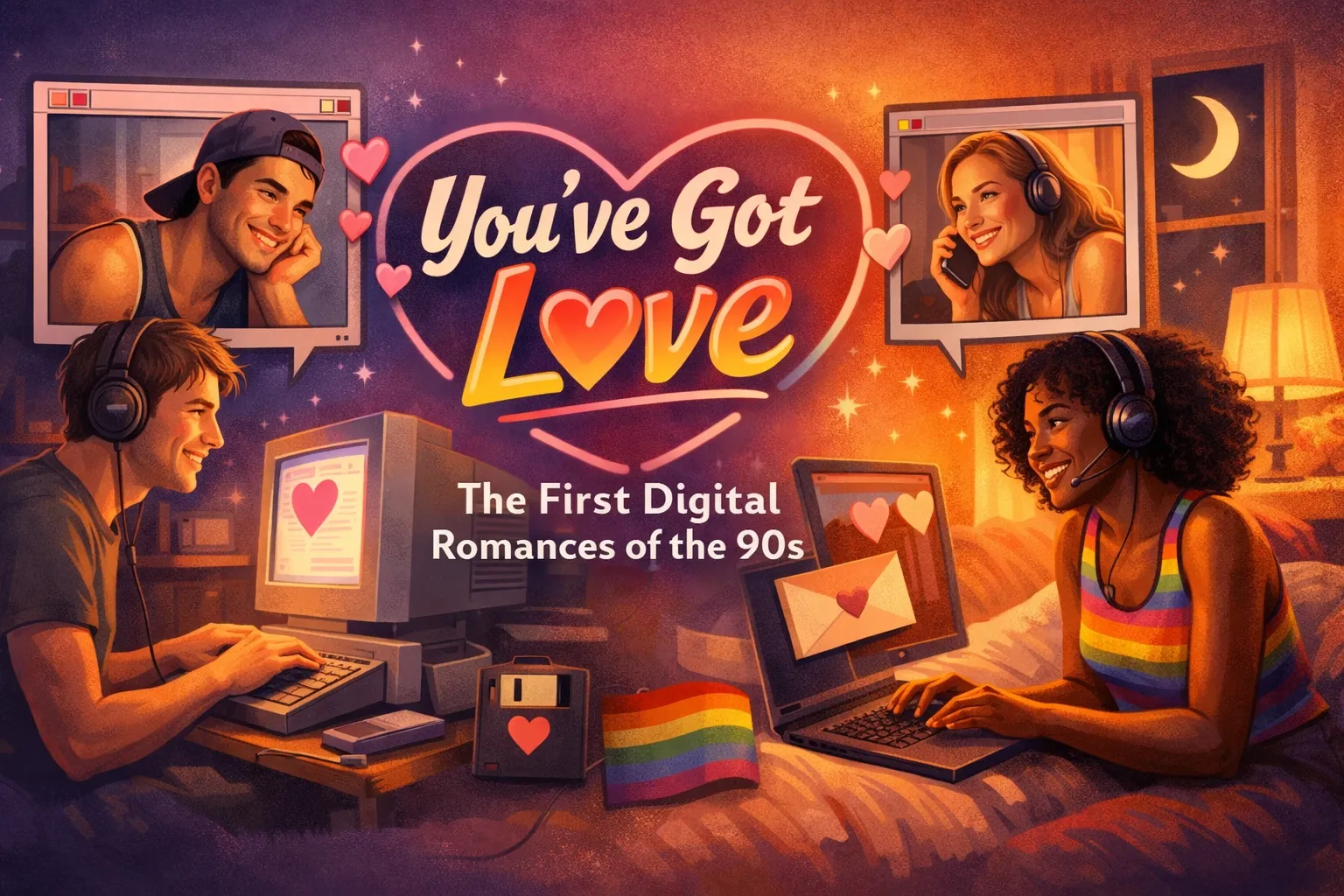
Picture this: It's 1996. You're sitting in front of a chunky beige computer, waiting for your dial-up modem to screech its way onto the internet. Your parents think you're researching for school. You're actually about to meet someone who might change your life.
For queer people in the 1990s, the internet wasn't just a technological revolution, it was a lifeline. Before smartphones, before Grindr, before you could swipe right on your soulmate, there was the wild frontier of early internet forums, chatrooms, and the first dating sites. And for LGBTQ+ folks living in isolation, closeted, or in communities where being out could cost you everything, these digital spaces became something extraordinary: a place to be yourself.
The World Before the World Wide Web
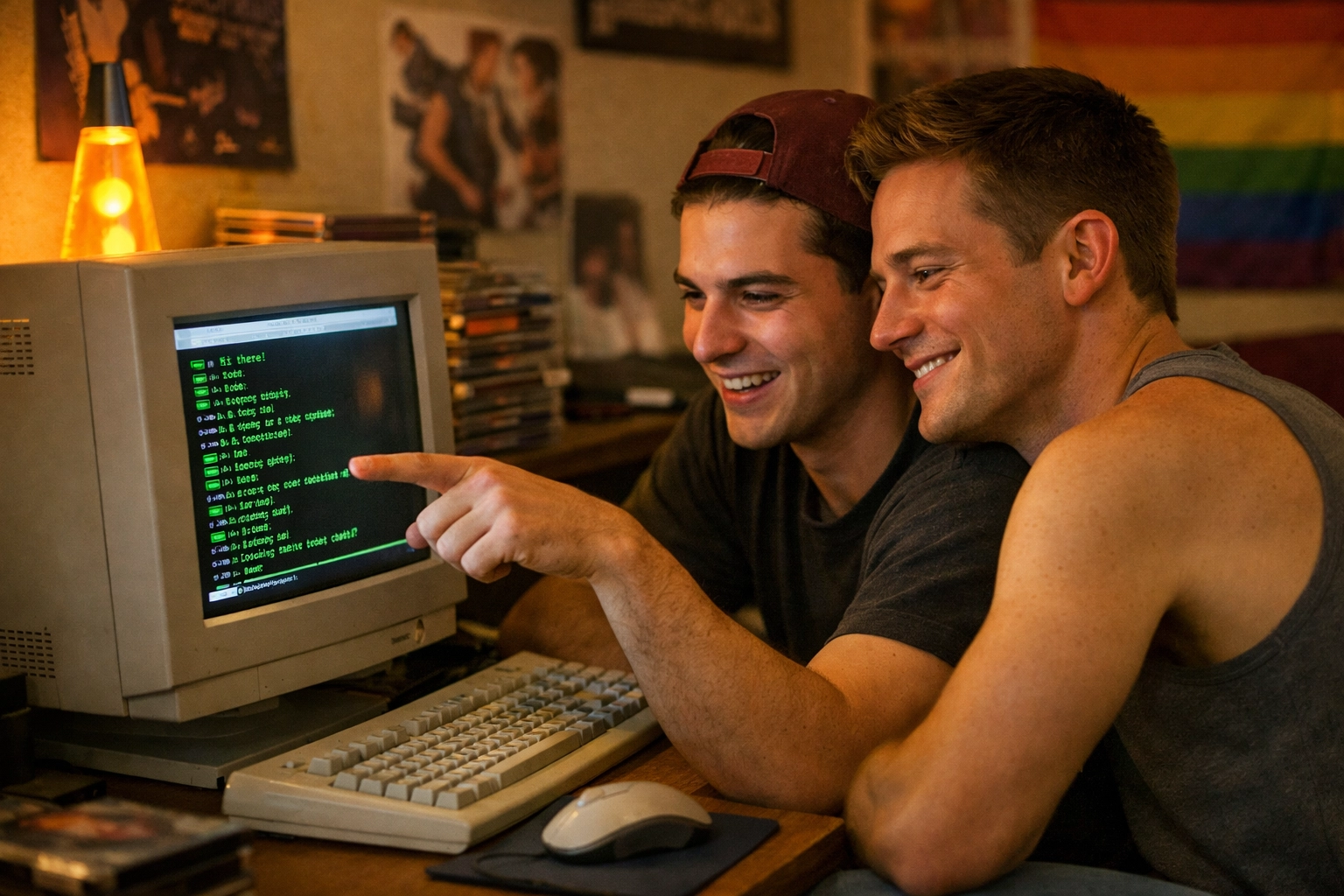
Let's rewind for a second. Before the internet went mainstream, finding other queer people, especially for dating, was an exercise in risk management. You had gay bars in major cities, sure, but what if you lived in rural Montana? What if you weren't old enough to get into those bars? What if being seen walking into one could get you fired, disowned, or worse?
The pre-internet playbook for queer connection was limited: personal ads in alternative newspapers (coded language required), chance encounters in "known" spots, or relying on whisper networks of friends-of-friends. It was beautiful when it worked, but it was also lonely, dangerous, and left countless LGBTQ+ people feeling like they were the only ones in the world.
Then came the modem.
Bulletin Boards and Early Forums: The First Digital Closets We Could Leave
Before Match.com launched in 1995 as the world's first online dating website, queer people had already found each other through bulletin board systems (BBS) and early internet forums. These text-based platforms, often accessed through university computers or early home modems, created spaces where usernames replaced real names and geography became irrelevant.
Forums like alt.sex.motss (Members of the Same Sex) on Usenet became gathering places for queer folks to discuss everything from coming out stories to relationship advice. You could log on at 2 AM, spill your heart out about your crush on your best friend, and find a dozen people who understood exactly what you were going through.
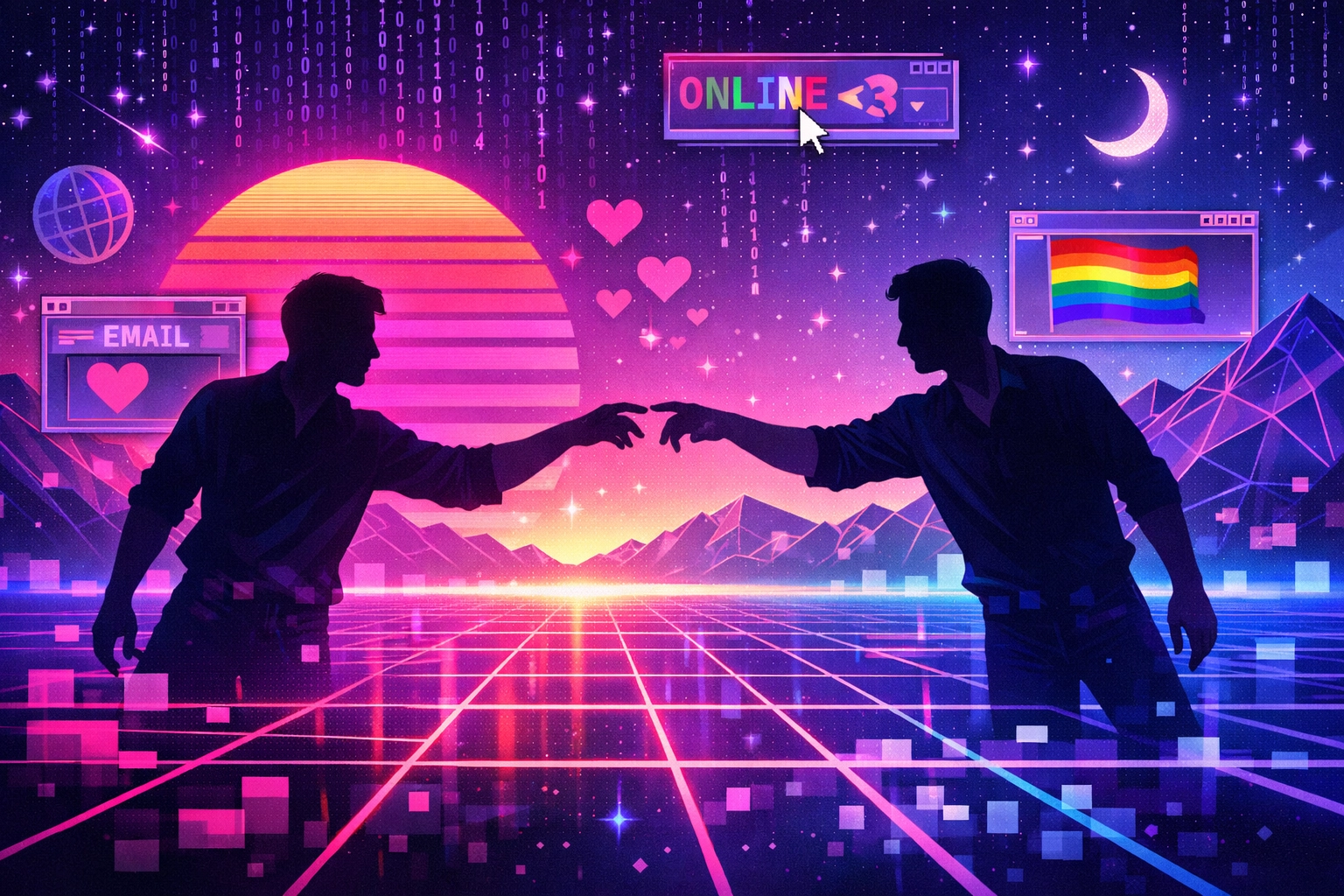
The anonymity was protective, yes, but it was also liberating. For the first time, many queer people could express themselves without the weight of their small-town reputation, their family's expectations, or their workplace's homophobia pressing down on them. You were just a screen name, and so was everyone else, which meant you could actually be honest.
And sometimes? That honesty sparked something more than friendship.
When Match.com Changed the Game
The launch of Match.com in 1995 transformed the landscape. Suddenly, there was a platform specifically designed for people to find romantic connections. While it wasn't exclusively for LGBTQ+ users, it didn't exclude them either, and that mattered enormously.
For queer people, Match.com and similar early dating sites offered something unprecedented: choice. You could be deliberate about seeking out potential partners. You could specify what you were looking for. You could have conversations before deciding whether to meet in person. It was dating, but with a safety net.
Of course, not everyone was thrilled about this development. The 1990s saw significant moral panic about online dating. Critics worried that seeking romantic connections through screens was "unreal" and would disconnect people from "appropriate and meaningful" relationships. For queer folks who'd been told their entire lives that their relationships were inappropriate and meaningless, this rhetoric had a particular sting, but also a familiar ring.
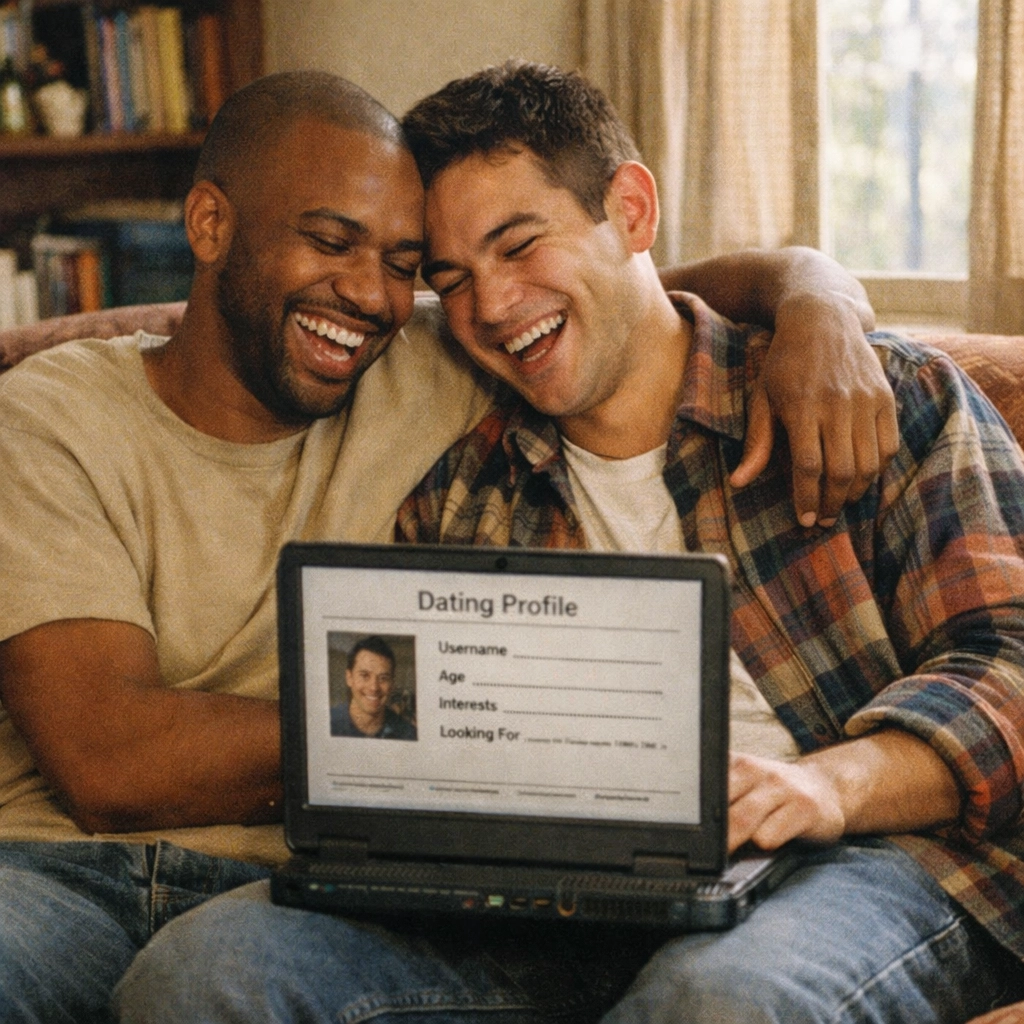
Despite the skepticism, queer people flocked to these platforms. Gay.com launched in 1998, providing one of the first major online spaces specifically for LGBTQ+ people to connect, chat, and yes, date. PlanetOut followed, merging news, community, and personal connections into one platform. These weren't just dating sites, they were entire ecosystems where queer people could exist openly.
Love Stories Written in AOL Instant Messages
The magic of 90s internet romance wasn't just in the platforms, it was in the medium itself. Before video calls and photo-heavy profiles, people fell for each other through words. Long, rambling emails. Late-night instant messages that stretched until sunrise. The anticipation of seeing that little "You've Got Mail" notification (or "You've Got M4M Mail," as some queer AOL users joked).
Without the immediate physical presence, connections formed differently. You learned someone's sense of humor, their vulnerabilities, their dreams before you knew whether they were tall or short, blonde or brunette. For many queer people who'd been taught to hide or perform, this text-first approach felt revelatory. You could lead with your personality, your intelligence, your heart.
Sure, there were catfishes before catfishing had a name. There were disappointments when online chemistry didn't translate in person. But there were also countless couples who met across state lines, across countries, across divides that would have seemed insurmountable before the internet shrunk the world down to the size of a computer screen.
The Freedom of Digital Identity
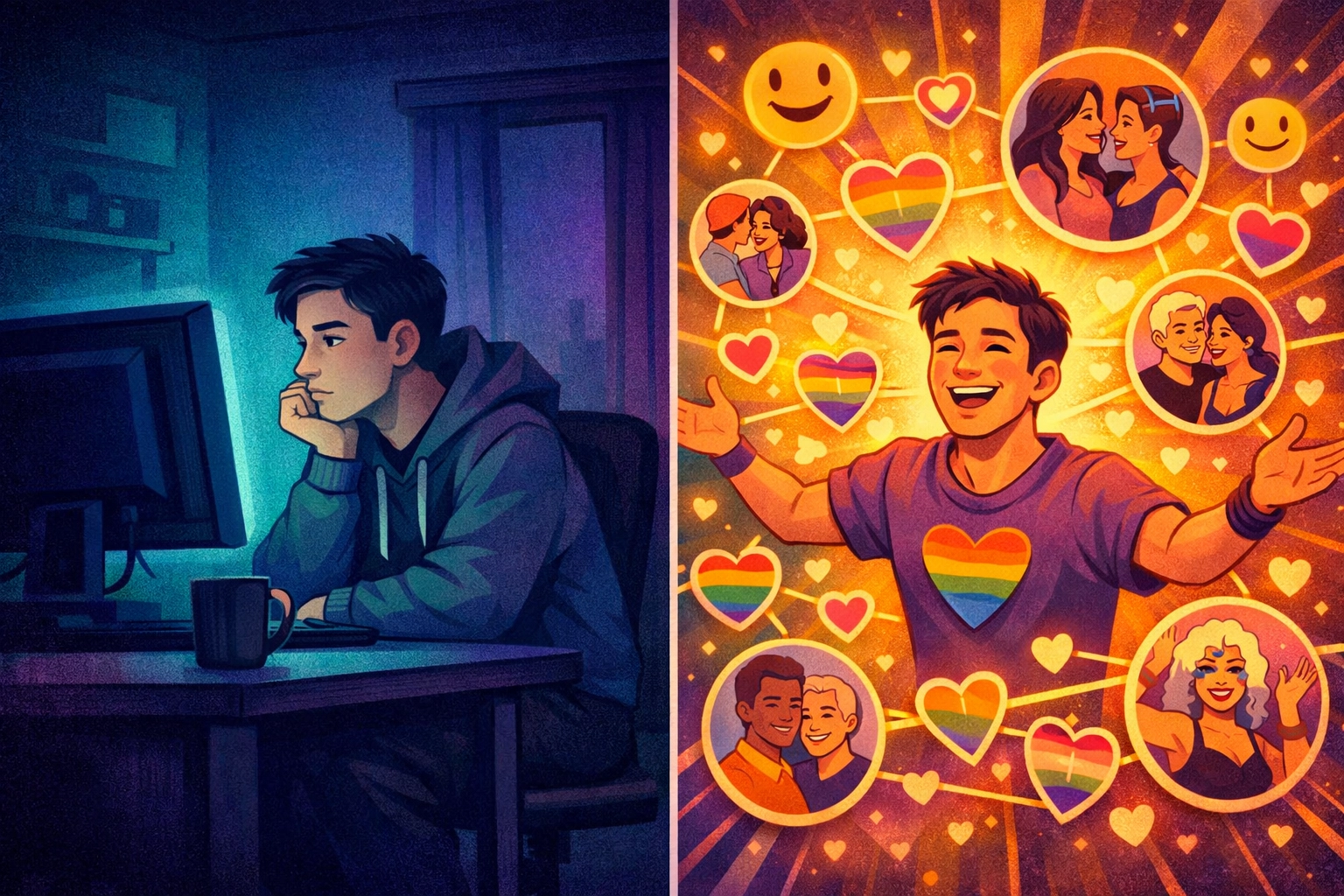
For transgender and non-binary folks, the early internet offered particular freedoms. You could present yourself however felt right without the immediate pressure of physical dysphoria or the violence of being misgendered. You could test out names, pronouns, ways of being in the world. Some people met partners who loved them first as the person they truly were, before ever having to navigate the complicated terrain of physical transition.
For bisexual people, who often felt excluded from both straight and gay spaces in the physical world, online communities provided neutral ground. You could be fully yourself without having to choose a side or prove your legitimacy.
For people still figuring themselves out, these digital spaces became laboratories of identity. You could ask questions, explore feelings, and connect with others on similar journeys without the stakes feeling quite so high. If things got uncomfortable, you could log off. Try again tomorrow. Find a different community.
The Skeptics Were Wrong
Remember that moral panic about online dating being "unreal"? Turns out, love through a screen was just as real as love anywhere else. By the late 90s, countless LGBTQ+ couples had met online, fallen in love, and built lasting relationships. Some got married (when and where they could). Others moved across the country to be together. Many found in each other not just romance, but the first person who truly understood them.
The internet didn't disconnect queer people from meaningful relationships, it connected isolated individuals to entire communities. It took people who thought they were alone and showed them they were part of something larger, something vibrant, something worth celebrating.
And yeah, Match.com's emergence coincided with an increase in interracial couples in the United States. When you remove geographical barriers and expand the pool of potential partners beyond whoever happens to live in your zip code, people connect across all kinds of boundaries. For queer people, that expansion was even more significant: the dating pool went from potentially zero to potentially everyone.
From Dial-Up to Pride
Those early digital romances of the 90s laid the groundwork for everything that came after. Every dating app, every online community, every way queer people connect today traces its lineage back to those early chat rooms and personal ads typed out on clunky keyboards.
The technology has changed: we've traded AOL Instant Messenger for Instagram DMs, personal websites for carefully curated profiles, forum threads for TikTok comments: but the fundamental promise remains the same: the internet can help you find your people, and maybe, if you're lucky, your person.
So here's to those pioneers who logged on in the 90s, took a chance on digital connection, and proved that love: queer love, especially: could bloom anywhere. Even through a 56k modem.
Looking for more stories that celebrate LGBTQ+ history and romance? Check out Read with Pride for MM romance books, gay fiction, and queer love stories that honor where we've been and imagine where we're going.
Connect with us:
Follow us on Facebook | Instagram | X/Twitter
#ReadWithPride #LGBTQHistory #GayHistory #MMRomance #QueerHistory #90sInternet #LGBTQRomance #GayRomanceBooks #DigitalLove #QueerLoveStories #GayFiction #LGBTQBooks #MMRomanceBooks #GayLoveStories #QueerCommunity #PrideHistory #InternetHistory #OnlineDating #LGBTQCulture #GayNovels

Leave a Reply
You must be logged in to post a comment.