

readwithpride.com
When we talk about LGBTQ+ history, we usually focus on the modern era, Stonewall, marriage equality, Pride parades. But queer people have always existed, even in the most unlikely places. Like, say, the Vatican in the 11th century.
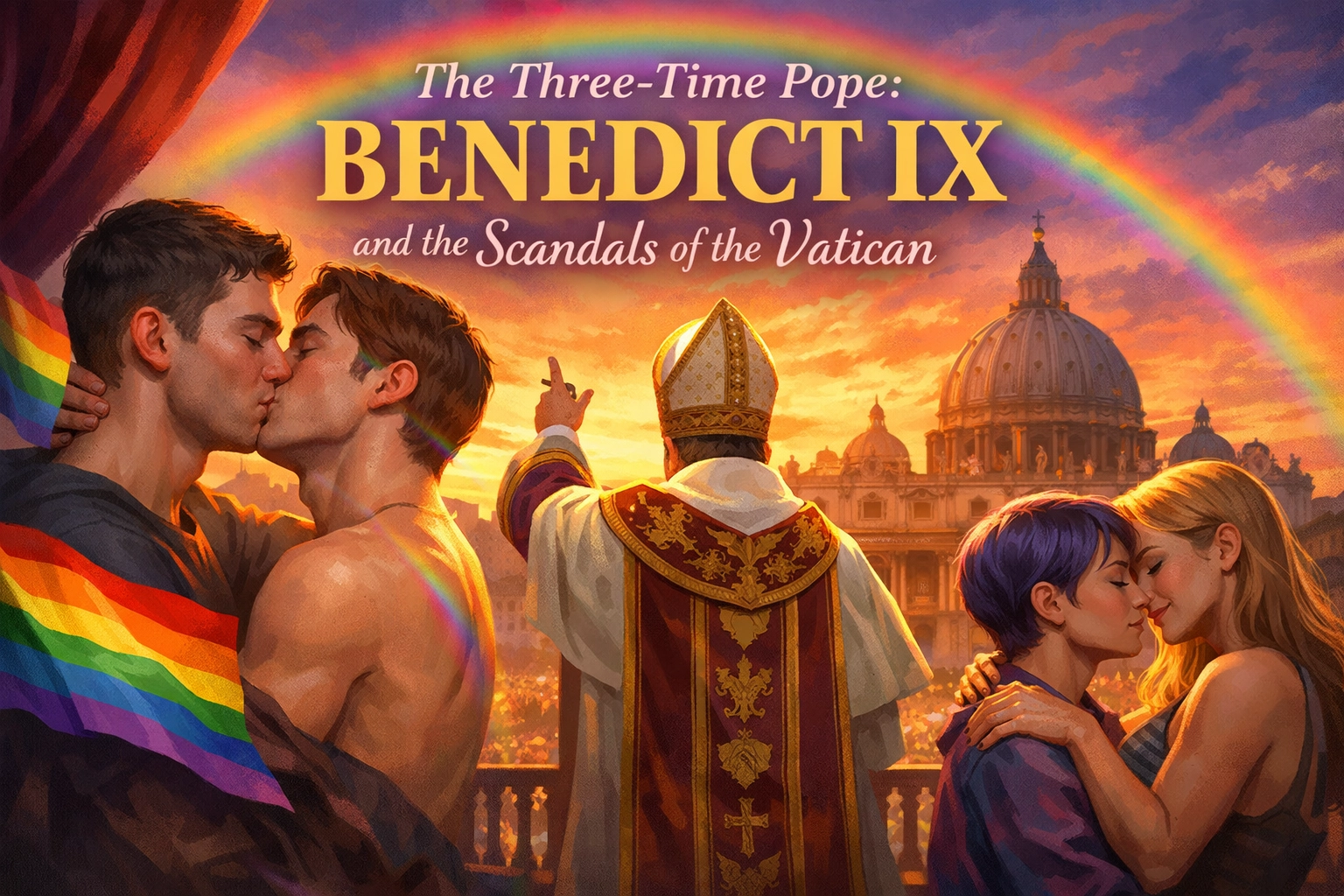
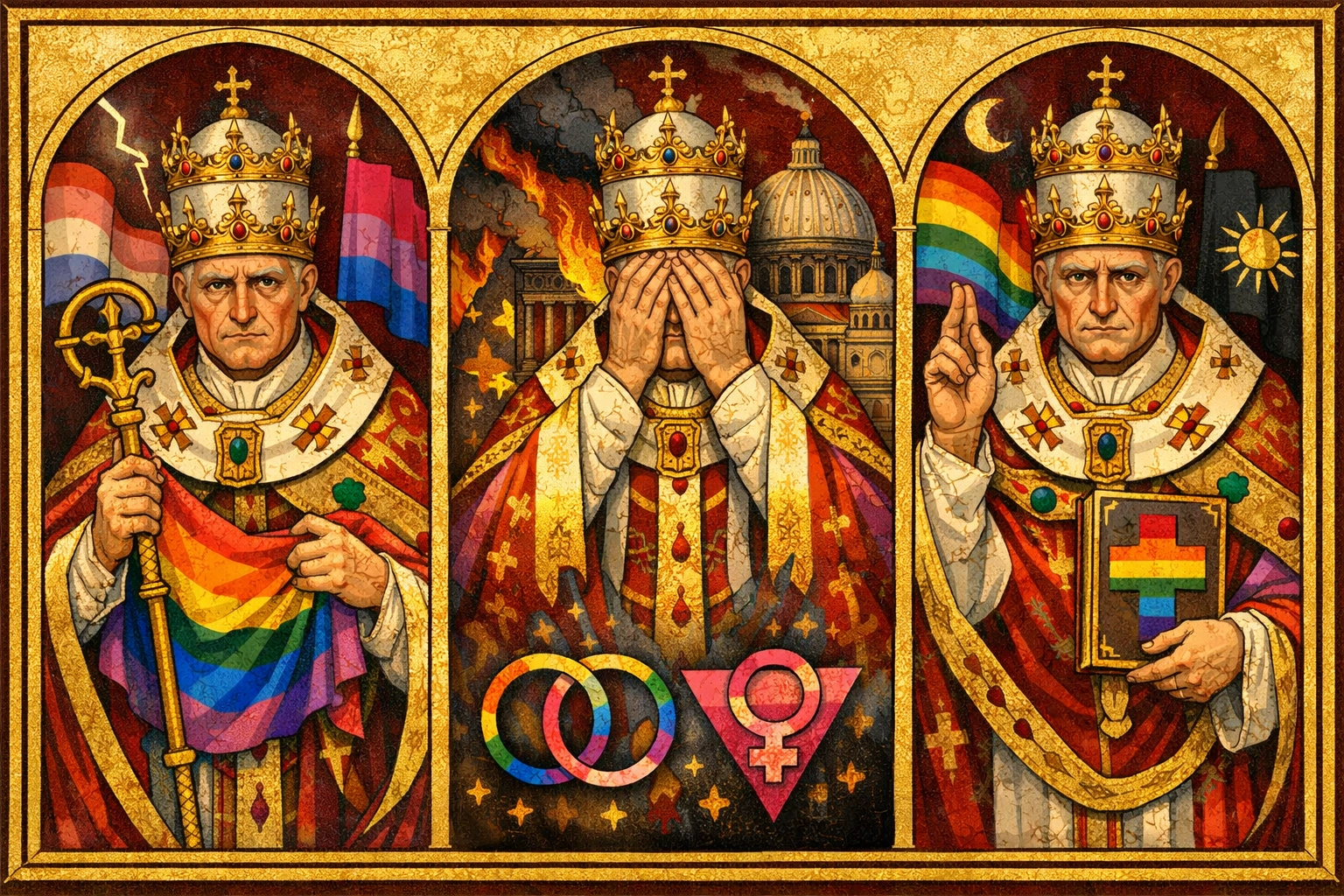
Meet Pope Benedict IX, possibly the most scandalous pope in the entire history of the Catholic Church. This guy didn't just bend the rules, he shattered them, sold the papacy for cash, and left behind whispers of "unspeakable acts" that historians are still unpacking today. Whether he was actually queer or just spectacularly badly behaved, his story reveals how same-sex desire and relationships existed even in the heart of medieval Christianity's power structure.
The Boy Pope Who Broke All the Rules
Picture this: It's 1032, and a teenager, possibly as young as 12, though more likely around 20, becomes the head of the entire Catholic Church. Benedict IX (born Theophylactus of Tusculum) didn't earn this position through piety or scholarship. He got it the old-fashioned way: nepotism. His family, the powerful Tusculani clan, had already installed two of his uncles as popes. When the papal throne opened up, they simply placed their young relative in the seat.
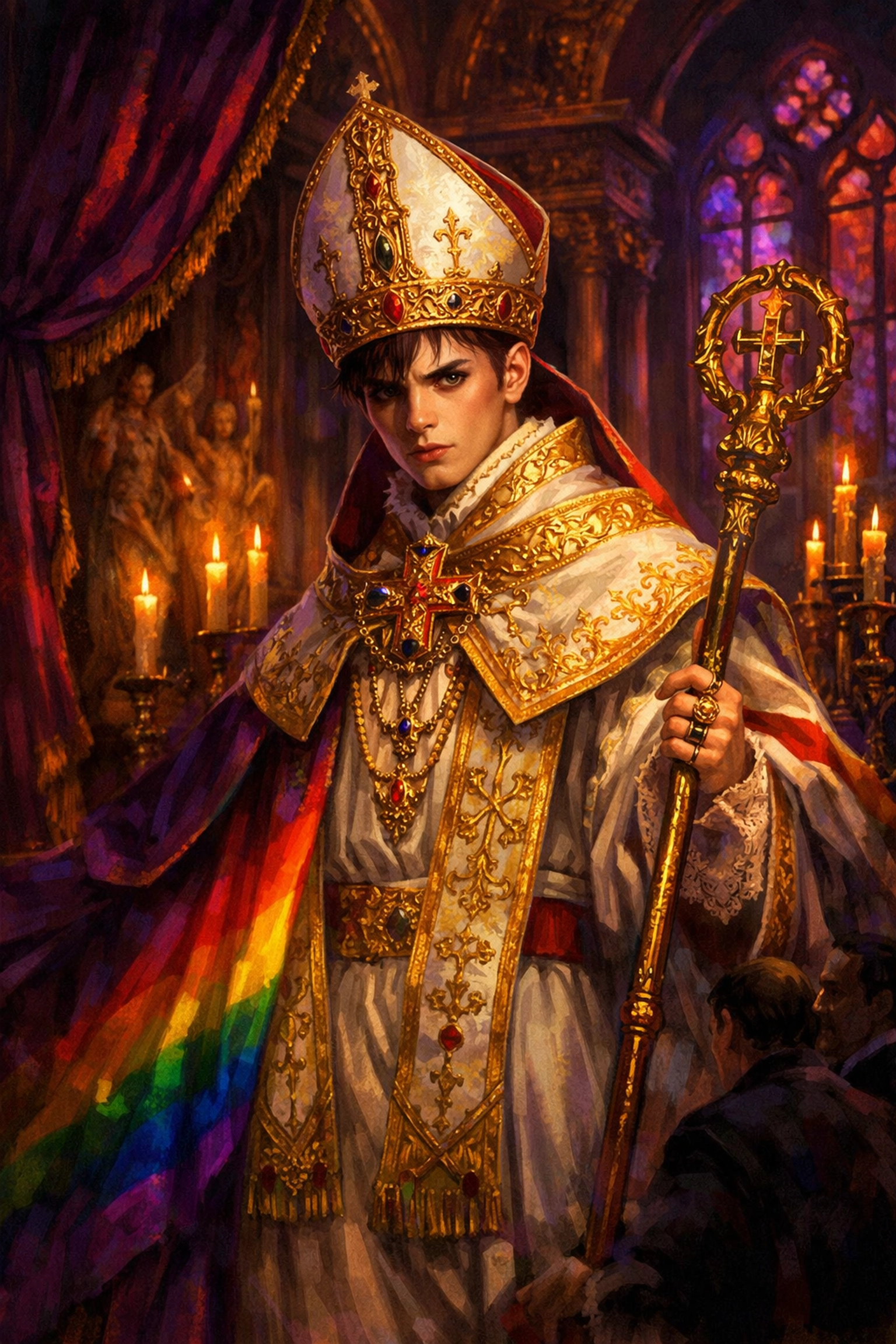
Benedict IX holds the distinction of being the youngest pope in history, a record that still stands today, nearly a thousand years later. But age wasn't the problem. The problem was everything else.
"Unspeakable Acts" and Whispered Rumors
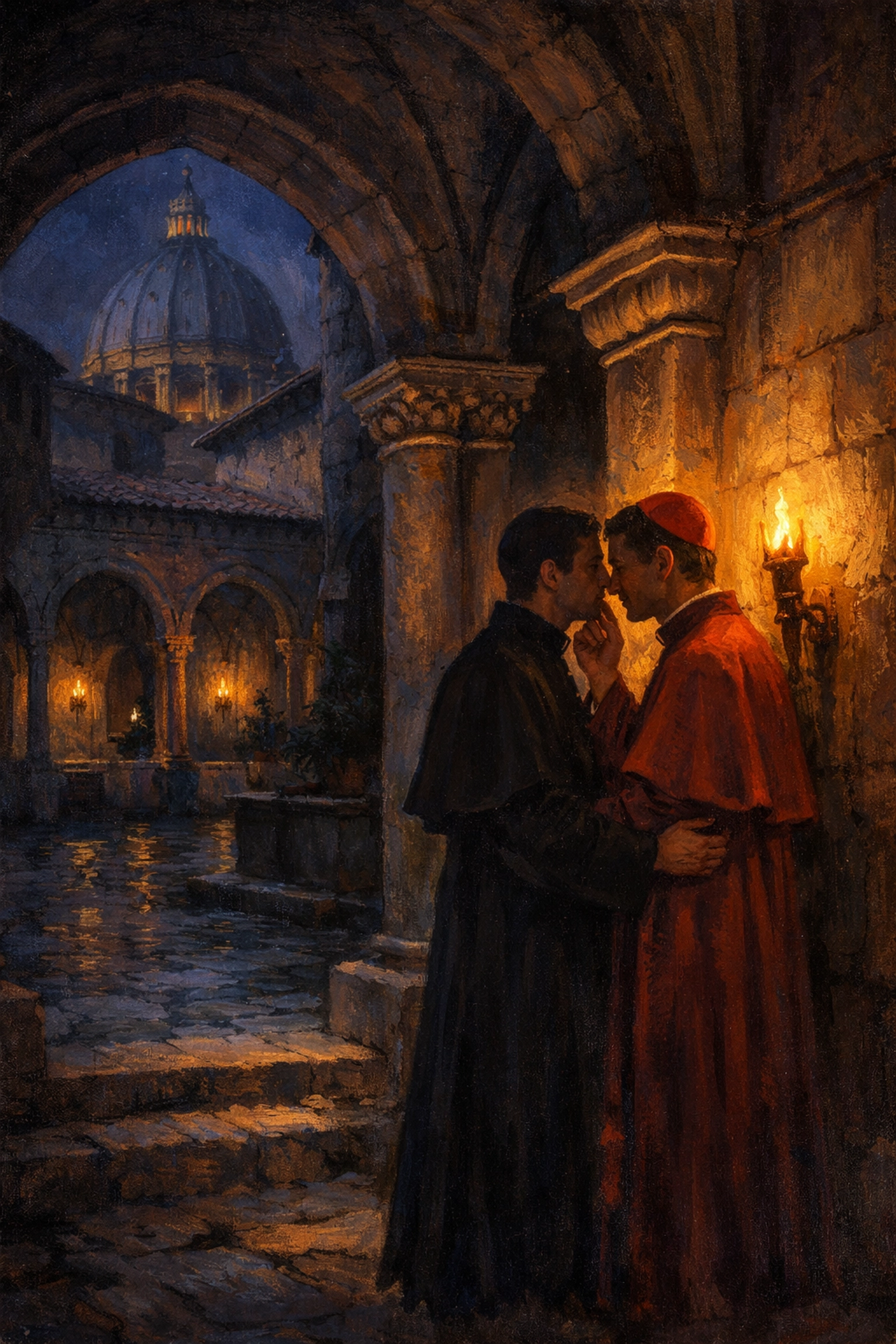
Here's where things get interesting for queer history. Contemporary and near-contemporary sources describe Benedict's behavior in terms that were code for homosexual activity in the medieval period. Saint Peter Damian, a church reformer who lived during Benedict's time, wrote about "the rapes of boys" and other sexual misconduct in the Vatican. Later, Pope Victor III didn't mince words, describing Benedict's papal reign as "so vile, so foul, so execrable" that he shuddered to think about it.
The Catholic Encyclopedia, not exactly known for throwing shade at popes, called him "a disgrace to the Chair of Peter." That's the equivalent of your own family saying you're an embarrassment at Thanksgiving dinner.
Medieval chroniclers accused Benedict of hosting wild parties, engaging in robbery and violence, and committing what they delicately called "various abominable acts." In 11th-century religious language, "abominable acts" was often euphemistic code for same-sex relations. One account specifically mentioned that he "raped" male individuals, though we should be cautious about taking medieval accusations at face value, enemies of any powerful figure often deployed sexual accusations as weapons.
What we can say with certainty is that Benedict's behavior was considered so shocking that Romans literally rioted to kick him out. In 1044, after twelve years of his first reign, the citizens of Rome had enough and forced him to flee the city. This wasn't about theological disputes or political intrigue. This was about a pope whose personal conduct had become intolerable.
The Pope Who Sold the Papacy (Yes, Really)
If you think the story couldn't get wilder, buckle up. After being kicked out once, Benedict returned to Rome and reclaimed the papal throne. But by 1045, he apparently decided he'd had enough of the whole pope thing. Maybe he wanted to get married (some sources suggest this), or maybe he just wanted the cash. Whatever the reason, Benedict did something unprecedented: he sold the papacy.
His godfather, Giovanni Graziano: a wealthy and reportedly pious man: paid Benedict a hefty sum and a pension to resign. Graziano became Pope Gregory VI, apparently believing this was the only way to save the Church from Benedict's scandalous leadership. For a hot minute, this seemed like a solution.
But Benedict had buyer's remorse. He came back, claimed he was still pope, and suddenly Rome had three different men all claiming to be the legitimate pontiff at the same time: Benedict IX, Gregory VI, and a third guy named Sylvester III who had briefly seized power during one of Benedict's absences.
It was chaos. Absolute papal chaos.
When the Emperor Had to Step In
The situation got so ridiculous that Holy Roman Emperor Henry III had to intervene. In December 1046, he convened the Council of Sutri and basically fired all three papal claimants. He installed a German bishop, Clement II, as the new pope, hoping to restore some order.
But Benedict wasn't done yet. When Clement II died in 1047 (under suspicious circumstances, naturally), Benedict swooped back in for his third and final stint as pope. This reign lasted only eight months before imperial forces under Boniface of Tuscany forcibly expelled him from Rome for good on July 17, 1048.
Three times. He was pope three times. No one else in history has managed this particular feat.
What This Tells Us About Queer History
Benedict IX's story matters for LGBTQ+ history, not because we can definitively prove he was gay: we can't, and medieval records are notoriously unreliable: but because his story reveals something important: queer people have always existed, even in institutions that later became violently anti-LGBTQ+.
The medieval Catholic Church wasn't always as rigidly opposed to same-sex relationships as it would later become. While sodomy was officially condemned, enforcement was inconsistent, and powerful men often lived openly with male companions or lovers. The harsh systematic persecution of queer people by the Church developed more fully in later centuries.
Benedict's case shows how accusations of same-sex activity were weaponized. Whether he actually had male lovers or not, his enemies knew that suggesting he did would damage his reputation. This tactic: using homosexuality as a political weapon: would be repeated throughout history, right up to modern smear campaigns.
The Monastery Ending
After his final expulsion, Benedict IX disappears from the historical record. Most sources suggest he ended up in the monastery of Grottaferrata, where he supposedly repented for his scandalous behavior. He died around 1055 or 1056, leaving behind a legacy that the Catholic Church would rather forget.

Some romantic historians imagine him finding peace in monastic life, finally able to live quietly away from the pressures and scrutiny of Rome. Others see his monastery years as a kind of exile, forced retirement for a disgraced pope. We'll never really know what his final years were like or what he actually repented for: if anything.
Why We Should Remember Him
Benedict IX isn't a queer hero. He was, by most accounts, a terrible pope and possibly a terrible person. But his story reminds us that LGBTQ+ history isn't just about heroes and pioneers. It's about real, messy, complicated people who existed in every era, in every institution, living lives that don't fit neatly into contemporary boxes.
His papacy also reveals the hypocrisy at the heart of institutional homophobia. The same Church that would later torture and execute people for sodomy had, at its very pinnacle, a pope accused of exactly those acts. Power, it seems, has always created exceptions to supposedly universal moral rules.
For those of us exploring LGBTQ+ history and gay literature today, stories like Benedict's remind us that queer people have always found ways to exist, even: maybe especially: in the most hostile environments. We've always been here, living our lives, causing scandals, and leaving historians scratching their heads centuries later.
Discover more LGBTQ+ history and amazing MM romance books at Read with Pride: where every story celebrates authentic queer voices.
Follow us for more queer history and the best gay romance novels:
- Facebook: https://www.facebook.com/profile.php?id=61586883027069
- Instagram: https://www.instagram.com/read.withpride/
- Twitter/X: https://x.com/Read_With_Pride
#ReadWithPride #LGBTQHistory #QueerHistory #GayHistory #VaticanSecrets #MMRomance #GayBooks #LGBTQBooks #QueerFiction #GayLiterature #HistoricalLGBTQ #MMRomanceBooks #GayRomanceBooks #2026GayBooks #LGBTQReading #QueerStories

Leave a Reply
You must be logged in to post a comment.