

readwithpride.com
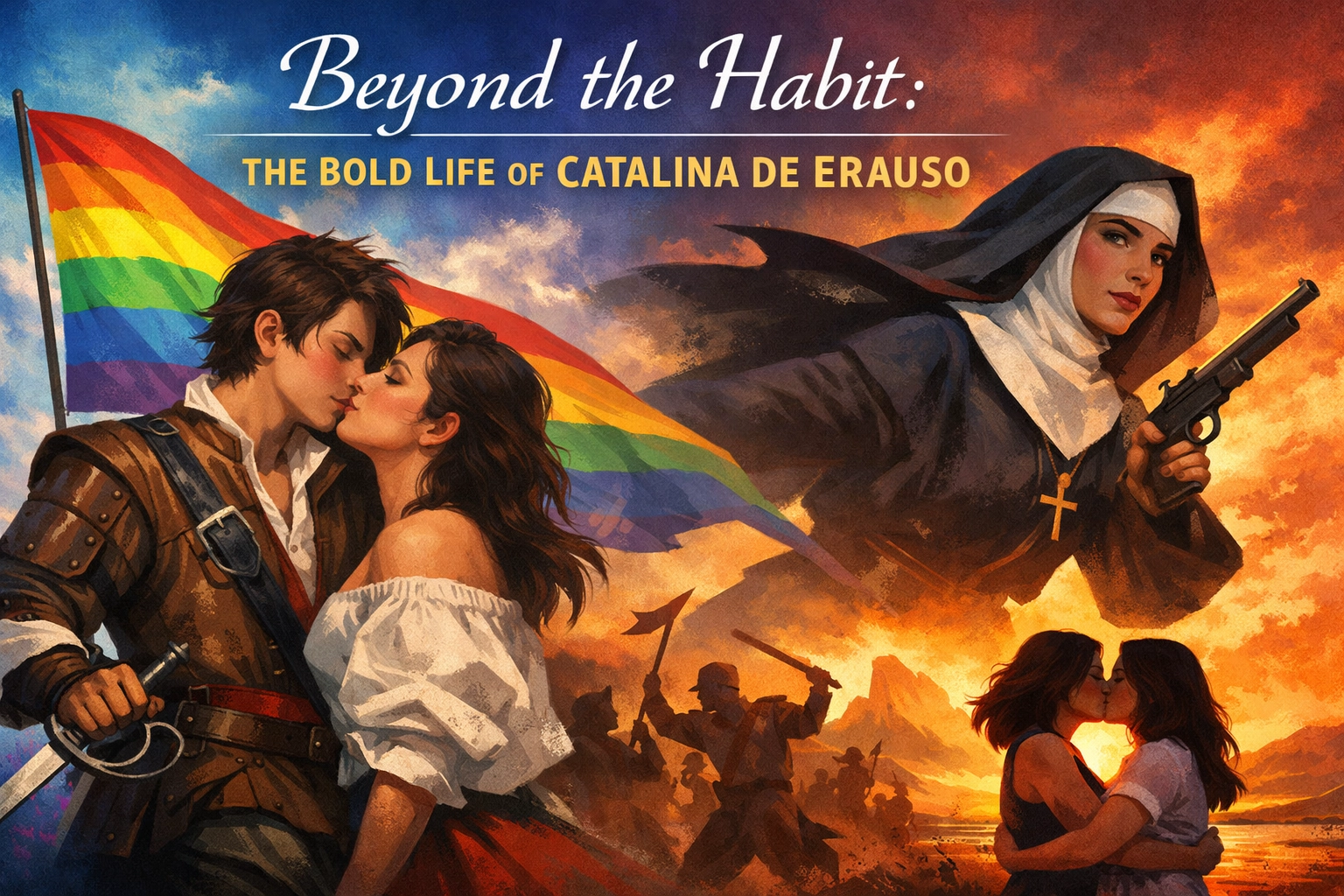
Imagine being trapped in a convent at fifteen, your entire life mapped out by your family, prayers, silence, and a lifetime of servitude. Now imagine saying "absolutely not" and breaking out to become one of the most legendary soldiers in Spanish colonial history. That's exactly what Catalina de Erauso did in 1607, and her story is wild enough to put any MM romance novel to shame.
Born in 1585 in San Sebastián, Spain, Catalina was the daughter of a noble family who decided her fate before she could even have a say. The convent doors closed behind her, but they couldn't contain her restless spirit. When she finally made her escape, she didn't just run away, she completely reinvented herself, adopted a male identity (initially calling herself Francisco Loyola), and embarked on an adventure that would make her famous across two continents.
From Convent Walls to Ocean Waves
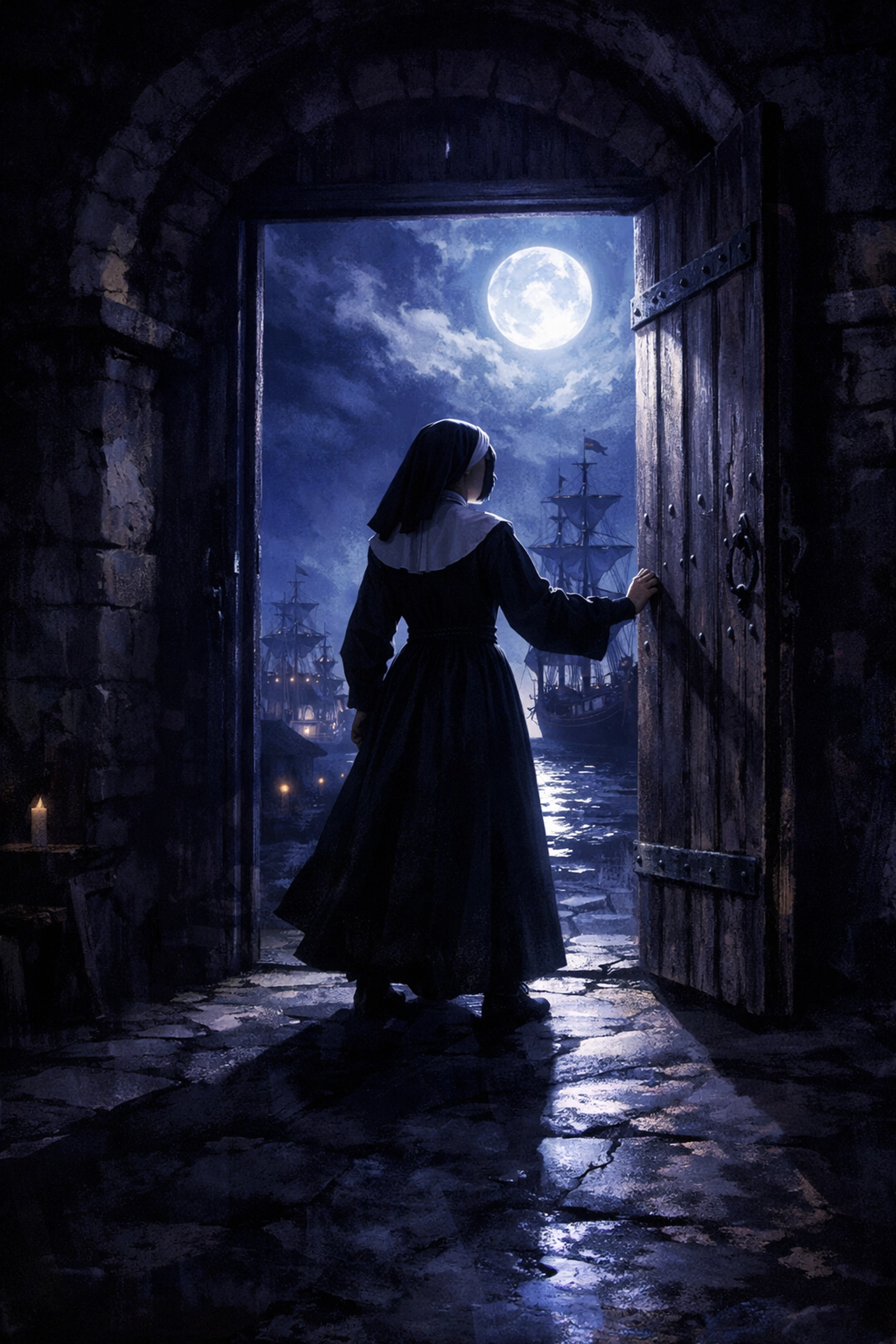
After fleeing the Dominican convent, Catalina spent years moving through Spain as a fugitive, taking odd jobs and learning to navigate the world as a man. She mastered the art of binding her chest, walking with swagger, and most importantly, wielding a sword like her life depended on it. Because, well, it did.
In 1603, she boarded a ship in Sanlúcar de Barrameda as a ship's boy, bound for the Spanish colonies in America. Can you imagine the courage that took? Leaving everything familiar behind, crossing the Atlantic in a cramped vessel, all while maintaining a disguise that could get you killed if discovered. She wasn't just running from the church: she was running toward freedom.
The Soldier Who Loved Women
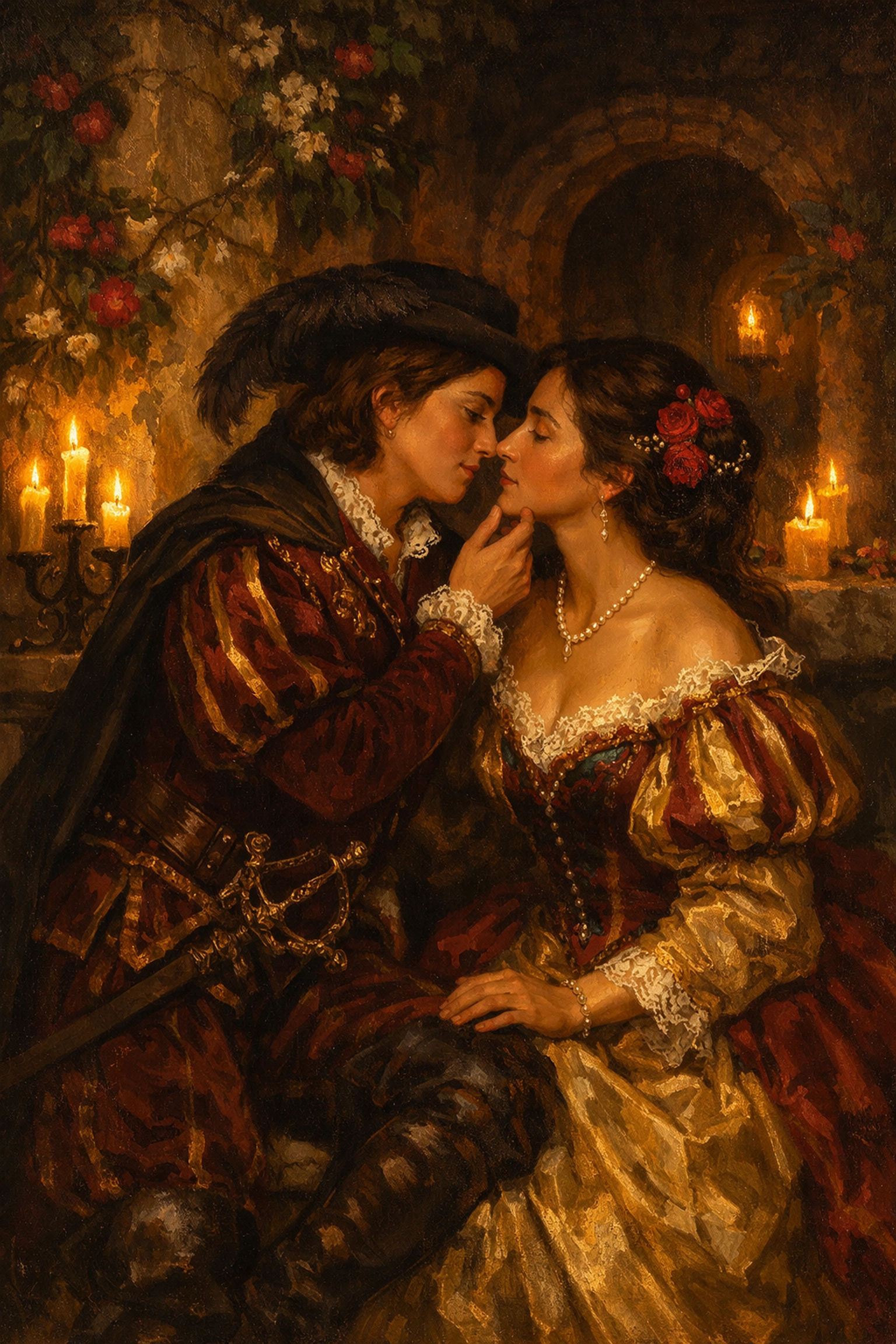
Here's where things get really interesting for those of us reading gay romance novels and queer fiction. Catalina didn't just live as a man professionally: she fully embraced the lifestyle, including courting women. Historical accounts mention several romantic entanglements with women throughout her adventures, though the details are frustratingly sparse (17th-century writers weren't exactly penning MM romance books with explicit content).
What we do know is that she had the swagger, the confidence, and the reputation of a ladies' man. She gambled, dueled, and charmed her way through colonial society. Some historians speculate she might have even been engaged to women on multiple occasions. The fact that she maintained these relationships while keeping her identity secret adds a whole new layer of tension that any fan of LGBTQ+ fiction would appreciate.
War, Glory, and a Sword That Never Quit
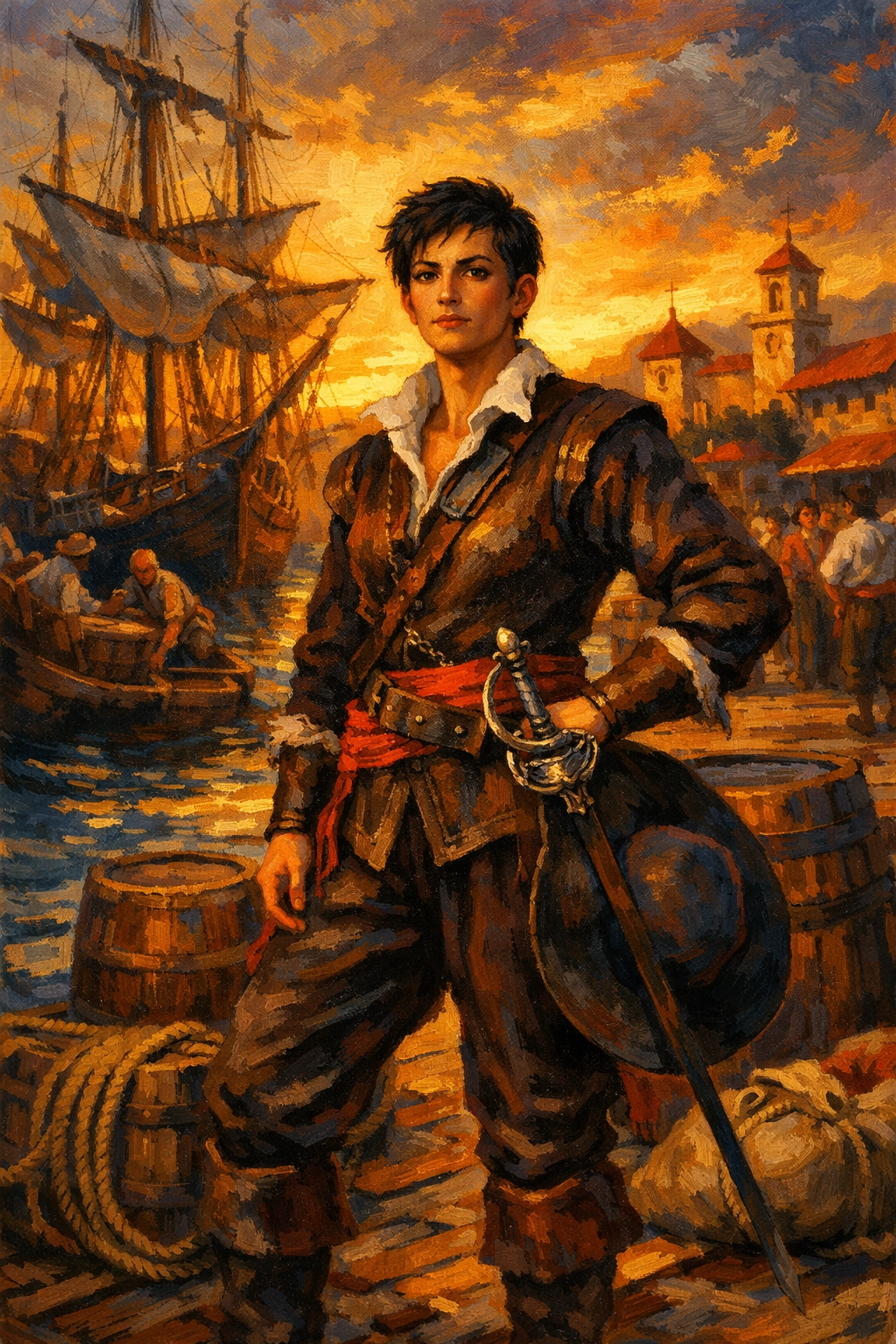
Catalina's military career was nothing short of extraordinary. She fought against Dutch pirates off the coast of Venezuela, worked in ports across Ecuador and Peru, and eventually enlisted in the brutal Spanish invasion of Chile. During the War of Arauco against the Mapuche people, she earned her reputation as a fearless warrior.
Under Captain Gonzalo Rodríguez, she became known for her exceptional swordsmanship and bravery. She achieved the rank of alférez (ensign) after a particularly daring feat: killing an indigenous cacique and recovering the royal standard in battle. When her captain died in combat, she took command of the entire company. This wasn't some side character in a gay historical romance: this was the main character energy we all aspire to have.
She fought, she bled, she commanded respect in one of the most masculine and violent environments imaginable. And she did it all while carrying a secret that could have ended her life in an instant.
The Truth Comes Out
Every good story has its turning point, and Catalina's came in 1623 in Huamanga, Peru. After a violent altercation (because of course there was violence: this woman didn't do anything halfway), she found herself cornered. Facing possible execution, she made a desperate play: she confessed her true identity to the local bishop, Agustín de Carvajal.
The bishop ordered an examination by matrons, and they confirmed what must have been shocking news: not only was Catalina a woman, but she was still a virgin despite decades of living as a man and courting women. This detail likely saved her life, as it proved she hadn't "defiled" herself in the eyes of the Church.
Instead of execution, she found protection. The bishop intervened on her behalf, and eventually, she was sent back to Spain. But here's where the story gets even more unbelievable.
Royal Recognition and Papal Permission
In 1624, King Felipe IV granted Catalina an audience. Rather than punishing her for her deception, he celebrated her military service. He allowed her to keep her rank, gave her the nickname "Monja Alférez" (the Nun Lieutenant), and awarded her a military pension. Read that again: the King of Spain gave a pension to a woman who escaped a convent and lived as a soldier for twenty years.
But it gets better. Pope Urban VIII himself granted her special ecclesiastical permission to continue wearing men's clothing for the rest of her life. The Pope. Gave permission. For gender non-conformity. In the 17th century.
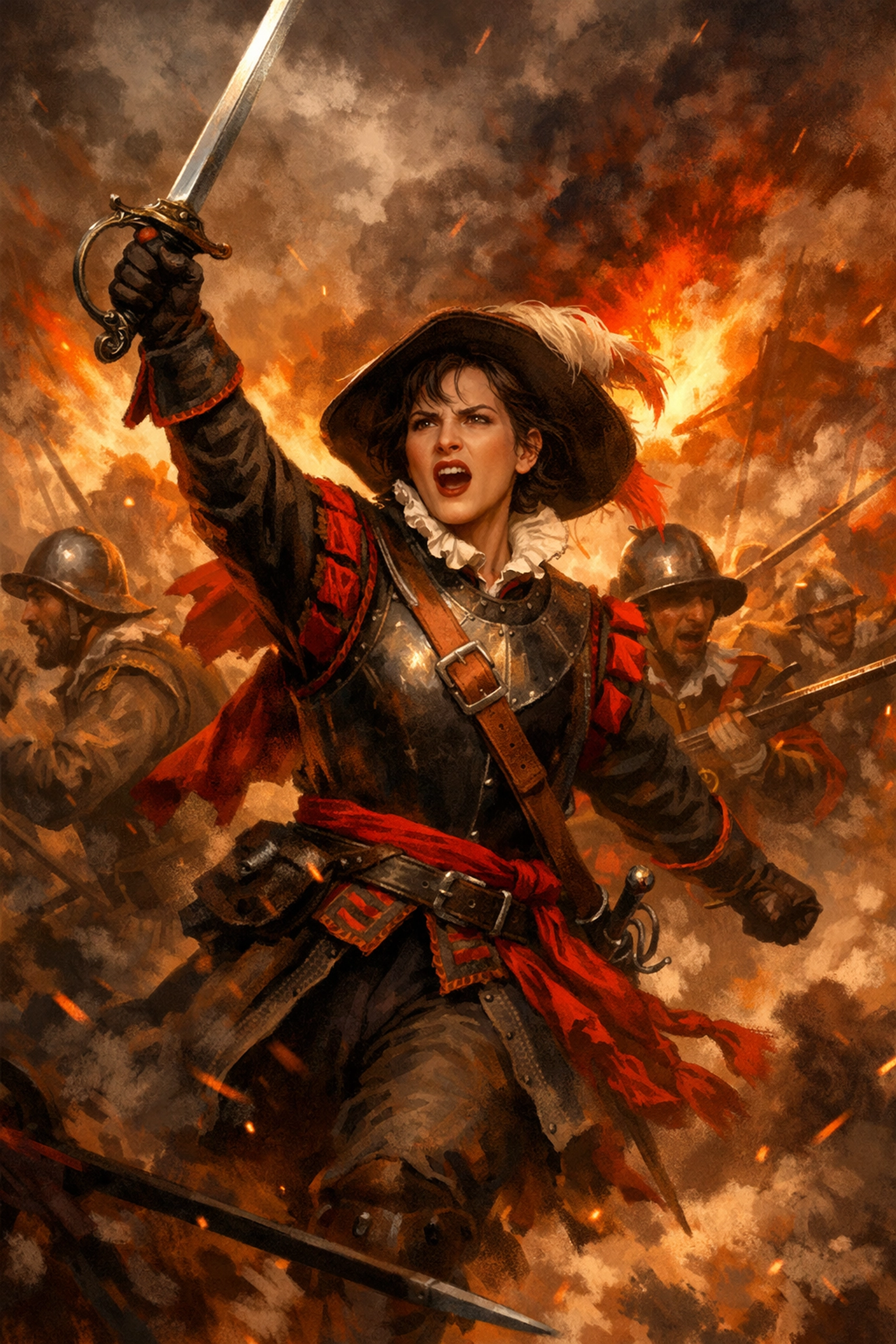
Catalina wrote an autobiography, Relación verdadera de las grandes hazañas, which became a sensation throughout Europe. She traveled to Rome, where she was treated like a celebrity. People wanted to see the legendary Nun Lieutenant in person. She became one of the most famous people of her time: a gender-bending warrior whose story captivated an entire continent.
Living Authentically Before It Was Cool
Eventually, Catalina settled in Mexico, where she lived out her remaining years, though the exact details of her death remain unclear. What's undeniable is the legacy she left behind. In an era when LGBTQ+ identities were literally punishable by death, she lived authentically for decades, loved women, achieved military glory, and earned recognition from both Crown and Church.
Her story resonates deeply with modern queer readers who devour gay romance books and MM novels looking for representation. She's proof that queer and gender non-conforming people have always existed, always fought for their right to be themselves, and always found ways to love and be loved.
Whether you're into gay historical romance or just appreciate a good real-life adventure that rivals any MM fiction, Catalina de Erauso's story delivers. She didn't have the language we have today for identity and sexuality, but she lived her truth with a sword in her hand and fire in her heart.
Why Her Story Matters Today
As we continue to fight for LGBTQ+ visibility and acceptance in 2026, stories like Catalina's remind us that we're part of a long, proud history. She wasn't waiting for permission to live authentically: she took it. And when society caught up to her truth, she didn't back down or apologize.
For readers exploring gay literature and queer fiction, her life reads like the ultimate forced proximity, gender-bending, slow-burn romance with action sequences. She's the protagonist we all want to read about: complex, brave, flawed, and utterly unforgettable.
So next time you're browsing for your next great read at Read with Pride, remember Catalina. Remember that the stories we love about MM romance, gay love stories, and LGBTQ+ fiction aren't just entertainment: they're echoes of real lives lived courageously across centuries.
The Nun Lieutenant proved that sometimes the best love story is the one you write yourself, on your own terms, with a sword at your side and freedom in your heart.
Follow us for more incredible queer stories:
- Facebook: https://www.facebook.com/profile.php?id=61586883027069
- Instagram: https://www.instagram.com/read.withpride/
- X/Twitter: https://x.com/Read_With_Pride
- Website: https://readwithpride.com
#ReadWithPride #LGBTQHistory #QueerHistory #MMRomance #GayRomanceBooks #HistoricalQueer #LGBTQFiction #GayBooks #QueerFiction #GenderNonconforming #LesbianHistory #MMRomanceBooks #GayHistoricalRomance #QueerLiterature #LGBTQEbooks #GayLiterature #ReadwithPride2026 #QueerStories #GayNovels #LGBTQReading

Leave a Reply
You must be logged in to post a comment.